
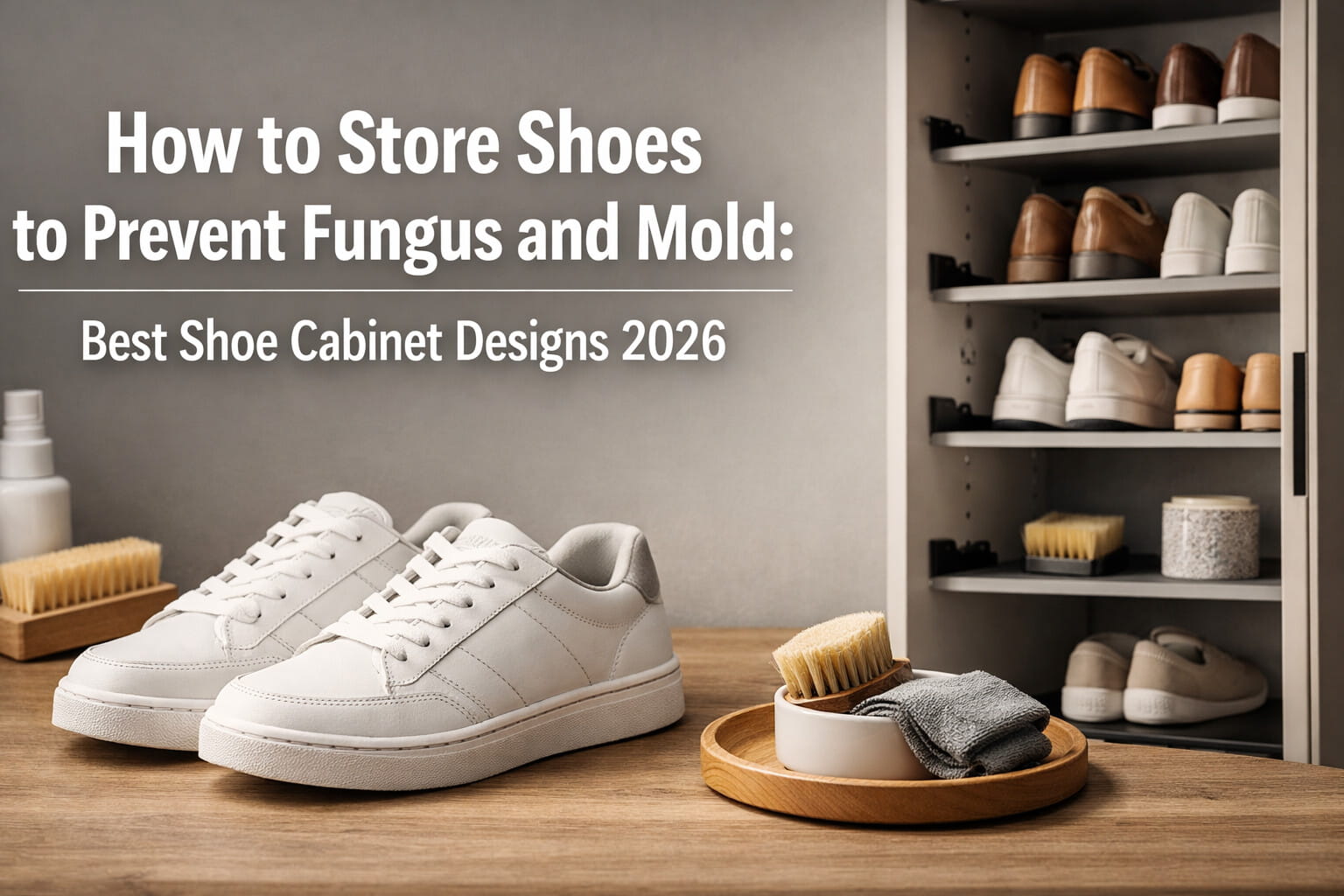
How to Store Shoes to Prevent Fungus and Mold: Best Shoe Cabinet Designs 2026
TL;DR: Quick Answer
The key to preventing shoe mold is airflow and moisture control. Never store damp shoes; dry them completely first. For storage, choose a shoe cabinet with open slats, louvered doors, or ventilation holes rather than airtight seals to allow air circulation. Maintain room humidity below 50% and use silica gel packets inside storage areas. Avoid storing leather shoes in plastic bags, as this traps moisture and creates a breeding ground for fungus.
The Heartbreak of Moldy Shoes
There is nothing quite as heartbreaking for a shoe lover as opening a closet after a few months to find a favorite pair of leather boots or suede loafers covered in a dusting of white or green fuzz. In my 20+ years running a physical shoe store, I have seen thousands of pairs of shoes ruined—not by walking, but by sitting still.
We often focus heavily on what shoes to buy, but we rarely talk about where to put them when they are not on our feet. Whether you live in a humid tropical climate or store winter boots in a damp basement, mold is the silent killer of footwear. It eats away at organic materials like leather and cotton, weakens glue, and leaves a smell that is nearly impossible to remove.
The secret to longevity is not just cleaning; it is about the environment you create for your collection. Through decades of handling inventory, we have learned that the difference between a pristine shoe and a ruined one often comes down to the shoe cabinet design and air quality.
What Causes Shoe Mold?
Before we look at the best shoe cabinet design, we have to understand what we are fighting. Mold requires three things to thrive:
- Moisture: From sweat, rain, or humidity in the air
- Darkness: Mold hates UV light
- Food: Leather, cotton, glues, and dirt on the soles
If you remove one of these pillars, the mold collapses. Our strategy focuses heavily on removing moisture and improving the architecture of your storage.
Did You Know?
Mold can start growing on shoes in as little as 24 to 48 hours if they are stored damp in a dark, enclosed space. The glue that holds your shoes together is also organic and can be consumed by mold, causing soles to separate.
Preparation: The 24-Hour Rule Before Storage
You cannot store a dirty shoe and expect it to survive. Before any pair goes into long-term storage, follow this checklist we use in the trade:
The 24-Hour Rule
Never put shoes immediately into a closed cabinet after wearing them. Feet sweat, even if you do not feel it. Let shoes air out in an open space for at least 24 hours.
Clean the Soles
Mud contains organic matter (mold food). Wipe down the outsoles before storing.
Condition Leather
Dry leather cracks, but over-oiled leather attracts mold. Use a light conditioner and buff it until dry.
Remove Insoles
If you are storing running shoes or sneakers long-term, pull the insoles out halfway to let the footbed breathe.
Best Shoe Cabinet Designs for Mold Prevention
This is where most people fail. They buy a storage unit based on how it looks in the hallway, ignoring the physics of airflow. When looking for furniture, you must prioritize ventilation.
The Open Slat Strategy
For maximum airflow, the classic open-slat wood rack is unbeatable. A design with horizontal slats ensures that air touches the sole of the shoe, not just the upper.
- Why it works: It prevents moisture from getting trapped under the rubber outsole
- Best material: Unfinished Cedar. Cedar wood is naturally anti-fungal and absorbs excess moisture from the air
The Louvered Door Cabinet
If you prefer your shoes hidden away for aesthetic reasons, you must avoid solid doors. Look for a shoe cabinet with louvered doors (slats that overlap but allow air through).
- The Airflow Gap: If you are building a custom unit or buying flat-pack furniture, ensure the back panel has ventilation holes. If it does not, drill them yourself. A sealed box is a mold incubator
- Perforated back panels let air circulate behind every pair
- Gaps between shelves prevent sealed compartments from trapping moisture
Mesh and Rattan Fronts
Some modern cabinets use rattan or mesh fronts. These are excellent for combining style with breathability.
Raised Base
Look for cabinets with an open bottom shelf or raised base. This allows air to circulate underneath and provides a spot for everyday shoes that need to dry quickly after rain.
Expert Tip
In our stockrooms, we use small fans to keep air moving. For a home cupboard, consider installing a small, battery-operated dehumidifier or a low-wattage heating rod to keep the air dry and circulating.
Best Materials for Shoe Cabinets
The material of your shoe cabinet matters just as much as the design.
| Material | Mold Resistance | Why It Works |
| Solid Cedar | Excellent | Natural antifungal oils kill mold spores; absorbs moisture |
| Solid Wood | Good | Porous material allows moisture exchange |
| Bamboo (Carbonized) | Good | Lower moisture content; 40-60% improved mold resistance |
| Powder-Coated Metal | Excellent | Does not absorb moisture; no mold growth |
| Stainless Steel | Excellent | Completely moisture-proof |
| MDF with Laminate | Poor | Sealed interior traps moisture |
| PVC/Plastic (Sealed) | Poor | Traps moisture; no breathability |
Verdict: For the best protection, choose cedar, bamboo, or powder-coated metal with ventilation features.
Climate Control: Silica Gel, Dehumidifiers & More
Silica Gel is Your Best Friend
You know those little “Do Not Eat” packets that come in shoe boxes? Keep them. They are desiccant packets designed to absorb moisture.
- Pro Strategy: Buy large packs of silica gel online. Place two packets inside each shoe and a few loose ones in the corners of your cabinet
- Recharge Them: Many silica beads change color when full. You can “recharge” them by baking them in the oven on low heat, making them reusable
Activated Charcoal
Place activated charcoal packets on each shelf. They absorb moisture and odors.
The Plastic Bin Trap
Clear plastic bins are popular for sneakerheads because they look great for display. However, they are dangerous if sealed tight.
- The Fix: If you use drop-front plastic boxes, ensure they have ventilation holes. If they do not, drill small holes in the back
- Never store leather in a sealed plastic bag; it needs to breathe
Ideal Humidity
Aim for a relative humidity between 40% and 50%. Anything above 60% significantly increases the risk of mold growth.
Storage Methods Comparison Table
Interactive Mold Prevention Checklist Tool
Mold Prevention Checklist
Answer a few questions to see if your shoe storage is mold-proof.
Common Mistakes to Avoid
1. Storing Shoes Immediately After Wearing
This is the number one mistake. Feet sweat, and that moisture gets trapped in the shoe. Always wait at least 24 hours before storing.
2. Using Solid, Airtight Cabinets
Solid doors with no ventilation create a dark, humid micro-environment perfect for mold. Choose louvered, slatted, or perforated doors instead.
3. Stacking Shoes on the Floor
Heat rises, but humidity settles. The floor is often the coolest, dampest part of the room. Always elevate your shoe rack by at least 2 inches off the ground using legs.
4. Overcrowding
If your shoes are touching each other in the cabinet, air cannot circulate. Leave at least an inch of space between pairs.
5. Ignoring the Insoles
Mold often starts under the removable insole. If you are storing running shoes long-term, pull the insoles out halfway to let the footbed breathe.
6. Using Plastic Bags
Never store leather shoes in plastic bags. They trap moisture and create a breeding ground for fungus.
Expert Tips from 20 Years in the Shoe Business
The Newspaper Trick
If you come home with soaking wet shoes from rain, stuff them tightly with crumpled black-and-white newspaper. Change the paper every 2 hours. It draws moisture out of the interior padding faster than air drying alone.
Acid-Free Tissue
When storing shoes for a season (like putting winter boots away for summer), stuff the toes with acid-free tissue paper. Regular paper contains acids that can yellow the rubber over time.
The Light Bath
Once a month, open all cabinet doors and let natural ambient light (not direct scorching sun) hit the shoes. This UV exposure helps sanitize the environment.
Tea Bags for Smell
Keeping dry tea bags inside sneakers does not stop mold, but it keeps them smelling fresh, which discourages the damp, musty atmosphere that mold loves.
Cedar Shoe Trees
Real cedar wood, in the form of shoe trees or blocks, is naturally antifungal and absorbs moisture. Use them for leather shoes to maintain shape and prevent mold.
Frequently Asked Questions {#faqs}
Does vinegar kill mold on shoes?
Yes. A mixture of equal parts white vinegar and water is effective at killing mold spores on leather and canvas. Wipe gently and let dry completely.
Can I store shoes in their original boxes?
It is not recommended for humid climates. Cardboard absorbs moisture and attracts silverfish. Use breathable fabric bags or ventilated plastic boxes instead.
How do you stop shoes from going moldy in a cupboard?
Ensure the shoe cabinet has ventilation holes, use silica gel packets generously, and never store shoes while they are damp or sweaty.
Is a wooden shoe rack better than metal?
Unfinished wood (like cedar or pine) is better because it absorbs moisture. Metal is durable but does not actively help control the humidity around the shoe.
What is the ideal humidity for storing shoes?
Aim for a relative humidity between 40% and 50%. Anything above 60% significantly increases the risk of mold growth.
Can I use a dehumidifier inside a shoe cabinet?
Yes, mini-dehumidifiers (often renewable wireless units) are excellent for enclosed shoe cabinets. They silently absorb moisture and can be plugged in to “recharge” when full.
Do dust bags prevent mold?
Only if they are made of breathable cotton or flannel. Avoid synthetic, waterproof dust bags, as they trap moisture inside with the shoe.
How often should I air out my stored shoes?
Ideally, open your shoe cabinet once a month to let fresh air circulate. If the shoes are rarely worn, take them out of the box every 3 to 6 months for inspection.
What is the best shoe cabinet design for small apartments?
Look for a vertical, wall-mounted cabinet with “tipping” drawers. Ensure the back is not sealed against the wall to allow airflow, or choose a design with ventilation cuts in the front.
Is it safe to store shoes in the garage?
Generally, no. Garages often have wide temperature fluctuations and uncontrolled humidity, which accelerates hydrolysis (sole crumbling) and mold growth.
Conclusion
A broken heel does not have to mean the end of your favorite shoes. With the right emergency hack and a proper permanent repair, you can extend the life of your footwear significantly.
Remember:
- For emergencies, use duct tape, hair ties, or super glue to get home.
- For permanent repairs, use flexible adhesives like contact cement (Barge) or polyurethane (Shoe Goo).
- Prevent heel breaks by storing shoes properly and checking for early warning signs like squeaking.
Ready to fix your shoes?
- Check today’s best prices on Shoe Goo on Amazon
- Browse Barge All-Purpose Cement for professional repairs
- Find replacement heel tips and shoe repair kits
Related Articles
- How to Clean Shoes: Complete Care Guide 2026
- Why Do Sneaker Soles Turn Yellow? The Science of Oxidation
- How to Dry Birkenstocks Properly
- Can You Wash Skechers in a Washing Machine?
Disclosure
We may earn a small commission at no extra cost to you when you purchase through our affiliate links. This does not influence our recommendations—we only suggest products we would use ourselves.