
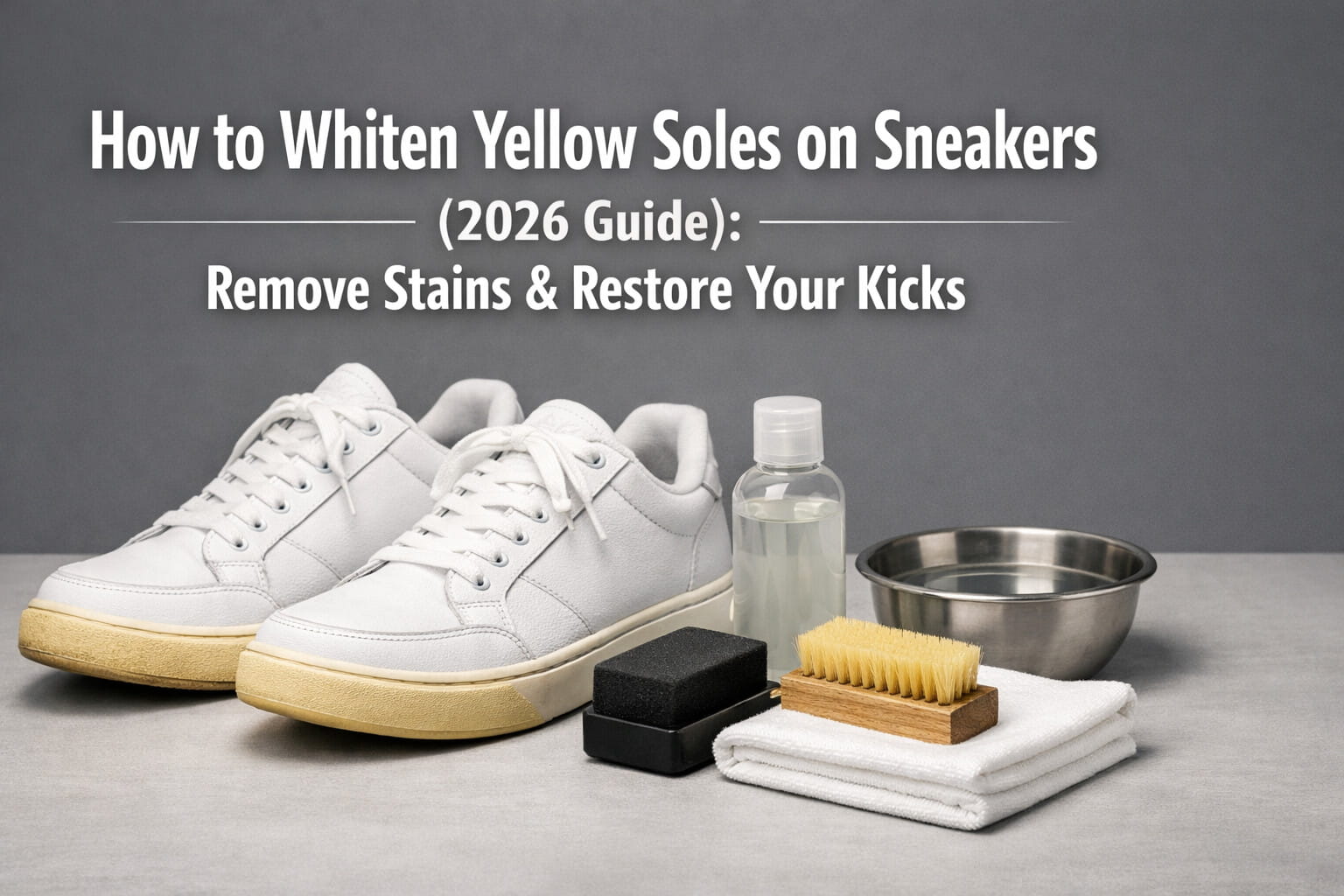
How to Whiten Yellow Soles on Sneakers (2026 Guide): Remove Stains & Restore Your Kicks
Introduction
There is nothing quite as heartbreaking for a sneaker enthusiast as pulling a fresh pair of kicks out of the box—or looking at your favorite daily beaters—only to find the pristine white soles have turned a sickly, aged yellow.
Whether you are a casual walker, a serious collector, or someone who just needs their shoes to look professional for work, yellowing soles are a universal frustration. Over my 20+ years running a footwear business, I have seen thousands of pairs come through my shop. Customers often assume the shoe is “ruined” or “old,” but that’s rarely the case.
The yellowing isn’t usually dirt; it is a chemical reaction called oxidation. But here is the good news: it is reversible.
In this guide, we will break down exactly how to whiten yellow soles on sneakers, protect your investment, and decide which cleaning method is right for your specific shoe material. We will move beyond basic scrubbing and get into the chemistry of restoration, sharing insights I’ve gathered from decades of handling everything from budget trainers to high-end retros.
TL;DR: How to Whiten Yellow Soles
How to remove yellow stains from white shoes fast:
To effectively reverse oxidation (yellowing) on sneaker soles, you need a combination of Hydrogen Peroxide (Volume 40 Cream) and Ultraviolet (UV) Light.
- Clean the soles thoroughly with soap and water to remove surface dirt.
- Apply a specialized de-oxidizing cream or Salon Care 40 to the yellowed areas (avoiding the uppers).
- Wrap the shoes in clear plastic wrap to keep the solution moist.
- Expose the soles to direct sunlight or a UV lamp for 1–4 hours.
- Rinse thoroughly. Repeat if necessary for stubborn oxidation.
Why This Topic Matters (And Why Your Shoes Turn Yellow)
Before we start scrubbing, it is crucial to understand why this happens if you want to properly whiten yellow soles. In my two decades of experience, the most common mistake I see global buyers make is treating yellowing like it is mud. They scrub harder, use harsh bleaches, and often damage the material permanently instead of actually fixing the problem.
Why Some Guides Get This Wrong
You’ll find guides online recommending diluted bleach to clean yellow soles. Don’t do it. Bleach doesn’t just fail to whiten oxidized rubber. It actively accelerates the same chemical reaction that caused the yellowing in the first place, and it dries out the rubber compound, making it prone to cracking. If a “cleaning hack” tells you to reach for bleach on rubber soles, skip it.
The Science of Oxidation
Most white sneaker soles are made of rubber, EVA (Ethylene Vinyl Acetate), or TPU (Thermoplastic Polyurethane). These materials are often treated with a chemical straight from the factory to preserve them. However, when exposed to oxygen in the air and UV rays from the sun over time, a chemical oxidation reaction occurs that breaks down the rubber’s structure.
This is oxidation. It’s the same process that turns a sliced apple brown.
- It happens to everyone: Whether you live in humid climates or dry cities, oxygen is unavoidable.
- Storage matters: Keeping shoes in cardboard boxes without acid-free paper can actually accelerate this process.
- The “Icy Sole” Dilemma: Translucent blue or clear soles (common on basketball sneakers) are notorious for turning yellow faster than solid rubber.
Understanding that you are fighting a chemical reaction, not just surface grime, changes how we approach the solution.
How to Whiten Yellow Soles: The Best Methods
We have tested countless methods in the back of the shop. Here is a breakdown of what actually works, ranked from “Home Remedy” to “Professional Restoration.”
Method 1: The “Retrobright” Method (The Gold Standard)
Best for: Deep yellowing, icy soles, and vintage restoration.
This is the only method that chemically reverses oxidation.
What You Need:
- Sole Sauce (specialized sneaker product) OR Salon Care 40 (Volume 40 Hydrogen Peroxide Cream).
- A paint brush.
- Clear plastic wrap (cling film).
- Protective gloves (mandatory).
- Direct sunlight or an indoor UV setup.
The Step-by-Step Framework:
- Prep the Shoe: Clean the sole with mild soap and water. Dry it completely. Use masking tape to cover the upper material (leather, suede, or mesh) to prevent the harsh chemicals from burning them.
- Apply the Agent: Put on your gloves. Using the paintbrush, apply a medium coat of the Hydrogen Peroxide cream to the yellowed rubber. Do not let it touch the fabric or leather.
- The Wrap: Wrap the shoes in clear plastic wrap. This step is vital—it prevents the peroxide from evaporating, keeping it active on the rubber.
- UV Exposure: Place the shoes upside down (soles facing up) in direct sunlight.
- Hot Climates: 30 minutes to 1 hour max (heat can separate the glue).
- Cooler Climates: 2 to 4 hours.
- Rinse and Repeat: Remove the wrap and wash off the cream thoroughly with cold water. If the yellowing persists, repeat the session.
Method 2: Baking Soda & Hydrogen Peroxide Paste
Best for: Mild yellowing and surface stains on solid rubber.
If you don’t have access to industrial hair developer (Volume 40), you can make a milder paste at home.
- Mix 1 tablespoon of baking soda, 1/2 tablespoon of water, and 1/2 tablespoon of hydrogen peroxide (standard 3% liquid found in pharmacies).
- Scrub the paste onto the soles using an old toothbrush.
- Let it sit in the sun for 3–4 hours until the paste dries and cracks.
- Brush off the dry chunks and rinse the soles.
Method 3: Whitening Toothpaste
Best for: Surface dirt masquerading as yellowing.
Sometimes, what looks like oxidation is just deep set organic stains (grass, mud, oils). For a full walkthrough of this method, see our 5-minute toothpaste cleaning guide.
- Use a non-gel, white toothpaste containing baking soda.
- Apply to a damp brush and scrub in circular motions.
- Let it sit for 15 minutes.
- Wipe away with a damp cloth.
Note from experience: This will not fix deep chemical oxidation on icy soles, but it brightens solid rubber effectively.
“But Reddit Said…” The Pillowcase-in-the-Dryer Trick
If you’ve searched this topic before, you’ve probably seen people online swear by putting peroxide-soaked shoes in a pillowcase and running them through a hot dryer cycle. I want to address this directly because it comes up constantly.
Here’s the honest verdict: it can work, but it’s a gamble I don’t recommend.
The heat from a dryer does speed up the peroxide reaction, similar to how sunlight does. But a dryer runs far hotter than direct sun, often well above the 30°C threshold I flagged earlier as the danger zone for glue separation. I’ve seen shoes come out of this method with soles that look brighter but with the sole unit visibly starting to peel at the edges, or with warping on the midsole shape that never fully corrects.
If you want to try a heat-assisted method, stick to controlled sun exposure or an indoor UV lamp, where you can check progress every 20 to 30 minutes. A dryer is uncontrolled heat with no way to check on the shoe mid-cycle, and by the time you hear it’s done, the damage (if there is any) has already happened.
It’s not that the trick is fake. It’s that the risk-to-reward ratio is worse than the methods above, and the failure mode (sole separation) is not something a second attempt can fix.
Material Deep-Dive: Know Your Soles
Not all white soles are created equal. In my years of inspecting inventory, I’ve learned that treating the wrong material with harsh chemicals spells disaster.
1. Solid Rubber (The Classic)
- Found on: Air Force 1s, Chuck Taylors, Stan Smiths.
- Durability: High.
- Reaction: Responds best to the Salon Care 40 method. Very resilient.
2. EVA Foam (The Midsole)
- Found on: Running shoes, Yeezys, Ultraboost (Boost material).
- Durability: Moderate/Soft.
- Reaction: Be careful. EVA is porous. While you can un-yellow it, scrubbing too hard with abrasives can ruin the texture of the foam (especially on Boost). Stick to the paint-on method, but reduce sun exposure time to avoid heat warping.
3. Icy / Translucent Soles
- Found on: Jordans, modern basketball shoes.
- Durability: High but chemically sensitive.
- Reaction: These turn yellow the fastest. The “Retrobright” method is the only way to fix these. Scrubbing will simply scratch the plastic, making them look cloudy.
Pro-Tip Section: Retailer-Only Insights
Over 20 years, I’ve seen plenty of “DIY fails.” Here is the inside track on how to get rid of yellow stain on shoes without ruining them.
- The “Bleach” Myth: Never, ever use household bleach on white rubber. Bleach can actually cause a chemical reaction that turns white rubber yellow instantly and permanently. It eats away at the rubber compound, making it dry and prone to cracking.
- Heat Management: When using the sun method, heat is the enemy, UV is the friend. If you live in a very hot region, the glue holding your sole to the sneaker can melt, causing sole separation. If it’s over 30°C (86°F), check your shoes every 20 minutes.
- The “Ice” Check: If you are restoring icy soles, they will never return to “factory blue” clear. They will become clear, but usually with a slight vanilla tint. Don’t chase perfection and over-process the shoe, or the soles will become brittle and crack when you walk.
Comparison Table: Whiten Yellow Soles Methods
| Method | Best For | Effectiveness on Oxidation | Risk Level | Cost |
|---|---|---|---|---|
| Volume 40 Cream + UV | Deep oxidation, Icy Soles | High (The only real cure) | Moderate (Can burn skin/leather) | Medium |
| Baking Soda Paste | Mild yellowing, Stains | Low to Medium | Low | Very Low |
| Whitening Toothpaste | Surface dirt, Grime | Low (Cleaning only) | None | Very Low |
| Magic Eraser | Scuffs, Surface marks | Low (Abrasive only) | Low (Can dull finish) | Low |
| Bleach | NOT RECOMMENDED | Negative (Causes yellowing) | High (Ruins materials) | Low |
Common Mistakes to Avoid for Whiten Yellow Soles
When trying to figure out how to remove yellow stains from white shoes, avoid these pitfalls:
- Skipping the Pre-Clean: Applying de-oxidizing cream over dirt pushes the grime deeper into the rubber pores. Always wash the shoe first.
- Touching the Uppers: Volume 40 peroxide acts like bleach on fabrics. If you get it on black suede or canvas, you will end up with orange spots. Always tape off the uppers!
- Leaving Them Out Overnight: The sun method requires UV rays, but leaving shoes out overnight exposes them to moisture/dew, which can interfere with the drying process or weaken adhesives.
- Using Acetone on Paint: Acetone removes scuffs, but on painted midsoles, it will strip the white paint right off, revealing the raw material underneath.
People Also Ask (PAA)
Why do white soles turn yellow in the box? Oxidation occurs due to air exposure and chemicals in the wrapping paper or cardboard reacting with the rubber over time.
Can I use purple shampoo to whiten yellow soles? Purple shampoo is a temporary toner that can neutralize yellow hues visually, but it does not chemically reverse the oxidation deep in the rubber.
Does vinegar remove yellow stains from shoes? Vinegar is great for removing salt stains and dirt, but it is not a strong enough oxidizing agent to reverse deep chemical yellowing on rubber soles.
Is yellowing on soles permanent? No. In most cases, yellowing caused by oxidation can be reversed using hydrogen peroxide and UV light treatment. The exceptions are soles that are already cracking or crumbling, where the material damage goes beyond surface color and restoration isn’t safe to attempt.
Does Magic Eraser work on yellow soles? Magic Erasers (melamine foam) are abrasive cleaners that remove surface dirt and scuffs, but they cannot fix the internal chemical yellowing of the rubber.
Can I use a UV lamp instead of the sun? Yes, an indoor UV light setup (often used for plants or reptile tanks) is actually safer as it provides UV rays without the glue-melting heat of the sun.
Which Method Should You Actually Try First?
Not sure where to start? Answer this honestly: how bad is the yellowing?
Light haze or slight dulling
→
Start with whitening toothpaste. Fifteen minutes, no risk, and it solves most surface staining on its own.
Visible yellow tint on solid rubber
→
Go with the baking soda and hydrogen peroxide paste. A few hours in the sun, minimal supplies, noticeably brighter soles.
Deep, stubborn yellowing or icy translucent soles
→
Only the Retrobright method will fully reverse this. Set aside an afternoon, tape off the uppers, and don’t rush the UV exposure step.
Cracked, crumbling, or separating soles
→
Skip restoration. No whitening method fixes structural damage, and pushing forward risks making it worse. It’s time for a new pair.
Tried one of these methods? Drop a comment below with what worked (or didn’t) for your specific shoe. Real results from other readers are often more useful than any guide, mine included.
Our Expertise
Why trust this guide?
- 20+ Years Experience: I have owned and operated a physical footwear store since the early 2000s, handling logistics, quality control, and customer returns.
- Material Science: We don’t just sell shoes; we study why they fail. From the breakdown of PU soles (hydrolysis) to the oxidation of icy bottoms, we understand the chemistry of footwear.
- Real-World Testing: The methods described above aren’t just internet theories; they are the exact protocols we use to restore vintage inventory or clean display models that have sat in shop windows too long.
Sometimes, a shoe is just too far gone, or the tread is worn down to the point where restoration isn’t safe for your feet. If your soles are crumbling or cracked, whitening them won’t restore their structural integrity.
If your soles are beyond saving, it might be time for a fresh pair. Check out our top picks for white sneakers for durable options that resist yellowing longer. And if the yellowing is on Crocs rather than sneakers, our guide to cleaning white Crocs covers Croslite material specifically, since it reacts differently than sneaker rubber.
FAQs for How to Whiten Yellow Soles
1. How long does it take to un-yellow sneaker soles? It typically takes 1 to 4 hours of sunlight exposure per session. Severe yellowing may require 2 to 3 separate sessions for complete restoration.
2. Is hydrogen peroxide safe for all shoe materials? It is safe for rubber and synthetic soles, but it can bleach leather, suede, and canvas. Always tape off the upper parts of the shoe before applying.
3. Can I use a hair dryer to speed up the process? No. A hair dryer provides heat but lacks the UV rays necessary to activate the chemical reaction. Excessive heat can also separate the sole glue.
4. Why did my soles turn yellow after washing them? If you didn’t rinse the detergent out completely, the chemical residue can react with sunlight while drying, causing yellow stains. Always rinse thoroughly.
5. How to keep icy soles from turning yellow? Store them in cool, dark places inside Ziploc bags to reduce air exposure. You can also use “sole protector” films to shield the rubber from dirt and oxidation.
6. Does toothpaste actually work to whiten shoes? Toothpaste works as a mild abrasive to scrub away surface dirt, making shoes look brighter, but it cannot chemically reverse deep oxidation like hydrogen peroxide can.
7. Can I use bleach to whiten yellow rubber? Absolutely not. Bleach accelerates the oxidation process on rubber, turning it more yellow and causing the material to become brittle and crack.
8. What is “Sole Sauce”? Sole Sauce is a generic term for premixed de-oxidizing creams sold by sneaker care brands. They usually contain hydrogen peroxide and lightening agents.
9. Can I restore yellowed Boost material? Yes, but Boost is delicate. Use a brush to apply the peroxide carefully. Alternatively, many restorers prefer to use an oil-based white marker to paint over yellowed Boost.
10. Is it worth fixing yellow soles or should I buy new ones? If the sole has plenty of tread and the uppers are in good condition, whitening is worth it. It costs a fraction of the price of a new pair of high-quality sneakers.
Conclusion & Recommendations
Silence is sophistication, and the same goes for clean, bright soles. Yellowed rubber doesn’t mean your sneakers are done. In most cases it just means they need the right chemistry, not more scrubbing.
Start with the Retrobright method if the yellowing is deep or the soles are icy or translucent. If it’s mild surface staining, the baking soda paste or whitening toothpaste will usually do the job in one sitting. Whatever you choose, patience matters more than elbow grease here. Rushing the process, using too much heat, or reaching for bleach will cost you more than the yellowing ever did.
If your soles are cracking or the tread is worn smooth, restoration won’t fix the underlying wear. At that point it’s worth checking our top picks for white sneakers for a fresh pair instead. And if you’re dealing with yellowing on Crocs rather than sneakers, our white Crocs cleaning guide covers that material separately, since Croslite reacts differently to these methods.
Whichever route you take, give your soles the same care you’d give the rest of the shoe. A quiet, clean pair says more about you before you even speak.