
Best Badminton Shoes India 2026 – Grip & Agility Ranked
TL;DR – Quick Picks
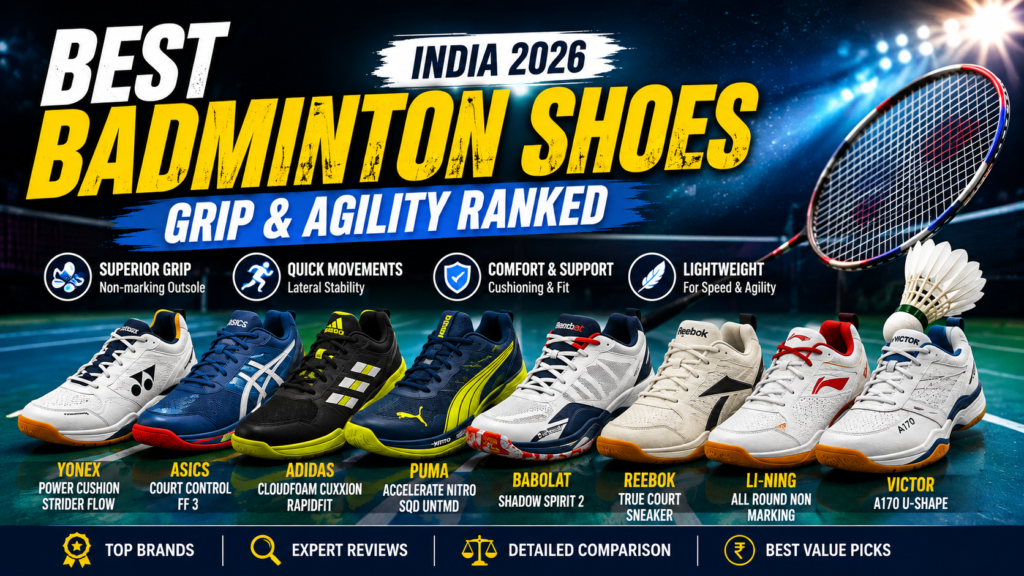
- Best Overall Grip: Yonex Power Cushion Strider Flow – purpose-built badminton geometry with Power Cushion shock absorption
- Best for Competitive/Aggressive Players: ASICS Court Control FF 3 – TWISTRUSS support for hard lateral cuts
- Best High-Grip Lightweight Pick: Babolat Shadow Spirit 2 – high-grip indoor outsole and lightweight construction
- Best for Wide Feet: VICTOR A170 U-Shape – dedicated wide-foot fit with stable court support
If you’ve ever lunged for a drop shot in your regular training shoes and felt your foot slide half an inch before it caught the floor, you already know why badminton needs its own category of footwear. This isn’t a “just wear your gym shoes” sport. Badminton is built on sudden direction changes — split-step, lunge, recover, repeat — and the wrong outsole compound on an indoor wooden or synthetic court can turn a routine rally into a rolled ankle.
I run Urban Style Footwear, and badminton shoes are one of the categories I get asked about the most from readers in Pune, Hyderabad, and smaller badminton-mad towns across India where PVC and wooden courts are everywhere — from society club courts to full academies. Over the years I’ve watched three things separate a proper badminton shoe from a shoe that merely looks the part: non-marking gum rubber compounds tuned for indoor grip, a cushioning system that survives repeated lunge-and-recover loading (not just straight-line running), and a stable, low-to-the-ground heel that doesn’t wobble on lateral cuts.
Below is my ranked list of the best badminton shoes available in India right now, evaluated specifically on grip and agility — the two things that actually matter on court. I’ve also included a couple of everyday sports shoes that get searched alongside “badminton shoes” so you know exactly where they fit (and where they don’t).
How We Ranked These (Grip & Agility Criteria)
Every shoe on this list was evaluated against four badminton-specific factors, not generic “sports shoe” criteria:
- Outsole compound and tread pattern — non-marking gum rubber is table stakes; the tread pattern needs to grip during a lunge without sticking so hard it strains the knee on rotation.
- Lateral stability — a firm, wide platform under the heel and midfoot so the shoe doesn’t roll during side shuffles.
- Cushioning response under lunge load — badminton loads the forefoot explosively and repeatedly; foam that’s too soft delays your push-off, too firm and your knees take the hit.
- Upper containment — how well the shoe locks your foot down during quick direction reversals, since a loose upper causes your foot to slide inside the shoe even if the outsole grips the floor.
best badminton shoes india REVIEWS
1. Yonex Power Cushion Strider Flow Badminton Shoes
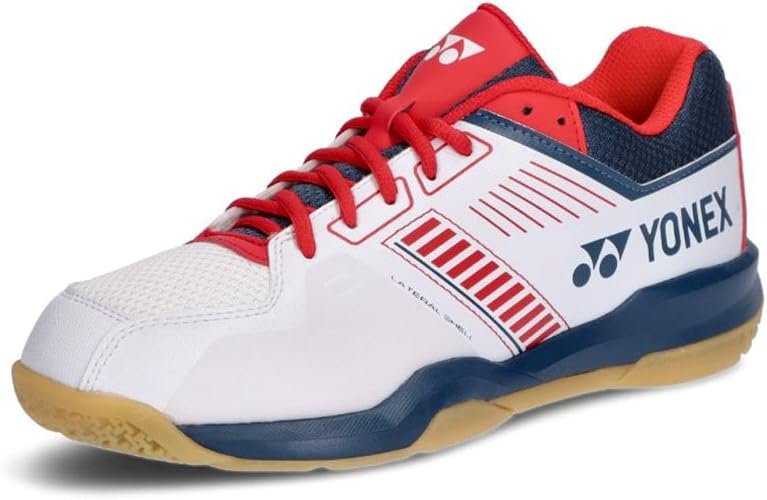
Shop Owner’s Take: Yonex practically invented the modern badminton shoe category, and it shows here. The Power Cushion midsole is genuinely built to absorb the specific impact profile of jump-smashes and repeated lunges rather than generic running impact, and the non-marking outsole gives you confident grip the moment you step onto a wooden or synthetic court. This is the shoe I point most club-level and regular weekend players toward, because it doesn’t ask you to compromise between comfort and court feel.
Best For: Regular club and recreational players who want a genuine badminton-specific shoe without stepping into elite tournament pricing.
Pros:
- Power Cushion midsole absorbs landing shock from jumps effectively
- Non-marking outsole gives reliable indoor court traction
- Stable heel construction reduces roll during side shuffles
- Breathable upper keeps feet cooler during long matches — genuinely useful in India’s humid indoor halls
- Flexible court sole supports quick lateral direction changes
Cons:
- Sizing tends to run slightly narrow for wider Indian feet — consider half a size up
- Not the lightest shoe in this list if you prioritize pure speed over cushioning
2. ASICS Court Control FF 3 Badminton Shoes
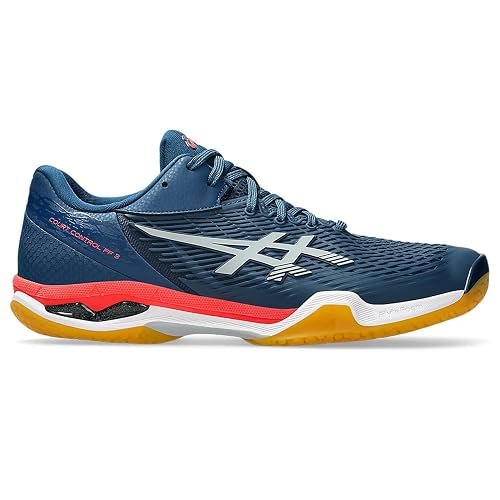
Shop Owner’s Take: This is the shoe I recommend to players who are already competing and know their footwork is aggressive — a lot of hard direction reversals, deep lunges, quick recoveries. ASICS’ TWISTRUSS system is specifically about resisting torque through the midfoot during those sharp cuts, and FlyteFoam gives you responsiveness without the mushy feel some cushioned shoes have. It rewards a player who commits fully to each shot rather than someone who plays cautiously.
Best For: Competitive and tournament-level players who need controlled, stable transitions during fast rallies.
Pros:
- Excellent lateral stability during side-to-side movement
- Responsive FlyteFoam cushioning for jumps and lunges
- Strong grip on indoor courts thanks to court-specific rubber
- TWISTRUSS support genuinely helps control on hard rotational movements
Cons:
- Firmer ride than the Yonex — beginners may find it less forgiving initially
- Men’s-only sizing, so it’s not an option for women players
3. adidas Cloudfoam Cuxxion Rapidfit Sportswear Shoes
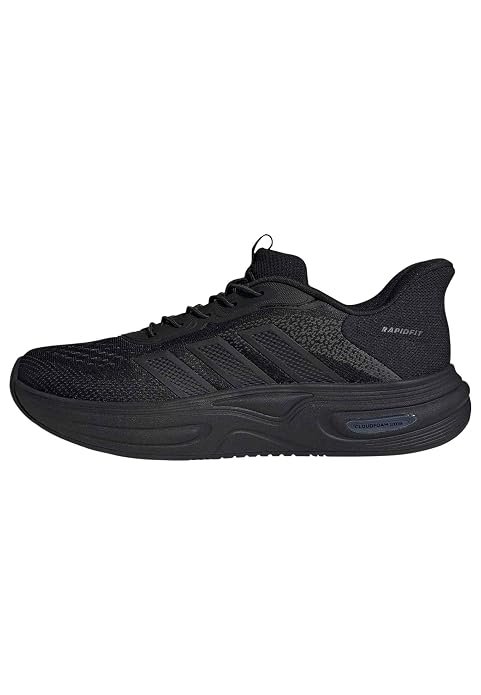
Shop Owner’s Take: I want to be straight with you here — this is a training/gym sneaker, not a badminton shoe, even though it turns up when people search for indoor court footwear. Cloudfoam midsoles are tuned for soft everyday comfort, not the repeated explosive lunge-and-recover pattern badminton demands, and the outsole isn’t a badminton-specific non-marking court compound. If you’re mixing casual gym sessions with the occasional relaxed knock-about game with friends, it’ll do fine. If you’re playing real rallies on a proper court, it will let you down on hard cuts.
Best For: Gym training and casual recreational use — not competitive or regular badminton play.
Pros:
- Soft, comfortable Cloudfoam cushioning underfoot
- Lightweight and breathable for everyday wear
- Good value if you need a general-purpose training shoe
Cons:
- Neutral support with no lateral stability features badminton requires
- Not designed with a badminton-specific non-marking court outsole
- Cushioning is too soft for the explosive push-off badminton demands
4. Puma Accelerate Nitro SQD Untmd Indoor Shoes
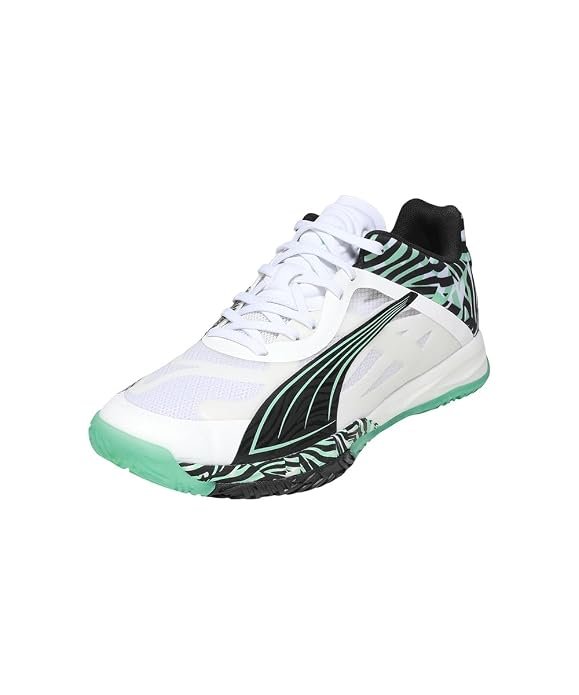
Shop Owner’s Take: The highest-rated shoe on this list, and it earns it. Nitro foam gives you a noticeably springier response off the floor than standard EVA midsoles, which matters when you’re chasing your fifth net shot in a row and your legs are starting to feel it. The reinforced upper and lateral stability features keep the shoe locked to your foot during rapid direction changes rather than letting your foot shift inside the shoe — a common failure point in cheaper indoor shoes.
Best For: Players who want a modern, energy-returning ride without giving up court stability — works well for badminton, handball, and other indoor court sports.
Pros:
- Nitro foam cushioning is genuinely responsive under quick movement
- Good grip on indoor courts with a non-marking outsole
- Reinforced upper supports rapid direction changes without foot slide
- Lightweight feel that doesn’t sacrifice stability
- Unisex sizing, so it’s an option for both men and women
Cons:
- Premium cushioning tech typically comes at a higher price point in this category
- Nitro foam shoes can compress faster under heavy daily use compared to firmer EVA midsoles
5. Babolat Shadow Spirit 2 Men’s Badminton Shoes
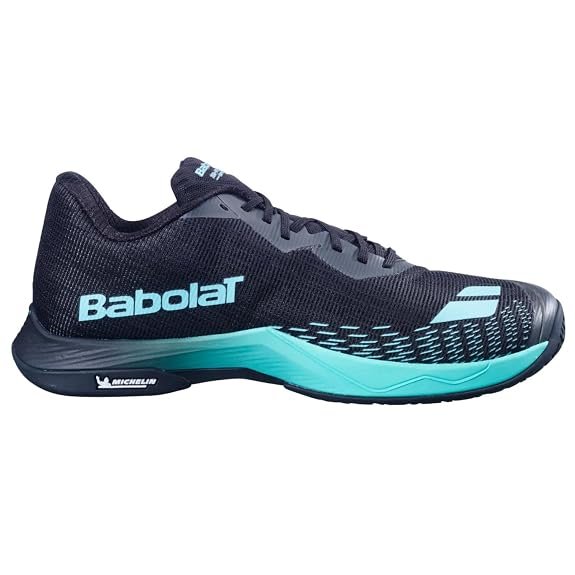
Shop Owner’s Take: Babolat borrows its Michelin-style outsole compound approach from its racquet-sport heritage, and you can feel it the moment you plant your foot for a lunge — the grip is immediate without feeling grabby. This is the shoe I’d suggest to a singles player whose game depends on covering the whole court fast; it’s genuinely light on the foot, which matters over a three-game match.
Best For: Fast-footwork singles players who prioritize lightweight speed and high grip over maximum cushioning.
Pros:
- Michelin-style non-marking outsole gives excellent lateral grip
- Lightweight build supports fast footwork
- Reinforced forefoot adds durability where badminton shoes wear out fastest
- Shock-absorbing cushioning without feeling bulky
Cons:
- Men’s-only sizing currently
- Neutral/stability blend means it’s less locked-down than dedicated stability shoes for players who overpronate
6. Reebok True Court Sneaker
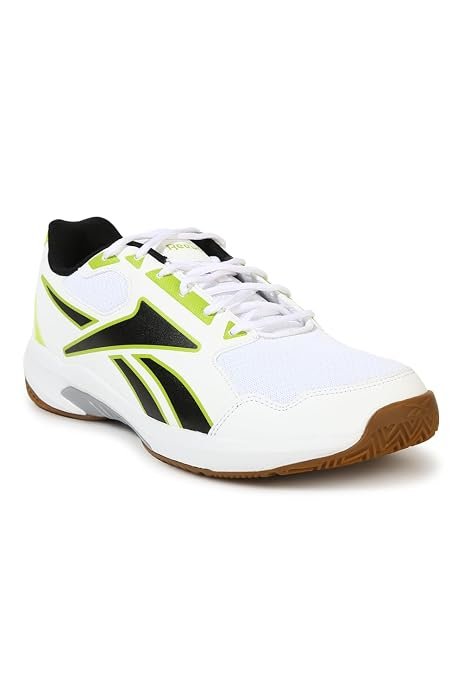
Shop Owner’s Take: A solid, honest entry-level option — I’d position this as a “getting started” shoe rather than a serious badminton shoe. It’s comfortable, durable for everyday wear, and the rubber outsole gives reasonable grip on indoor surfaces for light rallies. But it doesn’t have the lateral stability engineering or badminton-specific cushioning tuning of the dedicated court shoes above, so once you’re playing more than casually, you’ll want to upgrade.
Best For: Beginners and occasional players who want an affordable, comfortable option for light indoor sessions.
Pros:
- Comfortable for everyday and casual wear
- Durable construction for regular use
- Breathable upper and padded collar add comfort
- Versatile enough for other casual sports use too
Cons:
- Lacks badminton-specific lateral stability engineering
- Cushioning is basic compared to Power Cushion/FlyteFoam/Nitro systems
- Not built for aggressive or frequent match play
7. VICTOR A170 U-Shape Badminton Shoes for Wide Foot
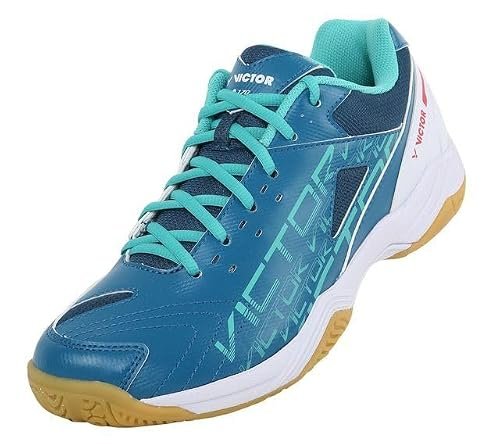
Shop Owner’s Take: This is the shoe I point wide-footed readers toward, and I get this question a lot — a lot of Indian players have a broader forefoot than standard badminton shoe lasts accommodate, and cramming into a narrow shoe causes real discomfort during long sessions. VICTOR’s U-shaped construction actually solves this rather than just adding a slightly roomier upper, and the shock-absorbing cushioning and stable heel mean you’re not sacrificing performance for comfort.
Best For: Players with wider feet who’ve struggled with standard-width badminton shoes pinching across the forefoot.
Pros:
- U-shaped last genuinely reduces forefoot pressure for wide feet
- Non-marking outsole with good indoor traction
- Stable lateral movement and heel support
- Shock-absorbing cushioning for long sessions
Cons:
- If you have narrow or standard-width feet, this fit won’t feel as locked-down
- Slightly higher price point given the specialized last construction
Comparison Table Best Badminton Shoes in India 2026
| Product | Rating | Best For | Support Type | Ideal Player |
|---|---|---|---|---|
| Yonex Power Cushion Strider Flow | 4.3/5 | All-round grip & comfort | Stability | Regular club/recreational players |
| ASICS Court Control FF 3 | 4.0/5 | Aggressive lateral movement | Stability | Competitive/tournament players |
| adidas Cloudfoam Cuxxion Rapidfit | 4.6/5 | Gym & casual training | Neutral | Not recommended for real badminton play |
| Puma Accelerate Nitro SQD Untmd | 5.0/5 | Responsive indoor court play | Stability | Players who want a springy, modern feel |
| Babolat Shadow Spirit 2 | 4.0/5 | High-grip lightweight footwork | Neutral/Stability | Fast-footwork singles players |
| Reebok True Court Sneaker | 4.0/5 | Casual/light indoor use | Neutral | Beginners, occasional players |
| Li-Ning All Round Non-Marking | 4.3/5 | Multi-sport indoor grip | Stability | Players who mix badminton with other indoor sports |
| VICTOR A170 U-Shape | 4.5/5 | Wide feet comfort | Stability | Players with wide forefoot |
Badminton Shoes vs Regular Court Shoes vs Running Shoes What’s the Real Difference?
This is probably the most common confusion I see among readers searching for “court shoes india” who aren’t sure whether their running shoes will do. They won’t not safely, anyway. Running shoes are built for forward, repetitive motion; their midsoles and outsoles have zero tuning for the lateral, stop-start loading badminton produces. Wear running shoes on a badminton court and you’ll notice two things quickly: the tread doesn’t grip the way a non-marking gum rubber compound does, and the raised heel-to-toe drop that helps you run efficiently actually works against you when you need to plant flat and cut sideways.
General “court shoes” (like basketball or tennis shoes) are closer, but even they’re tuned for different movement patterns tennis shoes for example are built around sustained lateral sliding on clay or hard courts, while badminton needs a shoe that grips instantly without any slide, because on a badminton court a slide usually ends in a fall. If you’re building out your sports shoe collection beyond badminton, it’s worth understanding how running shoes are chosen properly too — our guide to choosing running shoes in India covers the fit and gait basics that carry over to any sport-specific shoe decision.
Yonex Badminton Shoes in India Why They Dominate the Category
If you search “yonex badminton shoes india,” you’ll notice Yonex shows up constantly, and there’s a real reason beyond marketing: Yonex has been engineering shoes specifically for badminton’s movement patterns for decades, longer than most general sportswear brands have taken the category seriously. The Power Cushion technology in the Strider Flow above isn’t a rebranded running foam it’s tuned around badminton’s specific landing forces from smashes and jumps. That said, Yonex isn’t automatically the right choice for everyone; players with aggressive, torque-heavy footwork sometimes prefer ASICS’ TWISTRUSS system, and wide-footed players are usually better served by VICTOR’s dedicated last. Use Yonex as your default starting point, but don’t assume it’s universally the best fit for your specific foot and playing style.
Grip: What Actually Matters on Indian Indoor Courts
Indoor badminton courts across India vary more than players realize — wooden sprung floors at established academies, synthetic mat surfaces at many society and club setups, and PVC flooring at budget indoor facilities. Each surface interacts differently with rubber outsole compounds. Wooden courts generally reward a slightly softer, grippier gum rubber; PVC surfaces can get genuinely slippery if there’s any dust or moisture in the air, which is common in humid cities during monsoon months even indoors. If you regularly play at a facility with less-than-ideal floor maintenance, prioritize shoes with aggressive non-marking tread patterns — the Babolat Shadow Spirit 2 and Yonex Strider Flow both handle variable floor conditions better than the flatter-tread options on this list.
Agility: Why Shoe Weight and Heel Stability Both Matter
It’s tempting to chase the lightest shoe possible for agility, but weight alone doesn’t make a shoe agile heel stability matters just as much. A shoe that’s light but wobbles under lateral load will actually slow you down, because part of your energy on each cut goes into stabilizing your ankle rather than pushing off toward the shuttle. This is why the ASICS Court Control FF 3’s TWISTRUSS system and the Puma Accelerate Nitro’s reinforced upper matter so much — they let the shoe stay planted and confident even when you’re moving fast, so your footwork stays quick rather than cautious.
Sizing Notes for Indian Feet
A pattern I see constantly with badminton shoe buyers: international sizing charts, especially Japanese brands like Yonex, often run slightly narrower than what Indian feet are used to in local brands. If you’ve got an average-to-wide Indian foot, go up half a size on Yonex and ASICS unless the listing specifically states Indian-fit sizing. VICTOR’s A170 U-Shape sidesteps this problem entirely by building the wide last in from the start, which is why it’s worth considering even if you’re not sure you technically have “wide” feet — many players discover mid-session, after their toes have been cramped for an hour, that they did.
Caring for Your Badminton Shoes in Indian Conditions
Non-marking outsoles pick up dust fast on Indian courts, especially in facilities that aren’t cleaned between sessions, and dust buildup is one of the biggest silent killers of grip a shoe that felt grippy on day one can feel unexpectedly slick by week three simply because the tread pattern has filled in. Wipe the outsole with a slightly damp cloth after sessions and let shoes air-dry fully rather than leaving them in a closed kit bag, which matters even more in humid coastal cities where trapped moisture breeds odor and breaks down foam midsoles faster. If your badminton habit also has you doing conditioning runs outside for stamina, it’s worth keeping a completely separate pair for that our guide on anti-blister running shoes for Indian conditions is a good next stop if outdoor training is part of your routine.
When a Badminton Shoe Isn’t the Right Category
Not every “indoor sports shoe” search actually needs a badminton-specific shoe. If you’re mixing badminton with general gym conditioning, a shoe like the adidas Cloudfoam Cuxxion covers the gym side fine — just don’t expect it to hold up during real rallies. And if part of your training includes distance running for match stamina and endurance, that’s a genuinely different shoe category with its own fit priorities, including arch support considerations; our guide to running shoes for high arches in India is useful if that’s part of your training mix, and if you’re building toward longer-distance events alongside your racquet sport training, our best marathon shoes in India roundup covers that separately. Readers who prefer sticking with familiar Indian retail names for their training shoes can also check our best Reebok running shoes in India guide.
best badminton shoes india’S Frequently Asked Questions
1. What makes a shoe a “badminton shoe” instead of just a regular sports shoe?
The main differences are the outsole compound (non-marking gum rubber tuned for indoor court grip), a flatter, more stable platform for lateral movement, and cushioning designed for repeated lunge-and-jump loading rather than straight-line running impact.
2. Can I use running shoes for casual badminton games?
For a very occasional, low-intensity knock-about with friends, running shoes will get you through, but they lack the lateral grip and stability badminton needs, so the risk of a slip or ankle roll goes up noticeably with any real intensity.
3. Which badminton shoe from this list has the best grip for wooden courts?
The Yonex Power Cushion Strider Flow and Babolat Shadow Spirit 2 both perform well on wooden sprung floors thanks to their non-marking rubber compounds tuned for consistent indoor grip.
4. Are Yonex badminton shoes worth the price compared to other brands?
For regular and competitive players, yes Yonex’s Power Cushion technology is specifically engineered around badminton’s landing forces, which is hard to find in generalist sports brands at a similar price point.
5. What’s the best badminton shoe for someone with wide feet?
The VICTOR A170 U-Shape is purpose-built for wider feet with a dedicated last, making it noticeably more comfortable than standard-width badminton shoes for players who’ve struggled with forefoot pinching.
6. How often should I replace my badminton shoes?
For players training or competing regularly (a few sessions a week), most badminton shoes need replacing every 6-8 months as the outsole tread wears down and cushioning compresses, reducing both grip and shock absorption.
7. Do non-marking soles actually matter, or is that just a marketing term?
It matters a lot, particularly at academies and clubs with strict court rules non-marking soles don’t leave black scuff marks on wooden or synthetic court surfaces, and most facilities in India won’t let you play without them.
8. Is the adidas Cloudfoam Cuxxion actually suitable for badminton?
Not for serious or regular play it’s a training/gym shoe without badminton-specific lateral stability or a dedicated non-marking court outsole, so it’s better suited to casual gym use than competitive rallies.
9. What’s the difference between the Puma Accelerate Nitro and the ASICS Court Control FF 3?
The Puma leans toward a springier, more energy-returning ride with Nitro foam, while the ASICS prioritizes torque control and stability during hard lateral cuts via its TWISTRUSS system pick Puma for responsiveness, ASICS for aggressive footwork control.
10. Should beginners buy an expensive badminton shoe right away?
Not necessarily a shoe like the Reebok True Court Sneaker is a reasonable starting point for casual or occasional play, and it’s worth upgrading to a dedicated badminton shoe like the Yonex or Li-Ning once you’re playing more regularly and start noticing the limits of a general court sneaker.
Final Word from the Shop
If I had to send one reader off with a single recommendation, it’d be the Yonex Power Cushion Strider Flow for most regular players, the ASICS Court Control FF 3 if you already know your game is aggressive and lateral-heavy, and the VICTOR A170 U-Shape without hesitation if you’ve ever felt your toes cramped in a standard-width shoe. Whichever you pick, prioritize the non-marking outsole and lateral stability over anything else on the spec sheet — that’s what actually keeps you upright and quick when the shuttle’s coming fast.