
How to Measure Baby Feet at Home (Accurate Size Guide)
⚡ Quick Answer
- Trace your baby’s foot on paper while they’re standing or being held upright, then measure heel to longest toe.
- Add 0.4 to 0.5 inches of growing room to that number before matching it to a size chart.
- Measure both feet every time. One is almost always a little longer than the other.
- Remeasure every 4 to 8 weeks, since baby feet change size faster than most parents expect.
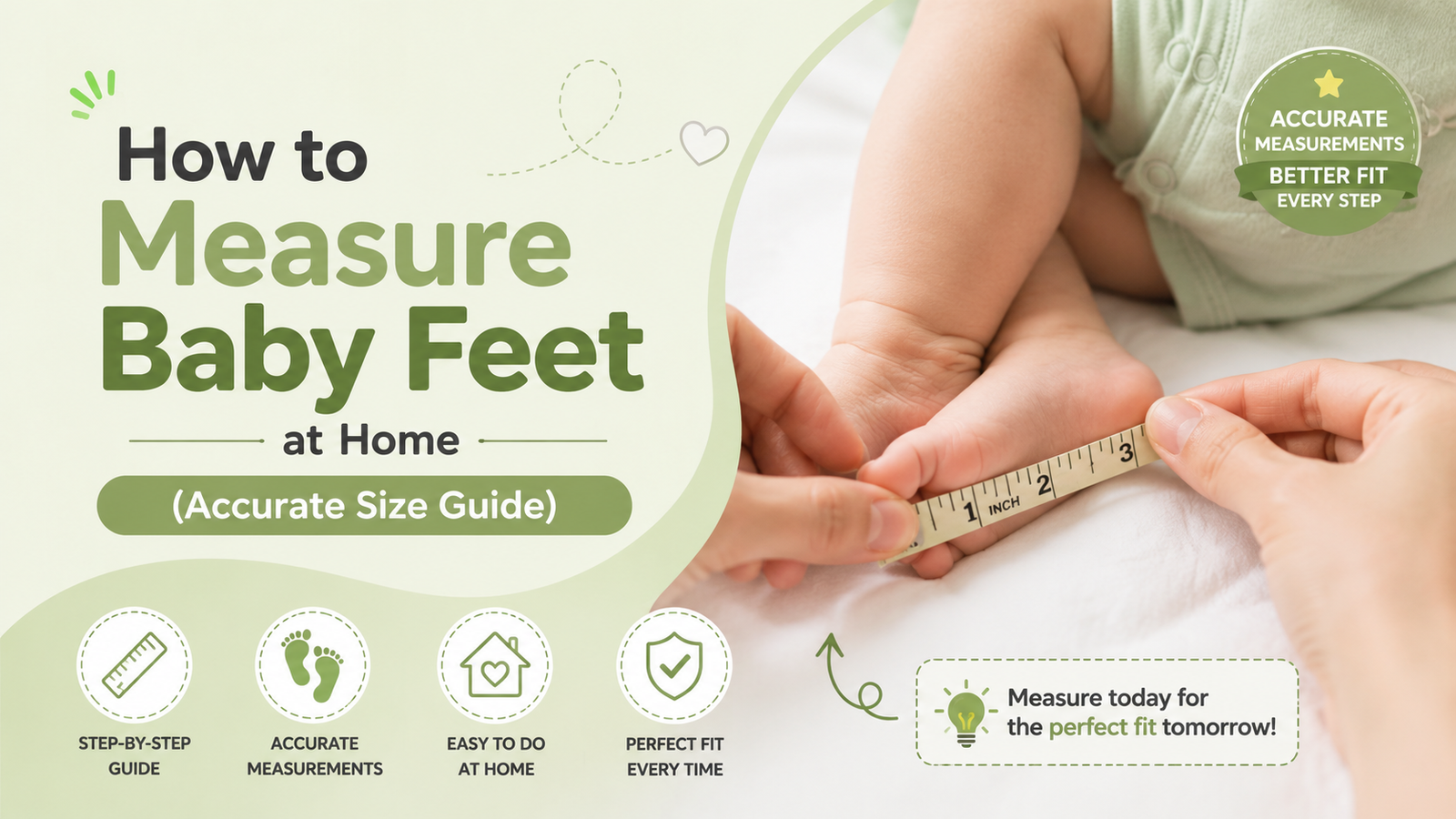
- A tape measure works too, but a paper tracing is usually easier with a wiggly baby.
The easiest way to measure baby feet at home is to trace the foot on a flat piece of paper, then measure the distance from the back of the heel to the tip of the longest toe. Add about 0.4 to 0.5 inches for growing room and match the number to a shoe size chart. Age alone is a poor way to guess shoe size, since two babies born the same week can differ by a full size or more. In our experience fitting thousands of little feet, a proper at-home measurement takes about five minutes and saves parents from constant shoe returns.
Why Measuring Beats Guessing by Age
Most shoe returns we see come from one habit: buying by age instead of by foot length. A size chart can tell you what’s typical for a 9-month-old, but it can’t tell you what your 9-month-old actually needs.
Babies grow in bursts, not on a schedule. One baby might jump from a size 2 to a size 3 in three weeks flat, while another stays in the same size for two months. Neither pattern is wrong, but it does mean a measurement taken today can be outdated by the time a shoe arrives if you wait too long between checks.
👶 Did You Know?
A baby’s foot is made mostly of cartilage during the first year, not solid bone. That’s part of why feet can look a little wider and flatter than an older child’s, and why a snug shoe can actually affect how the foot develops.
What You Need Before You Start
You don’t need anything fancy for this. Here’s what we recommend keeping on hand.
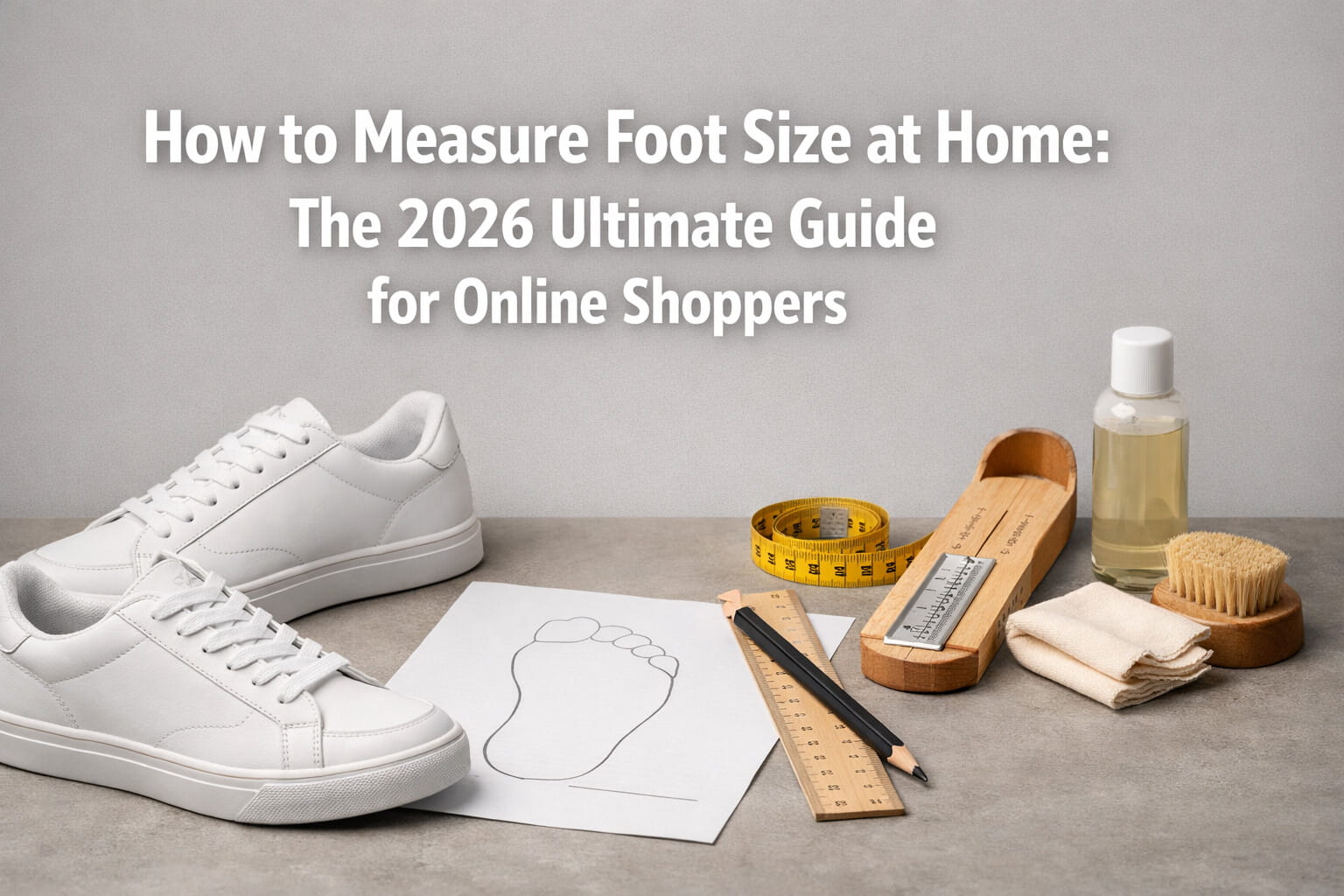
- A blank sheet of paper (plain printer paper works fine)
- A pencil or pen
- A ruler, tape measure, or a printed size chart
- Socks, if your baby will be wearing socks with their shoes
- A helper, if your baby squirms a lot (a second set of hands makes this much faster)
A quick tip that saves frustration: do this right after a nap or after a feeding, when babies tend to be calmer and more cooperative.
How to Measure Baby Feet Step by Step
Here’s the exact method we walk parents through in the store, adapted so you can do it at your kitchen table.
Step 1: Set up the paper. Place a sheet of paper flat on the floor or a hard table. Tape down the corners if your baby tends to kick.
Step 2: Position the foot. For babies who aren’t standing yet, hold them upright with their foot flat against the paper, heel touching a wall or straight edge if possible. For toddlers who can stand, let them stand naturally on the paper.
Step 3: Trace around the foot. Use a pencil held straight up and down (not at an angle) to trace around the entire foot. An angled pencil will add extra length to the tracing and throw off your measurement.
Step 4: Mark the heel and longest toe. Once the tracing is done, mark the very back of the heel and the tip of the longest toe, which isn’t always the big toe.
Step 5: Measure the distance. Use a ruler to measure a straight line between those two marks, in inches or centimeters.
Step 6: Repeat on the other foot. Baby feet are rarely identical. Always size to whichever foot measured longer.
Step 7: Add growing room. Add 0.4 to 0.5 inches to your final measurement. That’s roughly the width of an adult thumb, and it keeps the shoe from feeling tight after a few weeks of growth.
💡 Expert Tip
Measure in the late afternoon rather than first thing in the morning. Feet swell slightly through the day, so an afternoon measurement gives you a more realistic sense of how a shoe will feel by evening.
Baby Foot Size Chart (0-24 Months)
Once you have a measurement, match it against the chart below to find the closest US shoe size. This chart covers the full range from newborn through age two.
| Age | Foot Length (inches) | Foot Length (cm) | US Size |
| 0-3 months | 3.1 – 3.8 in | 7.9 – 9.7 cm | 0 – 1 |
| 3-6 months | 3.8 – 4.1 in | 9.7 – 10.4 cm | 1 – 2 |
| 6-9 months | 4.1 – 4.3 in | 10.4 – 11.0 cm | 2 – 3 |
| 9-12 months | 4.3 – 4.5 in | 11.0 – 11.4 cm | 3 – 4 |
| 12-15 months | 4.3 – 4.5 in | 11.0 – 11.4 cm | 4 |
| 15-18 months | 4.5 – 4.7 in | 11.4 – 12.0 cm | 5 |
| 18-21 months | 4.7 – 4.9 in | 12.0 – 12.4 cm | 6 |
| 21-24 months | 4.9 – 5.2 in | 12.4 – 13.2 cm | 7 |
If your baby’s foot measures right between two rows, choose the larger size. A little extra room is far easier to manage than a shoe that pinches.
Since sizing habits differ by country, our Baby Shoe Size Conversion Chart is a good next stop if you’re shopping from a UK or EU retailer.
Interactive Foot Size Finder
Type in the foot length you just measured and this tool will match it to a US size instantly. No math required.
Foot Size Finder
Enter your baby’s foot length and we’ll match it to a US shoe size instantly.
For a full breakdown across every size, including UK, EU, and centimeter equivalents side by side, our Shoe Size Conversion Calculator covers the complete range in one place.
How Often You Should Remeasure
This is the part most parents underestimate. Baby feet don’t grow at a steady, predictable pace, so a single measurement doesn’t hold for long.
Under 12 months: Remeasure every 4 to 6 weeks. This is the fastest growth window, and a size can become outdated surprisingly quickly.
12 to 24 months: Remeasure every 6 to 8 weeks. Growth is still quick but a bit more spaced out than the first year.
After a growth spurt: Always remeasure after you notice a jump in height or weight, since foot growth often follows shortly after.
📏 Size Snapshot
Age: 9 months
Typical US Size: 2 to 3
Foot Length: 4.1 – 4.3 inches
Growing Room: 0.4 – 0.5 inches
Signs You Measured Correctly
A good measurement, paired with the right shoe, should show these signs once your baby has them on.
- There’s a thumb’s width of space between the longest toe and the end of the shoe.
- The heel stays in place when your baby kicks or your toddler walks.
- Your baby doesn’t seem to be pulling at their feet or trying to remove the shoe right away.
- No red marks or pressure lines appear after the shoe comes off.
- The shoe bends at the ball of the foot, not stiffly across the whole sole.
Common Measuring Mistakes
We see the same handful of mistakes come up again and again, even from careful parents.
Measuring while the baby is sitting: Feet spread out and lengthen slightly under weight. A seated measurement for a toddler who can stand will usually come in smaller than reality.
Holding the pencil at an angle: This sounds minor, but an angled pencil can add a quarter inch or more to a tracing, which is enough to throw off a size.
Only measuring one foot: It’s tempting to measure just one foot and call it done, but the size difference between feet is common enough that it matters.
Skipping the growing room: A shoe that matches the exact foot length with zero extra room will likely feel tight within a few weeks.
Waiting too long between measurements: A measurement from three months ago is often no longer accurate, especially in the first year.
⚠ Common Mistake
Using an older sibling’s baby book measurement as a shortcut is a mistake we see a lot from second-time parents. Every baby’s feet grow on their own timeline, so a sibling’s old numbers aren’t a reliable substitute for measuring your current baby.
Buying Guide Once You Have the Measurement
Once you know the number, a few features make the shoe itself work better with that measurement.
Flexible, soft soles: Especially before walking age, a soft sole lets the foot move and develop naturally rather than being boxed in.
Adjustable closures: Velcro straps or elastic openings give you a bit of flex if your measurement falls right between two sizes.
Breathable materials: Cotton, mesh, and soft leather all help keep small feet comfortable, especially in warmer months.
A removable insole: Some brands include a removable insole you can trace against your paper cutout to double-check the fit before the shoe is worn.
✅ Parent Checklist
- Trace both feet on paper, standing if possible.
- Measure heel to longest toe with a straight ruler.
- Add 0.4 to 0.5 inches for growing room.
- Match the number to the size chart above.
- Set a reminder to remeasure in 4 to 8 weeks.
Expert Tips for Tricky Ages
Newborns (0-3 months): Newborn feet curl naturally, which makes tracing tricky. Gently press the foot flat with one finger while tracing rather than trying to force it straight, since forcing it can stretch the tracing longer than the foot actually is.
Pre-walkers (6-9 months): Babies at this age often kick during tracing. Try measuring right after a feeding when they’re more relaxed, or have a second person distract them with a toy while you trace.
New walkers (12-15 months): Standing measurements are more accurate here, but toddlers this age rarely stand still for long. A quick trace with one foot at a time usually works better than trying to get both feet done at once.
Active toddlers (18-24 months): By this age, foot shape has started to look more like a smaller version of an adult foot, so length matters most, but check width too if your toddler tends to leave marks near the sides of their current shoes.
FAQs
What’s the easiest way to measure a baby’s foot without special tools? Tracing the foot on a piece of paper with a pencil is the simplest method. Measure the distance from the heel mark to the longest toe mark with any ruler or tape measure you already have at home.
Should I measure my baby’s foot with or without socks? Measure the bare foot first to get an accurate baseline. If your baby will typically wear socks with their shoes, you can add a small amount of extra room, but the bare foot measurement should still be your starting point.
Why does one of my baby’s feet measure longer than the other? This is completely normal. Most people, babies included, have one foot that’s slightly longer or wider than the other. Always size shoes to the larger foot for comfort.
How much room should I leave for growth? Leave about 0.4 to 0.5 inches, roughly the width of an adult thumb, between the longest toe and the front of the shoe. Less than that and the shoe may feel tight within weeks.
Can I use an adult ruler or does it need to be a special baby foot measuring tool? A regular ruler or tape measure works fine. Specialty tools like a Brannock device can offer a bit more precision, but they aren’t necessary for an accurate at-home measurement.
Is it normal for my baby’s foot size to stay the same for months? Yes, this happens sometimes, especially after the first big growth spurt slows down. It doesn’t mean anything is wrong. Keep checking every 4 to 8 weeks regardless, since growth can restart without much warning.
How do I measure a baby who won’t stay still? Try tracing one foot at a time rather than both at once, and time it for right after a nap or feeding when your baby tends to be calmer. A second person to gently hold or distract can also help a lot.
Does shoe width matter as much as length? Length is the more important number for choosing a size, but width matters for comfort. If a properly sized shoe still leaves red marks on the sides of the foot, a wide width option is worth trying.
What if my baby’s measurement falls exactly between two sizes? Choose the larger size. A shoe with slightly more room, paired with a snug sock if needed, is more comfortable long term than a shoe that fits perfectly today but tightens within weeks.
How accurate are online shoe size predictor apps compared to a paper tracing? A careful paper tracing is generally just as accurate as most phone-based measuring apps, and it’s often faster with a baby who doesn’t want to hold still for a camera. Apps can be a helpful backup, but they aren’t required.
Do I need to remeasure before every single shoe purchase? If it’s been more than 4 to 6 weeks since your last measurement, yes, it’s worth doing again. Foot growth during this age range moves faster than most parents expect.
Is a foot measuring chart the same as a shoe brand’s size chart? Not always. A general foot length chart, like the one on this page, gives you an estimate across brands. Individual brands can run slightly larger or smaller, so it’s worth double-checking their specific chart when possible.
RELATED ARTICLES
- Shoe Size Conversion Calculator, US, UK, EU & CM (2026)
- 0-3 Month Baby Shoe Size Chart (US Sizes + Foot Length Guide)
- Baby Shoe Size Conversion Chart (US, UK, EU & CM)
- How to Measure Foot Size at Home
CONCLUSION
A five‑minute paper tracing at home gives you a far more reliable shoe size than any age chart alone. Measure both feet, add a bit of growing room, and match the number against a size chart before you buy.
Try the interactive tool above with your baby’s measurement right now, and set a reminder to check again in 4 to 8 weeks. For a full size and conversion breakdown once you have your number, our Shoe Size Conversion Calculator covers US, UK, EU, and centimeter sizing side by side.