
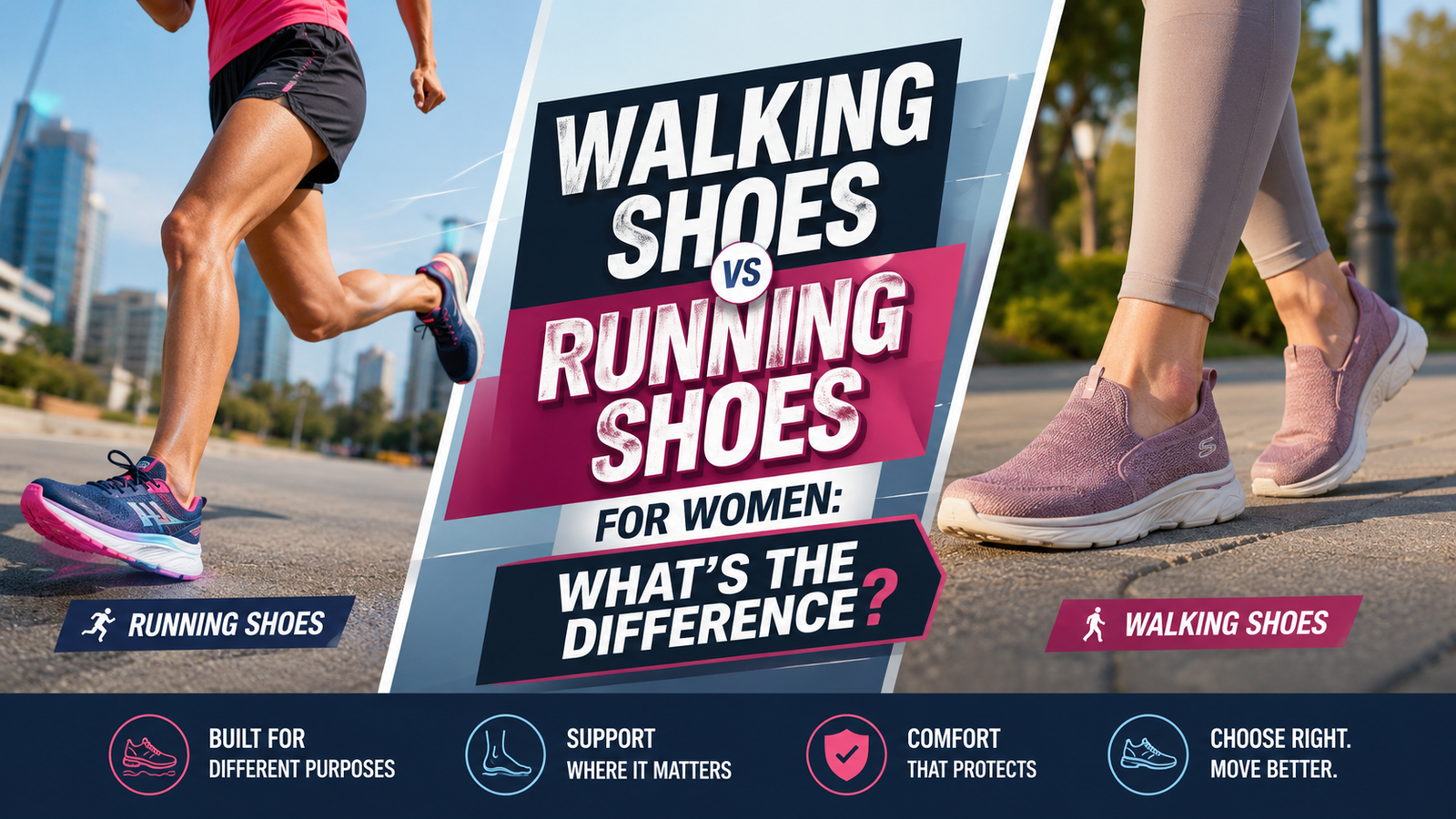
Walking Shoes vs Running Shoes for Women: What’s the Real Difference?
✅ Expert Verified | 🛒 Live Amazon Prices | 📅 Updated July 2026
🏃♀️👟 Running vs Walking – 8 Best Picks for Women
Choose the right shoe for your actual activity. Running shoes = speed & rebound. Walking shoes = stability & all‑day comfort. No overlaps – every model serves its purpose.
🏃♀️ Best Running Shoes for Women
👟 Best Walking Shoes for Women
Walking Shoes vs Running Shoes Women: What’s the Real Difference?
I have fitted thousands of pairs of shoes across both categories, and I still see the same mistake every week. A woman walks in wearing running shoes, tells me her feet ache after standing for four hours, and asks why comfortable gym shoes fall apart by dinnertime when she wears them around the office.
The answer is that running and walking shoes are built for completely different activities, even though they look similar in a box. A running shoe is engineered for forward speed and impact at pace. A walking shoe is engineered for repetitive, slower motion all day long. Wearing the wrong category for your actual activity is one of the fastest ways to develop foot pain and end up with shoes that don’t last.
This guide walks through the actual differences, not the marketing language, and gives you real picks for both running shoes and walking shoes for women. If you run or train, our New Balance walking shoes guide covers more walking-specific details as well.
💡 The Core Difference
Running shoes are tuned for impact at speed (your foot lands with 2-3x your body weight with each step). Walking shoes are tuned for sustained repetition at slower speeds (your foot lands with about 1.5x your body weight). This changes everything about cushioning, heel structure, and midsole stiffness. Use running shoes for walking and the cushioning compresses in ways that create pressure points. Use walking shoes for running and you lack the forefoot support needed for toe-off.
Running Shoes vs Walking Shoes: The Technical Breakdown
The differences go deeper than marketing categories. Here is what actually separates them.
Heel-to-toe drop. Running shoes typically have 8mm to 12mm of drop, pushing weight toward the forefoot to encourage forward momentum. Walking shoes have 6mm to 10mm drop, keeping weight more neutral so your foot stays grounded through the step.
Midsole stiffness. Running shoes use a stiffer midsole that springs back fast after impact, which is what you need for speed and repetitive toe-off. Walking shoes use a softer, more forgiving midsole that absorbs pressure slowly, which is what keeps your feet comfortable after eight hours of standing.
Forefoot flex. Running shoes have aggressive forefoot flex grooves to encourage toe-off and push-off power. Walking shoes have minimal forefoot flex because you are not actively pushing off the ground, you are just rolling through your stride.
Heel structure. Running shoes have a firmer, more defined heel counter to control impact at speed. Walking shoes have a softer, more padded heel to reduce pressure on the heel bone during all-day wear.
Cushioning type. Running shoes use responsive cushioning that rebounds quickly (EVA foam, DNA Loft, gel). Walking shoes use plush, absorption-focused cushioning that stays soft underfoot even after months of wear.
Why Wearing the Wrong Shoe Category Actually Hurts
If you wear running shoes for daily walking or standing, the cushioning compresses in the exact spots where your foot lands, creating pressure points over time. You get relief at first, then pain by week three when the foam starts to pack down. Running shoes are not built to stay soft after eight hours of repetitive pressure.
If you wear walking shoes for running, you lack the responsive spring that running demands. Your foot sinks deeper into the midsole with each step, which wastes energy and forces your ankle and knee to compensate for the lost rebound. This is where runner’s knee and shin splints often start.
The sweet spot is using each shoe for what it was designed for. If you do both running and walking regularly, get one pair of each rather than trying to use one shoe for everything. It is worth the investment.
⚠️ Common Buying Mistake
Many brands market their shoes as “running and walking” or “cross-training” to sound versatile. Some models genuinely work for both, but most are compromises that do neither particularly well. If your primary activity is one or the other, stick with a shoe designed specifically for that activity rather than a hybrid.
Best Running Shoes for Women (5 Top Picks)
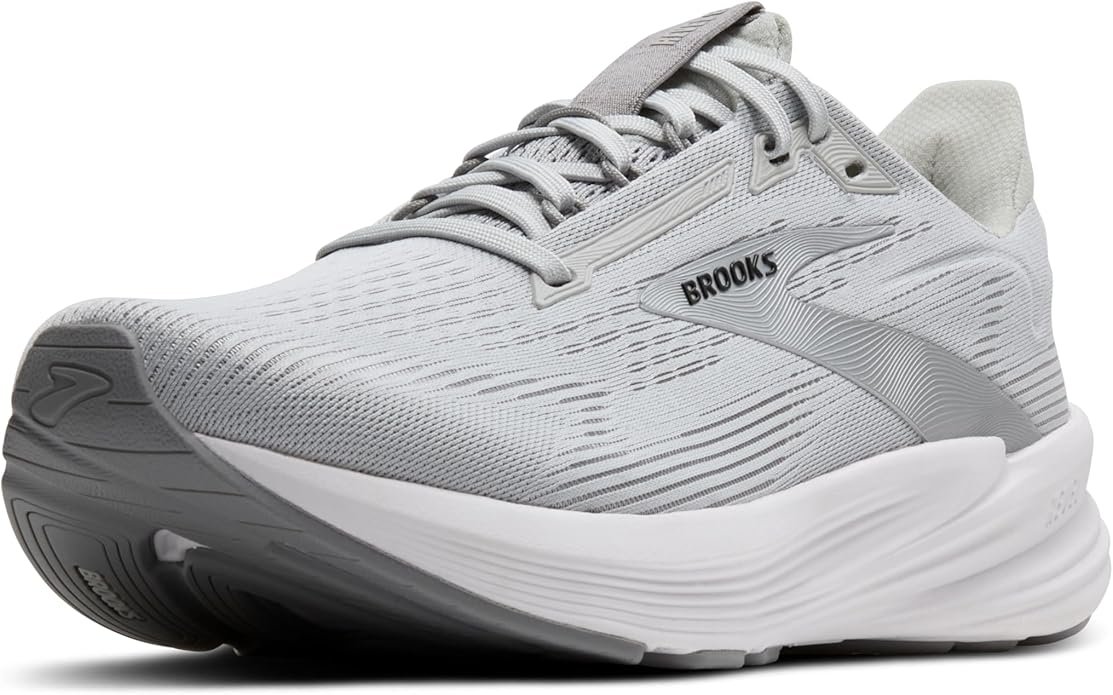
1. Brooks Revel 8 (Best Versatile Running Shoe)
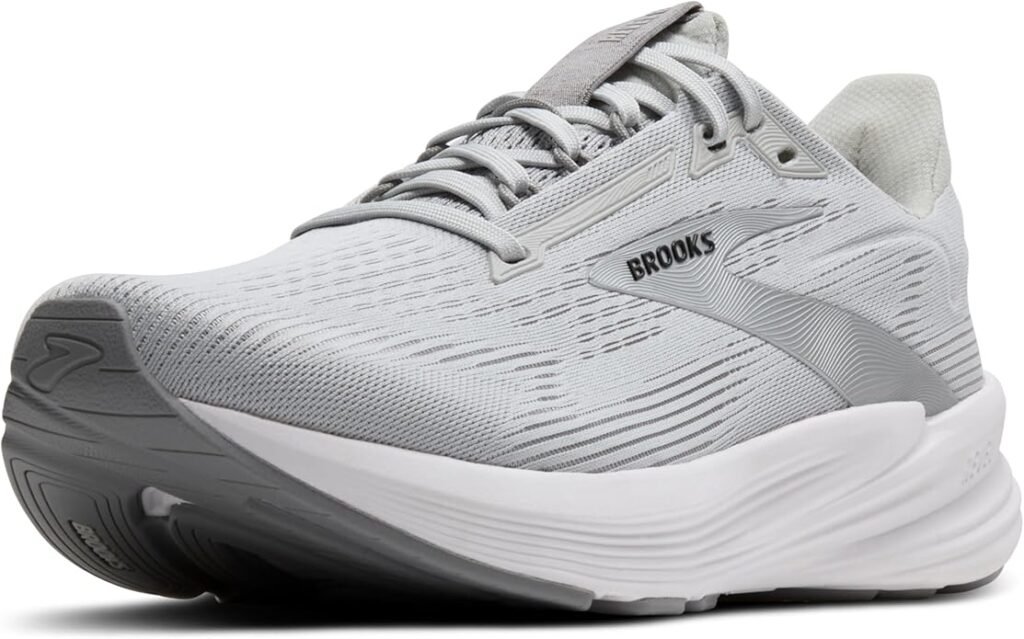
⭐ 4.4 · 2,190 Reviews 💲 $84.95
Expert Take The Revel 8 bridges the gap between dedicated running shoes and everyday wear better than most shoes try to. It is not a running-only option, which is why it ranks first here. It actually works for both light running and daily walking thanks to the DNA Loft v2 cushioning that adapts to your pace. APMA-approved, which matters. The mesh upper is breathable without feeling thin, and it does not need a long break-in period.
Best For Runners who also walk daily, cross-training, anyone who wants one shoe that covers both activities reasonably well.
Why It Works The adaptable DNA Loft v2 midsole responds differently depending on your stride speed, which is why it works better for mixed use than most running shoes. The RoadTack outsole gives traction without being overly sticky.
Pros Versatile for multiple activities, APMA-approved, affordable, responsive cushioning, breathable upper.
Cons It is a compromise, so it does not excel at either running or walking as much as dedicated shoes in each category would.
Verdict If you run light miles and walk most days, this is your shoe. If you run seriously, pick a dedicated running shoe below instead.
🛒 Check Price on Amazon.com2. Brooks Ghost 17 (Best Dedicated Running Shoe)
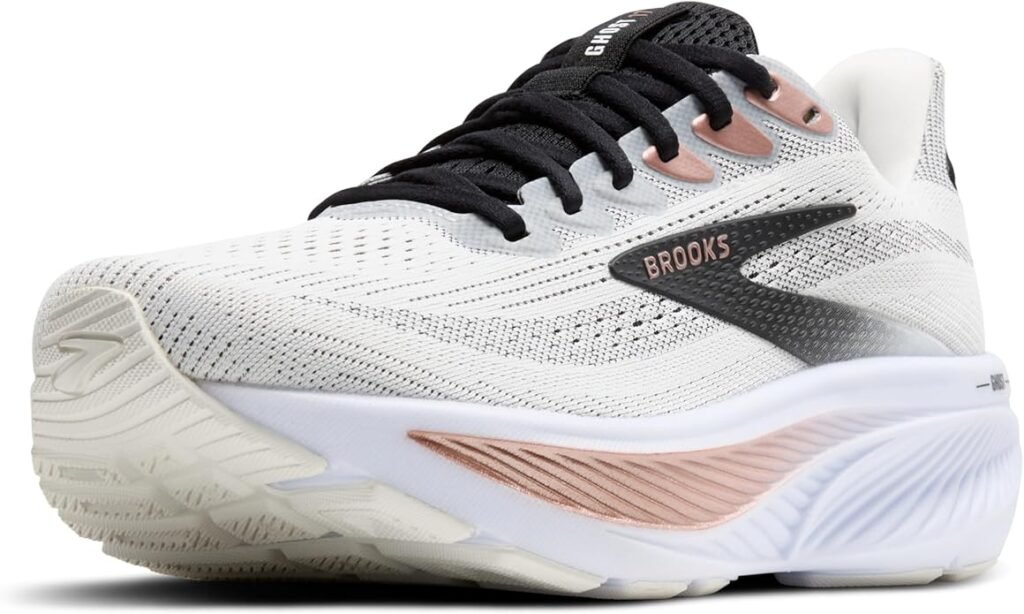
⭐ 4.6 · 2,915 Reviews 💲 $109.95
Expert Take This is the running shoe that runners actually buy multiple times. The extra DNA Loft v3 in the heel and forefoot means it feels plush at mile one and mile twenty. The flex grooves in the midsole do real work, not just marketing. PDAC A5500 diabetic-certified, APMA-approved, and it shows why in every step.
Best For Serious runners, anyone logging 20+ miles per week, people who need a shoe that stays soft after three months of regular running.
Why It Works The nitrogen-infused DNA Loft v3 is the difference between a shoe that feels great on day one and one that still feels good on day ninety. The dual jacquard mesh breathes without sacrificing structure.
Pros Proven durability, excellent cushioning that lasts, smooth transitions, works for multiple foot types (neutral).
Cons This is a running shoe first, not a walking shoe. Wearing it all day around town will feel less stable than a dedicated walking shoe.
Verdict Buy this if running is your primary activity. It is the gold standard for a reason.
🛒 Check Price on Amazon.com3. ASICS Gel-Excite 11 (Best Budget Running Shoe)
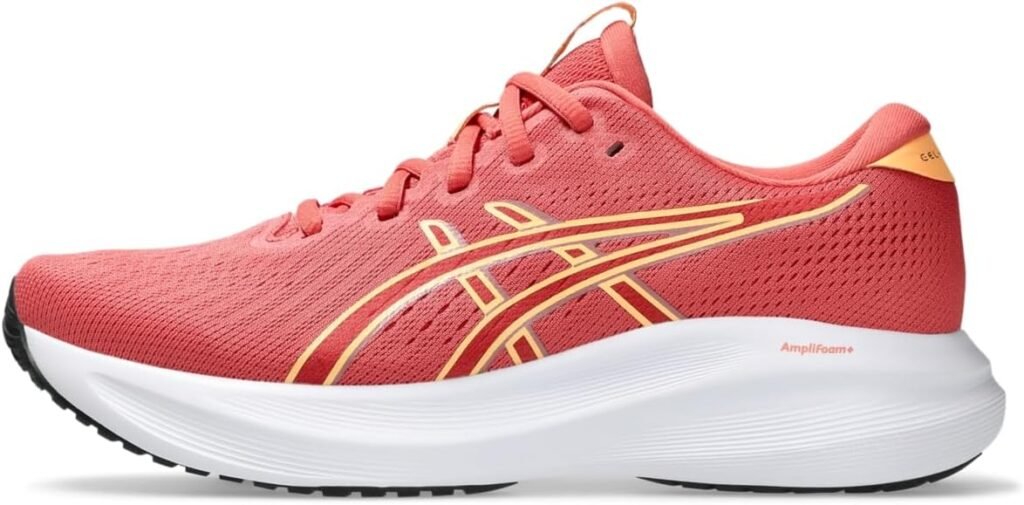
⭐ 4.5 · 1,173-1,221 Reviews 💲 $74.95
Expert Take The PureGEL technology is noticeably softer than standard GEL, and at this price point that is impressive. The shoe gives you real cushioning, not just soft foam that flattens in a month. The engineered mesh upper stays breathable even on humid days. It is not going to feel as premium as the Ghost, but the difference in actual performance is smaller than the price difference suggests.
Best For Budget runners, beginners, anyone who runs fewer than 15 miles per week, walkers who occasionally jog.
Why It Works The PureGEL in the heel targets the exact impact zone where most running stress lands. The AMPLIFOAM Plus midsole cushioning keeps the shoe soft without being mushy.
Pros Budget-friendly, soft cushioning, lightweight, breathable upper, OrthoLite X-30 sockliner for moisture management.
Cons The upper is slightly narrower than Brooks options, so wide-footed runners should size up half a size.
Verdict Best value for budget-conscious runners. Do not expect it to outlast premium options, but the initial comfort is solid.
🛒 Check Price on Amazon.com4. New Balance Fresh Foam Roav (Best Plush Running Cushion)
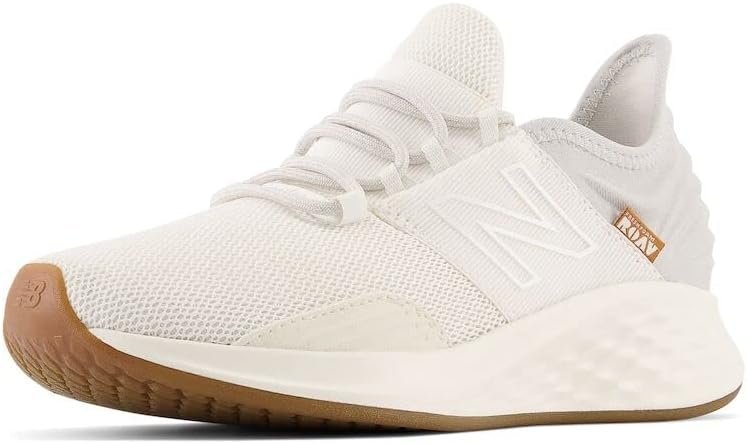
⭐ 4.5 · 33,974 Reviews 💲 $89.95
Expert Take The Fresh Foam midsole is genuinely plush without feeling unstable, which is harder to pull off than it sounds. The bootie construction wraps around your foot like a sock, which some runners love and some feel is too snug. The removable insole with arch support is a nice touch if you have custom orthotics. NDurance outsole technology means it will hold up to actual mileage.
Best For Runners who want maximum cushioning, heavier runners, anyone with joint sensitivity, people who value comfort over speed.
Why It Works The ultra-heel design provides targeted support for a secure fit, and the fresh foam midsole absorbs impact better than many options at this price. The sock-like bootie construction reduces pressure points.
Pros Very plush cushioning, bootie construction feels custom, removable insole, durable outsole, great review volume.
Cons The bootie construction runs tight. If you like roomy toe boxes, this might feel constraining. The plushness means slightly less road feel than firmer options.
Verdict If maximum cushioning and comfort matter more than speed or responsiveness, this delivers.
🛒 Check Price on Amazon.com5. Skechers Max Cushioning Endeavour (Best Max Cushion Budget Option)
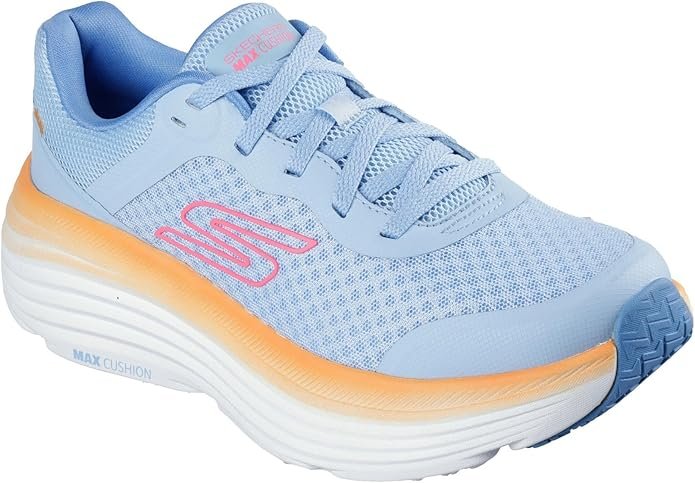
⭐ 4.6 · 4,288 Reviews 💲 $58.14
Expert Take This is the cheapest entry to max-cushion running at this price point. The Air-Cooled Goga Mat insole is genuinely comfortable, and the Ultra Light midsole cushioning keeps weight down despite the thick stack. Machine washable is a nice practical feature. It is not going to feel as responsive as premium options, but the cushioning is real.
Best For Budget maximalists, runners who want cloud-like feel, people who walk more than they run but want something soft for occasional running.
Why It Works The Natural Rocker Technology promotes smooth heel-to-toe transitions, which reduces strain on your knees. The Max cushioning stack absorbs impact without bouncing you around.
Pros Very affordable, genuine max cushioning, machine washable, vegan materials, good traction.
Cons The cushioning is forgiving but not responsive, so this is not for runners who care about speed feedback. The upper is basic compared to premium options.
Verdict Best overall value for max-cushion comfort. Skip if you run seriously or need responsive feedback.
🛒 Check Price on Amazon.comWalking Shoes Comparison
| Shoe | Price | Weight Feel | Cushioning | Best For | Key Feature |
| Brooks Revel 8 | $84.95 | Light | Moderate | Versatile use, both activities | DNA Loft v2, APMA-approved |
| Brooks Ghost 17 | $109.95 | Light | High | Serious runners | DNA Loft v3, proven durability |
| ASICS Gel-Excite 11 | $74.95 | Light | High | Budget runners | PureGEL, affordable |
| New Balance Fresh Foam Roav | $89.95 | Moderate | Maximum | Comfort seekers | Bootie construction, plush |
| Skechers Max Endeavour | $58.14 | Light | Maximum | Max cushion budget | Goga Mat, machine washable |
Best Walking Shoes for Women (5 Top Picks)
1. Brooks Ghost 17 (Best All-Day Walking)
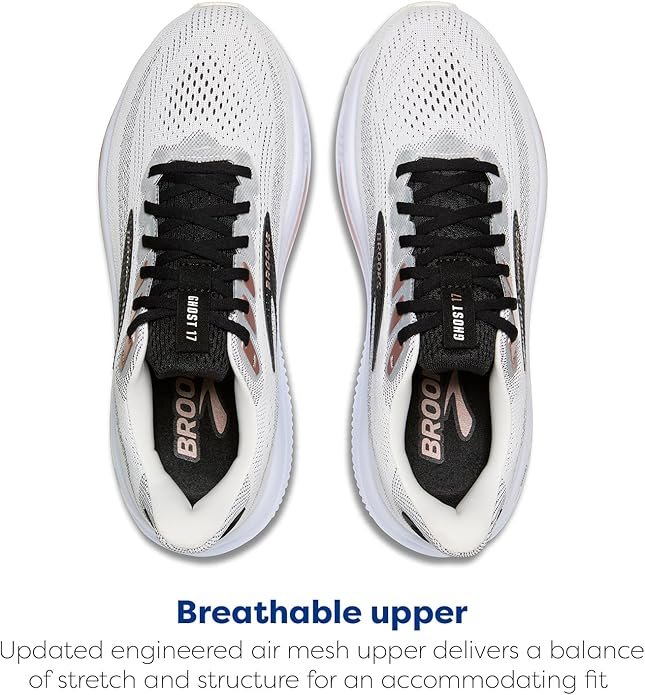
⭐ 4.4 · 3,914 Reviews 💲 $109.95
Expert Take The Ghost 17 is unusual because it works well for both running and walking, which is why it earns top spot here for the walking category. For walking specifically, the neutral support means it works for nearly every foot type. Zero break-in needed. Comfortable on day one, still comfortable on day ninety.
Best For Everyday walkers, first-time buyers, anyone not sure what support level they need, diabetic feet (PDAC A5500 certified).
Why It Works The DNA Loft v3 midsole is tuned perfectly for the slower impact speed of walking, which means it stays soft underfoot without compressing into pressure points. The flex grooves reduce strain on your forefoot.
Pros Versatile for both activities, immediate comfort, strong durability, APMA-approved, breathable.
Cons It does not offer aggressive stability correction, so if you have significant overpronation, look at the Adrenaline GTS below instead.
Verdict The safest pick for anyone who walks daily. Versatile enough to wear for light running too.
🛒 Check Price on Amazon.com2. Brooks Adrenaline GTS 25 (Best for Overpronation & Stability)
⭐ 4.6 · 2,137 Reviews 💲 $146.00
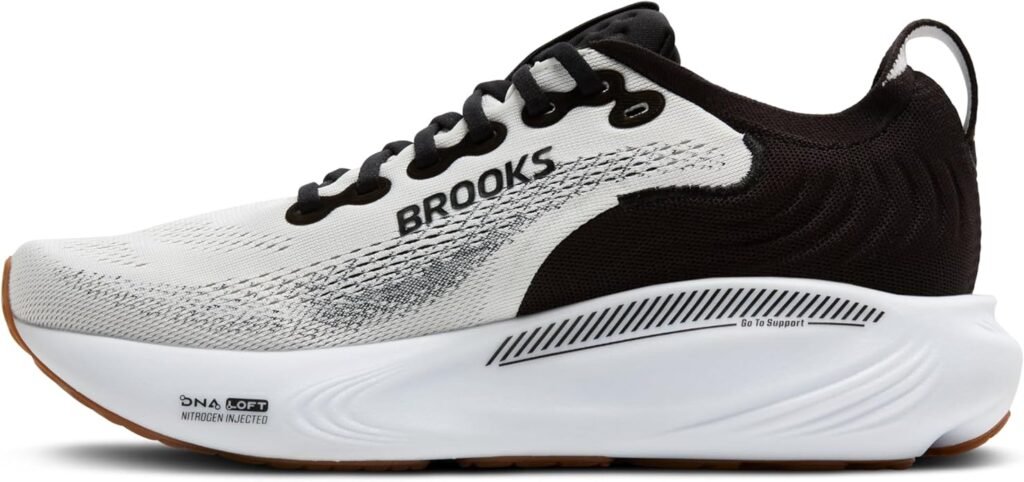
Expert Take This is what I recommend when someone tells me their ankles roll inward or their knees ache after walking. The GuideRails system is not just padding, it is actual biomechanical correction. It runs firmer than the Ghost, which some read as less plush at first, but that firmness is exactly what controls excess motion.
Best For Overpronators, anyone with chronic ankle or knee sensitivity, people who have been told they need motion control shoes.
Why It Works The GuideRails holistic support system keeps excess side-to-side motion in check without adding bulk. The DNA Loft v3 cushioning still delivers softness despite the added structure.
Pros Real corrective support, not just soft foam, durable mesh upper, PDAC A5500 diabetic-certified.
Cons It is the most expensive shoe on this list and feels noticeably firmer than neutral options. If your feet are neutral, you are paying extra for support you don’t need.
Verdict Worth every penny if you have documented overpronation or chronic ankle fatigue. Skip if your feet are neutral.
🛒 Check Price on Amazon.com3. Orthofeet Orthopedic Coral Stretch Knit (Best for Foot Pain)
⭐ 4.1 · 5,749 Reviews 💲 $119.00
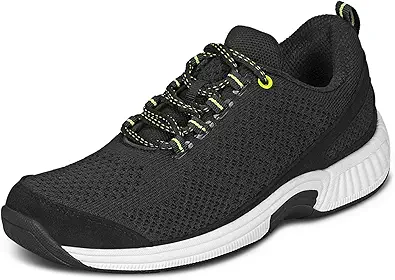
Expert Take Orthofeet built this one specifically for pain, not performance. The seam-free interior is the detail most people overlook until they wear it, there is nothing rubbing against a bunion or a tender spot. The orthotic insole has real anatomical arch shaping. This is the shoe I suggest when someone has already tried regular comfort sneakers and still hurt by midday.
Best For Plantar fasciitis, bunions, flat feet, anyone who has been told by a podiatrist to prioritize arch support over style.
Why It Works The stretch knit upper flexes with your foot instead of fighting it. The multilayered orthotic insole distributes weight more evenly than a flat foam pad.
Pros Genuinely designed for pain relief, wide toe box, seam-free interior, easy on and off.
Cons The look is clinical, not athletic. This is a shoe you wear for comfort, not for style matching.
Verdict If foot pain is your main problem, buy this before anything flashier. It solves the actual problem.
🛒 Check Price on Amazon.com4. Ryka Devotion X (Best Women-Specific Fit for Walking)
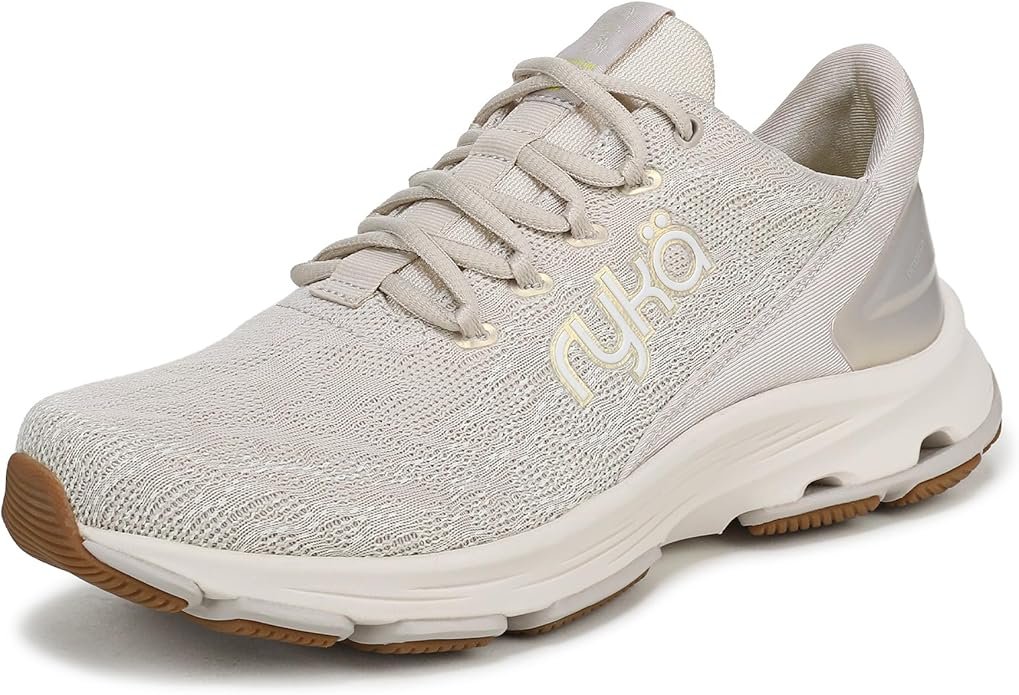
⭐ 4.2 · 3,614 Reviews 💲 $79.95
Expert Take Ryka designs specifically for women’s foot shapes, not shrunk men’s shoes, and that shows. The heel sits narrower while the forefoot has more room. The RE-ZORB responsive cushioning takes a walk or two to reveal itself, then it clicks. The narrower heel stops the heel slip that plagues many women in unisex shoes.
Best For Women with narrow heels and wider forefeet, all-day walkers, anyone tired of heel slip in other brands.
Why It Works The anatomical last reduces friction and slipping that happens when shoes are not shaped for women’s feet. The RE-ZORB cushioning absorbs impact without bouncing you around.
Pros Purpose-built female fit, lots of real review volume, solid traction, comfortable from day one.
Cons Some buyers have raised durability concerns after six months of heavy daily use. It will not last as long as the Brooks Ghost.
Verdict A smart buy if heel slip has been your recurring problem. If longevity is your top priority, choose the Ghost 17 instead.
🛒 Check Price on Amazon.com5. Skechers Go Walk Joy (Best Budget Walking Slip-On)
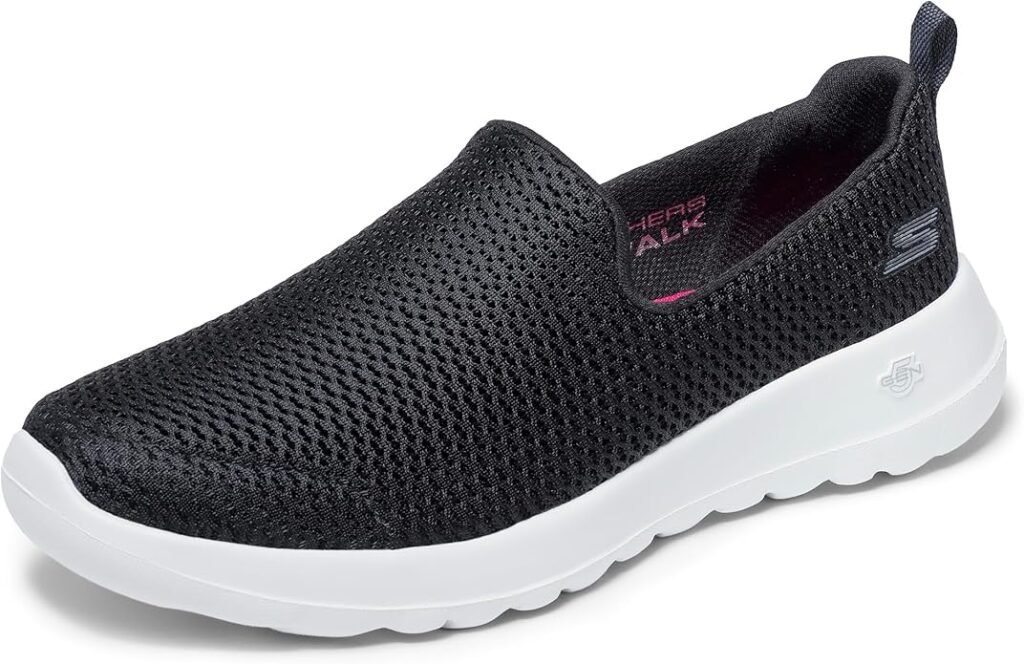
⭐ 4.5 · 92,822 Reviews 💲 $40.00
Expert Take At forty dollars, this is the cheapest entry to a real walking shoe. The 5GEN technology gives genuine cushioning, not just thin foam. The Goga Mat insole is soft and breathable. Slip-on convenience means no bending down on rush mornings. Machine washable is practical.
Best For Budget walkers, daily casual wear, anyone who wants slip-on convenience without sacrificing real cushioning.
Why It Works The 5GEN cushioning technology adapts to your walking pace, which is why it works better than many cheap shoes that just feel thin underfoot. The Goga Mat breathes and rebounds.
Pros Extremely affordable, genuine cushioning for the price, slip-on convenience, machine washable, huge review volume.
Cons The cushioning is softer but not as durable as premium options. The slip-on design means less ankle structure than a laced shoe.
Verdict Best value for casual daily walking. If you walk serious mileage daily or need extra support, upgrade to the Ghost 17 or Orthofeet.
🛒 Check Price on Amazon.comWalking Shoes Comparison
| Shoe | Price | Arch Support | Cushioning | Best For | Key Feature |
| Brooks Ghost 17 | $109.95 | Neutral | High | Everyday walkers | Versatile, immediate comfort |
| Brooks Adrenaline GTS 25 | $146.00 | Stability (GuideRails) | High | Overpronators | Corrective support |
| Orthofeet Orthopedic | $119.00 | Orthotic | High | Foot pain | Seam-free interior |
| Ryka Devotion X | $79.95 | Anatomical (women’s fit) | High | Women’s fit preference | Narrower heel design |
| Skechers Go Walk Joy | $40.00 | Moderate | Moderate | Budget casual | Machine washable, slip-on |
Real Situations: When to Pick Which
You run 3-4 times per week and walk the other days: Buy the Brooks Revel 8 or Brooks Ghost 17. Both work for mixed use. If you run more than you walk, pick Ghost. If you walk more, either works, but Ghost is slightly better for all-day comfort.
You stand or walk at work all day, no running: Buy the Brooks Ghost 17 or Orthofeet Orthopedic. If your feet do not hurt, Ghost all day. If you have existing foot pain, go straight to Orthofeet.
You run seriously and want one running shoe: Buy the Brooks Ghost 17. It is proven and durable. If cushioning matters more than speed, buy New Balance Fresh Foam Roav.
You have overpronation or ankle issues: Buy the Brooks Adrenaline GTS 25 for walking or running. Do not compromise on stability correction.
Budget matters most and you mostly walk: Buy the Skechers Go Walk Joy. Real cushioning at a price that does not hurt.
If your needs land somewhere between these, look at the comparison tables above and read each product’s Pros and Cons section honestly. Match the shoe to your actual activity, not to marketing or looks.
Related Reading
4 guidesFrequently Asked Questions
Can I use running shoes for walking?
Technically yes, but not optimally. Running shoes are tuned for forward speed and will eventually create pressure points during all-day wear because the cushioning compresses differently. For occasional walks, they work fine. For daily walking, a dedicated walking shoe is better.
Can I use walking shoes for running?
Not recommended. Walking shoes lack the responsive spring and forefoot support needed for running. You will feel like you are sinking into the shoe, which wastes energy and increases injury risk.
What is the main difference in heel drop between running and walking shoes?
Running shoes typically have 8-12mm drop to push weight toward the forefoot for push-off power. Walking shoes have 6-10mm drop to keep weight more neutral for sustained repetition.
Why do my running shoes cause foot pain during walking?
Running shoes have different cushioning compression profiles than walking shoes. The midsole softness works for high-speed impact but creates pressure points during slower, repetitive motion.
Are hybrid running-walking shoes worth buying?
Some are. The Brooks Revel 8 and Brooks Ghost 17 genuinely work for both activities. Most “hybrid” shoes are compromises that do neither well. Check reviews and test both activities if possible.
Which shoe lasts longer, running or walking shoes?
Walking shoes tend to last longer in actual wear time because walking puts less total impact stress on the midsole. A running shoe might last 300-500 miles. A walking shoe might last 500-800 miles.
Do I need different shoes if I have flat feet?
Yes, you need a walking or running shoe with explicit arch support. Do not try to make do with a neutral shoe if you have flat feet. The extra arch support matters.
What if I run and walk the same distance each week?
Get one running shoe and one walking shoe. The small investment in two shoes prevents injuries and extends the life of each shoe since they are not wearing out doing jobs they are not tuned for.
Is a heavier shoe better for walking?
Not necessarily. A heavier shoe does not mean better support or durability. Weight matters less than materials and construction. Many excellent walking shoes are light.
How do I know if I overpronate?
Your foot rolls too far inward after landing. Walk on a wet floor and look at your wet footprint, or record yourself walking from behind. If the inner edge of your foot is doing extra work, you overpronate.
Are APMA-approved shoes better?
APMA approval (American Podiatric Medical Association) means the shoe has been tested and shown to support foot health. It is a meaningful certification, especially if you have existing foot issues.
Should I buy the cheapest option to save money?
Not always. A $40 shoe that wears out in two months costs more per mile than a $100 shoe that lasts a year. Think in terms of cost per wear, not initial price.
Final Recommendation
If you run regularly: Buy the Brooks Ghost 17. It is the standard that other shoes get compared to.
If you walk regularly: Buy the Brooks Ghost 17 or Brooks Adrenaline GTS 25, depending on your pronation style.
If you have foot pain: Buy the Orthofeet Orthopedic.
If budget is your main concern: Buy the ASICS Gel-Excite 11 for running or Skechers Go Walk Joy for walking.
If you do both activities equally: Buy one running shoe and one walking shoe rather than trying to make one shoe do both jobs.
The right shoe is not the most expensive or the most popular. It is the one that matches your actual activity and your actual foot type.
We may earn a small commission at no extra cost to you if you purchase through the links in this article.