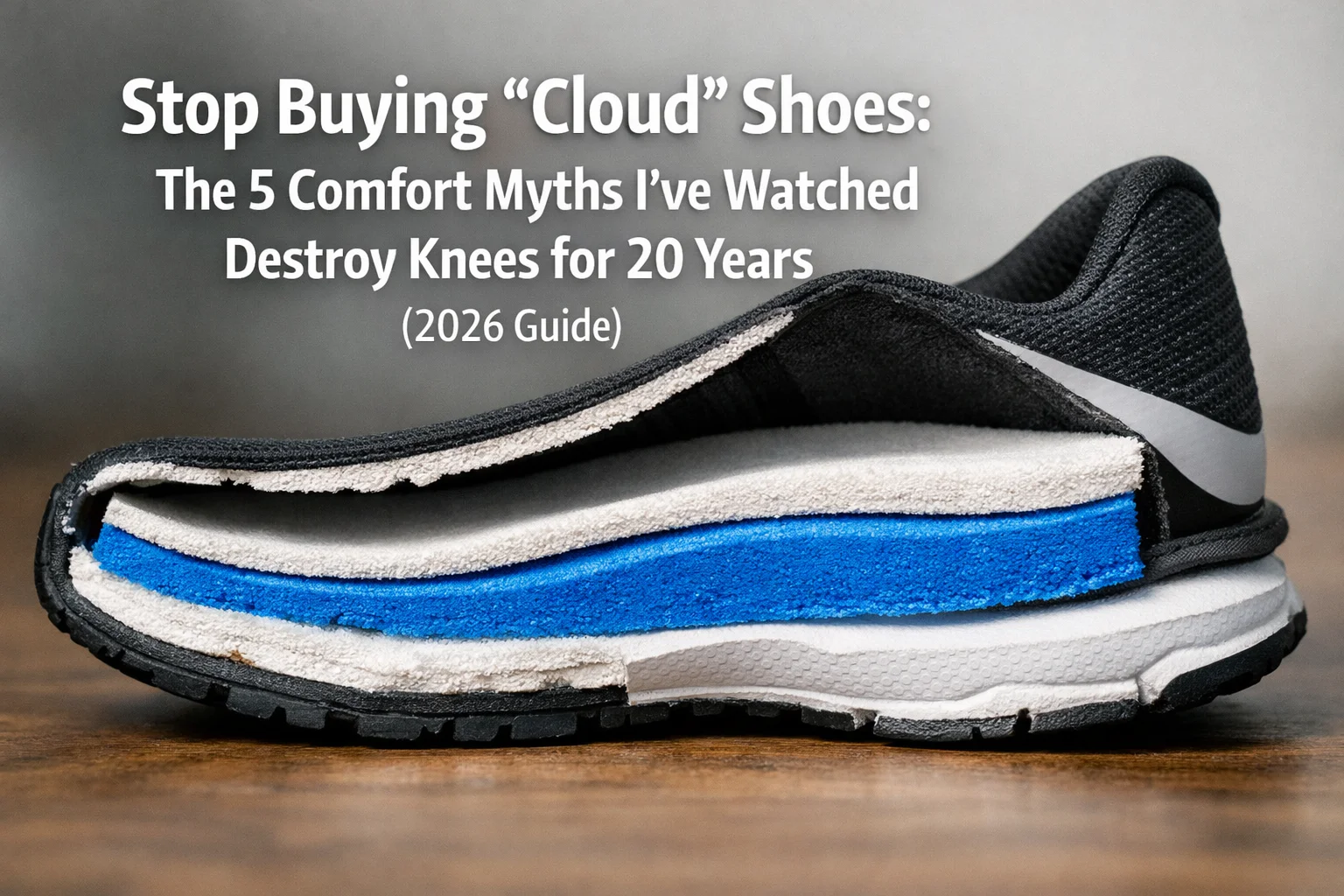

The Anatomy of a Shoe: Upper, Midsole, Outsole & Complete Parts Guide 2026
We’ve all been there. You buy a gorgeous pair of sneakers online, they look incredible out of the box, but three hours into a city walking tour or a busy shift at the office, your heels are blistered, and your arches are screaming.
I was scrolling through a popular travel group on Facebook last week, and someone posted a tragic photo of their stylish (and expensive) sneakers completely shredded on the cobblestone streets of Rome. The caption was a joke about leaving their feet behind in Italy, but the struggle in the comments was universally real. Hundreds of people chiming in with their own footwear regrets.
Whether you’re commuting, exploring the globe, or just standing on your feet all day, the difference between pure agony and walking on clouds comes down to one thing: how the shoe is actually built.
Understanding The Anatomy of a Shoe: Upper, Midsole, Outsole, along with mastering basic shoe terminology, isn’t just trivia for cobblers. It’s the ultimate cheat code for shopping online. When you know what materials and structural components to look for, you stop wasting money on shoes that hurt.
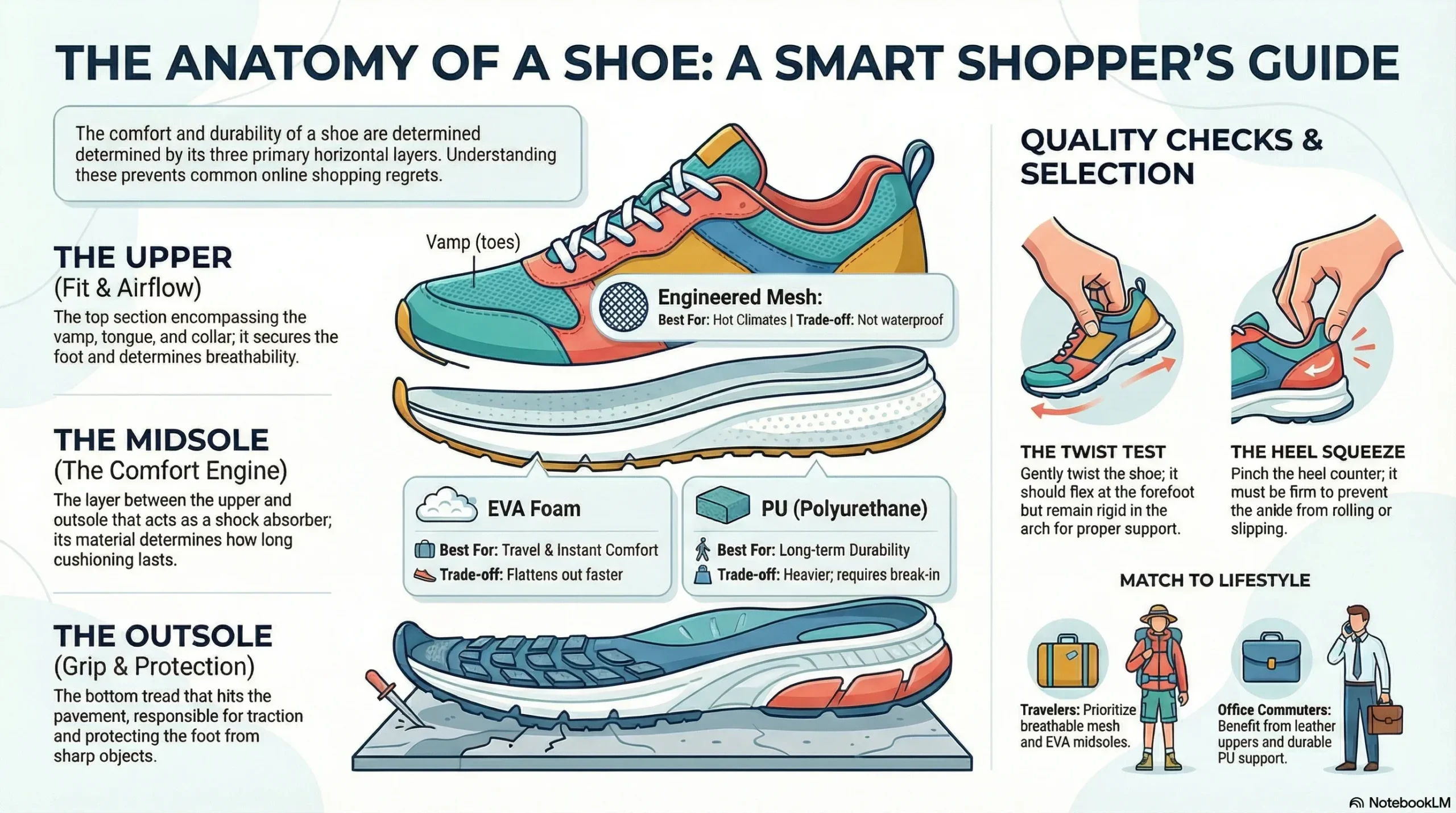
TL;DR: The anatomy of a shoe consists of three primary sections: the upper (holds your foot securely), the midsole (provides cushioning and shock absorption), and the outsole (the bottom tread for grip). Knowing these core elements, alongside finer parts of a shoe like the tongue, collar, and vamp, helps you guarantee better comfort, durability, and fit when buying online.
Why This Topic Matters (And Why We Keep Making the Same Mistakes)
Over the years I’ve spent handling footwear, analyzing wear patterns, and helping thousands of people find the right fit, a clear pattern emerges. Most of us just look at the design and the price tag.
When you shop online, you can’t feel the foam or bend the sole. You have to rely on the product description. This is where the challenge lies. Brands use fancy marketing jargon that often masks cheap materials.
I saw a meme on the r/Sneakers subreddit recently that perfectly nailed this: “Expectation: Walking on clouds. Reality: Walking on painted concrete.” If you don’t know the difference between an EVA midsole and a PU midsole, or how the vamp of a shoe affects your toes, you’re basically gambling with your foot health. Let’s break down the anatomy of a shoe so you can shop smarter, worldwide.
Master Your Shoe Terminology: The Big Three
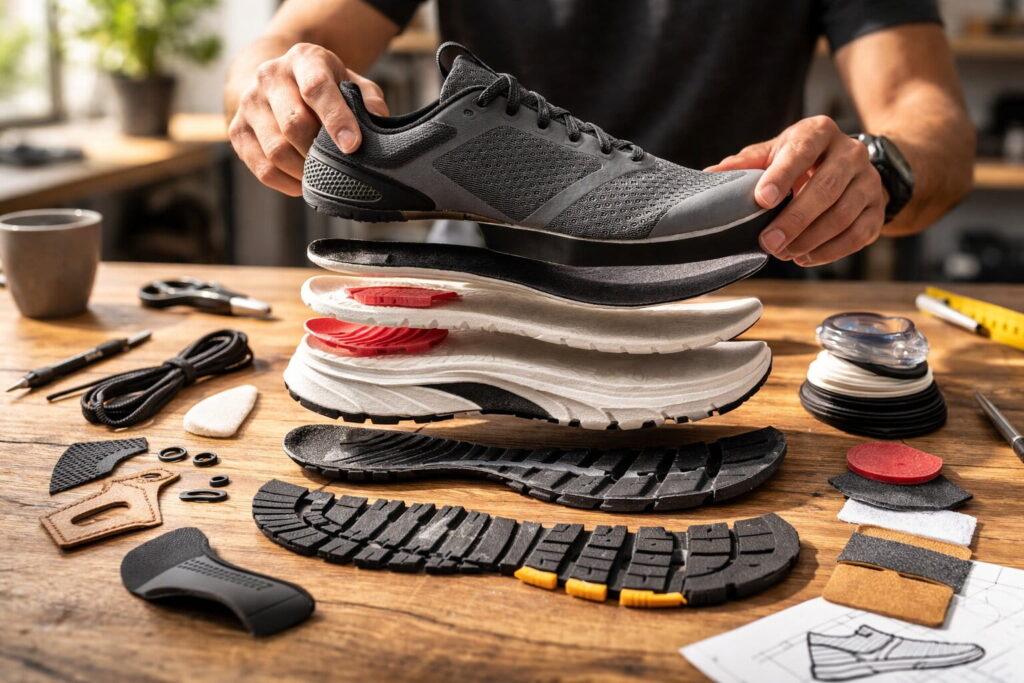
When we talk about the basic construction of any footwear—from running shoes to casual office wear—we divide it into three main horizontal layers.
1. The Upper: Fit, Breathability, and Style
The upper is exactly what it sounds like: everything on the top of the shoe that covers your foot. Its primary job is to hold your foot securely in place while allowing for breathability and flexibility.
When you dig into the finer parts of a shoe—tongue, collar, vamp, and eyestays—you realize how complex the upper really is:
- The Vamp: This is the section covering the top of your toes and forefoot. If a shoe creases badly or pinches your toes when you walk, it’s a vamp issue.
- The Tongue: The strip of material sitting right under the laces. A good tongue protects the top of your foot from lace friction and helps secure the fit.
- The Collar: The padded rim that wraps around your ankle. A well-designed collar prevents your heel from slipping out and stops Achilles blisters.
- The Toe Box: The hollow area at the front. If you have wide feet, a roomy toe box is non-negotiable.
Material Deep-Dive: For travel and summer wear, you want engineered mesh or knit uppers for maximum airflow. For formal office settings or harsh weather, full-grain leather is king because it molds to your foot over time and offers superior durability.
2. The Midsole: The Engine Room of Comfort
If you take nothing else away from this guide, remember this: the midsole is the most important part of the shoe for your physical comfort. It is the layer sandwiched between the upper and the outsole.
“Is this actually comfortable for all-day wear?” The answer almost entirely depends on the midsole. It acts as your shock absorber.
Common Midsole Materials:
- EVA (Ethylene Vinyl Acetate): The most common foam used in modern sneakers. It’s incredibly lightweight and squishy, offering instant step-in comfort. However, EVA compresses over time. If you wear them heavily, they might go “flat” after 6 to 8 months.
- PU (Polyurethane): Denser, heavier, and far more durable than EVA. PU midsoles take a little time to break in, but they will maintain their supportive shape for years. Great for hiking boots and heavy-duty walking shoes.
3. The Outsole: Traction and Durability
The outsole is the very bottom of the shoe—the part that literally hits the pavement. Its job is to provide grip, traction, and protection from sharp objects.
Common Outsole Materials:
- Carbon Rubber: Exceptionally durable and stiff (similar to tire rubber). Often used in high-wear areas like the heel.
- Blown Rubber: Lighter, softer, and more flexible, giving a bit of extra cushioning, but wears down faster.
- TPR (Thermoplastic Rubber): Commonly found in budget-to-midrange casual shoes. It offers decent grip and flexibility for everyday wear.
How to Choose the Right Shoe Anatomy for Your Lifestyle
Understanding shoe terminology is only half the battle. You need to apply it to your daily life.
- For the Office Commuter: Look for a leather or high-quality synthetic upper (for professionalism), a hidden PU midsole (for hidden support during train commutes), and a sleek rubber outsole that doesn’t look like a tractor tire.
- For the Global Traveler: You need a breathable mesh upper, a thick EVA midsole for 20,000-step days, and a segmented rubber outsole that allows the shoe to bend and pack easily into a suitcase.
- For Everyday Casual Wear: A canvas or knit upper paired with a TPR outsole provides the perfect balance of budget-friendly durability and laid-back style.
Material Match-Up: A Quick Comparison
Here is a simple breakdown of how different materials impact your daily wear:
| Component | Material | Best For | Trade-off |
|---|---|---|---|
| Midsole | EVA Foam | Running, travel, instant comfort | Flattens out faster over time |
| Midsole | PU (Polyurethane) | Heavy walking, long-term durability | Heavier, requires a break-in period |
| Outsole | TPR | Casual wear, budget-friendly options | Less grip on slick/wet surfaces |
| Outsole | Carbon Rubber | Trail walking, heavy use | Can feel stiff and heavy on the foot |
| Upper | Engineered Mesh | Hot climates, athletic use | Not waterproof, easily stains |
| Upper | Full-Grain Leather | Office wear, cold weather | Expensive, less breathable |
Pro-Tip: Insider Shoe Quality Checks
Before you hit “buy” or decide to keep an online order, run these quick retailer checks right in your living room:
- The Twist Test: Grab the toe and the heel of the shoe and gently twist it like a towel. A good shoe should have some flex in the forefoot but remain rigid in the middle (the shank area). If you can twist the whole shoe into a spiral easily, it offers zero arch support.
- The Heel Squeeze: Pinch the very back of the shoe (the heel counter) right below the collar. It should be firm. If it collapses easily under your fingers, your ankle is going to roll inward or outward when you walk.
- Check the Tread Depth: Look at the outsole. Are the treads deep and textured, or are they shallow grooves that look like they’ll rub smooth in a month?
Common Mistakes to Avoid When Buying Online
- Choosing Looks Over Support: That ultra-minimalist, flat-soled sneaker looks great on Instagram, but if there is no midsole cushioning, your knees will absorb every step.
- Wrong Size Assumptions: Your feet swell throughout the day. If you buy exactly to your foot measurement in the morning, the vamp and collar will feel incredibly tight by 5:00 PM. Always account for a little swelling and the thickness of your socks.
- Ignoring the Outsole Composition: Buying shoes with cheap, foam-only outsoles (where the midsole material touches the ground directly) is a recipe for disaster. They wear away completely within a few months of outdoor walking. Always ensure there is a layer of actual rubber on the bottom.
Behind the Seams: Real-World Wear Insights
Handling footwear and inspecting how shoes break down after months of use teaches you a lot about human biomechanics. Often, customers think a shoe is “defective” because the mesh upper tore near the pinky toe. In reality, the shoe lacked a reinforced vamp, and the user had a slightly wider forefoot than the shoe was built for.
By simply switching them to a model with a wider toe box and a more forgiving upper material, the tearing stops, and foot pain disappears. It all comes back to matching the anatomy of the shoe to the anatomy of your foot.
Ready to Upgrade Your Footwear?
Now that you are fluent in shoe terminology and understand the critical differences between uppers, midsoles, and outsoles, you are equipped to make smarter purchasing decisions. Don’t settle for foot fatigue.
If you’re ready to find shoes that actually respect the anatomy of your feet, start by comparing options from top-rated global retailers.
👉 [Check today’s best-rated casual and walking shoes on Amazon] 👉 [Compare prices and reviews from leading online footwear stores]
(Note: Always check the product details for midsole and upper materials before adding to your cart!)
Common Questions About Shoe Construction
What is the outsole and midsole of a shoe? The midsole is the cushioned layer in the middle of the shoe designed for shock absorption. The outsole is the hard, durable bottom layer that makes direct contact with the ground for traction.
What is the upper of a shoe anatomy? The upper is the entire top portion of the shoe that covers the foot. It includes the vamp, tongue, collar, laces, and heel counter.
What is outsole vs midsole? The easiest way to remember is: the midsole is for comfort (foam, cushioning), while the outsole is for protection (rubber, grip, tread).
What are the different parts of a shoe? The main three are the upper, midsole, and outsole. Smaller, crucial parts include the vamp (toe cover), tongue (under the laces), collar (ankle wrap), and insole (the removable footbed).
What is the 3 shoe rule? This is a popular packing and wardrobe strategy recommending you only need three pairs of shoes for any trip or basic wardrobe: one for walking/comfort, one for formal/nicer events, and one wild card (like a sandal or boot).
FAQs
1. Can a shoe’s midsole be replaced? Generally, no. Except for very specific, high-end welted boots, modern sneaker and casual shoe midsoles are glued and integrated, meaning once the foam compresses, the shoe needs replacing.
2. What part of the shoe causes heel blisters? Heel blisters are usually caused by a stiff, poorly padded collar or a rigid heel counter that doesn’t match the shape of your heel, causing friction.
3. Why do my toes poke holes in the top of my shoes? This is a vamp issue. It usually means the upper material (like thin mesh) isn’t reinforced, or you are wearing a shoe that is half a size too small.
4. What does “drop” mean in shoe terminology? Heel-to-toe drop is the difference in height between the heel of the midsole and the forefoot of the midsole. A higher drop pushes you forward; a zero drop keeps your foot flat.
5. Is memory foam good for walking all day? Memory foam feels great initially but tends to compress and trap heat over long hours. A resilient EVA or PU midsole is generally better for all-day standing or walking.
6. What is the eyestay on a shoe? The eyestay is the reinforced area on the upper of the shoe where the shoelace eyelets (holes) are located. It ensures the laces don’t rip the fabric when pulled tight.
7. Does the insole matter if the midsole is good? Yes. The insole (sockliner) provides the immediate step-in feel and minor arch contouring, while the midsole handles the heavy-duty impact absorption.
8. How can I tell if an outsole will have good grip? Look for varied tread patterns and softer rubber compounds. Deep lugs are great for dirt, while flat, siped (micro-cut) rubber is better for wet, smooth surfaces.
9. What is a shoe shank? A shank is a rigid piece (often plastic, fiberglass, or steel) embedded in the midsole under the arch. It prevents the shoe from bending in half and provides torsional stability.
10. Why do my shoes squeak when I walk? Squeaking usually happens when moisture gets trapped between the removable insole and the midsole, or if the glued layers of the outsole and midsole begin to separate and rub together.