
Vulcanized vs. Cupsole Skate Shoes 2026: Which Sole Construction Actually Lasts?
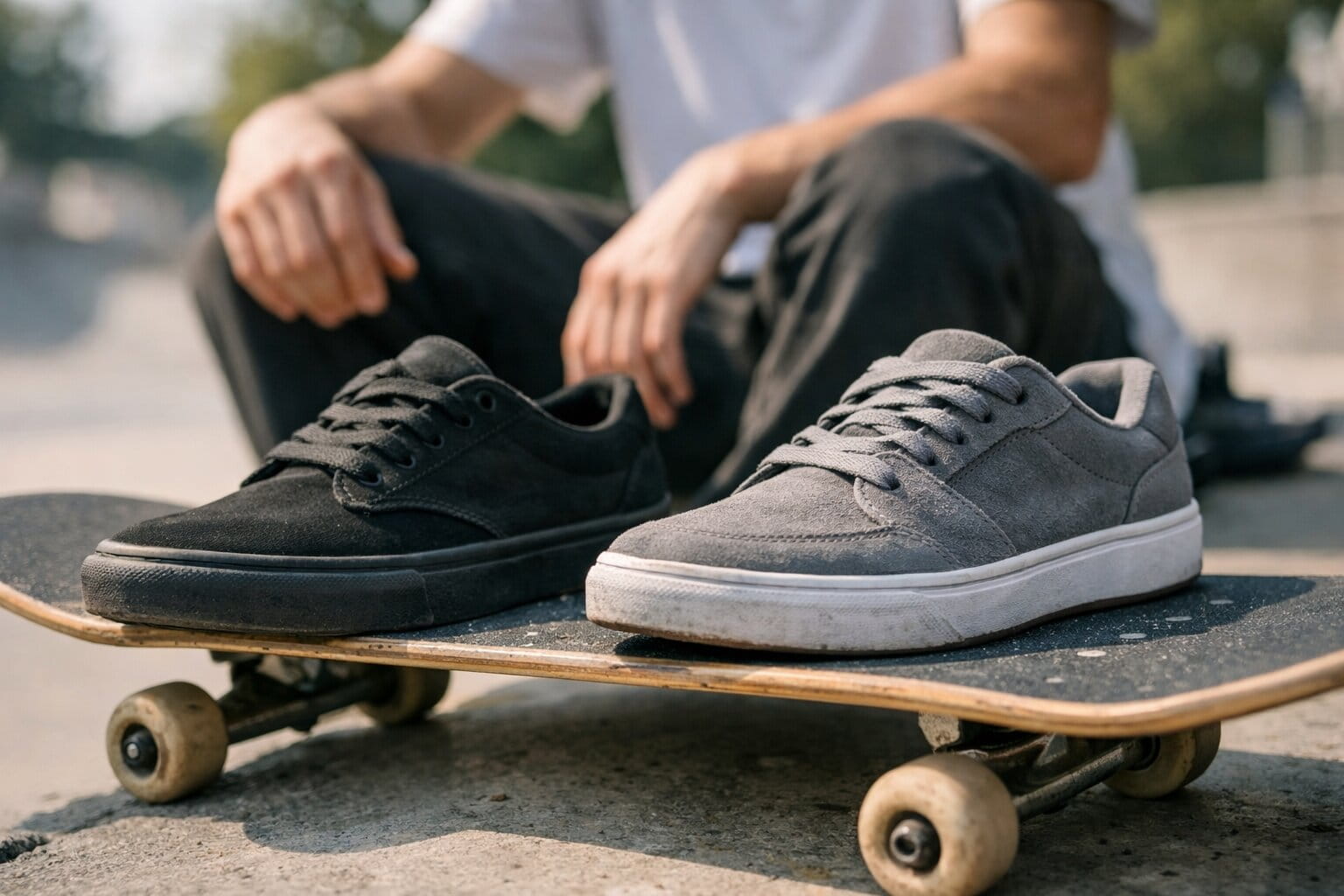
The difference between vulcanized and cupsole skate shoes comes down to a single trade-off: board feel versus impact protection. Vulcanized shoes are heat-bonded for maximum flexibility and immediate grip, making them ideal for technical street skating. Cupsole shoes use a stitched, molded midsole that absorbs impact and lasts longer, making them better for stairs, gaps, and all-day wear.
⚡ TL;DR: Quick Answer Box
The 30-Second Verdict
Vulcanized (vulc): Heat-bonded rubber foxing tape. Flexible from day one. Maximum board feel. Lighter. Cheaper. Wears faster under heavy impact.
Cupsole: Stitched and cemented molded midsole. Impact-absorbing EVA or PU foam. More durable. Better for stairs and gaps. Requires 3–5 sessions to break in.
Bottom line: Technical street skaters choose vulc. Gap jumpers, beginners, and anyone with foot pain choose cupsole. Many skaters keep one of each.
Why This Topic Matters (And Why Online Buyers Get It Wrong)
A customer walks into a shop and buys a sleek vulcanized shoe for a warehouse job that requires 10 hours on concrete. Two weeks later, they return with lower back pain. Another customer buys a chunky cupsole for casual cruising and complains that the shoe feels stiff and clunky.
Both mistakes happen because construction determines performance in ways that product photos cannot show. When you shop online, you cannot bend the shoe. You cannot press your thumb into the heel to test foam density. You have to rely on specifications. Understanding skate shoe anatomy bridges the gap between how a shoe looks in a listing and how it actually performs.
This guide covers the construction differences, the real-world trade-offs, and which shoes work best for specific skating styles and foot types.
What Are Vulcanized Skate Shoes?
Vulcanized shoes (often called “vulcs”) are the classics. Think Vans Old Skool or Converse Chuck Taylors. The construction process involves heat and chemistry rather than just stitching.
The upper is attached to the rubber outsole, and a strip of rubber called foxing tape is wrapped around the perimeter. The entire assembly is baked in a vulcanizing oven at temperatures between 250°F and 350°F for one to two hours. This process cross-links the rubber molecules, chemically bonding the sole, foxing tape, and upper into a single flexible unit.
Best Use-Cases
- Technical street skating: Flatground tricks, ledges, and manuals where precise foot placement matters
- Everyday casual wear: Quick trips, driving, or office environments
- Lifting and gym: The flat, low-to-the-ground profile works well for deadlifts and squats
The Trade-Offs
The good: Immediate flexibility. Zero break-in time. Maximum board feel and grip from the first wear. The baking process cures the gum rubber in a way that leaves it soft and tacky, gripping flat surfaces and grip tape instantly.
The bad: Minimal impact protection. The sole is solid rubber without a thick foam midsole. Jumping down stairs or standing all day on concrete transfers impact directly through the thin outsole. A serious street skater can wear through a vulc sole in three to four weeks.
What Are Cupsole Skate Shoes?
If vulcanized shoes are sports cars, cupsoles are luxury SUVs. A cupsole uses a pre-molded rubber or polyurethane cup that the foot sits inside. This molded sole houses layers of shock-absorbing foam like EVA (Ethylene-Vinyl Acetate) or TPR (Thermoplastic Rubber). The upper is glued and stitched into the cup.
Unlike vulcanized construction, the cupsole is not heated. It is stitch-bonded and cemented to the upper, making it sturdier and more resistant to sole separation.
Best Use-Cases
- High-impact skating: Stairs, gaps, bowls, and transition
- Long-distance walking and travel: Working on your feet or walking through a city all day
- Foot pain sufferers: Anyone needing structured arch support and heel cushioning
The Trade-Offs
The good: Superior impact absorption. The midsole layer protects feet from repeated high-impact landings. Cupsole skate shoes typically last two to three times longer than vulc for aggressive skating.
The bad: Reduced board feel. The thicker sole creates distance between foot and board. Heavier weight. Longer break-in period of three to five sessions before the sole flexes properly.
Vulcanized vs. Cupsole: Head-to-Head Comparison
| Feature | Vulcanized Construction | Cupsole Construction |
| Flexibility | Extremely high (bends easily right away) | Moderate to stiff (requires break-in) |
| Impact Protection | Low (relies mostly on thin insoles) | High (built-in EVA/PU foam midsoles) |
| Durability | Moderate (foxing tape can separate) | High (stitched cups resist separation) |
| Weight | Heavier (solid rubber is dense) | Lighter (foam midsoles reduce weight) |
| Cost | Usually more budget-friendly | Generally mid-range to premium |
| Board Feel | Maximum | Moderate to good (modern cupsoles improved) |
| Break-In | None | 3–5 sessions |
| Best For | Tactical feel, technical tricks | Joint protection, high impact |
For a deeper dive into skate shoe materials, our guide to what EVA foam is explains how midsole compounds affect cushioning and durability.
Understanding Skate Shoe Anatomy
The sole is only part of the story. The materials around your foot determine how long the shoe lasts and how it feels.
The Upper
- Canvas: Breathable, lightweight, and inexpensive. Shreds quickly against grip tape. Best for casual wear.
- Suede: The gold standard for durability and grip. It resists abrasion rather than absorbing it, so a suede upper can outlast canvas by a full season.
- Full-grain leather: Durable and easy to clean, but less breathable and takes longer to break in.
The Midsole
This is the hidden hero. Cupsoles use EVA or PU foam. PU foam is heavier but resists packing out, while EVA is ultra-light but loses bounce after months of heavy use. EVA foam density matters: low-density EVA feels plush on day one but flattens quickly.
The Outsole
Gum rubber provides the best traction on smooth surfaces. Synthetic rubbers offer slightly longer wear on rough concrete. Michelin-partnered outsoles claim three times the durability of standard rubber compounds.
According to the ASTM F3445 standard, minimum slip resistance requirements for footwear are evaluated using the ASTM F2913 whole shoe tester. While this standard is designed for workplace footwear, the testing methodology is relevant to skate shoes that need reliable traction on varied surfaces.
The Science Behind Board Feel and Impact Protection
Skateboarding is an Olympic sport with frequent jumping and landing. Research published on PubMed about skateboarding landing biomechanics shows that skateboarders absorb ground reaction forces through the movement of the metatarsals during ollie landings. The increased force on the forefoot and repeated displacement of the arch may lead to risk of damage to soft tissues, fascia, and ligaments.
This is where construction matters. A vulcanized shoe transmits board feel through a thin sole, which improves control but provides almost no shock absorption. A cupsole places a foam midsole between the foot and the ground, which reduces impact but dampens tactile feedback.
A podiatrist-reviewed guide from Michigan Foot Doctors notes that cupsole construction offers more cushion than vulcanized and is preferred for skaters with foot pain. The same guide lists common skateboarding foot injuries including plantar fasciitis, heel fat pad syndrome, metatarsal stress fractures, and sesamoiditis.
A peer-reviewed study published in Sports Biomechanics on skateboarding injuries found that landing mechanics in skateboarding place significant stress on the lower extremities, reinforcing the case for impact-absorbing footwear.
For skaters who want to keep the board feel of a vulc shoe but need more protection, adding a thin aftermarket insole is the best approach. Our guide to foot pain relief covers insole options for specific conditions.
Common Mistakes Buyers Make
Choosing looks over support. A slim shoe looks great, but a 12-hour tourist walk in vulcanized flats will leave your feet aching. Match the shoe to the activity.
Ignoring sole composition. Not all flat shoes are the same. A flat cupsole has vastly different internal support than a flat vulcanized shoe.
The canvas trap. Canvas shoes are for chilling. Suede and leather are for action. If you plan to skate actively, canvas will shred in weeks.
Wrong size assumptions. Cupsoles are thickly padded. You may need to go half a size up compared to a thin vulcanized shoe from the same brand.
Assuming cupsole means heavy. Modern cupsole shoes with EVA midsoles are often lighter than vulcanized shoes because foam weighs less than solid rubber.
Insider Pro-Tips for Buying Online
The Bend Test. When you receive a shoe, try to bend the toe to the heel. A vulc shoe bends almost in half easily. If a cupsole does that, the internal shank is weak and won’t support your arch.
The Thumb Press. Press your thumb hard into the heel of the sole. If it gives way easily, it’s low-density EVA. It will feel like a cloud on day one but will be flat by month three.
Check the Foxing Overlap. On vulcanized shoes, look where the rubber tape wraps around the toe. The cleaner the overlap, the less likely it is to peel away prematurely.
Check the Ollie Patch. Almost every skate shoe fails first at the ollie patch on the medial side near the big toe. Suede holds up far better than canvas here. Reinforced toe caps and double stitching extend shoe life meaningfully.
Top Picks: Best Skate Shoes for Every Construction
🛒 Best Vulcanized & Cupsole Skate Shoes
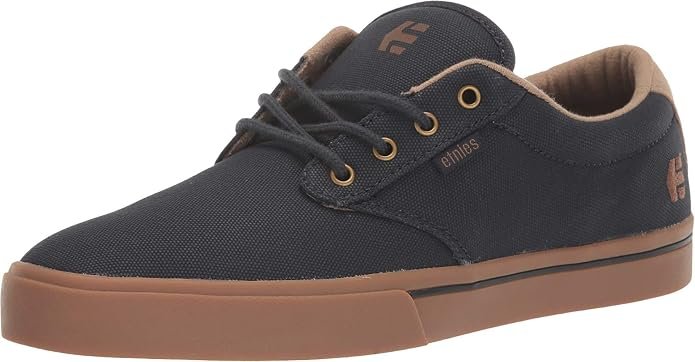
etnies Jameson 2 Eco
Classic vulcanized construction with suede upper. Flexible from day one with immediate board feel. Eco-friendly materials.
🛒 Check Price on Amazon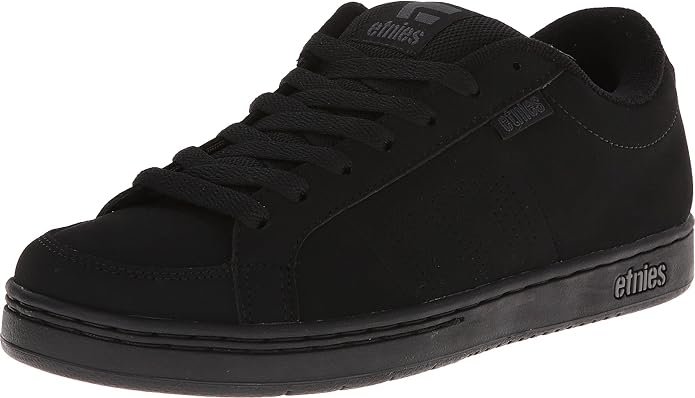
etnies Men’s Kingpin
Cupsole construction with padded collar and tongue. Impact protection for stairs and gaps. Highest-rated option in this guide.
🛒 Check Price on Amazon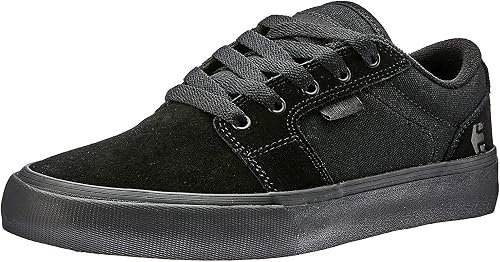
etnies Barge LS
Slim vulcanized silhouette with hefty armored collar and reinforced vulc construction. Classic skate look at a budget price.
🛒 Check Price on Amazon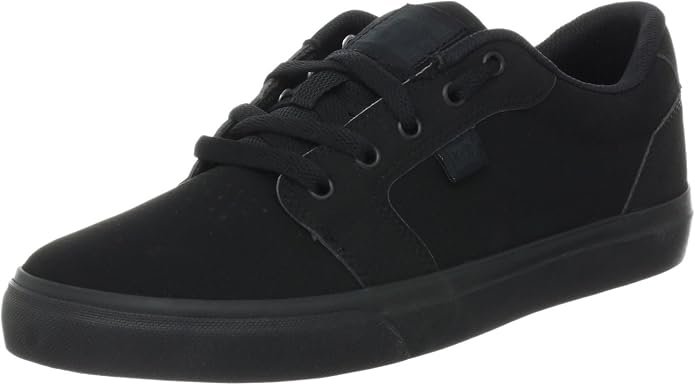
DC Men’s Anvil Action Sports Shoe
Cupsole construction with durable rubber outsole. Cushioned footbed for impact absorption. A solid entry point for new skaters.
🛒 Check Price on Amazon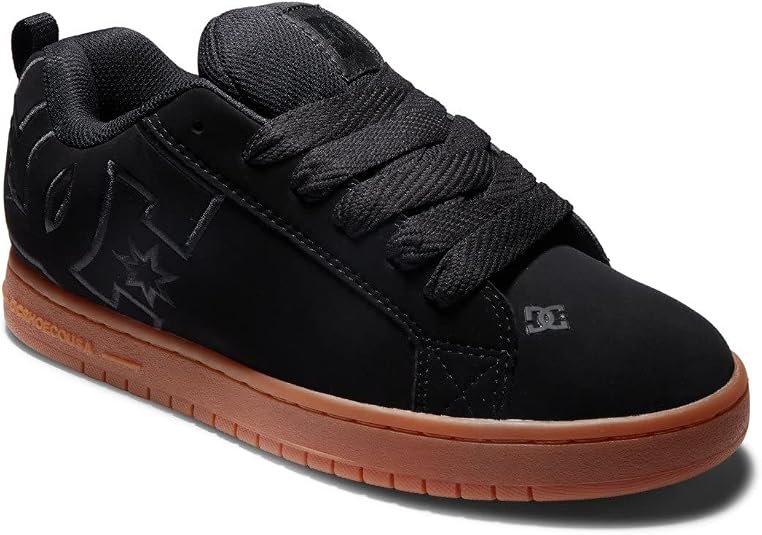
DC Men’s Court Graffik
Highest-rated skate shoe in this guide. Cupsole construction with durable build. Casual low top silhouette that works on and off the board.
🛒 Check Price on AmazonTop FAQs
What does vulcanized mean in shoes?
Vulcanized refers to a manufacturing process where the rubber outsole and foxing tape are heated and chemically bonded to the shoe’s upper, creating a flexible single piece.
How long does a cupsole shoe take to break in?
Typically 3 to 5 days of regular wear before the stiffness subsides and the shoe molds to your foot shape.
What is foxing tape?
A strip of textured rubber wrapped around the perimeter of a vulcanized shoe, holding the upper and outsole together. The cleaner the overlap, the less likely it is to peel.
Are cupsole shoes good for wide feet?
Yes. Cupsoles often accommodate wide feet better because the molded sole provides a wider, more stable platform that doesn’t let the foot spill over the edges.
Can I put custom insoles in vulcanized shoes?
Yes, if the factory insole is removable. Adding a thin aftermarket orthotic is the best way to add impact protection to a flexible vulcanized shoe. Our guide to foot pain covers insole options.
What is the most durable upper material for skate shoes?
Suede and reinforced full-grain leather are the most durable materials, resisting abrasion from grip tape far better than canvas or synthetic mesh.
Why do vulcanized shoes grip better?
The baking process cures the raw gum rubber in a way that leaves it soft and tacky, allowing it to grip flat surfaces and grip tape immediately.
Are running shoes considered cupsoles?
Running shoes use a different construction, usually cold-cemented EVA foam directly to the upper. They share the cupsole principle of using thick midsoles for impact protection but are not true cupsoles.
How can I tell if a shoe is vulcanized or cupsole?
Look at the side of the sole. A seamless rubber tape wrapped around with a textured toe bumper means vulcanized. Visible stitching connecting the sole to the upper means cupsole.
Do cupsole shoes have good board feel?
Modern cupsoles have improved significantly, using thinner rubber in the toe area to improve board feel while keeping thick foam in the heel for protection.
How long do skate shoes typically last?
It depends on construction and skating intensity. A serious street skater can wear through a vulc sole in three to four weeks. Cupsole skate shoes typically last two to three times longer for aggressive skating.
Is vulcanized or cupsole better for walking?
Cupsoles are generally better for long-distance walking because their built-in foam midsoles absorb the repetitive shock of striking concrete, preventing foot and knee fatigue.
What do Reddit skaters say about vulc vs cupsole?
On r/OldSkaters and r/NewSkaters, the consensus is that vulc is for board feel and technical tricks, while cupsole is for impact protection and durability. Many experienced skaters keep one of each in rotation. The meme “My brain says jump down the 8-stair, but my vulcanized shoes say enjoy your bruised heels for a month” captures the trade-off perfectly.
Final Verdict
If your priority is board feel, choose vulcanized. The heat-bonded construction keeps your foot close to the deck for maximum control.
If your priority is impact protection, choose cupsole. The stitched midsole absorbs landing forces and lasts longer.
If you have foot pain, choose cupsole. Podiatrist-reviewed guidance recommends cupsole construction for skaters with plantar fasciitis, heel pain, or arch discomfort.
If you are a beginner, choose cupsole. Beginners don’t have the board control to benefit from vulc board feel, and they will blame the shoe when their feet hurt after a session.
If you want the best of both, buy one of each. Many experienced skaters keep a vulc pair for technical flatground days and a cupsole pair for stairs, gaps, and transition.
Overall winner: There is no single best answer. Construction is a tool, not a ranking. Match the shoe to how you skate.
Affiliate Disclosure
Some links on this page are affiliate links. If you purchase through them, Urban Style Footwear may earn a commission at no additional cost to you. Our recommendations are based on the product information, footwear characteristics, and buying criteria discussed in this guide, not on the size of the commission.