
Kids Shoe Size Chart (Master Guide)
Complete US, UK & EU size conversion charts for infant, toddler, and youth shoes. Get the perfect fit every time with our printable sizing guides and expert measurement tips.
Download Free PDF Chart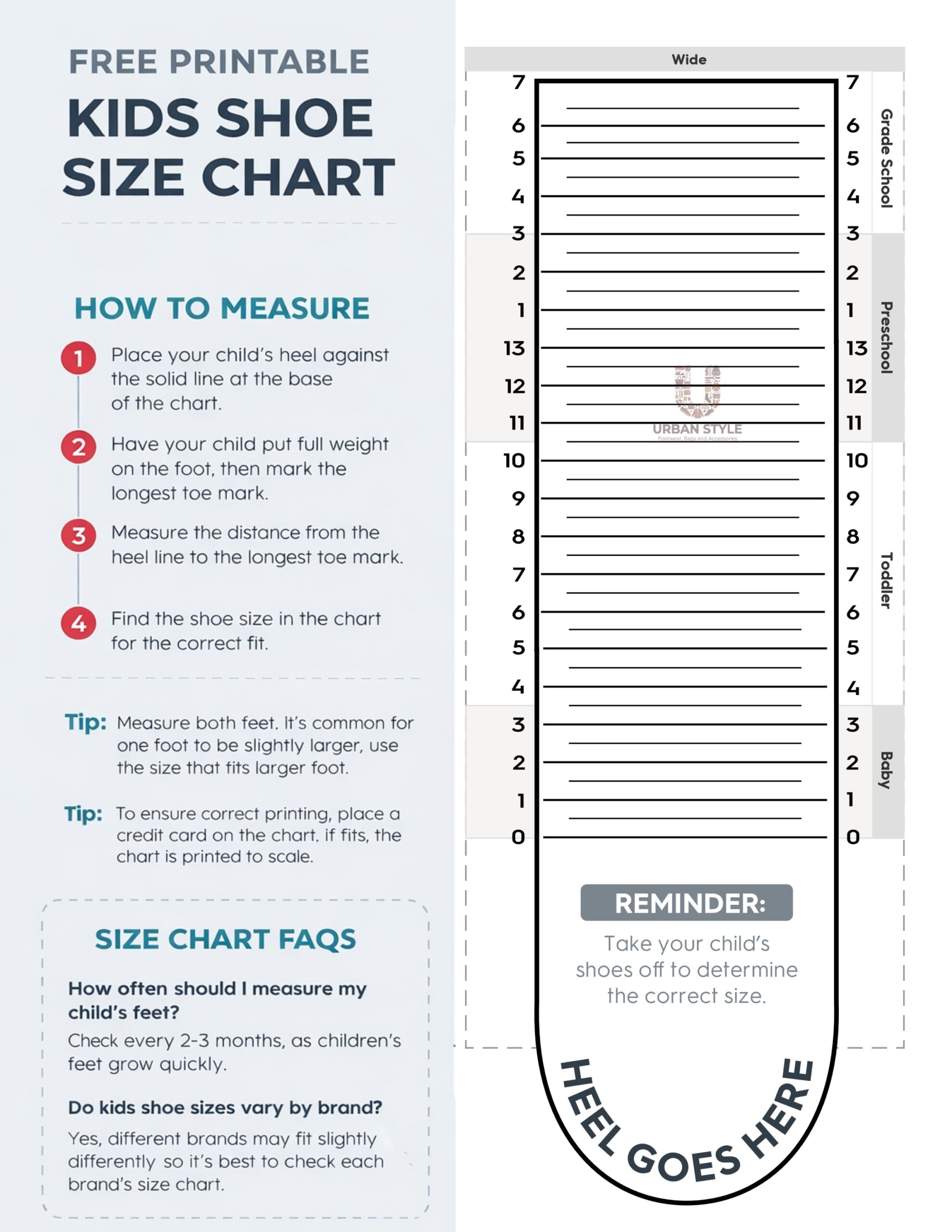
Complete Kids Shoe Size Conversion Chart
Finding the right childrens shoe size can be challenging with different sizing systems used across the world. This kids shoe size chart covers every age from newborn to teen, so you can look up the right size for boys’ shoe sizes, girls’ sizes, or shoe sizes for kids of any age in seconds. This comprehensive guide provides accurate US, UK, and EU kids shoe size conversions to ensure you always get the perfect fit for your child’s growing feet.
Understanding child shoe size conversion is essential when shopping internationally or buying from brands that use different sizing standards. Our conversion charts below cover all age ranges from newborn infants to older youth, making it easy to find equivalent sizes across all major sizing systems.
US to UK Kids Shoe Size Conversion
The difference between US and UK kids shoe sizes typically ranges from 0.5 to 1 size, with US sizes running slightly larger. This toddler shoe size chart shows exact conversions for everyday shopping needs.
| US Size | UK Size | EU Size | Length (inches) | Length (cm) | Age Range |
|---|---|---|---|---|---|
| 0.5 | 0 | 15 | 3.1″ | 7.9 | 0-2 months |
| 1 | 0.5 | 16 | 3.5″ | 8.9 | 0-2 months |
| 1.5 | 1 | 17 | 3.6″ | 9.2 | 2-6 months |
| 2 | 1 | 17 | 3.7″ | 9.5 | 3-6 months |
| 2.5 | 1.5 | 18 | 4.0″ | 10.2 | 6-9 months |
| 3 | 2 | 18 | 4.1″ | 10.5 | 6-9 months |
| 3.5 | 2.5 | 19 | 4.3″ | 10.8 | 9-12 months |
| 4 | 3 | 19 | 4.5″ | 11.4 | 9-12 months |
| 4.5 | 3.5 | 20 | 4.6″ | 11.7 | 12-18 months |
| 5 | 4 | 20 | 4.8″ | 12.1 | 12-18 months |
| 5.5 | 4.5 | 21 | 5.0″ | 12.7 | 18-24 months |
| 6 | 5 | 22 | 5.1″ | 13.0 | 18-24 months |
| 6.5 | 5.5 | 22 | 5.3″ | 13.3 | 2-2.5 years |
| 7 | 6 | 23 | 5.4″ | 13.7 | 2-2.5 years |
| 7.5 | 6.5 | 23 | 5.6″ | 14.0 | 2.5-3 years |
| 8 | 7 | 24 | 5.7″ | 14.6 | 2.5-3 years |
| 8.5 | 7.5 | 25 | 5.9″ | 15.0 | 3-3.5 years |
| 9 | 8 | 25 | 6.1″ | 15.6 | 3-4 years |
| 9.5 | 8.5 | 26 | 6.3″ | 15.9 | 3.5-4 years |
| 10 | 9 | 27 | 6.4″ | 16.5 | 4-4.5 years |
| 10.5 | 9.5 | 27 | 6.6″ | 16.8 | 4.5-5 years |
| 11 | 10 | 28 | 6.8″ | 17.1 | 4.5-5 years |
| 11.5 | 10.5 | 29 | 6.9″ | 17.8 | 5-5.5 years |
| 12 | 11 | 30 | 7.1″ | 18.1 | 5.5-6 years |
| 12.5 | 11.5 | 30 | 7.2″ | 18.4 | 6 years |
| 13 | 12 | 31 | 7.4″ | 19.1 | 6-7 years |
| 13.5 | 12.5 | 31 | 7.6″ | 19.4 | 6-7 years |
| 1 (Youth) | 13 | 32 | 7.7″ | 19.7 | 7 years |
| 1.5 | 13.5 | 33 | 7.9″ | 20.0 | 7-8 years |
| 2 | 1 | 33 | 8.1″ | 20.6 | 8 years |
| 2.5 | 1.5 | 34 | 8.2″ | 20.9 | 8-9 years |
| 3 | 2 | 34 | 8.4″ | 21.6 | 9 years |
| 3.5 | 2.5 | 35 | 8.6″ | 21.9 | 9-10 years |
| 4 | 3 | 36 | 8.8″ | 22.2 | 10 years |
| 4.5 | 3.5 | 36 | 8.9″ | 22.9 | 10-11 years |
| 5 | 4 | 37 | 9.1″ | 23.2 | 11 years |
| 5.5 | 4.5 | 37 | 9.3″ | 23.5 | 11-12 years |
| 6 | 5 | 38 | 9.4″ | 24.1 | 12 years |
| 6.5 | 5.5 | 38 | 9.6″ | 24.4 | 12+ years |
| 7 | 6 | 39 | 9.8″ | 24.8 | 12+ years |
Quick Conversion Tip
To convert US to UK kids shoe sizes, subtract approximately 0.5-1 size. For EU conversions, US sizes are typically 15-16 sizes smaller than EU sizes (e.g., US 8 = EU 24).
Infant Shoe Size Chart (Newborn to 12 Months)
Infant shoe sizes cover the crucial first year of life when babies’ feet grow rapidly. During the first 12 months, an infant’s foot can grow up to 4 sizes. This infant shoe size chart helps parents track growth and choose appropriate footwear for pre-walkers and early walkers.
Most infants don’t need structured shoes until they begin walking. Soft-soled shoes or booties are ideal for pre-walkers, providing warmth and protection while allowing natural foot development. Once your baby starts taking steps, look for flexible shoes with non-slip soles.
Infant Size Chart by Age
| Age | US Size | UK Size | EU Size | Foot Length | Development Stage |
|---|---|---|---|---|---|
| 0-2 months | 0.5-1 | 0-0.5 | 15-16 | 3.1-3.5″ | Newborn |
| 2-6 months | 1.5-2 | 1 | 17 | 3.6-3.7″ | Pre-sitting |
| 6-9 months | 2.5-3 | 1.5-2 | 18 | 4.0-4.1″ | Sitting/Crawling |
| 9-12 months | 3.5-4 | 2.5-3 | 19 | 4.3-4.5″ | Standing/First steps |
Soft Sole Footwear
Choose flexible, breathable materials that allow natural foot movement
Room to Grow
Always allow 0.5″ space between toes and shoe end for comfort
Safety First
Ensure shoes have non-slip soles and secure closures to prevent falls
Toddler Shoe Sizes: Complete Size Chart (Ages 1-4)
Toddler years bring significant changes in foot development as children become more active. This toddler shoe size chart covers US sizes 5-10, which corresponds to approximately ages 1-4 years. During this period, children’s feet typically grow about one size every 4-6 months.
Toddlers need supportive shoes with proper cushioning and flexibility as they develop walking and running skills. Look for shoes with a wide toe box, breathable materials, and adjustable closures like velcro or elastic laces that make it easy to achieve a secure fit.
Complete Toddler Size Reference
| US Size | UK Size | EU Size | Inches | CM | Typical Age |
|---|---|---|---|---|---|
| 5 | 4 | 20 | 4.8″ | 12.1 | 12-18 months |
| 5.5 | 4.5 | 21 | 5.0″ | 12.7 | 18-24 months |
| 6 | 5 | 22 | 5.1″ | 13.0 | 18-24 months |
| 6.5 | 5.5 | 22 | 5.3″ | 13.3 | 2 years |
| 7 | 6 | 23 | 5.4″ | 13.7 | 2-2.5 years |
| 7.5 | 6.5 | 23 | 5.6″ | 14.0 | 2.5 years |
| 8 | 7 | 24 | 5.7″ | 14.6 | 2.5-3 years |
| 8.5 | 7.5 | 25 | 5.9″ | 15.0 | 3 years |
| 9 | 8 | 25 | 6.1″ | 15.6 | 3-4 years |
| 9.5 | 8.5 | 26 | 6.3″ | 15.9 | 3.5-4 years |
| 10 | 9 | 27 | 6.4″ | 16.5 | 4 years |
Toddler Shoe Fit Guidelines
- Check the thumb test: There should be a thumb’s width (about 0.5 inches) between the longest toe and the end of the shoe.
- Feel the heel: The shoe should fit snugly around the heel without slipping when walking.
- Watch your child walk: Shoes should flex naturally at the ball of the foot, not the arch.
- Check the width: The shoe should be wide enough that toes aren’t squeezed together or overlapping.
Youth Shoe Size Chart (5-12 Years)
Youth shoe sizes cover school-age children from approximately 5-12 years old, beginning at youth size 1 and extending to size 7. This youth shoe size chart represents the transition from children’s to adult footwear, as larger youth sizes overlap with small adult sizes.
Children in this age group become more particular about style and comfort. Their feet grow approximately one size every 6-9 months, though growth spurts can cause faster changes. Many youth shoes feature similar technology to adult athletic shoes, providing proper support for sports and daily activities.
Youth Sizing Guide
| US Youth Size | UK Size | EU Size | Length (in) | Length (cm) | Age Range |
|---|---|---|---|---|---|
| 1Y | 13 | 32 | 7.7″ | 19.7 | 6-7 years |
| 1.5Y | 13.5 | 33 | 7.9″ | 20.0 | 7 years |
| 2Y | 1 | 33 | 8.1″ | 20.6 | 7-8 years |
| 2.5Y | 1.5 | 34 | 8.2″ | 20.9 | 8 years |
| 3Y | 2 | 34 | 8.4″ | 21.6 | 8-9 years |
| 3.5Y | 2.5 | 35 | 8.6″ | 21.9 | 9 years |
| 4Y | 3 | 36 | 8.8″ | 22.2 | 9-10 years |
| 4.5Y | 3.5 | 36 | 8.9″ | 22.9 | 10 years |
| 5Y | 4 | 37 | 9.1″ | 23.2 | 10-11 years |
| 5.5Y | 4.5 | 37 | 9.3″ | 23.5 | 11 years |
| 6Y | 5 | 38 | 9.4″ | 24.1 | 11-12 years |
| 6.5Y | 5.5 | 38 | 9.6″ | 24.4 | 12 years |
| 7Y | 6 | 39 | 9.8″ | 24.8 | 12+ years |
Youth to Adult Transition
Youth size 7 typically overlaps with women’s size 8.5 and men’s size 7. Girls may transition to women’s shoes around ages 10-12, while boys typically move to men’s sizes around ages 12-14. Consider adult sizing for better selection in larger youth sizes.
How to Measure Kids Feet Properly
Accurate foot measurement is the foundation of finding the perfect shoe size for your child. Follow this step-by-step guide to measure your child’s feet at home and use our conversion charts to determine the correct size in any sizing system.
Step-by-Step Measurement Guide
- Gather Your Materials: You’ll need a blank piece of paper larger than your child’s foot, a pencil or pen, and a ruler or measuring tape. Have your child wear the type of socks they’ll typically wear with shoes.
- Position Your Child Correctly: Place the paper on a hard, flat surface against a wall. Have your child stand on the paper with their heel against the wall, distributing weight evenly on both feet. This standing position ensures the most accurate measurement as feet expand under body weight.
- Trace the Foot Outline: Hold the pencil or pen vertically and trace carefully around your child’s entire foot, keeping the writing instrument perpendicular to the paper. Keep the pencil close to the foot for the most accurate outline.
- Measure the Length: Use your ruler or measuring tape to measure from the back of the heel to the tip of the longest toe (which may not be the big toe). Record this measurement in both inches and centimeters. Repeat this process for both feet.
- Add Growing Room: Add 0.5 to 0.7 inches (12 to 17 millimeters) to the longer foot measurement. This growing room allows for natural toe splay and accommodates foot expansion during activity. Use the measurement that includes this growing room to find your child’s shoe size in our conversion charts above.
Best Practices for Accurate Measurements
Measure at the Right Time
Measure feet in the afternoon or evening when they’re naturally slightly larger from daily activity. Feet can expand up to 5% throughout the day.
Measure Both Feet
Always measure both feet as one foot is often slightly larger. Use the measurement from the larger foot when selecting shoe size.
Regular Re-measurement
Check your child’s shoe size every 2-3 months for infants and toddlers, and every 3-4 months for older children to ensure proper fit.
Keep Records
Maintain a record of your child’s measurements and shoe sizes to track growth patterns and anticipate when new shoes will be needed.
Printable Kids Shoe Size Chart PDF
Download our comprehensive printable kids shoe size chart for easy reference while shopping online or in-store. This free PDF includes all conversion tables for US, UK, and EU sizes across infant, toddler, and youth ranges, plus measurement instructions and fitting tips.
Prefer UK sizing? Our printable chart includes a dedicated UK column alongside US and EU, so you can print one page and use it for shopping in any country.
What’s Included in the PDF
Complete Size Charts
All US, UK, EU conversions for infant through youth sizes in easy-to-read tables
Measurement Guide
Step-by-step instructions with visual diagrams for accurate at-home measuring
Fitting Tips
Expert advice on proper shoe fit, growing room, and when to size up
Brand Comparisons
Sizing differences between major brands like Nike, Adidas, and more
Kids Shoe Size Comparison by Brand
Different footwear brands often have slight variations in their sizing, even within the same US, UK, or EU size designation. Understanding these differences is crucial when shopping across brands to ensure consistent fit for your child.
Some brands run larger or smaller, while others may be narrower or wider in the toe box. Use this brand comparison guide to make informed decisions when trying new brands or ordering online.
Nike Kids
Nike children’s shoes tend to run about half a size smaller than standard US sizing. The toe box is narrower, making them ideal for slender feet. Consider sizing up if your child has wider feet or if buying for long-term use.
Adidas Kids
Adidas generally offers true-to-size fit with a roomier toe box compared to Nike. Their shoes work well for children with wider feet. Most models feature comfortable cushioning and good arch support for active kids.
Vans Kids
Vans children’s shoes typically run slightly larger with a wide toe box. The canvas construction allows for some stretch. Great for kids with wider feet, but consider sizing down half a size for narrow feet or if between sizes.
Puma Kids
Puma kids shoes generally fit true to size with medium width. Some models, particularly athletic shoes, may run slightly large. Good all-around option for average foot widths with consistent sizing across different styles.
Skechers Kids
Skechers provides consistent true-to-size fit with many styles available in wide widths. Known for comfortable cushioning and easy on/off designs. Excellent choice for children who need extra width or have high arches.
General Brand Sizing Tips
European brands (Geox, Clarks, Superfit) typically run more narrow than American brands. Athletic shoes often run smaller than casual shoes from the same brand. Always check brand-specific sizing charts and read customer reviews for fit feedback before purchasing.
Common Mistakes Parents Make When Sizing Kids Shoes
Even with the best intentions, parents often make sizing mistakes that can affect their child’s foot development and comfort. Here are the most common errors and how to avoid them:
1. Buying Shoes Too Large “For Growth”
While it’s tempting to buy shoes significantly larger to get more wear time, oversized shoes can cause blisters, affect gait, and lead to trips and falls. Shoes should have 0.5-0.7 inches of growing room beyond the longest toe, but no more. Excessive room prevents proper foot development and can cause instability.
2. Not Measuring Both Feet
Most people have one foot slightly larger than the other, and this difference can be more pronounced in children. Always measure both feet and use the larger measurement when determining size. A shoe that fits the smaller foot perfectly will be too tight on the larger foot.
3. Relying Solely on Age-Based Sizing
Age ranges in size charts are approximate guidelines, not rules. Children’s feet grow at different rates, and some kids have naturally larger or smaller feet for their age. Always measure your child’s actual foot length rather than relying on age-based recommendations alone.
4. Not Checking Shoes Frequently Enough
Children’s feet grow rapidly – up to a full size every 2-3 months in infants and toddlers, and every 3-6 months in school-age children. Set reminders to check shoe fit regularly. Signs shoes are too small include red marks on feet, complaints of discomfort, or your child removing shoes frequently.
5. Ignoring Width Considerations
Shoe size isn’t just about length – width matters too. A shoe that’s the correct length but too narrow can pinch toes and cause discomfort. Look for brands that offer wide widths if your child has broader feet, or choose styles with adjustable closures for a customized fit.
6. Shopping Without the Child Present
While online shopping is convenient, buying shoes without trying them on increases the chance of poor fit. When possible, have your child try shoes on and walk around in them. Watch how they walk – shoes should flex at the ball of the foot, and your child’s gait should look natural.
7. Assuming All Brands Fit the Same
As shown in our brand comparison section, different manufacturers have different fits. A size 10 in Nike fits differently than a size 10 in Adidas. When trying a new brand, check their specific sizing guide and read customer reviews about fit.
8. Measuring Standing vs. Sitting
Always measure your child’s feet while they’re standing, with weight distributed evenly on both feet. Feet spread and elongate under body weight, and sitting measurements will be inaccurately small. This can lead to buying shoes that are too short.
Frequently Asked Questions About Kids Shoe Sizes
Get answers to the most common questions about children’s shoe sizing, conversions, and finding the perfect fit.
Place your child’s foot on a piece of paper while standing, trace around it, and measure from heel to longest toe. Add 0.5-0.7 inches (12-17mm) for growing room. Always measure both feet and use the larger measurement. For best results, measure in the afternoon when feet are naturally slightly larger, and have your child wear the socks they’ll typically wear with shoes.
US kids shoe sizes are typically 1-1.5 sizes larger than UK sizes. For example, a US size 10 kids shoe equals approximately UK size 9 or 9.5. The conversion isn’t perfectly consistent across all sizes, so always refer to specific conversion charts when shopping internationally or from brands using different sizing systems.
Children’s feet grow rapidly, requiring frequent size checks. For infants and toddlers (0-3 years), measure every 2-3 months. For preschoolers (3-5 years), check every 3-4 months. School-age children (5-12 years) should be measured every 4-6 months. During growth spurts, you may need to check more frequently. Always check if your child complains of discomfort or you notice red marks on their feet.
Toddler shoe sizes typically range from size 5 to 10 in US sizing, covering ages approximately 1-4 years old. This corresponds to UK sizes 4-9 and EU sizes 20-27. The toddler range begins when children start walking and ends when they transition to youth sizing around age 4-5.
Allow 0.5-0.7 inches (about a thumb’s width) of growing room beyond the longest toe, but avoid buying shoes that are significantly too large. Oversized shoes can cause blisters, affect your child’s gait, and lead to tripping. Shoes that are too big prevent proper foot development and can cause instability. It’s better to replace shoes more frequently than to buy them excessively large.
The transition from toddler to youth sizes typically occurs around age 4-5, when children reach US size 10.5-11 (UK 10-10.5). Youth sizes begin at US size 1 and continue through size 7, which overlaps with adult sizing. The exact timing varies by individual, as children grow at different rates. The transition is based on foot size rather than age.
No, Nike and Adidas kids shoes fit differently. Nike generally runs slightly smaller and narrower than Adidas kids shoes. If your child has wider feet or is between sizes, consider sizing up in Nike or choosing Adidas for a roomier fit. Adidas tends to be true-to-size with a wider toe box, while Nike often requires sizing up half a size for optimal comfort, especially for children with average to wide feet.
EU size 25 converts to approximately US size 8-8.5 in kids shoes, which equals UK size 7-7.5. This size typically fits children aged 2-3 years with a foot length of approximately 5.9-6.0 inches (15.0-15.3 cm). Always measure your child’s actual foot length for the most accurate size, as age ranges are approximate guidelines only.
Boys’ and girls’ shoe sizes use the same numbering system through the toddler years — a size 10 fits the same foot length regardless of gender. The main difference emerges in youth sizing, where boys’ shoes tend to run slightly wider through the same size range, and older boys often move into men’s sizing earlier than girls move into women’s sizing.
Do Nike and Adidas kids shoes fit the same?
