
How to Clean Birkenstock Footbed Naturally: The 2026 Expert Guide to Remove Stains & Odors
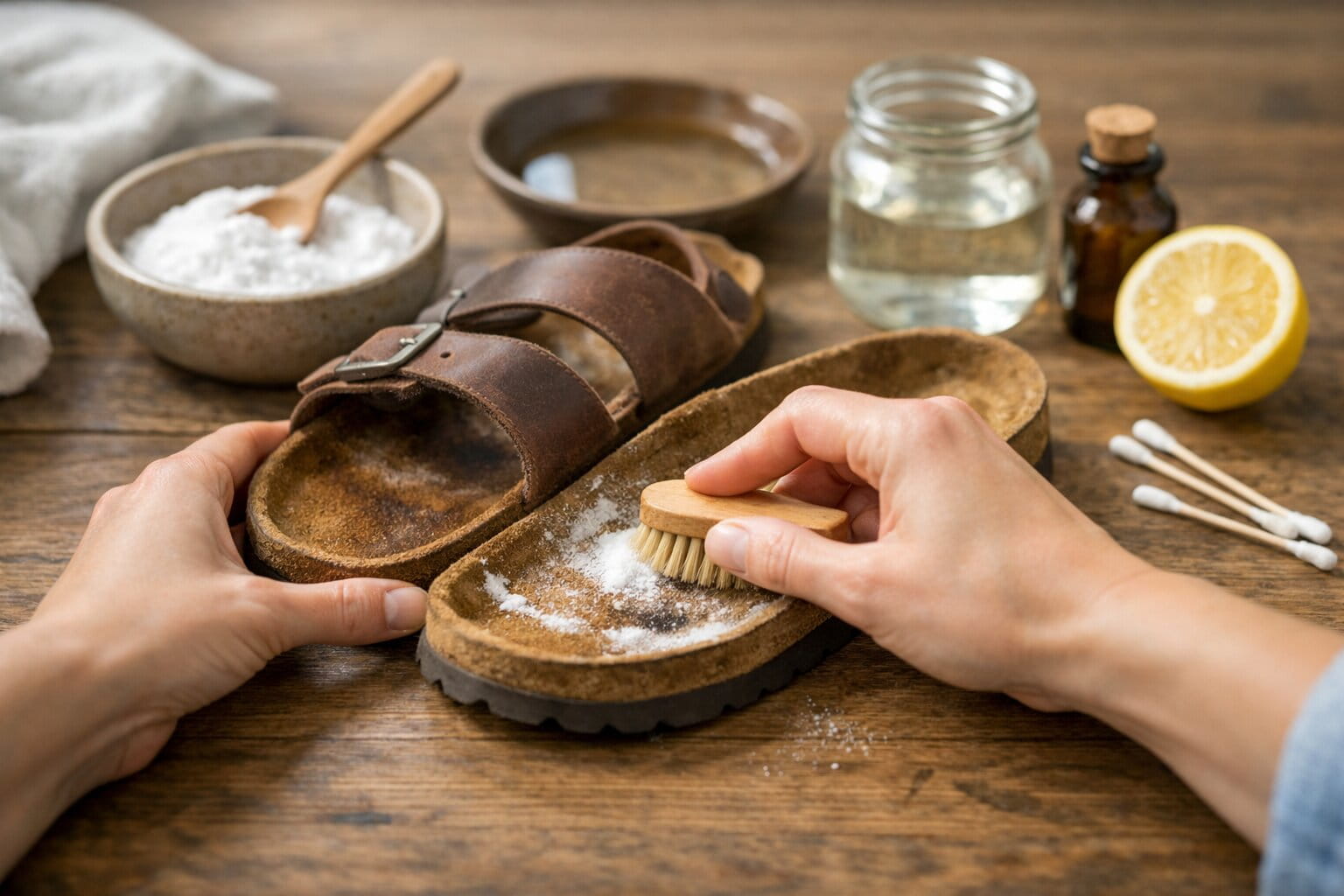
Before and after comparison of a dirty Birkenstock footbed being cleaned with baking soda paste and a toothbrush.
⚡ The Quick Answer
To clean a Birkenstock footbed naturally, mix 2 tablespoons of baking soda with 1 tablespoon of water to create a thick paste. Gently scrub the footbed using an old toothbrush in circular motions, focusing on dark stain areas. Wipe away the residue with a damp cloth—do not saturate the cork. Allow the sandals to dry for 24 hours in a cool, shaded area. Never use a heat source or direct sunlight, as this causes the cork to crack and shrink.
👣 Introduction: The “Black Footprint” Dilemma
If you own a pair of Birkenstocks, you know the scenario: You slip them off at a friend’s house or a beach party, and suddenly you’re trying to hide the inside of your shoes. There it is—the shiny, dark, almost black footprint stamped permanently into the suede.
It’s the universal badge of Birkenstock ownership, but let’s be honest—it can look pretty gross.
I was scrolling through a Reddit thread on r/Birkenstocks recently, and someone jokingly posted a meme about their sandals looking like they had “ancient secrets” trapped in the heel cup. It’s funny because it’s true. But here is the reality I’ve learned from handling thousands of pairs over two decades in the footwear industry: that dark stain isn’t just dirt. It’s a combination of sweat, body oils, dust, and dead skin cells that have been absorbed by the unsealed suede liner.
While a darkened footbed is actually a sign that the shoe has molded to your foot (which is good!), there is a fine line between a “broken-in patina” and “unhygienic grime.”
In this guide, we aren’t just going to scrub them. We are going to look at how to clean Birkenstock footbed naturally so you can extend the life of your investment without using harsh chemicals that degrade the natural cork.
🔍 Why This Topic Matters (And Why Most People Ruin Their Sandals)
The biggest mistake I see global shoppers make isn’t ignoring the dirt—it’s how they try to fix it.
Online shopping has made it easy to buy these sandals, but the instructions often get lost in the box. I’ve had customers come in claiming their sandals “fell apart” after three months. After a quick inspection, I usually find out they threw them in the washing machine or scrubbed them with dish soap and left them on a radiator.
Here is the expert reality: Cork is natural bark. It relies on a delicate balance of moisture.
- Too dry? It crumbles (dry rot).
- Too wet? It dissolves and separates from the glue.
When you use chemical cleaners, you risk stripping the natural oils from the cork. This guide focuses on natural Birkenstock cleaning methods that respect the material science of the shoe, ensuring your $130+ investment lasts for years, not just a summer.
🧪 Understanding the Enemy: What Are We Cleaning?
Before we mix our pastes, we need to know what we are dealing with. The Birkenstock footbed is made of jute, cork, and a top layer of suede lining.
| Component | Role | Vulnerability |
| Suede Lining | Soft top layer, absorbs sweat | Stains easily, oils matte the fibers |
| Cork Footbed | Molds to foot shape, provides support | Expands when wet, cracks when dry |
| Jute Layer | Provides structure and flexibility | Degrades with excessive moisture |
| Cork Sealant | Protects outer cork edges | Fades over time, needs reapplication |
Sweat & Oils: The main culprit for the dark color.
PH Balance: Your foot sweat is acidic; over time, this can actually degrade the suede if not neutralized.
Bacteria: The source of that “gym locker” smell.
A funny comment I saw on Instagram mentioned that their Birks “smelled like a bag of corn chips.” If that sounds familiar, you’re dealing with bacteria, and you need the vinegar method below.
🧼 Method 1: The Baking Soda Scrub (To Remove Stains)
This is the gold standard for removing stains from Birkenstock footbed linings. It’s abrasive enough to lift dirt but gentle enough not to tear the suede fibers.
What You Need:
- Baking Soda (Sodium Bicarbonate)
- Water
- An old toothbrush (soft or medium bristle)
- A damp microfiber cloth
- A spoon
The Step-by-Step Process:
- Prep the Surface: Use a dry brush or a clean cloth to wipe away any loose sand or dry dirt.
- Make the Paste: In a small bowl, mix 2 parts baking soda to 1 part water. You want a consistency like toothpaste, not a runny liquid.
- Apply and Scrub: Dip your toothbrush into the paste. Gently scrub the footbed in small circular motions.
- Pro Tip: Focus heavily on the heel cup and the toe area, as this is where the oils accumulate the most.
- The “Lift” Phase: You will see the white paste turn brown/gray. This is satisfying—it means the oil is lifting out of the suede.
- Wipe Clean: Take your damp cloth (wring it out until it’s barely wet) and wipe away the paste.
- CRITICAL WARNING: Do not rinse the shoes under a running tap. If the cork gets soaked, it will expand and lose its shape.
- Dry Properly: Leave them in a cool, airy room. Do not put them in the sun.
🧴 Method 2: The Vinegar Disinfectant (For Odors)
If your main issue is smell rather than visible dirt, white vinegar is your best friend. It kills bacteria and neutralizes pH levels.
How to do it:
- Mix equal parts water and white distilled vinegar.
- Dip a cloth into the solution and wring it out thoroughly.
- Gently wipe down the footbed.
- Let it air dry. The vinegar smell will vanish once dry, taking the foot odor with it.
Note: This can be combined with Method 1. Scrub with soda first, then wipe down with vinegar water.
🛠️ Method 3: The “Sandpaper” Reset (For Extreme Cases)
Sometimes, cleaning isn’t enough. If the footprint is shiny, hard, and black, the suede nap has been matted down completely by oil. In the shop, when we do refurbishments, we often use this trick to clean cork footbed surfaces that seem too far gone.
The Retailer’s Secret:
- Use a piece of fine-grit sandpaper (180 to 220 grit).
- Ensure the shoe is completely dry.
- Very gently sand the footbed liner.
- You are essentially removing the very top layer of dirty, matted leather.
- This brings back the soft, fuzzy texture of the original suede and removes the darkest stains.
Caution: Don’t overdo this. You can only do this 2–3 times in the life of the shoe before you wear through the liner.
📊 Comparison: Natural Cleaners vs. Commercial Shampoos
Many users ask if they should just buy the branded “Kit.” Here is how they stack up.
| Feature | Baking Soda & Vinegar (Natural) | Commercial Shoe Shampoos |
| Cost | Almost Free | $15 – $25 |
| Effectiveness | Excellent for stains & odors | Good for general surface dirt |
| Risk to Cork | Low (if not soaked) | Moderate (chemical drying) |
| Odor Removal | High (Vinegar kills bacteria) | Moderate (often just masks smell) |
| Availability | In your kitchen right now | Requires ordering/shipping |
| Environmental Impact | Biodegradable, non-toxic | Chemical runoff concerns |
⚠️ 7 Common Mistakes That Will Ruin Your Birkenstocks
Over the years, I’ve seen some tragic shoe deaths. Avoid these common pitfalls when you try to remove stains from Birkenstock footbed linings.
- The Washing Machine: Never. Just don’t. The water submersion dissolves the water-soluble glue holding the cork and sole together.
- Sun Drying: “I put them on the porch to dry fast.” This is the quickest way to shrink the leather straps and crack the cork. Always dry in the shade.
- Using Bleach: This will turn the footbed yellow/orange and make the leather brittle.
- Soaking the Cork: I can’t stress this enough. We want to clean the liner, not soak the cork.
- Hairdryers: Artificial heat destroys the adhesive. Patience is key.
- Ignoring the Cork Seal: Once you clean them, check the shiny coating on the outside edge of the cork. If it looks dull, apply a layer of Cork Sealer. This keeps the moisture balance intact.
- Waiting Too Long: Cleaning them every 3–4 weeks is easier than trying to resurrect them after 2 years of heavy use.
💡 Pro-Tips: Insider Footwear Insights
The “Suede Eraser” Hack
There’s a little tool called a suede eraser (often found in nubuck cleaning kits). It looks like a rubber block. I keep one at the shop counter. If you have minor scuffs or light dirt spots on the footbed, rub this block vigorously over the spot. It crumbles up, lifting the dirt with it. It’s a great dry-cleaning method for in-between deep cleans.
The “Freezer” Myth
You might see TikTok hacks suggesting you freeze your shoes to kill bacteria. While freezing does stop bacteria from multiplying, it doesn’t kill them effectively, and the extreme cold can make the glue brittle. Stick to vinegar.
Is the “Farting Noise” Normal?
This is a classic query. After cleaning, if your shoes make a squishing or “farting” noise when you walk, air might be trapped between your arch and the footbed because the suede is smoother. This usually goes away once the suede roughens up again (or if you use the sandpaper trick).
The Baking Soda “Overnight” Method
For heavily odorous or stained footbeds, you can sprinkle a generous layer of dry baking soda directly onto the footbed and leave it overnight. The baking soda absorbs moisture and odors without any scrubbing. Vacuum or brush it off the next morning.
🛡️ Cork Sealing & Maintenance
After you’ve cleaned your Birkenstocks, it’s important to protect the cork itself. Here’s a quick guide:
How to tell if you need Cork Sealer:
- The cork on the sides of the footbed looks dull or ashy
- You can see small cracks forming
- The edge of the cork feels rough or powdery
How to apply Cork Sealer:
- Clean the cork edges with a dry brush to remove dirt.
- Apply a thin, even layer of Cork Sealer (available on Amazon or at Birkenstock retailers).
- Let it dry for 12 hours.
- Apply a second thin coat if needed.
- Buff lightly with a soft cloth.
Why Cork Sealer matters:
- Prevents moisture from penetrating the cork
- Reduces cracking and crumbling
- Extends the life of your Birkenstocks by 2–3 years
📅 How Often Should You Clean Your Birkenstocks?
| Usage Level | Light Clean (Soda Scrub) | Deep Clean (Soda + Vinegar) | Cork Seal Check |
| Daily wear | Every 3–4 weeks | Every 2–3 months | Monthly |
| Occasional wear | Every 2–3 months | Every 6 months | Every 3 months |
| Special occasion | As needed | Once per season | Once per season |
📚 Complete Birkenstock Care Guide – Topic Deep Dives
This pillar page supports dedicated in-depth articles on every Birkenstock care topic relevant to footwear enthusiasts. Explore each section below.
Best Cork Sealers for Birkenstocks 2026
Using the right Cork Sealer is essential for protecting your investment. Cork is a natural material that needs regular conditioning to prevent cracking and crumbling. We’ve tested the top sealers available in India to find the ones that actually work.
→ Read Full Guide: Best Cork Sealers for Birkenstocks India 2026
Best Suede Cleaning Kits 2026
Suede is delicate and requires specialized tools. A good suede cleaning kit includes a brush, eraser, and protector spray that won’t damage the natural fibers of your Birkenstock footbed.
→ Read Full Guide: Best Suede Cleaning Kits India 2026
How to Break in Birkenstocks Fast
New Birkenstocks can be uncomfortable for the first few weeks. Learn how to speed up the break-in process without damaging the cork or footbed.
→ Read Full Guide: How to Break in Birkenstocks Fast
❓ People Also Ask (PAA)
1. Why do Birkenstock footbeds turn black?
They turn black due to the accumulation of sweat, body oils, dirt, and dead skin cells reacting with the natural suede liner over time.
2. Can I use hydrogen peroxide to clean Birkenstocks?
Yes, but dilute it with water (1:1). It is effective for killing bacteria but can lighten the color of the footbed liner significantly. Use with caution.
3. How long do Birkenstocks take to dry after cleaning?
They typically require 24 hours to dry completely. Always air dry them away from direct sunlight or radiators to prevent damage.
4. Can I wash Birkenstocks in the washing machine?
No. Submerging them in water destroys the cork sealant and dissolves the glue, causing the shoe to fall apart.
5. How often should I clean my Birkenstock footbed?
For daily wearers, a light clean every 3 to 4 weeks prevents heavy buildup. A deep clean is recommended once per season.
6. Is it normal for the footprint to remain after cleaning?
Yes. You will likely never get the footbed back to its original light tan color once it has been worn. Cleaning removes the surface dirt and bacteria, but the oil staining is usually permanent.
7. Can I use magic eraser on Birkenstock footbed?
Magic erasers can be used on the soles (the rubber part), but use caution on the suede footbed as they are abrasive and can leave micro-plastic residue.
8. How to clean vegan Birkenstock footbeds?
Vegan footbeds are microfiber, not suede. They can be cleaned with a damp cloth and mild soap more aggressively than the leather versions, but should still not be soaked.
9. Why are my Birkenstocks sticky after cleaning?
If you didn’t wipe away the cleaning agent thoroughly, soap or soda residue can feel sticky. Wipe them again with a damp cloth and let them dry.
10. Can I use rubbing alcohol to clean the footbed?
Rubbing alcohol is harsh and can dry out the cork and leather. Vinegar is a safer, more natural alternative for disinfection.
🏪 From the Stockroom: Real-World Testing & Credibility
You don’t spend two decades in the footwear industry without seeing every possible variation of shoe decay. We’ve handled, tested, and inspected countless pairs across every price point. Through thousands of customer interactions and hands-on material testing, one truth remains constant: your footbed is your footprint on the world.
A little bit of dark patina is a badge of honor—it means you’re actually using them. But when it crosses the line into “questionable hygiene,” grab that toothbrush and baking soda. Your feet will thank you, and your sandals will last years longer.
🔄 Conclusion: Restore or Replace?
Learning how to clean Birkenstock footbed naturally is about more than just aesthetics; it’s about preserving the structural integrity of the shoe. That cork footbed is the soul of the sandal—it’s what molds to your foot and provides that legendary support.
By using simple ingredients like baking soda and avoiding the harsh heat of the sun (or the dryer!), you can keep your sandals fresh for years. Remember, a little bit of dark patina is a badge of honor—it means you’re actually using them. But when it crosses the line into “questionable hygiene,” grab that toothbrush and baking soda.
Ready to upgrade or replace your pair? If your cork is cracking or the soles are worn down to the cork, cleaning won’t save them.
- Check today’s best prices on Birkenstock Arizona Essentials here
- Browse the best-rated Cork Sealers to protect your investment
- See the top-reviewed Suede Cleaning Kits on Amazon
Disclaimer: As an affiliate, we may earn a small commission from qualifying purchases made through our links, at no extra cost to you. This helps us keep testing and writing about footwear!