
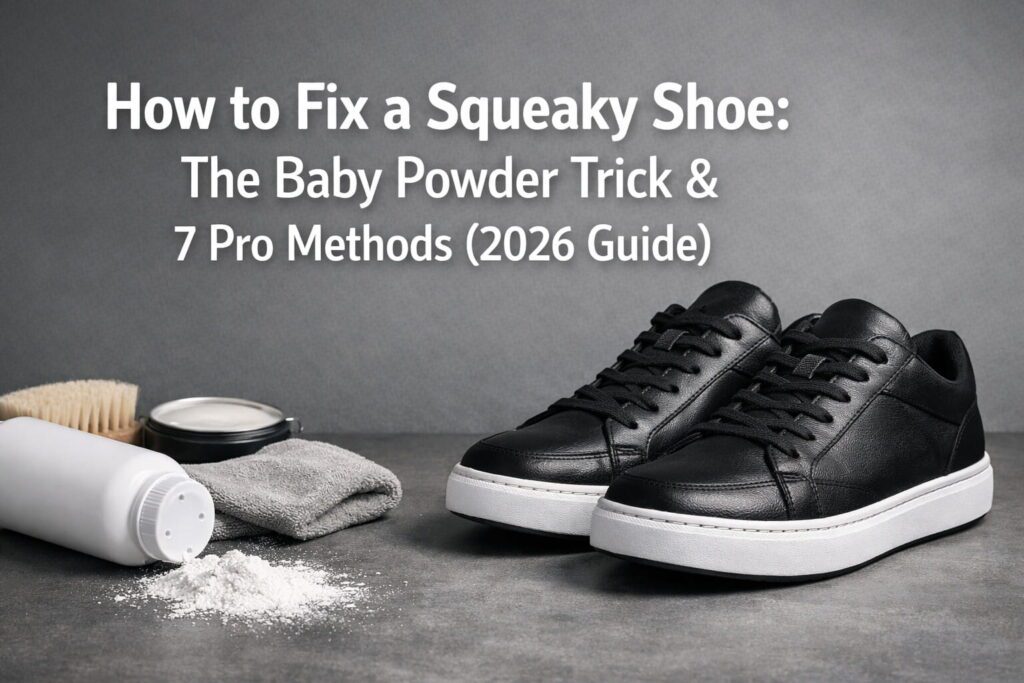
how to stop shoe squeak: The Baby Powder Trick & 7 Pro Methods (2025 Guide)
TL;DR: how to stop shoe squeak on Tennis Shoes (Quick Answer)
The most common cause of a squeaky shoe is friction between the insole and the outsole, or trapped moisture. To fix this immediately:
- Remove the inner sole (insert) from the shoe.
- Sprinkle Baby Powder (talcum powder) generously inside the shoe bed and on the bottom of the insert.
- Rub it in to create a barrier that reduces friction.
- Re-insert the sole. If the squeak comes from the outside sole, use a dryer sheet or light sandpaper to roughen the tread.
The “SpongeBob” Effect: Why We Need to Talk About Squeaky Shoes
We have all been there. You walk into a quiet office, a library, or—worst of all—a date, and every step announces your arrival with a loud, rhythmic squeak-squeak-squeak. It is annoying, it is embarrassing, and it makes even the most expensive sneakers feel cheap.
I have spent over 20 years running a physical shoe store in Chennai. While the location is specific, the problem is global. I have handled thousands of pairs of shoes—from high-end Italian leather to mass-produced athletic sneakers—and I can tell you that squeaking is the number one complaint that isn’t related to fit.
Many customers assume that if a shoe squeaks, it is “defective” or “fake.” In my two decades of tearing shoes apart to see how they tick, I’ve learned that isn’t always true. Sometimes, it’s just physics. Whether you are in London, New York, or Sydney, the interaction between humidity, synthetic materials, and friction causes noise. how can you stop shoes from squeaking
In this guide, we aren’t just going to cover the famous baby powder trick. We are going to look at how can you stop shoes from squeaking using multiple methods, diagnose why are my shoes squeaking in the first place, and look at the materials that cause it.
Why Is This Happening? (Diagnosing the Noise)
Before we pour powder everywhere, we need to find the source. In my shop, whenever a customer brought in a noisy pair, I would perform a quick “flex test.”
1. Internal Friction (The Most Common Culprit)
This is usually where the removable insole rubs against the midsole (the bottom inside of the shoe). If there is even a millimeter of movement, rubber rubbing against foam creates that high-pitched squeak. This is very common in running shoes and casual sneakers.
2. Trapped Air or Moisture
If you have been walking in the rain, or if your feet sweat significantly, water gets trapped between layers. Water creates a vacuum seal that pops and squeaks when you step. This is why how to stop squeaky tennis shoes is such a popular search during rainy seasons.
3. Outsole Issues
Sometimes, the squeak comes from the bottom of the shoe touching the floor. This happens often with new basketball shoes or dress shoes on polished tile or hardwood floors. It means the rubber is too smooth or too sticky.
4. Structural Damage
If the noise sounds like a “clunk” or a “creak” rather than a squeak, the heel block might be loose, or the shank (the support bar inside the sole) has snapped. how can you stop shoes from squeaking
The Baby Powder Trick: The Gold Standard Solution
When people ask how do I fix squeaky shoes, this is the first method I recommend. It is safe for 90% of shoes, cheap, and works instantly for internal friction.
Why It Works
Baby powder (talcum powder) acts as a dry lubricant. It absorbs moisture (sweat/dampness) and creates a silky layer between the rubbing parts, eliminating friction without damaging the shoe structure.
Step-by-Step Guide
- Remove the Insole: If your shoe has a removable insert (orthotic), pull it out. If it is glued down, do not rip it out forcefully; skip to the “WD-40” method below.
- Apply Generously: Sprinkle a decent amount of baby powder into the shoe cavity. Do not be shy.
- Coat the Insole: Sprinkle powder on the bottom of the insole you just removed.
- Shake it Out: Tap the shoe to distribute the powder evenly into the corners and crevices.
- Reassemble: Put the insole back in.
- Walk Test: Walk around for 2 minutes. The heat from your foot will help the powder settle.
Pro-Tip from the Shop Floor: If you don’t have baby powder, Cornstarch works almost exactly the same way. However, avoid baking soda; it is abrasive and can degrade certain foams over time.
6 Other Methods to Fix a Squeaky Shoe
If the powder didn’t work, or if the squeak is coming from the outside, you need heavier artillery.
2. The WD-40 / Silicone Spray Method
Best For: Squeaks coming from stiff leather or un-removable insoles. If you cannot take the sole out, you need a lubricant that penetrates.
- How to do it: Spray a tiny amount of WD-40 or silicone lubricant onto a cotton ball or Q-tip. Rub it into the seam where the shoe is squeaking.
- Warning: Never spray directly onto suede or nubuck—it will stain permanently. This is strictly for the internal mechanisms or rubber soles.
3. The Dryer Sheet Hack
Best For: Outsole squeaking on smooth floors. If your basketball sneakers sound like a skidding car every time you turn:
- How to do it: Rub a standard laundry dryer sheet vigorously over the bottom rubber sole of the shoe. The residue from the sheet reduces the “tackiness” of the rubber just enough to stop the squeak without making you slip.
4. Sandpaper Rough-Up
Best For: New dress shoes or slick-bottomed boots. New leather soles can be incredibly noisy on tile.
- How to do it: Take fine-grit sandpaper (120-220 grit) and gently scuff the bottom of the sole. You aren’t trying to grind it down; you just want to create texture to stop the vacuum seal effect against the floor.
5. Super Glue (The Separation Fix)
Best For: Old shoes where the sole is peeling. Sometimes shoes squeak because the glue holding the outsole to the upper has failed, creating an air pocket that “farts” when you step.
- How to do it: Clean the gap, apply a quality shoe adhesive (like Shoe Goo or Loctite), clamp it down for 24 hours, and let it cure.
6. Conditioning Leather
Best For: Tongue friction on leather boots/sneakers. On high-top sneakers (like Jordans) or work boots, the leather tongue often rubs against the laces or the side panels.
- How to do it: Apply a quality leather conditioner or saddle soap to the tongue and the inside of the eyelets. This softens the leather and stops the “dry rub” noise.
7. The Paper Towel Method
Best For: When you have absolutely no supplies.
- How to do it: Fold a paper towel into a flat square and place it under the insole. It acts as a buffer layer. It’s a temporary fix, but it works in a pinch.
Material Deep Dive: Why Specific Shoes Squeak
In my 20 years of retail, I’ve noticed distinct patterns based on materials. Understanding this helps you buy better in the future.
The Problem with EVA & Memory Foam
Ethylene Vinyl Acetate (EVA) is the foam used in almost all running shoes. It is lightweight and comfy, but over time, it compresses. When it compresses, it becomes smooth and shiny, leading to friction against the insole.
- Retailer Insight: If your old running shoes start squeaking after 6 months, the foam is likely dead. Powder fixes the noise, but the support is gone.
The Patent Leather Issue
Patent leather (the shiny stuff) is notorious for noise. It has a plastic coating. When patent leather rubs against itself (like the tongue against the ankle collar), it screams.
- Fix: A tiny dab of petroleum jelly (Vaseline) on the contact points creates silence.
The “Air Bubble” Tragedy
Many iconic sneaker brands use air units in the heel. If you hear a “whoosh” or a squeak inside the heel, the air bubble may have cracked.
- Bad News: This is usually structural. How do I fix squeaky shoes with popped air bubbles? You usually don’t. It might be time for a new pair.
Comparison Table: Which Method Should You Use?
| Method | Best Used For | Risk Level | Durability of Fix |
|---|---|---|---|
| Baby Powder | Inner sole friction, moisture | Low | Medium (Re-apply monthly) |
| WD-40 | Stiff joints, squeaky springs | High (Can stain) | High |
| Dryer Sheet | Outsole squeak on floors | Low | Low (Lasts a few days) |
| Sandpaper | Slick bottom dress shoes | Medium | Permanent |
| Leather Conditioner | Tongue/Upper friction | Low | Medium |
| Super Glue | Sole separation | Medium | Permanent |
Common Mistakes to Avoid
In my shop, I’ve seen people ruin perfectly good shoes trying to fix a noise. Please avoid these errors:
- Putting Shoes in the Washing Machine/Dryer: Heat is the enemy of shoe glue. If your shoes squeak because they are wet, put them in front of a fan—never in the dryer. The heat will warp the EVA foam and delaminate the soles, making the squeak (and the fit) worse.
- Using Oil on Suede: I mentioned this earlier, but it bears repeating. Oil-based lubricants will leave dark, greasy spots on suede, nubuck, or canvas. Stick to powder for these materials.
- Ignoring the Return Window: If you buy a new pair of shoes and they squeak immediately due to a structural defect (like a loose shank), return them. Do not try to glue them yourself, or you void the warranty this helps how can you stop shoes from squeaking
Pro-Tips: Insider Quality Checks (Retailer Secrets)
When you are shopping online or in-store, look for these signs to avoid buying a future squeaker:
- The Twist Test: Grab the toe and heel of the shoe and gently twist. If it makes a crinkling sound like a plastic bag, the internal adhesives are poor quality.
- The Removable Insole Check: Always prefer shoes with removable insoles. Not only are they easier to clean and replace, but they are also much easier to fix with powder if squeaking starts. Glued-in insoles are a pain to service.
- Stitching vs. Gluing: Look for outsoles that are stitched to the upper rather than just glued. They are less likely to develop air pockets that cause noise.
Frequently Asked Questions
1. Why are my shoes squeaking when I walk?
Squeaking is usually caused by friction between parts of the shoe (like the insole rubbing the midsole), air trapped in the sole, or moisture inside the shoe.
2. Can I use baking soda instead of baby powder for squeaky shoes?
Yes, but be careful. Baking soda is more abrasive than baby powder. While it absorbs odors and moisture well, long-term use might roughen the delicate fabric of your insoles. Cornstarch is a safer alternative.
3. How to stop squeaky tennis shoes on polished floors?
Rub a dryer sheet on the bottom of the soles. This leaves a thin residue that provides traction and stops the rubber from creating a vacuum seal against the tile.
4. Does WD-40 damage shoes?
It can if used incorrectly. WD-40 can stain leather, suede, and mesh. Only use it on internal metal parts, hard rubber, or hidden areas, and apply it with a Q-tip, never a full spray.
5. Why do my Nike Air Force 1s squeak?
This is a common issue often caused by the friction between the rubber cup-sole and the hidden internal midsole. The baby powder trick usually fixes this instantly.
6. Will washing my shoes stop them from squeaking?
No, washing them often makes it worse. Water can get trapped between the glued layers of the sole, leading to more noise and potential mold.
7. How do I fix a squeaky heel?
If the heel clicks or squeaks, the heel block might be loose. If it’s a dress shoe, take it to a cobbler. If it’s a sneaker, it might be a collapsed air unit.
8. Is it normal for new leather boots to squeak?
Yes. New leather is stiff and rubs against the tongue or laces. Treat the leather with mink oil or conditioner to soften it, and the noise should stop.
9. Can I return shoes if they squeak?
Yes, most reputable retailers consider a persistent squeak a manufacturing defect (such as a loose shank or unglued midsole) if it happens within the warranty period.
10. How long does the baby powder trick last?
It typically lasts for a few weeks to a few months, depending on how much your feet sweat. If the squeak returns, just re-apply the powder.
Final Thoughts
A squeaky shoe isn’t a life sentence. In 9 out of 10 cases I saw in my shop, a simple shake of baby powder solved the problem in under two minutes. It is a trick as old as the shoe industry itself, and it works.
However, if your shoes are squeaking because the sole is falling off or the support has collapsed, don’t try to bandage it. Your feet support your entire body weight—walking on broken shoes to save a few dollars isn’t worth the back pain. how can you stop shoes from squeaking
Ready to upgrade to silent, high-quality footwear?
- [Check out today’s best-rated walking shoes on Amazon] – Tested for comfort and silence.
- [Browse top-selling cushioned sneakers] – Brands that prioritize durability.
Disclaimer: As an experienced footwear specialist, I recommend these fixes based on years of practical application. However, Urban Style Footwear may earn a commission if you purchase through our affiliate links, at no extra cost to you.TL;DR: How to Stop Squeaky Tennis Shoes (Quick Answer)
The most common cause of a squeaky shoe is friction between the insole and the outsole, or trapped moisture. To fix this immediately:
- Remove the inner sole (insert) from the shoe.
- Sprinkle Baby Powder (talcum powder) generously inside the shoe bed and on the bottom of the insert.
- Rub it in to create a barrier that reduces friction.
- Re-insert the sole. If the squeak comes from the outside sole, use a dryer sheet or light sandpaper to roughen the tread.
- The Ultimate Amazon Fashion Find: POYOIOR Cowgirl Western Pattern Embroidered Review
- 7 Best Safety Shoes for Construction Workersin India
- 7 Best Safety Shoes for Construction Workers in India 2026
- 5 Best Orthopedic Slippers for Diabetic Patients in India (2026 Guide)
- What is TPR Sole? The Ultimate Guide to Durable Shoe Soles (2026)