

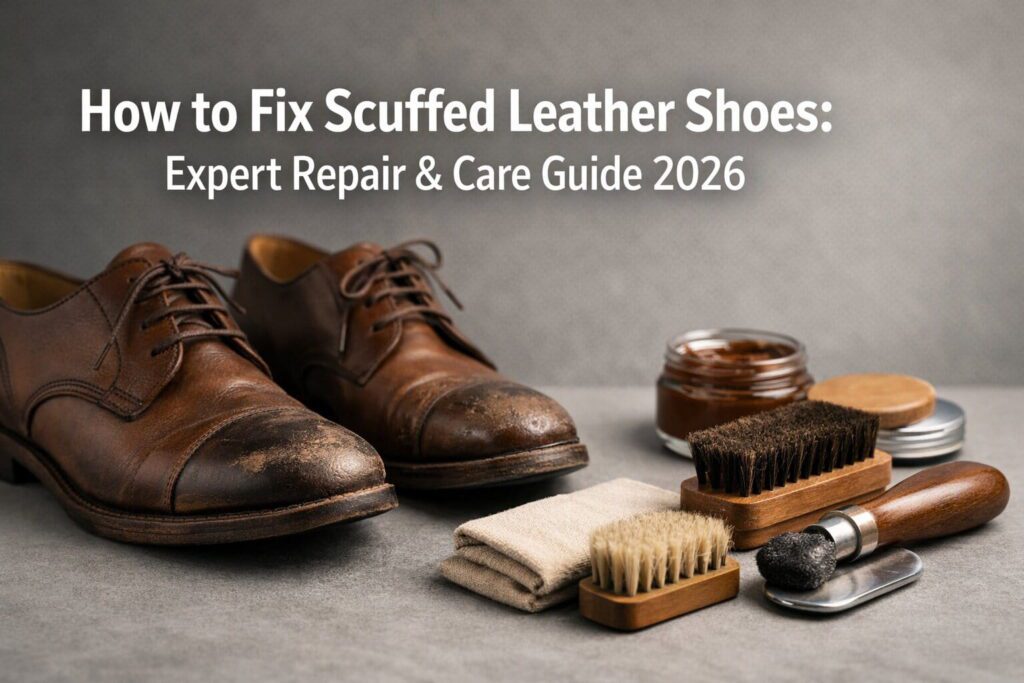
How to Fix Scuffed Leather Shoes: Expert Repair & Care Guide 2026
tL;DR: The Quick Fix
How do you fix scuffed leather shoes quickly? For minor surface scuffs, clean the area with a damp cloth, let it dry, and rub a small amount of leather conditioner for scratches or colorless shoe cream into the mark using a circular motion. If the color has lifted, apply a color-matched cream polish, let it sit for 10 minutes, and buff vigorously with a horsehair brush to blend the waxes. For deep scratches, you may need a specialized leather filler or repair resin before polishing.
Introduction: The Heartbreak of the First Scuff
There is a specific kind of pain that comes with looking down at a pair of leather shoes you’ve only owned for a week and seeing that first ugly, jagged white line across the toe box.
In my 20+ years of running a physical shoe store and handling thousands of pairs of shoes—from high-end full-grain oxfords to daily-wear casual boots—I’ve seen customers ready to throw away perfectly good footwear because of a simple scuff. Whether you are navigating a crowded subway in New York, walking the cobblestones in Europe, or just catching your toe on an office chair, leather damage is inevitable.
But here is the truth that most footwear brands won’t tell you: Leather is skin. Just like your own skin heals (to an extent), leather can be restored. It is a resilient, organic material that responds incredibly well to the right oils, waxes, and care.
In this guide for Urban Style Footwear, I’m going to walk you through exactly how to fix leather scratches, distinguish between a cosmetic scuff and deep damage, and share the “shop secrets” we use to make beaten-up display models look brand new again.
Why This Matters: Don’t Retire Your Shoes Early
Why do we panic over scratches? Because we often mistake a “finish issue” for a “structural issue.”
Most people buying shoes online today struggle with the expectation of perfection. When you unbox a fresh pair, they look flawless. But the moment real life happens, that finish is compromised. Through my decades on the shop floor, I’ve noticed a pattern: people retire their shoes too early.
Discarding leather shoes because of scuffs is not just bad for your wallet; it’s bad for the environment. A quality leather shoe, if the sole is good, should last years, not months. Learning how to repair leather scratches isn’t just a maintenance skill—it’s an investment in your wardrobe.
Whether you are a budget-conscious student or a professional investing in high-quality dress shoes, mastering these simple repairs will save you hundreds of dollars over your lifetime.
Diagnosis: Is it a Scuff, a Scratch, or a Gouge?
Before we grab the polish, we need to know what we are dealing with. In my shop, I categorize damage into three levels. The treatment for each is totally different.
1. The Surface Scuff
- What it is: This is usually a transfer of paint or dirt onto the shoe (like rubbing your shoe against a painted curb) or a slight abrasion of the top wax layer.
- The Look: It often looks like a smudge. The leather fibers underneath aren’t broken.
- The Fix: Cleaning and conditioning.
2. The Light Scratch
- What it is: The finish of the leather has been penetrated, but the leather hide itself hasn’t been cut deeply. The color might be missing, revealing the lighter tan or grey leather beneath.
- The Look: A thin, light-colored line.
- The Fix: Re-coloring and waxing (filling with polish).
3. The Deep Gouge
- What it is: Structural damage. A flap of leather might be hanging loose, or the cut is deep enough to feel a ridge with your fingernail.
- The Look: Ugly, textured, and often dark.
- The Fix: Glue, filler, sanding, and heavy restoration.
Method 1: The “Shop Floor” Fix for Minor Scuffs
This is the technique I use when a customer tries on a shoe and accidentally scuffs the heel against the other foot. It’s fast, easy, and requires minimal tools.
What you need:
- A microfiber cloth
- A high-quality leather conditioner for scratches (or a generic renovating lotion)
- A horsehair brush
The Process:
- Wipe Down: Remove any surface dust. You don’t want to grind grit into the leather.
- Heat Activation: This is a pro trick. Rub the scuffed area briskly with your thumb. The heat from friction helps redistribute the existing oils and waxes in the leather. For minor scuffs, this sometimes makes them disappear instantly.
- Condition: Apply a pea-sized amount of conditioner to the cloth. Rub it into the scuff in circular motions.
- Buff: Wait 5 minutes, then brush rapidly.
Expert Note: If the leather is “Pull-Up” leather (oiled leather that changes color when bent), the thumb-rub method works 90% of the time without adding any product.
Method 2: How to Fix Leather Scratches (Color Loss)
When the scratch has removed the dye, you need to put pigment back in. This is the most common issue I see with office shoes and commuter boots.
What you need:
- Shoe Cream (NOT liquid polish, and NOT wax polish yet)
- Applicator brush
Step-by-Step:
- Clean the Wound: Ensure the scratch is free of dirt.
- Apply Cream Polish: Cream polish contains pigment (color) and oils. It penetrates the leather. Wax polish just sits on top. You need cream to dye the scratch back to the shoe’s color.
- Massage it In: Don’t just wipe it on. Work the cream into the scratch/crack.
- The “Cure” Time: Let it sit for at least 15 minutes. The leather needs to drink the pigment.
- Seal with Wax: Once the cream is dry and buffed, apply a thin layer of hard wax polish over the top to seal the repair and add shine.
Method 3: Heavy Duty Repair for Deep Gouges
If you kicked a concrete step and have a flap of leather hanging, polish won’t fix it. You need surgery.
What you need:
- Super glue (Cyanoacrylate) – minimal amount!
- High-grit sandpaper (400 to 800 grit)
- Leather filler (optional)
- Shoe cream
The Process:
- Glue the Flap: If there is a loose flap of leather, use the tip of a toothpick to apply a tiny dot of glue and press the flap back down. Hold for 60 seconds.
- Sand Smooth: Gently sand the glued area or the rough edges of the gouge until it feels flush with the rest of the shoe. It will look dull and scary—don’t panic.
- Fill (If needed): For deep holes, use a dedicated leather filler paste. Apply, let dry, and sand smooth.
- Recolor: Apply heavy coats of cream polish to the sanded area. You may need 2-3 coats to match the color density of the surrounding leather.
Pro-Tips: Insider Insight from 20 Years in Footwear
Running a shop teaches you shortcuts, but it also teaches you what never to do. Here are my personal insights on maintaining leather integrity.
The “Liquid Polish” Trap
Never use those sponge-tipped liquid polishes on a scratch. They contain high alcohol and lacquer content. They might cover the scratch for a day, but they dry out the leather, leading to cracking later. Stick to creams and waxes.
The Hairdryer Method
If you are trying to repair leather scratches on waxy, rugged boots (like Timberlands or heavy work boots), use a hairdryer. Heat the leather slightly (don’t burn it!) and then rub the scratch. The heat melts the oils deep in the leather, causing them to rise to the surface and self-heal the scratch.
Conditioner is Key
Dry leather scratches easily. Well-oiled leather deflects scratches. Think of it like skin: dry skin cracks and bleeds; moisturized skin is elastic. Using a leather conditioner for scratches preventatively is better than fixing them later.
Comparison Table: Choosing the Right Repair Method
Not sure which route to take? Here is a breakdown based on the damage type.
| Damage Type | Best Tool | Skill Level | Cost | Longevity of Fix |
|---|---|---|---|---|
| Surface Scuff | Damp cloth + Conditioner | Beginner | Low ($) | Permanent |
| Light Scratch | Pigmented Shoe Cream | Beginner | Low ($) | High |
| Deep Scratch | Filler + Cream + Wax | Intermediate | Medium ($$) | High |
| Gouge/Cut | Glue + Sandpaper + Dye | Advanced | Low ($) | Medium |
| Fading | Renovating Polish | Beginner | Medium ($$) | Medium |
Common Mistakes to Avoid
I have seen many DIY attempts go wrong. Here is how to avoid ruining your shoes while trying to save them.
- Wrong Color Match: Black is not just black. There is blue-black, carbon-black, and charcoal. If you use the wrong shade, you will have a patchy shoe. Always test the polish on the inner heel (the discrete side) first.
- Over-Sanding: When fixing a gouge, sand only the damaged area. If you sand the surrounding healthy leather, you damage the factory finish.
- Using Olive Oil or Coconut Oil: Please don’t do this. Food oils can go rancid and rot the stitching. Use oils designed for leather (Neatsfoot, Mink, or specialized synthetic blends).
- Ignoring the Sole: Sometimes a “scuff” is actually the sole separation. Check the glue bond near the scuff to ensure the structure is sound.
People Also Ask
Can toothpaste fix scuffed leather shoes? Yes, non-gel white toothpaste can act as a mild abrasive to buff out surface scuffs on finished leather, but use it with caution and wipe it off immediately to avoid drying out the material.
Does Vaseline fix scratches on leather shoes? Vaseline (petroleum jelly) can temporarily darken a scratch and make it less visible, but it doesn’t nourish the leather and can leave a greasy residue that attracts dust.
How do you fix deep scratches in leather boots? Deep scratches require filling with a repair resin or leather filler, sanding the surface smooth, and then applying a color-matched cream polish to blend the repair.
Is shoe polish the same as leather conditioner? No. Polish is primarily for color and shine (aesthetics), while conditioner is for hydration and flexibility (health). You should use conditioner before polish.
Ready to Restore Your Kicks?
Don’t let a few scratches push your favorite shoes to the back of the closet. With the right leather conditioner for scratches and a bit of patience, you can double the lifespan of your footwear.
If your shoes are beyond repair or you are simply ready for a fresh upgrade, explore the global collection at Urban Style Footwear. We curate shoes that balance durability with modern style.
[Check today’s best-rated leather care kits on Amazon] [Browse Top-Reviewed Durable Casual Shoes]
FAQs
1. What is the best home remedy for scuffed leather shoes?
For minor scuffs, a small amount of baking soda mixed with water or white toothpaste can gently buff out the mark. Follow up immediately with a leather conditioner to prevent drying.
2. Can scuffed leather be repaired permanently?
Yes, most surface scuffs can be permanently repaired by buffing and conditioning. Deep scratches can be disguised and filled, but the texture repair depends on the skill of the application.
3. How do you fix scratches on fake (synthetic) leather shoes?
Synthetic leather cannot absorb oil like real leather. For synthetic shoes, use a color-matched marker or acrylic leather paint to cover the scratch. Polish will not work effectively on plastic-based materials.
4. How often should I condition my leather shoes?
To prevent scratches, condition your shoes once a month if worn daily. Hydrated leather is more elastic and resistant to cracking and scratching than dry leather.
5. Does olive oil fix leather scratches?
While olive oil can darken scratches, it is not recommended as it can go rancid and leave a sticky residue. Stick to products specifically formulated for leather care.
6. How do I remove black scuff marks from tan shoes?
Use a pencil eraser or a “magic eraser” sponge (very gently) to lift the black friction mark. Then, apply a tan shoe cream to restore the finish.
7. What acts as a natural leather conditioner?
Beeswax and lanolin are excellent natural conditioners often found in high-quality leather balms. They provide a breathable protective layer.
8. Can I use a sharpie to fix leather shoes?
Only in an emergency on black shoes. Sharpie ink usually has a purple tint that looks obvious in sunlight. It is better to use proper shoe dye or cream.
9. Why is my leather peeling after I polished it?
If the leather is peeling, it is likely “bonded leather” or synthetic, not real leather. Polish cannot fix peeling plastic; the shoes typically need to be replaced.
10. How much does a cobbler charge to fix scratches?
A professional shine and minor repair typically cost between $15 and $30 depending on your location, whereas a full re-dyeing service can cost $50 or more.

Pingback: How to Keep White Soles White 2026: Prevention & Sole Protector Guide
Pingback: How to Wear Ankle Boots with Jeans: 2026 Men’s Style Guide (Optimized for high CTR and includes the current year relevance)
Pingback: How to Clean Sheepskin Boots (Uggs) at Home in 2026: The Ultimate Guide