

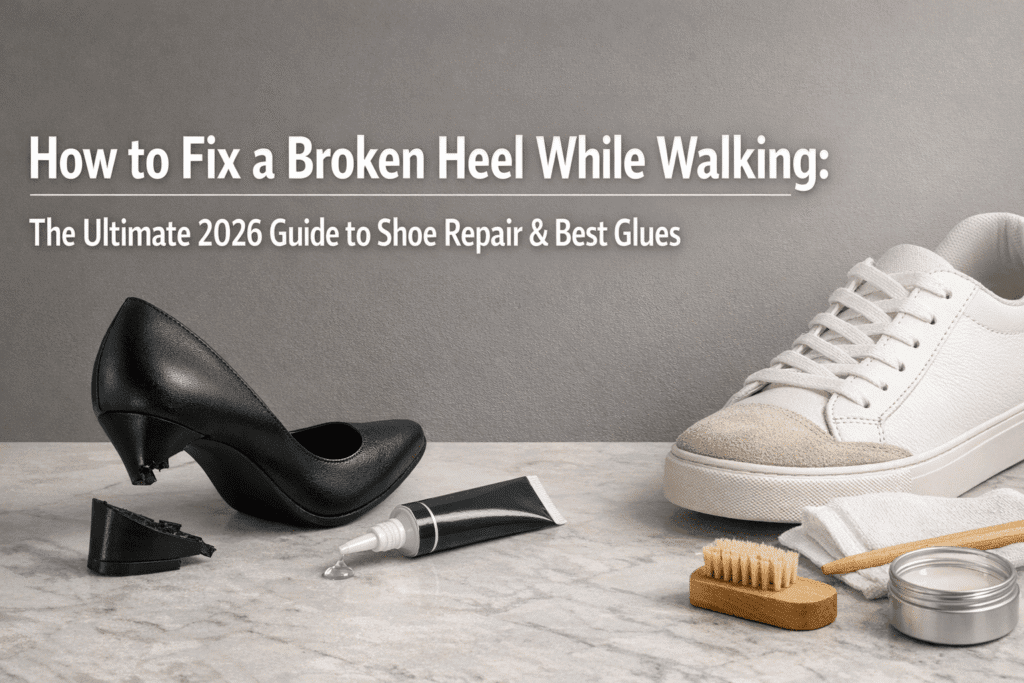
How to Fix a Broken Heel While Walking: The Ultimate 2026 Guide to Shoe Repair & Best Glues
Introduction
There is a specific kind of panic that sets in when you are walking down a busy street, rushing to a meeting or navigating a terminal, and suddenly—snap. Your heel gives way. You stumble, the shoe flops uselessly against your foot, and you are left hobbling.
It is a universal nightmare. Whether you are in New York, London, or Sydney, gravity and material fatigue treat everyone the same. In my 20+ years running a physical shoe store, I have had countless customers limp through my doors, holding a detached heel in one hand and their dignity in the other. It doesn’t matter if you spent $50 or $500; glues dry out, nails rust, and polyurethane crumbles.
The immediate question is: How do I survive the next hour? The secondary, more important question is: Can I save these shoes?
This guide isn’t just about the emergency shuffle; it is about understanding the mechanics of footwear adhesion. We will cover how to survive the immediate “walking” emergency, and then deep dive into the best shoe glue for soles to perform a permanent, professional-grade repair at home.
TL;DR: Quick Answer
How to Fix a Broken Heel While Walking (Emergency & Permanent):
If a heel snaps while you are walking, your immediate option is temporary immobilization. Use double-sided tape, a strong hair tie, or duct tape to secure the heel to the sole until you reach safety. Do not drag the foot. For a permanent repair, you must clean both surfaces, sand them down, and apply a flexible shoe repair glue sole adhesive (like contact cement or polyurethane). Super glue is brittle and only a temporary fix; for long-term durability, flexible, impact-resistant glues are mandatory.
Why This Topic Matters (Global Context)
We live in an era of “fast fashion” footwear, where aesthetic often overrides engineering. But even heritage brands aren’t immune to the ravages of time.
The “Hydrolysis” Heartbreak
One thing I’ve learned from handling thousands of shoes over two decades is that storage kills shoes faster than walking does. If you bought a pair of boots five years ago and left them in the closet, moisture in the air breaks down the chemical bonds in the sole (a process called hydrolysis). You wear them once, and the sole peels off or the heel snaps.
The Online Shopping Disconnect
When buying online, you cannot test the “flex” or check the stitching tension. Many buyers unknowingly purchase shoes with rigid, plastic-heavy heel blocks that snap under torque rather than flex.
I am writing this to save you money and save your favorite pair. You do not always need a cobbler. With the right glue for the soles of shoes and a bit of patience, you can execute a repair that is often stronger than the factory bond.
Part 1: The Emergency Fix (While You Are Still Walking)
If you are reading this on your phone while standing on one leg in a parking lot, this section is for you. You cannot “properly” glue a shoe while walking, but you can rig it to get home.
1. The “Bodega” Run (Super Glue Hack)
If you are near a convenience store or pharmacy:
- Buy Cyanoacrylate (Super Glue/Krazy Glue).
- Warning: This is brittle. It will likely crack again within 24 hours because walking creates flex, and super glue hates flex.
- Technique: Wipe the dirt off the heel and sole with a tissue. Apply a thin layer. Press down with your full body weight for 60 seconds. Walk carefully (heel-to-toe gently) to your destination.
2. The MacGyver Bind (Duct Tape or Hair Ties)
If the heel is fully detached:
- Hair Ties: If you have elastic hair bands, wrap two or three of them around the instep of the shoe (the arch) and the heel block to hold it in place. It looks terrible, but it stops the heel from dragging.
- Tape: Duct tape or heavy packaging tape wrapped around the arch and heel is the most secure temporary fix.
3. The Gait Change
If you have no tools:
- Remove the broken heel piece entirely if possible.
- Walk on the balls of your feet (tiptoe style). Do not try to walk normally, or you will sprain your ankle.
Part 2: The Permanent Fix (The Best Shoe Glue for Soles)
Once you are home, you need to do this right. Using the wrong glue is the number one mistake I see. A rigid glue will snap; a water-based glue will dissolve in the rain.
Understanding the Chemistry
To fix a broken heel or a delaminated sole, you need a shoe repair glue sole solution that offers three things:
- High Viscosity: It shouldn’t be runny like water.
- Flexibility: It must stretch when you step.
- Water Resistance: It cannot fail in a puddle.
Top Contenders: Choosing the Right Adhesive
1. Contact Cement (The Professional’s Choice)
In the trade, this is the gold standard. Brands like Barge or DAP Weldwood are common.
- How it works: You apply it to both surfaces (the heel and the shoe), let it dry for 15-20 minutes until tacky, and then press them together.
- Pros: Incredible bond, very flexible.
- Cons: Unforgiving (once it touches, it’s stuck), strong fumes.
2. Urethane-Based Adhesives (The “Shoe Goo” Style)
These are thick, clear, and rubbery glues.
- How it works: Apply, clamp, and cure for 24 hours.
- Pros: Fills gaps well (great if the heel is jagged), waterproof.
- Cons: Long cure time. You cannot wear them the next day.
3. Toughened Cyanoacrylate (Impact-Resistant Super Glue)
If you must use instant glue, look for “Gel” versions labeled “Impact Tough” or “Rubberized.”
- Pros: Fast.
- Cons: Still more brittle than contact cement.
Expert Recommendation: If I am fixing a customer’s shoe in my shop, I am using industrial-grade Contact Cement. For a DIY home user, a Urethane adhesive is safer and easier to handle, provided you have 24 hours to let it dry.
Step-by-Step: How to Permanently Reattach a Heel
Do not just squirt glue in the hole and pray. That is a recipe for a second fall.
Step 1: Prep the Surface
Old glue is your enemy. You must remove the residue from the previous failure.
- Use a dull knife or sandpaper to scrape off old adhesive from both the shoe unit and the heel block.
- Pro Tip: Wipe both surfaces with Acetone (nail polish remover) or Alcohol. This removes oils and prepares the pores of the material for the glue for the soles of shoes.
Step 2: Abrasion
Glue loves rough surfaces.
- Use 100-grit sandpaper to roughen the bottom of the shoe and the top of the heel.
- If the surface is too smooth (like hard plastic), the glue will peel off like a sticker.
Step 3: Application Strategy
- For Contact Cement: Apply a thin layer to both sides. Wait 15 minutes. It should feel sticky but not transfer to your finger. Then, press together with force.
- For Urethane: Apply to one side. Swirl it to prevent air bubbles. Press together.
Step 4: The Clamping (Crucial)
You cannot hold it for 24 hours. You need pressure.
- If you don’t have clamps, use heavy rubber bands.
- Alternatively, put the shoe on, sit down, and rest a heavy weight (like a dumbbell or pile of books) on your knee to press the heel into the floor. (This is boring, so tape/bands are better).
Pro-Tip Section (Retailer-Only Insights)
In my 20 years, I’ve noticed patterns that manufacturers don’t talk about.
1. The “Hollow Heel” Trap Many modern shoes, especially high street fashion heels, are hollow plastic shells. When they snap, there is very little surface area to glue back together.
- The Fix: You need to fill the hollow void. Stuff the hollow heel with cotton wool soaked in epoxy or Shoe Goo before reattaching. This creates an internal “anchor.”
2. The Sound of Death Shoes warn you before they break. If your heel starts making a “clicking” sound on carpet, or a “squeak” when you lift your foot, the internal shank or glue bond is failing. Check them immediately.
3. Material Shortcuts If your heel block looks like stacked leather but feels incredibly light, it is “leatherette” wrapped around plastic. Treat this as plastic when gluing—you need a plastic-bonding adhesive, not a leather glue.
Comparison Table: Choosing Your Glue
| Feature | Standard Super Glue | Urethane Adhesive (e.g., Shoe Goo) | Contact Cement (Professional) |
|---|---|---|---|
| Best For | Emergency / Hard Plastics | Sneakers / Filling Gaps | Leather / Rubber Soles |
| Flexibility | Low (Brittle) | High (Rubbery) | High (Elastic) |
| Cure Time | 1–5 Minutes | 24–48 Hours | Instant Grip (after 20 min dry time) |
| Difficulty | Easy | Easy | Moderate |
| Durability | Short-Term | Long-Term | Permanent |
Common Mistakes to Avoid
- Using Wood Glue or PVA: It seems obvious, but I’ve seen it. These glues are for porous materials and will not bond rubber or plastic.
- Rushing the Cure Time: Even if the package says “dry in 1 hour,” wait overnight. The bond strength increases significantly after a full cure.
- Ignoring Alignment: Once contact cement touches, it is stuck. If you attach the heel crookedly, you will ruin your gait and hurt your back. Dry-fit (practice placing it) three times before applying glue.
- Gluing Dirty Shoes: If there is road dust or mud in the joint, the shoe repair glue sole bond will adhere to the dirt, not the shoe.
Keyword Strategy & Monetization (CTA)
Finding the right supplies is half the battle. You don’t need industrial drums of glue; small tubes are available online.
- For Leather Boots & Heels: Look for Barge All-Purpose Cement. It is industry standard for a reason.
- For Sneakers & Casual Shoes: Shoe Goo or E6000 are excellent because they are forgiving and waterproof.
- For the “Purse Kit”: Keep a small tube of Gorilla Gel Super Glue (the green cap) in your bag. The gel formula doesn’t run, making it safer for on-the-go fixes.
Action: Check today’s best prices for [Shoe Repair Glues on Amazon] or compare options at your local hardware listings. Investing $10 in quality glue saves a $100 pair of shoes.
PAA-Style Questions (Featured Snippet Optimized)
What is the best glue to fix a heel? The best glue for fixing a heel permanently is a contact cement (like Barge) or a polyurethane adhesive. These remain flexible when dry, absorbing the shock of walking without cracking.
Can I use Gorilla Glue on shoe soles? Yes, but ensure you use the “Gorilla Glue Clear Grip” or specific shoe formulas. Standard expanding Gorilla Glue can create a messy foam that ruins the shoe’s aesthetic and fit.
How long does shoe glue take to dry? Most shoe repair glue sole products require 24 hours to fully cure. Contact cement bonds instantly upon contact but still benefits from an overnight rest to reach maximum strength.
Why did my shoe heel fall off? Heels usually detach due to hydrolysis (aging glue), physical impact (tripping), or poor manufacturing where the nails or staples missed the internal securement block.
Does hot glue work on shoes? No. Hot glue is heat-sensitive and lacks flexibility. It will become brittle in the cold or melt on hot pavement, leading to immediate failure.
FAQs
Q1: What is the strongest glue for the soles of shoes?.A1: Industrial-grade contact cement is widely considered the strongest option for shoe soles because it creates a flexible, permanent bond that moves with your foot.
Q2: Can a cobbler fix a broken heel block? A2: Yes. If the heel block itself is snapped in half, a cobbler can order a replacement block. If it is just detached, they can professionally re-glue and nail it back on.
Q3: Is Super Glue good for shoe repair? A3: Only for emergencies. Super glue is too brittle for the constant flexing of a shoe sole and will likely crack within a few days of wear.
Q4: How do I clamp a shoe without clamps? A4: Use strong rubber bands, duct tape wrapped tightly around the shoe, or wedge the shoe under a heavy piece of furniture to maintain pressure while the glue dries.
Q5: What glue do Nike and Adidas use? A5: Major brands typically use heat-activated polyurethane adhesives and industrial primers that are not readily available to consumers, which is why contact cement is the best DIY alternative.
Q6: Can I use epoxy on shoes? A6: Epoxy is very strong but very rigid. It is excellent for filling holes in a hollow heel but poor for gluing a flexible sole to an upper.
Q7: How much does it cost to fix a broken heel? A7: A DIY repair costs the price of the glue ($5–$


Pingback: What Is Shoe Bite? Treatment, Causes & Prevention Guide (2026)
Pingback: How to Stop Heels from Clicking: Expert Quiet Walking Guide (2026)