

How to Clean Velvet Shoes Without Ruining Them: The 2026 Expert Guide (Do’s & Don’ts)
TL;DR: The Quick Answer
To clean velvet shoes safely, never saturate the fabric with water. Start by using a soft-bristled clothes brush or an old toothbrush to gently sweep away surface dust in the direction of the nap. For stains, create a solution of water and mild dish soap, mix until sudsy, and apply only the foam (not the liquid) with a soft cloth. Dab gently—do not scrub—and allow the shoes to air dry away from direct sunlight.
Introduction: The Velvet Dilemma
There is something undeniably luxurious about velvet footwear. Whether it’s a pair of deep burgundy loafers for a holiday party, sleek velvet sneakers for a casual Friday, or high-fashion velour heels, the texture adds immediate depth and sophistication to an outfit.
But let’s be honest—owning them is stressful.
In my 20+ years of running a shoe store and handling footwear inventory, the number one reason people hesitate to buy velvet is the fear of ruining them. I’ve had customers walk in, holding a beautiful pair of velvet slip-ons, and ask, “But what happens if I step in a puddle?” or “How do I get street dust off this?”
It is a valid concern. Unlike leather, you can’t just wipe it down. Unlike canvas, you can’t throw it in the washing machine (please, never do that).
The good news? Cleaning velvet and velour isn’t actually difficult; it just requires a different approach. It is about patience and technique rather than harsh scrubbing. In this guide, I’m going to share the exact methods we use in the industry to keep velvet looking plush, vibrant, and new, regardless of your budget or where you live in the world.
Why This Matters: The “Nap” Factor
Before we get to the cleaning, you need to understand what you are working with. This isn’t just “cloth.”
Velvet and velour are woven fabrics where cut threads are evenly distributed in a short, dense pile. This gives the material its distinctive soft feel. This pile has a “nap“—a specific direction in which the fibers lie flat.
Why does this matter for cleaning? If you scrub velvet aggressively or use the wrong chemicals, you don’t just stain it; you crush the pile. Once those fibers are matted down or ripped out, you are left with permanent “bald spots” or areas that look like a different color because the light hits them differently.
Most online shopping regrets happen here. People buy cheap velvet shoes, get them dirty, scrub them with a rough sponge, ruin the texture, and then assume the shoes were bad quality. Usually, the shoes were fine—the cleaning method was just too aggressive.
The Toolkit: What You Need
You don’t need expensive machinery, but you do need the right tools. Here is what I keep in my back room for quick touch-ups:
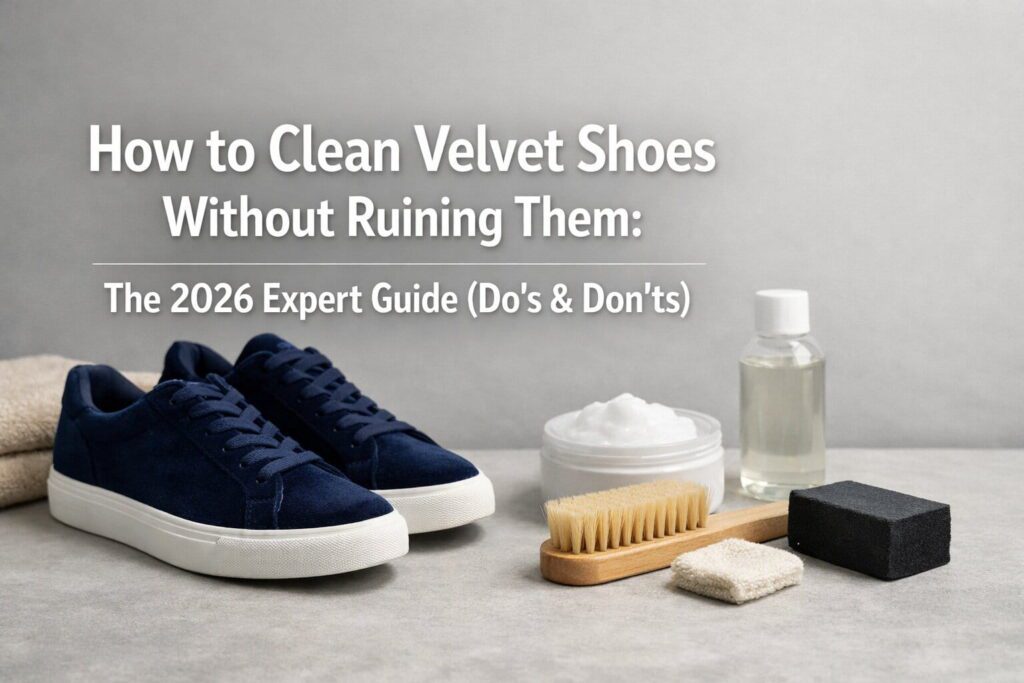
- Soft-Bristled Brush: A dedicated suede/nubuck brush or a brand-new soft toothbrush.
- Microfiber Cloths: White is best (to ensure no dye transfer to the shoe).
- Mild Dish Soap: Or a dedicated delicate fabric cleaner.
- A Bowl of Water: Room temperature.
- Protective Spray: Scotchgard or a generic fabric protector (optional but recommended).
Step-by-Step: How to Clean Velvet Shoes (The Safe Way)
Here is the exact framework I’ve used for two decades to rescue velvet shoes from dust, mud, and spills.
1. The “Dry” Prep (Do This First)
Never apply water to a muddy velvet shoe. If your shoes are wet and muddy, wait for them to dry completely. If you try to wipe wet mud, you will push the dirt deep into the fibers, staining them permanently.
Once dry, take your soft brush and gently brush the shoe. Move in the direction of the nap (with the grain) to remove loose dust and dried dirt. This step usually solves 80% of minor dirty shoe problems.
2. The “Suds-Only” Method for Stains
If brushing didn’t work, you need to spot clean.
- Mix: Fill a bowl with water and add a few drops of mild dish soap. Whisk it vigorously until you have a layer of thick foam/suds on top.
- Scoop: Take your microfiber cloth or soft brush and scoop up only the suds. You want the cleaning agents in the bubbles, not the water itself.
- Dab: Gently dab (don’t rub) the stained area with the sudsy cloth. Repeat until the stain lifts.
3. The Drying Process
Wipe away any excess foam with a clean, dry cloth. Now, let the shoes air dry.
- Warning: Do not put them near a radiator, heater, or use a hair dryer on high heat. Heat can shrink the cotton or synthetic base of the velvet, warping the shoe’s shape.
4. Restoring the Texture (The Retailer Secret)
Once the shoes are dry, the velvet might look a bit flat or stiff. This is where the magic happens.
- Steam it: If you have a clothes steamer, hold it about 6 inches away from the shoe. The steam relaxes the fibers.
- Brush it up: While slightly damp from the steam, brush the fibers against the grain to fluff them up, then smooth them back down. This restores that premium, “new shoe” look.
Velvet vs. Velour: Is There a Difference?
From an SEO and shopper perspective, you will see these terms used interchangeably, but there is a slight technical difference I’ve noticed in stock handling.
- Velvet: Traditionally made from silk (expensive) or cotton/synthetic blends. It is woven and has a stiffer drape. It is less stretchy.
- Velour: Usually a knit fabric (often cotton/poly blend). It is stretchier and feels a bit more like a plush towel.
Does cleaning change? Minimally. How to clean velour shoes is essentially the same process, but velour is generally a bit more durable and forgiving than pure silk velvet. However, velour traps dust more easily, so the dry brushing step is even more critical.
Pro-Tips: Insights From 20 Years in Footwear
These are the things brand manuals don’t usually tell you, but experience teaches you quickly.
1. The “Crusty” Sole Fix If you have velvet sneakers with white rubber soles (like Vans or Converse styles), the velvet often bleeds onto the rubber when wet.
- My Tip: Cover the velvet near the sole with masking tape before you scrub the rubber sole with a Magic Eraser or stiff brush. This prevents cross-contamination.
2. The Lemon Juice Hack For tough grease stains that soap won’t lift, I’ve had success with a mixture of lemon juice and water (1:1 ratio). It acts as a mild astringent. However, always test this on the inner heel or tongue first to ensure it doesn’t bleach the color.
3. Storage is Key Velvet attracts dust like a magnet. If you aren’t wearing them, don’t leave them on an open rack. Keep them in a shoe bag or the original box. It saves you cleaning time later.
Common Mistakes to Avoid (The “Don’ts”)
I have seen beautiful shoes ruined by these common errors. Please avoid them.
- DON’T use paper towels: They shred when wet and leave tiny white paper lint stuck in the velvet pile, which is a nightmare to pick out.
- DON’T use hot water: It can melt the glues used to bond the velvet upper to the sole, causing separation.
- DON’T rub hard: If you scrub a spot too hard, you will create a bald patch. Once the fiber is gone, it is gone.
- DON’T wash in a machine: The tumbling action creates friction that destroys the velvet texture.
Comparison: Cleaning Different Shoe Materials
To give you context on effort levels, here is how velvet compares to other common materials.
| Feature | Velvet/Velour | Canvas (Cotton) | Suede | Leather |
|---|---|---|---|---|
| Water Sensitivity | High (Avoid saturation) | Low (Can be soaked) | High (Avoid water) | Medium (Wipe clean) |
| Tool Required | Soft Brush + Suds | Stiff Brush + Soap | Suede Eraser | Damp Cloth + Polish |
| Drying Time | Slow (Air dry) | Medium | Slow | Fast |
| Risk of Damage | High (Pile crush) | Low | High (Discoloration) | Low |
People Also Ask (PAA)
Can I wash velvet shoes in the washing machine? No, never put velvet shoes in a washing machine. The agitation will ruin the pile texture and the water saturation can dissolve the shoe glue.
How do I get mud off velvet shoes? Let the mud dry completely until it is hard. Then, use a soft-bristled brush to gently sweep the dried dirt off. Do not wipe wet mud.
Can I use suede cleaner on velvet shoes? Generally, yes. Many suede cleaning kits are formulated for “napped” fabrics, making them safe for velvet, but always check the bottle label first.
Does water ruin velvet shoes? Water doesn’t necessarily ruin the shoe structure, but it can mat down the fibers and leave unsightly water rings if not dried evenly.
How to clean crushed velvet shoes? Use a hand-held steamer to lift the crushed fibers, then gently brush them up with a soft toothbrush to restore volume.
Monetization & Recommendations
If you are looking to invest in a pair of velvet shoes or need the right tools to maintain the ones you have, quality matters. Cheap synthetic velvet is harder to clean because the fibers are often glued poorly.
- Looking for specific cleaners? Check out top-rated fabric care kits on [Amazon/Retailer Link].
- Need a fresh pair? Browse the best-selling velvet loafers and sneakers for 2026 here: [Affiliate Link to Category].
Investing in a simple $10 cleaning kit can extend the life of your $100 shoes by years. It is a math equation that always makes sense.
FAQ
1. Can I wear velvet shoes in the rain? It is not recommended. If you must, apply a heavy-duty fabric protector spray 24 hours beforehand. If they get soaked, stuff them with newspaper immediately to draw out moisture.
2. How do I remove scuff marks from velvet? Try a gum eraser (standard white pencil eraser). Gently rub the scuff mark dry. This often lifts the transfer without wetting the fabric.
3. Why do my velvet shoes smell? Velvet is absorbent. Sprinkle baking soda inside the shoe (not on the outside velvet) and let it sit overnight to absorb odors.
4. How to clean velour shoes vs. velvet? Treat them the same, but you can be slightly firmer with velour. Velour is often used in sneakers and is a bit more rugged than dress-shoe velvet.
5. Can I use a hair dryer to dry them? Only on the “Cool” setting. Heat is dangerous for velvet shoes as it can warp the synthetic backing of the fabric.
6. How do I fix a “bald spot” on velvet? Unfortunately, if the fibers are missing, you can’t grow them back. However, steaming the surrounding area and brushing fibers over the spot can help camouflage it.
7. Is lint rolling okay for velvet? Yes! A sticky lint roller is actually one of the safest ways to remove pet hair and dust from velvet shoes without using water.
8. What if I spilled wine/juice on them? Blot immediately with a dry cloth—do not rub. Then use the “suds only” method. If the stain remains, consult a professional cobbler.
9. Does vinegar clean velvet? Diluted white vinegar (1 part vinegar to 2 parts water) can help with salt stains, but it smells strong. Use sparingly.
10. How often should I clean them? Brush them after every wear. Deep clean with suds only when visible stains appear. Over-cleaning can wear down the fabric.
Final Thoughts Cleaning velvet shoes is less about “scrubbing” and more about “grooming.” Treat the fabric like hair—brush it, steam it, and keep it dry. Do this, and your velvet footwear will stay a statement piece in your wardrobe for years to come.
- The Ultimate Amazon Fashion Find: POYOIOR Cowgirl Western Pattern Embroidered Review
- 7 Best Safety Shoes for Construction Workersin India
- 7 Best Safety Shoes for Construction Workers in India 2026
- 5 Best Orthopedic Slippers for Diabetic Patients in India (2026 Guide)
- What is TPR Sole? The Ultimate Guide to Durable Shoe Soles (2026)
Pingback: How to Shorten Long Shoelaces Without Cutting: 5 Easy Hacks (2026)
Pingback: How to Remove Oil Stains from Suede Shoes: The Expert Guide (2026
Pingback: How to Straight Bar Lace Dress Boots: The Expert Guide (2026)