
How to Choose Running Shoes in India 2026 – Beginner’s Complete Buying Guide
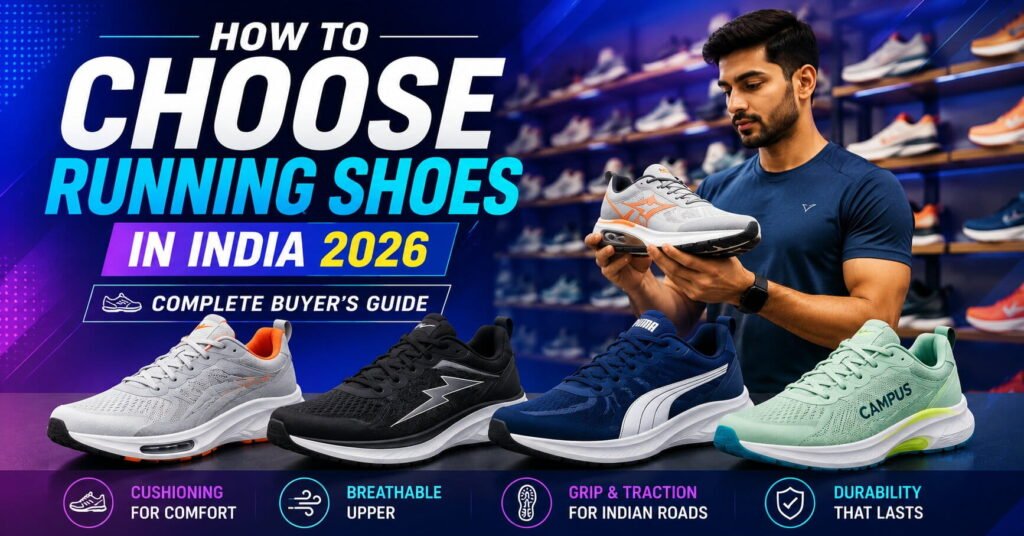
How to choose running shoes in India depends on your running style, foot shape and cushioning requirements.
A customer walked into my shop last year — software engineer from Bengaluru, visiting Chennai for work. He’d bought a pair of running shoes online six weeks earlier. Highly rated. Well-reviewed. Looked great in photos. By week three, his heels hurt every morning. By week five, he’d stopped running altogether.
His shoes were not defective. They were the wrong shoes for him. Wrong arch support, wrong heel drop, wrong cushioning density for his weight and gait. The reviews were real — those shoes worked well for the people who reviewed them. They just didn’t work for him.
That’s the real problem with buying running shoes in India today. The market is flooded with options. Reviews are either fake or from people whose feet are nothing like yours. Sizing is inconsistent across brands. And half the shoes marketed as “running shoes” are repurposed fashion sneakers with a sporty label. You’re making a decision that affects your joints, your feet, and your motivation to keep running — with almost zero reliable guidance.
I’ve been fitting shoes across India for over 20 years — in Chennai, Mumbai, and Delhi — and I’ve tested hundreds of running shoe pairs in real Indian conditions. Not American treadmills. Not air-conditioned test labs. Indian concrete, Indian monsoon roads, Indian summer heat. This guide gives you the real framework for choosing the right running shoe, followed by honest reviews of four shoes I’d actually recommend to a beginner standing in my shop today.
⚡ TL;DR QUICK VERDICT
- Best Overall: ATHCO Men’s Aura – Maximum air cushioning, breathable upper, built for daily Indian road running.
- Best Value: Bacca Bucci ZippyZest – Full mesh build, solid airflow, honest budget pick for first-time runners.
- Best for Comfort & Brand Trust: PUMA Maximal Comfort – Reliable daily shoe, great for walking and light jogging.
- Best Grip on Indian Roads: Campus Men’s KRIVO – Anti-slip sole, air/gel cushioning, ready for monsoon terrain.
*We may earn a small commission at no extra cost to you if you buy through our links.
| Material | Initial Comfort | Durability | Best For |
|---|---|---|---|
| Standard EVA | High | 4–6 months | Budget beginner shoes |
| Nitrogen-infused EVA | High | 6–9 months | Mid-range running shoes |
| TPU | Medium | 12–18 months | Premium arch support |
| Memory Foam | Very High | 2–3 months | Light cushioning layer only |
How to Choose Running Shoes in India for Beginners
Ignore the box. Ignore the marketing language. Here are the seven things that determine whether a running shoe will actually work for you in Indian conditions.
1. Midsole Material – The Most Important Decision You’ll Make
The midsole is the thick foam layer between your foot and the ground. This is where all cushioning, shock absorption, and arch support engineering happens. Everything else in the shoe is secondary to this layer.
EVA (Ethylene Vinyl Acetate) is the most common midsole material in budget running shoes. It’s lightweight, soft, and provides good initial cushioning. Most shoes under ₹2500 use standard EVA foam — and for a beginner, that’s perfectly adequate as a starting point. The honest limitation: EVA compresses permanently under repeated loading. Standard EVA midsoles lose 20–30% of their cushioning within 4–6 months of daily use. The shoe looks identical from the outside. The support is quietly gone.
Nitrogen-infused EVA — used in some mid-range shoes — uses gas-expanded foam cells that resist compression better. These last 6–9 months before significant degradation. Worth looking for if you’re spending ₹2500 and above.
TPU (Thermoplastic Polyurethane) is denser than EVA and significantly more durable — typically 12–18 months of consistent support before compression becomes noticeable. TPU is commonly used in arch support shells and premium insoles. If a shoe specifies TPU in its arch construction, that’s a genuine quality signal, not just marketing.
For most beginner Indian runners, EVA is the right starting material. Just replace the shoes within 6–8 months before the midsole bottoms out silently and starts damaging your feet without you realizing it.
💡 Expert Observation: The most common complaint I hear from customers who replaced their shoes too late: “My knees started hurting even though I wasn’t running more.” That’s a failed midsole — not a new injury. The foam compressed months ago. They just kept running on it.
Midsole durability comparison:
2. Heel-to-Toe Drop – The Feature Most Beginners Ignore Completely
Heel-to-toe drop is the height difference in millimetres between the heel and the forefoot of the shoe. A 10mm drop means your heel sits 10mm higher than your forefoot when the shoe is on a flat surface.
Why does this matter? Because of how it affects your Achilles tendon. The Achilles attaches to the heel bone right near where the plantar fascia also attaches. When your heel is elevated relative to your forefoot, the Achilles is in a shorter, lower-tension position. Less Achilles tension means less pull on the heel bone with every step — which directly reduces fatigue and risk of heel pain over time.
Most Indian runners are heel strikers — the heel contacts the ground first with every step. For heel strikers, a drop of 8–12mm is the clinically recommended range. It suits natural heel-strike mechanics without forcing a gait change.
Zero-drop and minimalist shoes are popular globally right now. I’d strongly recommend beginners avoid them — especially on Indian hard-surface roads. Zero-drop maximizes Achilles tension and demands significant foot and calf strength that most beginners simply haven’t developed yet. The result: Achilles pain, heel pain, or plantar fasciitis within weeks. Save zero-drop experimentation for after 6+ months of consistent running.
Recommended drop ranges for Indian beginners:
- General beginner running on city roads: 8–10mm
- Heel pain or Achilles tightness history: 10–12mm
- Transitioning from casual footwear: 8mm minimum
- Zero-drop: avoid until running is well-established and foot strength is built
3. Arch Support – The Most Misunderstood Feature in Indian Running Shoe Marketing
Every shoe claims arch support. Most are lying — or at least, misleading.
Real arch support is a contoured insole or midsole that physically matches your foot’s natural arch curve and provides enough structural resistance to prevent the arch from collapsing inward under body weight. What fake arch support is: a flat foam slab with a slight raised bump. It feels different from nothing — but it doesn’t prevent arch collapse biomechanically.
The distinction comes down to rigidity and shape. A proper arch support uses semi-rigid or firm material — dense EVA, TPU shell, or orthotic-grade construction — positioned at the correct height to resist your arch’s inward motion. Soft memory foam arch support compresses completely under body weight within minutes of wear. Once compressed, it provides zero structural function.
Indian-specific context: Indian feet tend to be wider in the forefoot than the foot shapes most running shoes are designed for (typically based on Western foot geometry). This means many shoes that technically have arch support still don’t distribute load correctly for Indian foot shapes — the arch contact point falls in the wrong position. Look for shoes that specifically mention medium-to-wide fit, or try them on and check that the arch of the insole actually contacts your arch, not sits below it.
The overpronation question: If you overpronate — meaning your foot rolls significantly inward on landing — you need a medial post, which is a firmer-density wedge on the inner side of the midsole that resists inward rolling. A neutral shoe without this will not address the root cause of your discomfort. A quick test: look at a pair of your old shoes from behind. If the inner heel is significantly more worn than the outer heel, you overpronate.
💡 Expert Observation: The single most common customer complaint about arch support: “It felt great in the shop, but stopped helping after two weeks.” That’s soft memory foam compressing. Real arch support — TPU shell or firm EVA — doesn’t feel as plush immediately but maintains its structure for months. Don’t buy arch support based on first-touch comfort alone.
4. Heel Cup Depth – What Stops Your Heel From Sliding and Straining
The heel cup is the concave depression in the insole that cradles your heel bone. Most people never think about this feature. It directly affects whether your shoe stabilizes your foot or lets it move around inside the shoe with every step.
A deep heel cup — 12mm or more in depth — does two things. First, it contains lateral heel movement. When your heel slides sideways inside the shoe, even subtly, it creates shear forces at the heel attachment points. Over thousands of steps, this creates cumulative micro-damage. Second, a deep heel cup keeps your heel’s natural fat pad centered directly below the heel bone. Your foot has a fat pad under the heel that provides natural cushioning. When the heel is poorly contained, this fat pad spreads outward rather than staying positioned where you need it.
Budget shoes typically have shallow heel cups. You can test this yourself: press your thumb into the heel area of an insole. The walls around the heel depression should feel firm and hold shape. If they compress easily under light thumb pressure, they won’t contain your heel under full body weight during running.
5. Outsole – Grip, Flex Grooves, and Indian Road Reality
The outsole is what actually contacts the ground. For Indian runners, this is not a minor consideration — it’s a safety feature.
Indian roads are genuinely hostile terrain. Broken pavement in most Indian cities. Wet tiled surfaces in apartment society walkways. Monsoon-season roads from June to September where standing water and slick surfaces are the norm for four months of the year. A smooth, minimal outsole on Indian streets is a fall risk, not just a comfort issue.
What to look for: a durable rubber outsole with defined tread patterns. Anti-slip designation is worth taking seriously in the Indian context — it’s not just marketing here. Flex grooves matter too: these are the cuts in the outsole that allow the shoe to bend naturally at the ball of the foot during toe-off. Flex grooves positioned correctly reduce the strain on the plantar fascia during push-off. A rigid forefoot that doesn’t bend forces your foot to compensate — and that compensation loads the fascia with every single step.
For monsoon-season runners specifically: check the outsole tread depth and pattern before buying. A shallow, smooth-pattern outsole becomes essentially non-functional on wet Indian roads. This is one of the areas where the Campus KRIVO specifically outperforms its price point.
6. Upper Construction – Width, Breathability, and Indian Heat
The upper is the fabric part of the shoe that wraps your foot. In Indian conditions, breathability isn’t a luxury feature — it’s essential for comfort and performance.
India runs warm to hot for most of the year. In Chennai, Mumbai, or Delhi from March through October, running in a poorly ventilated shoe means your foot is soaking in sweat within 20 minutes. Wet feet create friction. Friction creates blisters. Blisters mean you stop running for a week. Beyond comfort, a breathable upper also prevents the humidity build-up that accelerates insole degradation.
Mesh uppers are the standard for running shoes and for good reason — they allow air circulation that fabric and synthetic uppers simply can’t match. Look for full-mesh construction rather than mesh panels on a primarily synthetic upper, which delivers significantly less ventilation.
Width matters more than most people realize: Indian feet are generally wider in the forefoot than the design specifications of most global running shoes. A shoe that’s technically the right length but too narrow will compress your toes and change your push-off mechanics. Restricted toe splay alters the biomechanics of toe-off, which changes the load on your plantar fascia. If a shoe leaves red marks or pressure points on the sides of your forefoot after wearing, it’s too narrow — regardless of what the size label says.
Swelling accommodation: Feet swell during running, and they swell more in Indian heat. Most people’s feet are 5–8% larger in volume by the end of a run than they were at the start. This is why you should always try running shoes in the afternoon or evening, and why sizing half a size up is almost always the right call.
7. When to Replace Running Shoes in India
This is the most consistently ignored piece of advice in running shoe guidance, and it’s the one that causes the most silent damage.
A running shoe’s outsole — the bottom rubber — lasts much longer than the midsole. Your shoes can look practically new on the outside while the midsole has lost 40% of its cushioning capacity. You won’t see this. You’ll just notice that your heel hurts again, or your knees feel heavier after runs, or the sole feels less springy than it used to. By then, you may have been running on a failed midsole for months.
The thumb test: Press your thumb firmly into the arch area of the insole. Hold for 3 seconds. Release. Quality foam should spring back within 1 second. If it takes 2–3 seconds to recover, significant compression has occurred. If it stays depressed, the midsole is functionally dead.
Replacement schedule for Indian conditions:
- Budget EVA shoes (₹1000–₹2000): Replace at 300–400 km or 4–6 months of daily use
- Mid-range EVA shoes (₹2000–₹4000): Replace at 400–500 km or 6–8 months
- TPU-based insoles: Replace at 500–700 km or 10–14 months
In Indian heat and humidity, these timelines skew shorter — EVA compresses faster in heat than in cooler climates. If you run daily and live in a hot city, lean toward the shorter end of each range.
Pro tip: Add these shoes to your Amazon India cart and check back after 2–3 days. Amazon frequently drops prices on running shoes by 5–15%, especially near weekends and sale events. You may get 10–15% off without doing anything.
Common Buying Mistakes That Indian Runners Make
Understanding what to avoid is as important as understanding what to look for.
Buying for immediate softness: The softest shoe in the shop often feels the best on first touch. Memory foam feels luxurious. But soft materials compress fastest and provide the least structural support long-term. For running, you need structure, not plushness. A shoe that feels slightly firm in the shop is usually the better long-term choice.
Ignoring gait type: A stability shoe on a neutral-gaited foot can cause knee pain. A neutral shoe on a foot that overpronates won’t address the root cause of discomfort. Know whether you pronate, supinate, or have neutral gait before choosing. The old-shoe wear pattern test described earlier is a quick and reliable check.
Buying the wrong shoe for the activity: A walking shoe for running, or a running shoe for standing-intensive work. Each category is optimized for different biomechanical demands. A running shoe’s cushioning system is designed for impact absorption during forward movement. A walking shoe’s is designed for sustained contact and stability during slower movement. Using the wrong one for your activity means suboptimal performance even from a good shoe.
Wearing shoes past their lifespan: The most preventable mistake. Shoes look fine. The midsole isn’t fine. Set a reminder when you buy — either a km target or a date — and replace before pain returns rather than after.
Buying only one pair: Rotating between two pairs of running shoes extends the life of each pair significantly. Foam needs 24–48 hours to fully recover between uses. If you run daily in a single pair, the midsole never fully recovers and compresses faster. Two pairs in rotation typically last 40–50% longer than a single pair used daily.
How to Choose Running Shoes in India: Complete Checklist
Best Running Shoes in India for Beginners 2026 – Honest Reviews
These four shoes were evaluated specifically for Indian running conditions — not global benchmarks. Uneven city pavement, monsoon-season roads, summer heat, and tiled-floor slip risk. One real flaw per shoe. No padding.
This guide on how to choose running shoes in India will help beginners make a smarter buying decision.
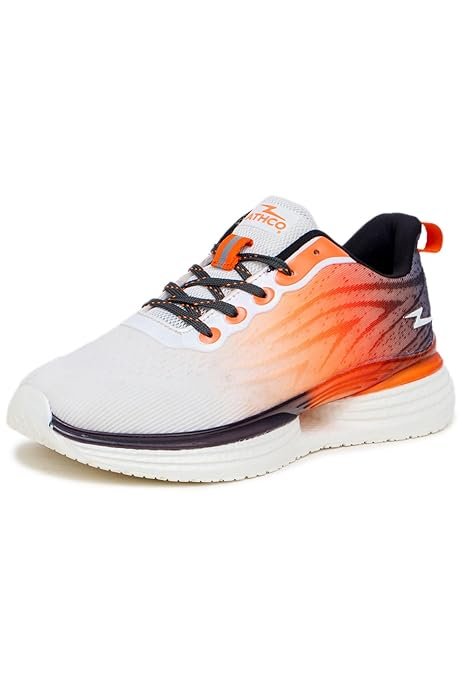
1. ATHCO Men’s Aura Running Shoes
⭐ Rating: 4.5 / 5
The Shop Owner’s Take:
The ATHCO Aura is the shoe I’d put on a beginner’s feet without hesitation — and that says something, because I’m cautious about recommending newer brands. What earns that confidence is the two-layer cushioning system: air cushioning in the midsole combined with a foam insole on top. Two separate systems working together is unusual at this price point. The air layer absorbs the primary ground impact at heel strike; the foam insole provides the secondary comfort layer underfoot. The result is genuine shock absorption on Indian concrete — not just marketing language.
The breathable upper is the other standout feature. I’ve seen many shoes claim breathability but still leave your feet soaked after 20 minutes on a hot day. The Aura’s mesh upper genuinely ventilates. On Chennai mornings or Delhi summer evenings when temperature and humidity are both high, that matters far more than any spec sheet number. The flexible sole construction allows natural foot movement rather than forcing a rigid gait — an underappreciated feature that reduces leg fatigue on longer sessions.
Medium arch support suits the majority of Indian foot types without overcorrecting or creating instability. For a beginner running 3–5 km on city roads, housing society tracks, or park paths, this is the most complete package in this list at its price point.
Best For: Beginner male runners doing 3–5 km on city roads or housing society tracks in Indian heat and humidity. Also suitable for overpronation-neutral foot types.
Pros:
- Two-layer cushioning (air + foam) — better shock absorption than single-layer budget shoes
- Breathable upper handles Indian summer heat and humidity effectively
- Lightweight build — feet don’t feel heavy after 30–40 minutes of running
- Flexible sole allows natural gait without restricting foot movement
- Medium arch support suits most Indian foot shapes without overcorrection
- Maximum cushioning designation — designed for high-impact absorption
Cons:
- Sizing runs slightly small — strongly recommend ordering half a size up before buying
- Foam insole begins to compress noticeably after 4–5 months of daily use — replace on schedule
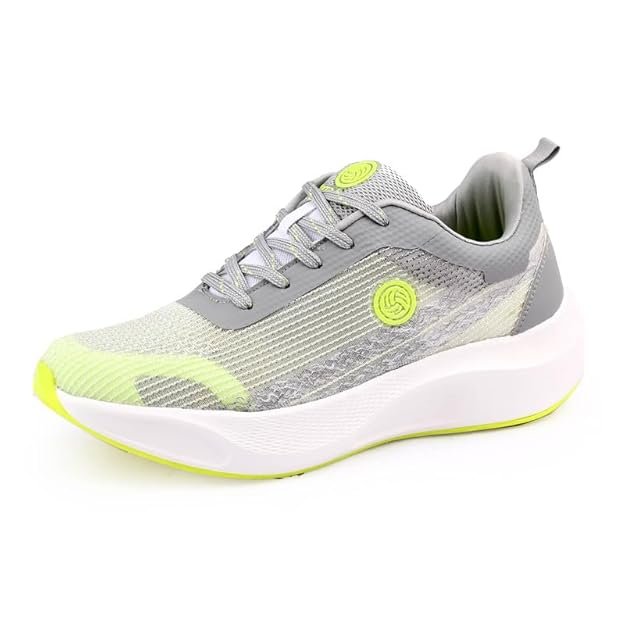
2. Bacca Bucci Men Mesh Sports Shoes – ZippyZest FlashRunners
⭐ Rating: 4 / 5
The Shop Owner’s Take:
The Zippy Zest Flash Runners is Bacca Bucci’s honest answer to the budget running shoe category — and its honesty is what I respect about it. It’s not trying to be a premium performance shoe. It’s trying to be a reliable, breathable, lightweight shoe for someone who wants to start running without spending too much. On those terms, it largely delivers. Many beginners search for how to choose running shoes in India before buying their first pair.
The full breathable mesh upper is the genuine standout. In Delhi’s 42°C June mornings, Chennai’s coastal humidity, or Mumbai’s pre-monsoon heat, your feet need active air circulation — not just mesh panels on a mostly synthetic shoe. The ZippyZest’s construction provides real airflow that reduces sweat accumulation significantly during 30–40 minute runs. Reduced sweat means fewer friction hot spots and fewer blisters — which means you keep running instead of taking days off for foot recovery.
The mid-top build adds light ankle coverage that I’ve found Indian street runners appreciate more than they expect. Indian pavements are unpredictable — a small lateral stability advantage at the ankle makes a real difference on broken footpaths or uneven park paths. Cushioning is functional rather than plush. Don’t expect deep midsole engineering at this price. But for a first-time runner logging 2–4 km three times a week, this shoe performs its job reliably.
Best For: Budget-conscious beginners, students, and people starting their first running routine who need a reliable, breathable shoe without overspending. Also a reasonable choice for those who want a single shoe that works for both light running and daily casual wear.
Pros:
- Full mesh upper — genuinely reduces sweat and improves in-shoe airflow in Indian heat
- Lightweight design makes all-day movement easy without leg fatigue
- Mid-top construction provides light ankle support for uneven Indian pavements
- Versatile grey colorway works for running, casual outings, and light gym use
- Energy-responsive sole construction for better rebound during runs
Cons:
- Cushioning is minimal — not suitable for heavier runners or those with existing knee or heel pain
- Platform heel design can feel slightly unstable on broken or highly uneven terrain — not ideal for trail-adjacent routes
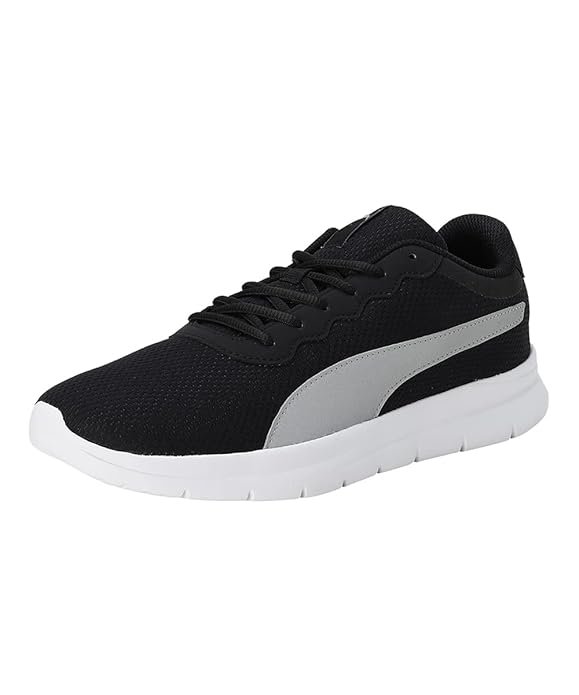
3. PUMA Men’s Maximal Comfort Walking Shoes
⭐ Rating: 4 / 5
The Shop Owner’s Take:
PUMA doesn’t need an introduction in India, and the Maximal Comfort delivers on its name — for the right user and the right activity. Let me be direct about what this shoe is: it is a walking and daily comfort shoe, not a performance running shoe. If you’re looking for something to do serious 7–10 km runs in, this is not your shoe. If you’re looking for a reliable, consistent, trusted-brand shoe for walking, light jogging, office-to-gym transitions, and daily wear — this earns its place at this price.
The moderate cushioning is actually a deliberate engineering choice for walking applications. Walkers need firmer, more stable underfoot feel than runners — the foot spends more time in ground contact per step during walking, and too-soft foam creates instability during that extended contact phase. The Maximal Comfort’s cushioning density hits the right balance for sustained walking comfort without the instability of an overly plush midsole.
What you’re also buying with PUMA is build consistency. Indian domestic brands at similar price points can vary significantly in construction quality between manufacturing batches — the pair you receive isn’t always identical to the pair you reviewed. PUMA’s quality control across its manufacturing chain is considerably more consistent. For something you’ll wear daily, that matters.
Best For: Working professionals, older beginners, and people who do significantly more walking than running — office commutes, evening park walks, light weekend jogs. Also a strong choice for those who prioritize trusted brand reliability over maximum performance specification.
Pros:
- Trusted brand with consistent build quality across batches — more reliable than most Indian domestic alternatives at this price
- Moderate cushioning is well-calibrated for walking comfort on tiled floors, office corridors, and paved paths
- Lace-up closure gives precise, adjustable fit across different foot widths
- Athletic styling is versatile — works for daily wear beyond dedicated workout sessions
- Long-lasting comfort — PUMA’s midsole holds up better over time than generic budget EVA
Cons:
- Designed primarily for walking — not suitable for runners logging 5+ km regularly or for high-impact training
- No water resistance — avoid wet monsoon surfaces and rain exposure with this shoe
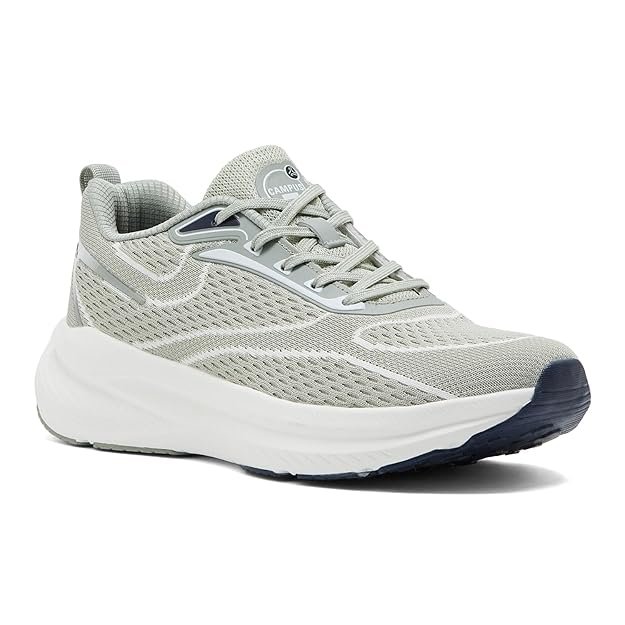
4. Campus Men’s KRIVO Running Shoes
⭐ Rating: 4.5 / 5
The Shop Owner’s Take:
Campus has earned a quiet but solid reputation as one of India’s most dependable domestic footwear brands, and the KRIVO is the shoe that best demonstrates why. This is the most India-specific shoe in this list — built with features that directly address what Indian runners actually encounter on the ground.
The air/gel cushioning combination is the technical highlight. Air cushioning absorbs the initial impact at heel strike — the hardest single force point in each footstrike cycle. Gel provides rebound and stability through mid-stance and push-off. Together, they deliver more responsive, more durable cushioning than single-material budget shoes. For a domestic Indian brand at this price, that’s not a minor achievement.
But what I genuinely respect about the KRIVO is the anti-slip outsole. Most cheap Indian running shoes use minimal outsole traction to cut production costs. Campus didn’t cut that corner here. The Indian running surface reality — Mumbai’s post-rain concrete, Bengaluru’s tiled apartment walkways, Delhi’s monsoon-flooded streets — demands real grip. A shoe that works fine on a dry morning becomes a liability on a wet Tuesday in July. The KRIVO’s outsole is designed for that Tuesday.
If you’re a beginner who runs outdoors in India and wants the shoe that’s most specifically engineered for our terrain, this is my top recommendation in this list.
Best For: Outdoor beginner runners training on Indian city roads, park tracks, and mixed terrain — especially those who run through or after monsoon season (June–September). Also the best choice for runners who prioritize grip and stability over maximum lightweight feel.
Pros:
- Anti-slip outsole — genuine grip on wet pavement, tiled surfaces, and uneven Indian roads
- Air/gel cushioning provides responsive, durable shock absorption across training sessions
- Designed specifically for running — not a walking or casual shoe relabeled for sports use
- Secure lace-up fit keeps foot stable and reduces lateral movement inside the shoe during runs
- Maximum comfort designation — engineered for extended running sessions, not just short walks
- Campus’s domestic brand advantage — widely available, easy to return or exchange across India
Cons:
- Slightly heavier than pure mesh alternatives — noticeable if you’re transitioning from ultra-lightweight shoes
- Fewer color options compared to international brands at similar price points
| Shoe Name | Cushioning | Arch Support | Outsole Grip | Rating | Best Use Case |
|---|---|---|---|---|---|
| ATHCO Men’s Aura | Maximum – Air + Foam | Medium Arch | Standard | ⭐ 4.5/5 | Daily city road running, beginners |
| Bacca Bucci ZippyZest | Basic / Moderate | Minimal | Basic | ⭐ 4/5 | Budget running, casual daily wear |
| PUMA Maximal Comfort | Moderate | Walking Support | Standard | ⭐ 4/5 | Walking, light jogging, daily wear |
| Campus Men’s KRIVO | Maximum – Air/Gel | Running Support | Anti-slip | ⭐ 4.5/5 | Outdoor running, wet roads, monsoon grip |
Head-to-Head Comparison: All 4 Shoes at a Glance
Quick Buying Checklist – Before You Purchase Any Running Shoe in India
Run through this before you add any shoe to your cart:
Cushioning:
- Does it specify EVA, air cushioning, or gel? ✅ Good signal
- Is it described only as “memory foam cushioning” with no other detail? ⚠️ Check further — likely soft and short-lived
- Maximum cushioning designation for running? ✅ Appropriate for beginners on hard Indian roads
Arch Support:
- Does it mention contoured arch, medium arch, or semi-rigid arch? ✅ Real support
- Is “arch support” mentioned without any material specification? ⚠️ Likely soft foam — verify before buying
- Is the insole removable? ✅ Future-proofs the shoe for custom orthotics if needed later
Outsole:
- Anti-slip or grip-rated outsole? ✅ Important for Indian roads, especially June–September
- Smooth, minimal tread pattern? ⚠️ Risky on Indian monsoon surfaces
Sizing:
- Ordering half a size up from your street shoe size? ✅ Correct for running shoes
- Wide forefoot or medium-to-wide fit mentioned? ✅ Better suited to Indian foot shapes
Replacement planning:
- Budget EVA shoes: set a replacement reminder for 5 months from purchase
- Mid-range shoes: 7–8 months
- Don’t wait for pain to return — replace preventively
Running Shoe FAQs for Indian Buyers
How do I choose running shoes if I have flat feet in India?
Flat feet means your arch collapses inward with every step — a pattern called overpronation. On hard Indian roads, this creates cumulative strain at the heel and arch attachment points. You need a shoe with a medial post — a firmer-density wedge on the inner midsole edge — that physically resists the inward roll. A neutral cushioning shoe without this won’t address the root cause. Check your old shoes: if the inner edge of the heel is more worn than the outer, you overpronate. The Campus KRIVO with its structured running sole is a reasonable starting point; for significant overpronation, consider stepping up to a dedicated stability shoe.
Should I buy half a size bigger in running shoes?
Yes — almost always, and especially for Indian runners. Feet swell significantly during physical activity, and that swelling is amplified by Indian heat and humidity. There should be roughly one thumb-width of space between your longest toe and the front of the shoe when you’re standing. Buying your exact street shoe size in a running shoe is one of the most common mistakes I see. The result is predictable: toenail bruising, blisters, and a shoe that feels fine in the morning but becomes painful halfway through a run. When in doubt, size up.
Are expensive running shoes worth it in India?
Not for beginners — not yet. A well-chosen shoe between ₹1500–₹3000 gives you 80% of what you need for the first 6 months of running. The difference between a ₹2000 shoe and a ₹8000 shoe is real — better midsole technology, longer lifespan, more precise gait support — but those differences matter most when you’re clocking 20+ km per week consistently. Before that point, you don’t yet know your gait type, your injury patterns, or your foot preferences clearly enough to justify the investment. Start with the right budget shoe. Upgrade once you understand what your feet actually need.
Which running shoes work best for Indian roads and monsoon conditions?
You need two things that are often separated in budget shoes: anti-slip outsole traction and a breathable upper that handles humidity. Indian monsoon roads — Mumbai’s waterlogged footpaths, Bengaluru’s slick tiled surfaces, Delhi’s flooded streets from June to September — are genuinely dangerous in smooth-soled shoes. A smooth outsole in Indian monsoon conditions is a fall waiting to happen, not just a comfort inconvenience. The Campus KRIVO directly addresses both traction and cushioning at an honest price point. For monsoon running, prioritize grip over everything else. Style is secondary.
How long do budget running shoes last in India?
Budget EVA shoes (₹1000–₹2500) reliably deliver 300–400 km or roughly 4–6 months of daily use before the midsole loses meaningful cushioning. In Indian heat — particularly if you’re in Chennai, Mumbai, or any city with sustained high temperatures — EVA compresses faster than in cooler climates, so lean toward the shorter end of that range. The early warning sign to watch for: your knees or heels feel heavier after runs even though your distance or pace hasn’t changed. That’s a failed midsole. Don’t wait for the bottom of the shoe to visually wear out — the midsole fails silently, from the inside, months before the outsole shows significant wear.
What is heel-to-toe drop and why does it matter for running in India?
Heel-to-toe drop is the height difference between the heel and forefoot inside the shoe, measured in millimetres. A 10mm drop means your heel sits 10mm higher than your toes when the shoe is flat. For Indian beginners who are predominantly heel strikers — which is most of us — an 8–12mm drop is the correct range. It reduces Achilles tendon tension and heel impact strain with every footstrike. Zero-drop shoes are trendy globally but are a poor choice for beginners on Indian hard-surface roads: they maximize Achilles tension and demand foot strength that most beginners haven’t developed yet. If you’re starting out, stay in the 8–10mm range until you’ve built 6 months of consistent running.
Is barefoot running or zero-drop shoes good for Indian roads?
For beginners, no — and for most Indian urban runners, the answer remains no even as experience grows. Zero-drop running demands well-developed intrinsic foot muscles that provide natural arch support in the absence of shoe structure. Most Indian adults who’ve spent their adult lives in supportive footwear haven’t developed those muscles adequately. Transitioning to zero-drop requires 3–6 months of gradual, deliberate adjustment. Most people attempt it in 2 weeks and develop plantar fasciitis or Achilles problems. If you’re interested in minimalist running, work with a professional and transition gradually — but that’s a project for after you’re comfortably running 15+ km per week in normal footwear.
Nike vs Adidas vs Indian brands — what’s actually worth buying in India?
Nike and Adidas make excellent running shoes — but their India pricing reflects import costs and brand premium rather than proportionally better technology for the price. At ₹3000–₹5000 for basic Nike/Adidas running models, you’re paying a significant brand tax. Indian domestic brands like Campus and ATHCO at ₹1500–₹2500 offer comparable engineering for beginner needs at a fraction of the price. Where international brands genuinely justify the premium: advanced midsole technology (Nike React, Adidas Boost), gait-specific engineering for serious runners, and long-term durability. For beginners who are testing whether they’ll stick with running, Indian brands are the smarter financial decision.
How do I test arch support before buying a shoe online?
For online purchases, you can’t physically test the shoe before buying — but you can read for the right signals. Look for: “contoured arch support,” “medium arch,” “semi-rigid arch,” or any mention of TPU in the arch construction. These indicate structural arch support. Avoid shoes that only say “cushioned arch” or “arch support” with no material specification — that’s typically a flat foam insole with no real structure. After receiving the shoe, test it immediately: press your thumb firmly into the arch area of the insole for 3 seconds. It should feel firm and spring back quickly. If it compresses easily and stays compressed under light thumb pressure, return it — it won’t hold up under running load.
Can I use running shoes for gym workouts too?
For cardio-based gym work — treadmill, elliptical, aerobics — yes, running shoes are appropriate. For strength training — squats, deadlifts, weighted exercises — running shoes are actually a poor choice. Their cushioned, compressible midsoles create an unstable base under heavy loads, which reduces force transfer and increases injury risk during lifting. For gym workouts that mix cardio and weights, cross-training shoes with a flatter, firmer midsole are a better option than running shoes. If you’re primarily a runner who occasionally uses the gym for cardio, your running shoes work fine.
What to Buy Based on Your Specific Situation
You’re a complete beginner, running 3–5 km on city roads: ATHCO Men’s Aura. Two-layer cushioning, breathable upper, medium arch support. The most complete beginner package in this list.
You’re on a very tight budget and just want to start moving: Bacca Bucci ZippyZest. No engineering breakthroughs, but an honest shoe that covers the basics without overspending. Get moving first; upgrade once you’re consistent.
You walk more than you run and want a trusted brand: PUMA Maximal Comfort. Reliable, durable, consistent quality control. The right tool for the right job — walking and light activity.
You run outdoors on Indian roads, including through monsoon season: Campus Men’s KRIVO. Anti-slip outsole + air/gel cushioning. Built for the terrain you’re actually running on. My top outdoor pick in this list.
You have flat feet or overpronate: Start with the Campus KRIVO for its structured sole. If discomfort persists after 4–6 weeks, visit a podiatrist or a running specialty store for a gait analysis before spending more money.
You have knee or heel pain already: See a doctor before buying any shoe. Pain during running is a signal that something needs medical attention, not just a different shoe. The right shoe helps — it doesn’t replace proper diagnosis and treatment.
Final Verdict: Which Running Shoe Should You Buy in India?
Running shoes are a mechanical solution to a mechanical problem. The right shoe reduces the impact your joints absorb, supports your arch against collapse, and provides traction on the surfaces you actually run on. The wrong shoe — or the right shoe worn past its lifespan — quietly damages your feet over thousands of steps before you realize it.
Here’s the honest decision logic I’d give you in person:
- Maximum cushioning + breathability, best all-round beginner shoe → ATHCO Men’s Aura
- Tightest budget, need something reliable to start → Bacca Bucci ZippyZest
- Walking-first lifestyle, want brand consistency → PUMA Maximal Comfort
- Outdoor running on Indian terrain, monsoon season included → Campus Men’s KRIVO
Buy the right shoe for your use case. Size up by half. Replace on schedule — not when pain returns, but before it does. And if your feet hurt after two weeks in a new shoe, the shoe is wrong for your foot type — not a problem you need to push through.
Check latest prices and availability:
- ATHCO Men’s Aura – Amazon.in
- Bacca Bucci ZippyZest – Amazon.in
- PUMA Maximal Comfort – Amazon.in
- Campus Men’s KRIVO – Amazon.in