
How to Dry Birkenstocks Properly: The Ultimate 2026 Care & Rescue Guide
TL;DR: The Quick Answer Box How do you dry Birkenstocks properly? Never use direct heat. Instead, unbuckle the straps, wipe off excess moisture with a microfiber cloth, and air dry Birkenstocks at room temperature in a well-ventilated, shaded area. Let them sit for 24 to 48 hours. Using hair dryers, radiators, or direct sunlight will permanently crack the cork footbed and melt the glue.
Introduction: The “Gremlin” Rule of Footwear
It happens to the best of us. You’re out enjoying a perfect afternoon, maybe traveling through Europe or just commuting home from the office, and suddenly the sky opens up. You get caught in a torrential downpour, or worse, you accidentally step right into a massive puddle.
You look down, and your beloved, perfectly broken-in sandals are completely soaked.
If you spend any time on the r/Birkenstocks subreddit, you know exactly what follows: sheer panic. I was scrolling through my feed just the other day and saw a viral meme comparing these sandals to Gremlins—whatever you do, don’t get them wet! I even saw a TikTok where someone tried to quickly dry their soaking wet Arizonas by tossing them in the microwave. Please, for the love of your feet and your wallet, do not do that.
Over the past two decades of running a physical shoe shop in Chennai, I’ve handled thousands of pairs of shoes. Monsoon season always brings a wave of customers carrying soggy, ruined sandals in plastic bags, asking if I can perform a miracle.
The truth? Water doesn’t automatically ruin your sandals, but how you dry them absolutely will. Today, I’m going to walk you through exactly how to dry Birkenstocks properly, the material science behind why the footbed acts the way it does, and how to save your favorite daily-wear shoes from the trash bin.
Why This Topic Matters: The Cost of Impatience
Around the globe, buyers invest heavily in quality footwear. Whether you are buying for work, travel, or casual weekend wear, a good pair of sandals isn’t cheap.
The biggest mistake online shoppers make isn’t buying the wrong size; it’s treating premium materials like cheap, disposable plastic. When you buy a shoe made of natural cork, jute, and leather, you are buying a mini-ecosystem that molds to your foot.
When that ecosystem gets wet, people panic. They want dry shoes now, so they reach for a hair dryer or leave them on a hot radiator. That $150 investment gets destroyed in 15 minutes because of a simple lack of material knowledge. By learning how to dry cork footbed safely, you are extending the lifespan of your footwear by years, saving money, and ensuring you get the maximum value out of your purchase.
The Anatomy of the Sandal: Why Water is the Enemy
To understand how to dry Birkenstocks properly, you need to understand what you are actually trying to dry. It’s not just one material; it’s a layered cake of footwear engineering.
- The Suede Liner: This is the soft top layer that touches your foot. When wet, it turns dark and can become crusty if not dried correctly.
- The Jute Layers: Hidden beneath the suede are two layers of jute (a natural fiber). Jute provides strength and wicks away moisture, but it holds onto water like a sponge.
- The Cork and Latex Core: The heart of the shoe. It’s a blend of natural cork oak bark and latex. This is what molds to your foot shape. If this gets compromised, the shoe loses its orthopedic support.
- The EVA Sole: The bottom tread. EVA (Ethylene-Vinyl Acetate) is a highly durable, shock-absorbing synthetic material. The EVA itself is completely waterproof, but the glue holding it to the cork is not.
- The Upper (Leather, Suede, or Birko-Flor): Full-grain leather and suede will stretch and warp if dried improperly. Synthetic options like Birko-Flor are more resilient but still require care.
Because these are natural, highly absorbent materials, a casual approach to drying will result in structural failure.
Step-by-Step: How to Dry Birkenstocks Properly
If your sandals are currently soaking wet, take a deep breath. Follow this framework step-by-step.
Step 1: Unbuckle and Assess
Immediately unbuckle all the straps. You want maximum airflow reaching every corner of the footbed. If your straps are made of genuine leather, unbuckling them prevents the leather from stretching out of shape while it is vulnerable and wet.
Step 2: The Microfiber Wipe-Down
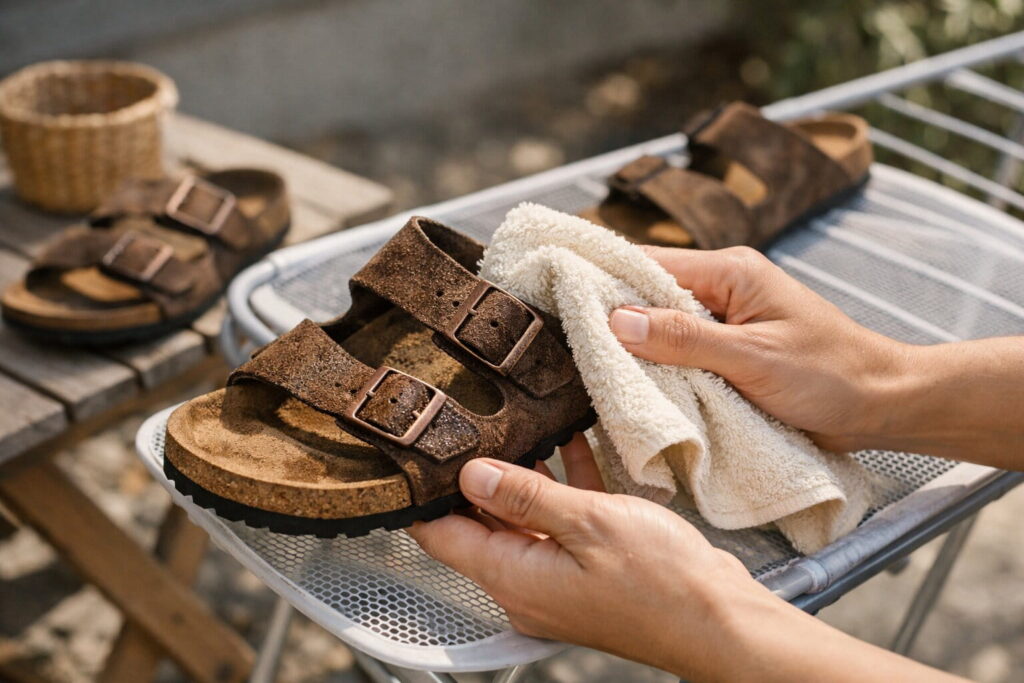
Take a clean, dry microfiber cloth (or an old, soft t-shirt) and gently dab the entire shoe.
- Do not scrub. Scrubbing wet suede will ruin the nap (the fuzzy texture).
- Press the towel firmly into the footbed to absorb as much standing surface water as possible.
Step 3: The Newspaper Trick
If the shoes are completely waterlogged, crumple up pieces of plain, unprinted paper or newspaper and gently stuff them under the straps, pressing lightly against the footbed. The dry paper acts as a desiccant, actively pulling moisture out of the suede and cork. Swap the paper out every few hours as it becomes damp.
Step 4: Air Dry Birkenstocks (The Waiting Game)
This is the most critical step. Place the unbuckled sandals in a cool, dry, well-ventilated area indoors.
- Keep them away from windows where direct sunlight might hit them.
- A room with a ceiling fan or a gentle breeze from an open window is perfect.
- Wait. It will take anywhere from 24 to 48 hours for the core of the cork to dry completely. Do not wear them while they are still damp, or your body weight will compress the weakened cork and ruin the custom mold you’ve built up.
Crucial Rule: How to Avoid Heat Damage Sandals
In my years of retail, the number one killer of premium sandals isn’t water; it’s heat. If you want to avoid heat damage sandals, you must banish the following items from your shoe-care routine:
- Hair dryers
- Radiators and space heaters
- Campfires
- The dashboard or trunk of a hot car
- Direct, baking sunlight
Why is heat so bad? The cork footbed is bound together by natural latex and heat-activated adhesives. When you apply artificial heat, two things happen. First, the rapid evaporation causes the cork to shrink violently, leading to massive, unrepairable cracks across the footbed. Second, the heat melts the glue holding the EVA sole to the cork, causing the sole to peel away (delamination). Once the cork is cracked and the sole is peeling, the structural integrity is gone.
Pro-Tip Section: Retailer-Only Insights
After handling thousands of footwear repairs and customer complaints, here are a few insider tips most brands won’t explicitly tell you:
- The “Stiff Suede” Fix: Once you successfully air dry Birkenstocks, you might notice the suede footbed feels a bit stiff or crusty. Don’t panic. Take a stiff nylon shoe brush (or a clean, dry toothbrush) and gently brush the footbed in one direction. This restores the soft nap of the suede instantly.
- Seal the Deal: Water strips away the protective sealant on the exposed cork edges. Once your sandals are 100% dry, look at the exposed cork. Does it look dull and dry? Apply a thin layer of Cork Sealer (Cork Renew). It paints on white but dries clear, restoring the shiny, protective barrier that prevents the cork from crumbling.
- The “Bend Test”: Not sure if they are fully dry inside? Gently flex the sole. If it feels overly squishy or makes a faint squeaking sound, the internal jute layers are still damp. Give it another 12 hours.
Comparison: Heat Drying vs. Air Drying
| Factor | Heat Drying (Hairdryer, Sun, Radiator) | Proper Method (Air Dry in Shade) |
|---|---|---|
| Drying Time | 2–4 Hours | 24–48 Hours |
| Cork Health | High risk of severe cracking & shrinking | Retains natural shape and integrity |
| Adhesive/Glue | Melts; EVA sole separates from footbed | Remains fully intact |
| Leather Uppers | Dries out, cracks, and stiffens permanently | Retains natural oils and flexibility |
| Long-Term Result | Ruins the shoe; requires replacement | Safe; ready for daily wear again |
Common Mistakes to Avoid (And What People Regret)
When researching for new shoes online, most buyers focus strictly on aesthetics and price. But the real regrets come after the purchase when basic maintenance is ignored.
- Wrong Size Assumptions: Wearing a wet shoe that is slightly too big can cause severe blistering due to the added friction of wet straps. Always ensure a perfect fit.
- Ignoring the Cork Sealant: The biggest regret I hear from daily-wear users is letting the cork dry out completely over months of use, leading to chipping at the heel and toe.
- Wearing Them Damp: “Are they comfortable for all-day wear?” Yes, but only when dry! Wearing a damp cork footbed compresses the wet material, ruining the arch support forever.
When to Rescue vs. When to Replace
Sometimes, despite your best efforts, a shoe is simply too far gone. If your sandals were left out in a hot sun after a rainstorm and the cork has split straight down the middle, or the EVA sole has completely detached, no amount of DIY care will bring them back.
If you are looking for a shoe that offers the exact same orthopedic support but is 100% waterproof for beach trips, pool days, or monsoon season, you should strongly consider picking up a pair of EVA Birkenstocks. They are made entirely of highly durable, injection-molded EVA foam. They offer the comfort you love without any of the water anxiety.
(Ready to upgrade or replace a ruined pair? Compare prices from leading online stores and check today’s best-rated waterproof sandals on Amazon to ensure you always have a rain-friendly backup in your closet.)
PAA-Style Questions (People Also Ask)
Can I put my Birkenstocks in the dryer? Absolutely not. The intense heat and tumbling action of a clothes dryer will melt the glues, crack the cork, and completely destroy the sandals within minutes.
How long does it take for Birkenstocks to dry? When dried properly at room temperature in a well-ventilated area, it typically takes 24 to 48 hours for the thick cork and jute layers to dry completely.
Will water ruin the cork on my Birkenstocks? Water itself won’t immediately ruin the cork, but prolonged soaking or improper heat-drying will. As long as you air dry them slowly and reapply cork sealant afterward, they will survive.
Can I dry my sandals in the sun? No. Direct, intense sunlight acts like a radiator. It will cause the moisture inside the natural cork to evaporate too quickly, leading to severe cracking and shrinkage.
How do you fix hard Birkenstocks after they get wet? If the suede footbed feels hard or crusty after air drying, wait until it is 100% dry, then gently scrub the footbed with a suede brush or a clean, stiff toothbrush to restore its softness.
FAQs
1. Is it okay if my Birkenstocks get a little wet? Yes, light rain or a few splashes won’t hurt them. Just wipe off the surface water and let them air dry naturally indoors.
2. How do I dry a cork footbed safely? Unbuckle the straps, wipe away excess water with a microfiber cloth, stuff lightly with newspaper, and leave them in a shaded, well-ventilated room for up to 48 hours.
3. Why did my sandals crack after getting wet? Cracking happens when wet cork dries too fast. This is usually caused by leaving them in direct sunlight, using a hair dryer, or placing them near a heater.
4. Can I wear my sandals while they are still damp? No. Wearing damp sandals compresses the weakened cork and jute layers, permanently flattening the arch support and custom footbed shape.
5. What is the best material for wet conditions? If you frequent wet environments, choose sandals made entirely of EVA (Ethylene-Vinyl Acetate) or rubber, rather than natural cork and leather.
6. Do I need to treat my sandals after they dry? Yes. Once fully dry, inspect the exposed cork edges. If they look dull, apply a fresh coat of cork sealant to protect them from future moisture and cracking.
7. Can water cause the sole to peel off? Water alone usually doesn’t cause peeling, but applying heat to dry the water will melt the adhesive, causing the EVA sole to separate from the footbed.
8. Does salt water damage cork sandals more than fresh water? Yes. Salt is highly corrosive and dries out natural materials rapidly. If exposed to salt water, gently rinse them with fresh water before beginning the air-drying process.
9. How do I stop my wet leather straps from stretching? Always unbuckle leather straps when they are wet. Wet leather is highly pliable and will stretch out of shape if left buckled tightly or if worn while drying.
10. How can I speed up the drying process safely? The only safe way to speed up drying is to place the sandals under a ceiling fan or use a desk fan to blow room-temperature air over them. Never use heated air.