

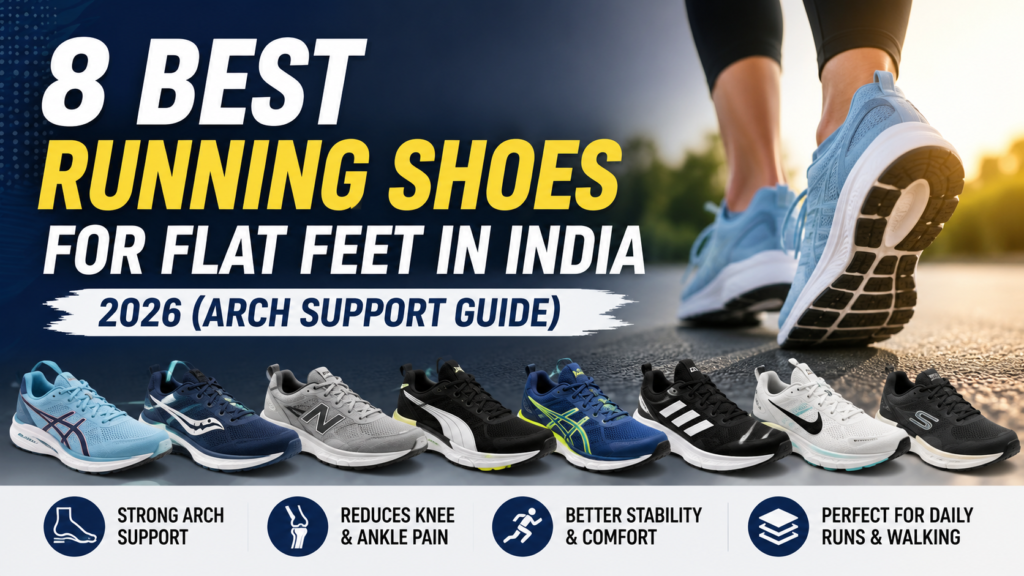
8 Best Running Shoes for Flat Feet in India 2026 (Arch Support Guide)
🔥 30-Second Summary — TL;DR
- Best Overall: ASICS Gel-Kayano 32 – Gold-standard stability shoe for flat feet and overpronation.
- Best Value: Saucony Guide 18 – Reliable arch support with excellent cushioning.
- Best for Long-Distance Running: New Balance Fresh Foam X 860 v14 – Plush cushioning for long training sessions.
- Best for Wide/Flat Feet: Puma Deviate Nitro 4 Wide – Wide toe box with responsive NITRO foam.
- Best for All-Day Walking: Skechers Arch Fit Takar – Excellent Arch Fit® support for all-day comfort.
The Retailer’s Reality: Why Flat Feet Buyers Get Confused Online
I’ve been selling shoes across Indian stores for over 20 years, and flat feet customers are the ones I worry about most. They walk in with knee pain, shin splints, or that dull ache in the arch after a 5K — and half the time, they’re wearing a neutral cushioned shoe that’s doing them zero favours.
Online shopping makes this worse. Every listing says “great arch support,” half the reviews are fake, and Indian foot shapes — often wider forefeet, flatter arches, lower ankle mobility from years of barefoot or chappal walking — don’t always match the sizing charts built for US or European feet. In my shop, I’ve physically tested hundreds of these pairs. Here’s the honest breakdown, no marketing fluff.
Buying Guide: What Actually Matters for Flat Feet
Before you add anything to cart, understand these three things — they matter far more than brand logos.
1. Midsole material (EVA vs TPU): Most stability shoes use EVA foam because it’s lightweight and forgiving. TPU-based foams (like Fresh Foam X or NITRO) tend to be denser and more energy-returning, which helps flat-footed runners who lose some natural spring from a collapsed arch.
2. Heel-to-toe drop: A 8–10mm drop is generally more forgiving for flat feet and overpronators because it reduces strain on the Achilles and calf. Very low-drop (0–4mm) shoes can aggravate overpronation if you’re not used to them.
3. Arch support and stability posts: Look for a medial post — a firmer piece of foam on the inner (medial) side of the midsole. This is what actually controls overpronation, not just a “supportive-looking” insole.
In Indian conditions — hot, humid, and often on uneven or tiled surfaces — breathable mesh uppers and slip-resistant rubber outsoles matter just as much as the arch tech. A shoe that’s technically great in a lab but overheats your feet in Chennai’s humidity, or slides on a wet Mumbai monsoon pavement, isn’t the right buy.
Product Reviews: 8 Best Running Shoes for Flat Feet in India
1. Saucony Guide 18 — Best Value Stability Shoe
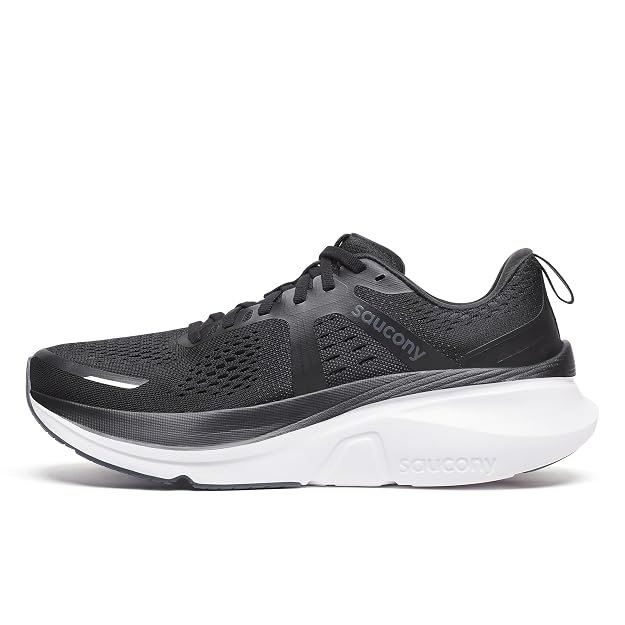
The Shop Owner’s Take: The Guide 18 is best running shoes for flat feet in india Saucony’s dedicated stability workhorse, and it shows. The responsive foam cushioning doesn’t feel mushy, and the engineered mesh upper breathes well even on warmer training days. What I like most is the midfoot lockdown — flat-footed runners tend to need that secure hold so the foot doesn’t roll inward mid-stride.
Best For: Runners who want dependable stability without paying flagship prices — good for daily training on Indian roads and gym treadmills alike.
Pros:
- Strong arch support for flat feet and overpronation
- Breathable mesh upper, holds up well in humidity
- Durable rubber outsole with reliable grip
Cons: The stability cage does add a bit of stiffness — not the shoe to pick if you want a soft, flexible daily trainer feel.
2. New Balance Fresh Foam X 860 v14 — Best for Long-Distance Running
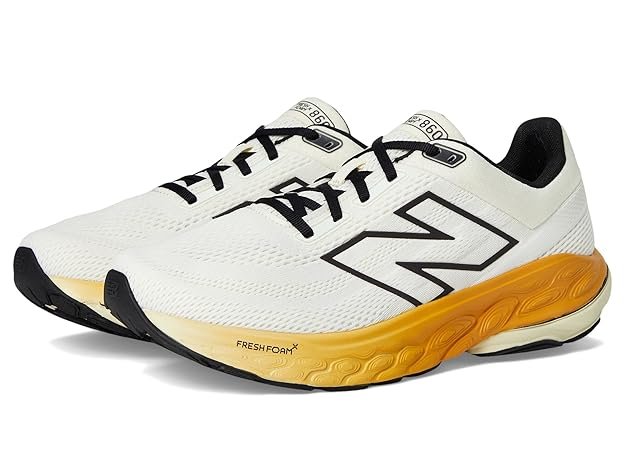
The Shop Owner’s Take: This is one of the most trusted stability shoes among Indian marathon and half-marathon runners I’ve dealt with. The Fresh Foam X midsole is soft underfoot but firms up on the medial side exactly where flat feet need it. It holds up well past 400–500km of running before you feel any real breakdown.
Best For: Long-distance runners and daily trainers logging 8–15km sessions who need consistent arch support over months of use.
Pros:
- Excellent cushioning-to-support balance
- Reduces knee and ankle impact on long runs
- Breathable, keeps feet cool in Indian summers
Cons: Runs slightly heavier than pure performance shoes — not ideal if you’re chasing speed PRs, better for comfort-first mileage.
3. Mizuno Wave Legacy — Best Japanese Engineering for Stability
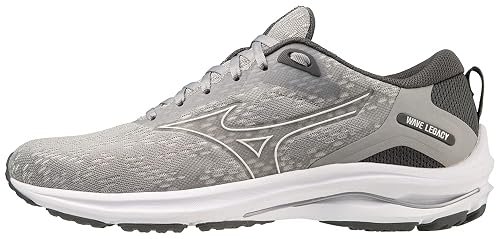
The Shop Owner’s Take: Mizuno’s Wave plate technology is different from foam-based stability systems — it’s a physical plastic wave embedded in the midsole that redistributes impact sideways. best running shoes for flat feet in india For flat feet, this translates to a very planted, controlled feel with each stride, especially noticeable on longer runs.
Best For: Runners who overpronate moderately and want a firmer, more “connected to the ground” ride rather than a plush, marshmallow-soft one.
Pros:
- Wave technology gives genuine lateral stability
- Durable outsole, holds grip on gym and road surfaces
- Breathable mesh construction
Cons: The Wave plate makes this shoe feel firmer than foam-only stability shoes — some runners with sensitive joints may find it less forgiving on hard Indian concrete pavements.
4. Puma Deviate Nitro 4 Wide — Best for Wide + Flat Feet
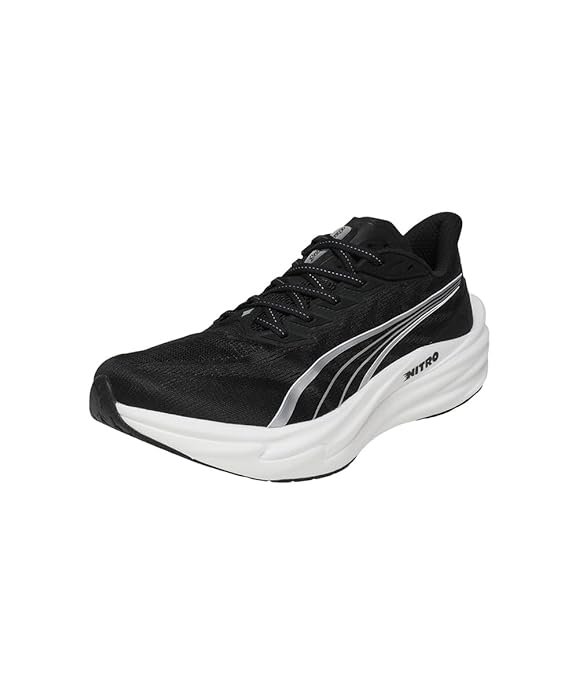
The Shop Owner’s Take: A lot of Indian buyers with flat feet also have a wider forefoot, and most “stability” shoes ignore that completely. This Wide version of Puma’s NITRO line solves that — extra room across the toe box so your foot isn’t fighting the shoe, plus a genuinely bouncy NITRO foam midsole that doesn’t feel dead after a few weeks.
Best For: Runners with both flat and wide feet who’ve struggled with standard-width stability shoes feeling cramped.
Pros:
- True wide-fit toe box — rare in performance running shoes
- NITRO foam gives lightweight, responsive cushioning
- Reliable traction on road surfaces
Cons: It’s a neutral-leaning performance shoe rather than a dedicated motion-control shoe, so severe overpronators may still want a firmer medial post option like the Kayano or Guide.
5. ASICS Gel-Kayano 32 — Best Overall
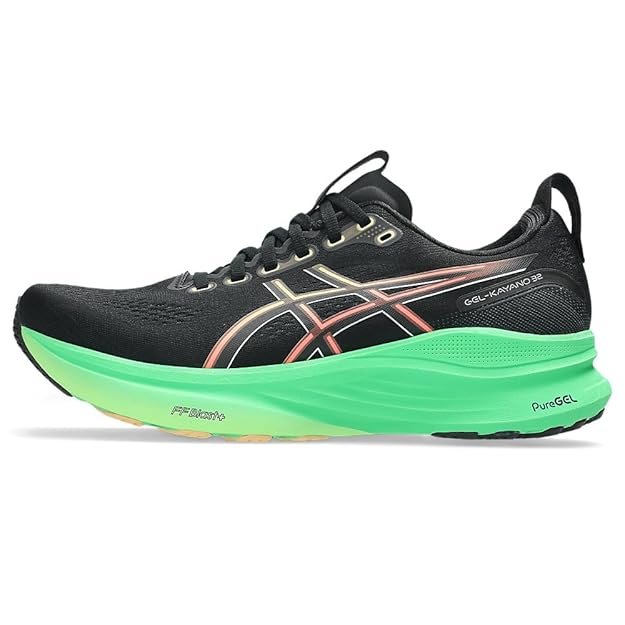
The Shop Owner’s Take: The Kayano line has been the benchmark stability shoe for flat feet for over two decades, and the 32nd version doesn’t disappoint. The 4D Guidance System actively adapts to your gait rather than using a fixed medial post, and the FF BLAST™ PLUS cushioning combined with PureGEL™ in the heel gives some of the softest landings I’ve felt in a stability shoe. This is the one I recommend first when a customer with visibly flat arches walks in.
Best For: Runners who need serious motion control but don’t want to sacrifice comfort — ideal for daily training and long-distance runs alike.
Pros:
- Best-in-class arch support and overpronation control
- Plush yet responsive cushioning for all-day comfort
- Durable AHAR™ outsole, good longevity on Indian roads
Cons: It’s on the heavier side compared to neutral running shoes, and it sits at a premium price point — not the budget pick on this list.
6. Adidas Solarmotion — Best for All-Day Comfort (Walking-Focused)
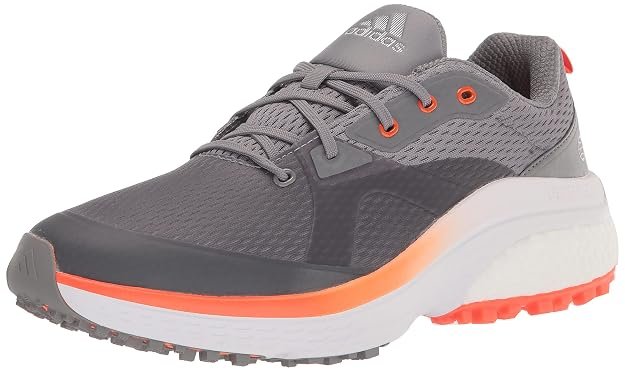
The Shop Owner’s Take: This one’s a bit different from the rest of the list — it’s built more for walking and all-day wear than dedicated distance running, but I’ve included it because a lot of flat-footed customers actually need this kind of shoe more than a race-ready trainer. The Bounce midsole is genuinely comfortable for standing and walking for hours, which matters if you’re commuting or on your feet at work as much as you’re running.
Best For: Buyers who split their time between light jogging and long hours of walking or standing, rather than serious mileage running.
Pros:
- Lightweight Bounce cushioning reduces fatigue
- Breathable mesh, stays cool through the day
- Stable heel support for balanced movement
Cons: It’s not engineered as a dedicated overpronation-control running shoe, so serious flat-foot runners doing high mileage should prioritise the Kayano, Guide, or New Balance instead.
7. Nike Structure 26 — Best for Daily Training
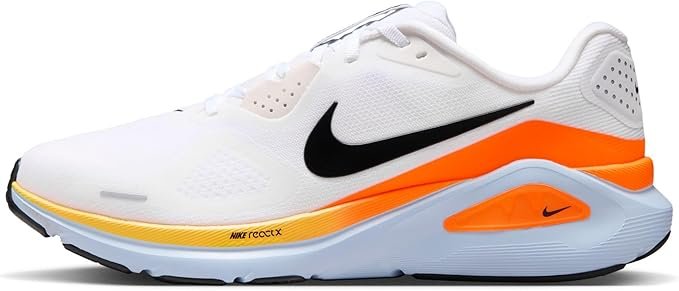
The Shop Owner’s Take: The Structure line has always been Nike’s answer to stability, and the 26th edition keeps that going with a responsive foam midsole and genuine support built into the frame. It’s a good middle-ground shoe — not as clinical as the Kayano, not as soft as the Fresh Foam X, but a solid daily trainer for flat feet that doesn’t ask you to compromise on either comfort or grip.
Best For: Daily trainers and road runners who want a reliable, well-known brand with genuine stability support.
Pros:
- Reduces overpronation with structured midsole support
- Reliable grip on paved Indian roads
- Comfortable for extended daily wear
Cons: The toe box runs a touch narrow for wider Indian feet — if you have a broader forefoot, size up half a size or try the Puma Wide instead.
8. Skechers Arch Fit Takar — Best for All-Day Standing/Walking
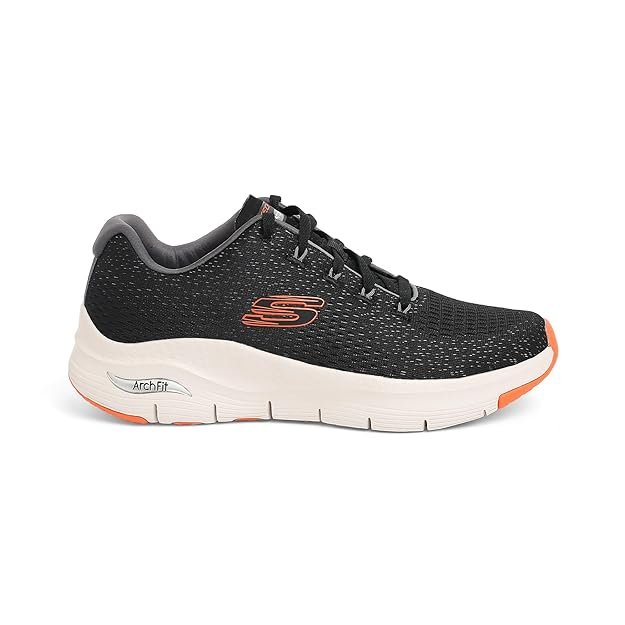
The Shop Owner’s Take: Not everyone with flat feet is training for a 10K — a lot of my customers just need something comfortable for standing behind a counter, walking around a warehouse, or long commutes. The Arch Fit® insole system is genuinely one of the better podiatrist-style arch supports I’ve felt in a mainstream shoe, and it’s noticeably lighter than most running-specific stability shoes.
Best For: Non-runners or casual walkers with flat feet who need arch support for daily wear rather than performance training.
Pros:
- Arch Fit® system gives excellent everyday arch support
- Very lightweight, minimal fatigue over long hours
- Breathable knit mesh, comfortable in Indian heat
Cons: The cushioning and outsole aren’t built for serious running mileage — treat this as a walking/lifestyle shoe, not a marathon trainer.
Head-to-Head Comparison Table
| Shoe Name | Rating | Approx. Weight | Arch Support Level | Best Use Case |
|---|---|---|---|---|
| Saucony Guide 18 | 4.4/5 | ~290g | High | Budget-friendly daily stability training |
| New Balance Fresh Foam X 860 v14 | 4.6/5 | ~300g | High | Long-distance & marathon training |
| Mizuno Wave Legacy | 4.5/5 | ~280g | High | Firm, stable ride |
| Puma Deviate Nitro 4 Wide | 5.0/5 | ~260g | Moderate | Wide feet & tempo runs |
| ASICS Gel-Kayano 32 | 4.4/5 | ~310g | Very High | Serious overpronation |
| Adidas Solarmotion | 4.6/5 | ~270g | Moderate | Walking & light jogging |
| Nike Structure 26 | 4.3/5 | ~295g | High | Everyday road running |
| Skechers Arch Fit Takar | 4.3/5 | ~250g | High (Walking) | All-day standing & casual walking |
Frequently Asked Questions
1. What type of running shoe is best for flat feet?
Stability or motion-control shoes with a medial post are best. They’re designed to correct overpronation, unlike neutral cushioned shoes which let the arch collapse further inward.
2. Are Nike or Adidas better for flat feet on Indian streets?
Nike’s Structure line and Adidas’ Bounce-based shoes both offer decent support, but neither matches dedicated stability specialists like ASICS Kayano or Saucony Guide for genuine arch correction.
3. How much heel-to-toe drop is best for flat feet?
An 8–10mm drop generally works best for flat feet and overpronators, as it reduces strain on the Achilles tendon compared to low-drop or zero-drop shoes.
4. Are expensive running shoes worth it for flat feet in India?
Yes, to a point. Dedicated stability tech (like ASICS’ 4D Guidance System or Mizuno’s Wave plate) genuinely reduces injury risk, which is worth paying for if you run regularly — but you don’t need the most expensive pair on the shelf to get good arch support.
5. Can flat feet be corrected with the right running shoes?
No, shoes don’t correct the structural shape of your foot, but the right stability shoe controls overpronation and reduces the strain that causes knee, shin, and heel pain.
6. Do I need orthotic insoles in addition to stability shoes?
Not always. Most stability shoes on this list have enough built-in arch support for mild to moderate flat feet. For severe flat feet or diagnosed conditions, a podiatrist-prescribed orthotic alongside these shoes can help further.
7. Are these shoes suitable for Mumbai’s monsoon conditions?
Most have durable rubber outsoles with decent wet-grip, but for heavy monsoon running, prioritise shoes with deeper tread patterns and avoid mesh-heavy uppers that soak water quickly.
8. How do I know if I have flat feet or just low arches?
A simple wet-foot test on a dry floor works: if your footprint shows almost no curve on the inner side, you likely have flat feet. For a proper diagnosis, a podiatrist or gait analysis at a running store is more reliable.
9. Do stability shoes work for walking on tiled floors and office environments?
Yes — models like the Skechers Arch Fit Takar are built specifically for that kind of all-day, low-impact wear rather than high-mileage running.
10. How often should I replace running shoes for flat feet?
Every 500–700km, or roughly every 6–8 months for regular runners. Stability shoes lose their medial post effectiveness faster than neutral shoes once the foam compresses.
Final Verdict
If you want the single most reliable, do-it-all stability shoe for flat feet — go with the ASICS Gel-Kayano 32. If you’re watching your budget but still want genuine arch support, the Saucony Guide 18 is the smarter buy. Training for long-distance runs? The New Balance Fresh Foam X 860 v14 is built for exactly that. And if you’re on your feet all day rather than running competitively, the Skechers Arch Fit Takar will serve you better than any race-focused shoe on this list.
Whichever you choose, don’t buy blind — check the latest price and size availability before deciding.
🛒 Check Latest Deals on Amazon.in
Related Guides
- Best Nike Running Shoes in India
- Best Adidas Running Shoes in India
- Best Campus Running Shoes in India
- Best Running Shoes for High Arches in India
- Best Running Shoes in India (Overall Guide)
We may earn a small commission at no extra cost to you if you purchase through the Amazon.in links above.