
Nike Authenticity Check: SKU, Serial Number & Fake vs. Real Guide
Updated: 24/July/2026
TL;DR: Check Nike Authenticity
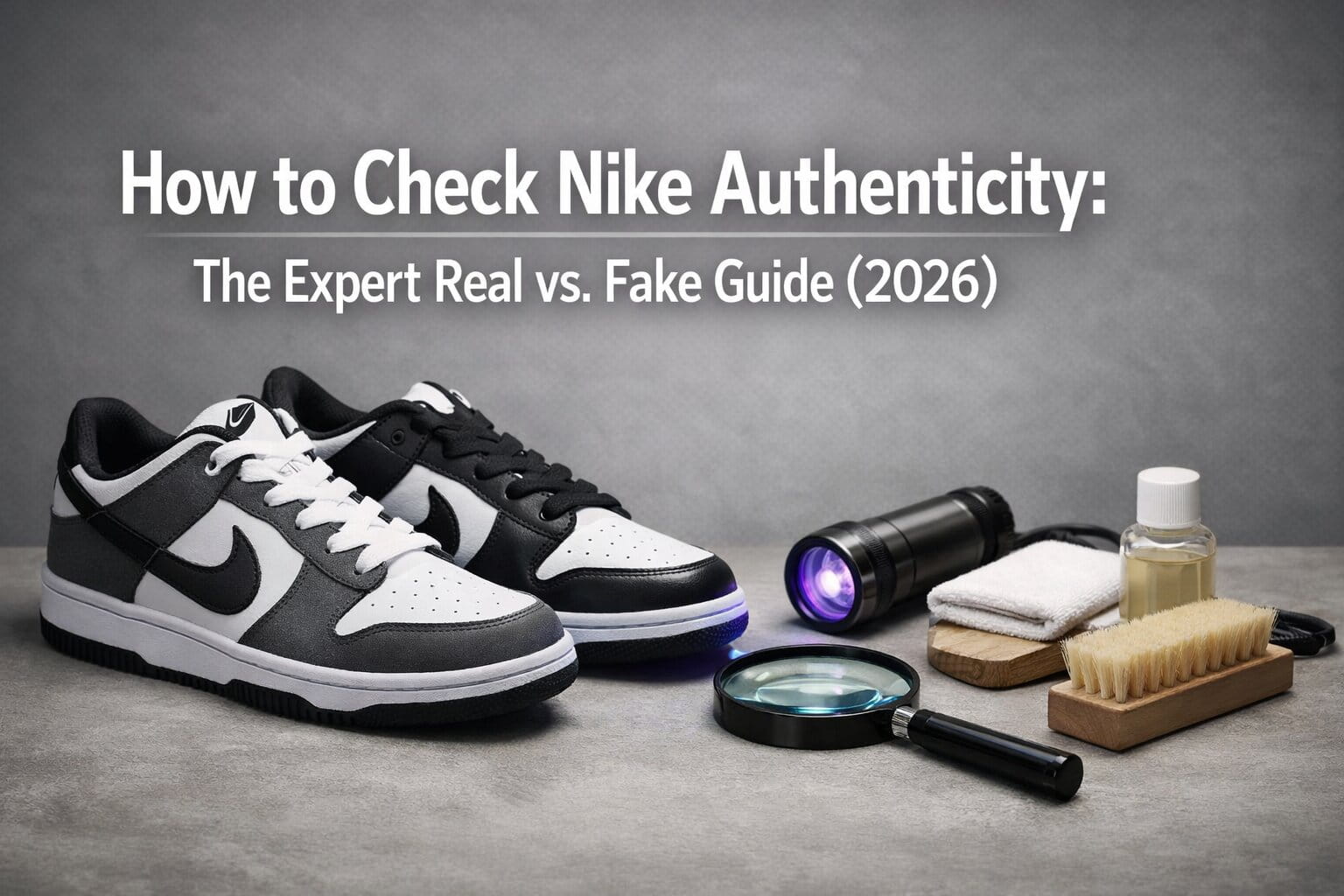
To check Nike authenticity instantly, verify the 9-digit style code (SKU) on the inner tongue tag matches the code printed on the box label. Authentic Nikes feature perfect symmetry in stitching, a distinct “factory fresh” smell (not chemical glue), and a midsole that rebounds when pressed. Check the tongue label; the font should be bold and evenly spaced, and the UPC code should be scannable. If the SKU is missing or does not match the box, the shoes are likely fake.
👟 Shop Authentic Nike Shoes on Amazon — 2026 Picks
Free Returns · Verify SKU on arrival
30-day low price · Limited stock
Free Returns · Ships from Amazon
Free Returns · Multiple sizes
Free Returns · Verify SKU on arrival
Compare all seller ratings · Use SKU guide above
We may earn a small commission at no extra cost to you · Prices change frequently — verify on Amazon · Always check seller ratings
Introduction: The Global Problem of “Super Fakes”
There is a specific feeling every sneaker enthusiast knows: the anxiety that hits right after you click “Buy” on a deal that seemed just a little too good. Nike Authenticity Check: SKU, Serial Number & Fake vs. Real Guide. Whether you are shopping in London, New York, or browsing online from a café in Tokyo, the market is flooded with counterfeits. And I’m not talking about the obvious, cheap knock-offs from a decade ago. I’m talking about “Super Fakes”—unauthorized copies so precise they sometimes fool the resellers.
Check today’s best-rated Authentic Nike collections on Amazon
In my 20+ years of running a physical footwear store and handling thousands of pairs of shoes—from basic runners to high-heat Air Jordans—I have seen the evolution of the fake market firsthand. I’ve had customers walk into my shop in Chennai proudly showing off a pair they bought online, only for me to have to break the bad news that the sole is made of cheap TPR instead of carbon rubber, or the stitching density is off by a millimeter. This isn’t just a US problem — some of the most convincing fakes I’ve seen shipped in from resale marketplaces across Southeast Asia, which is exactly why the SKU check below works regardless of where the pair came from.
You don’t need a laboratory to protect yourself. You just need to know what to look for. This guide breaks down exactly how to check Nike authenticity using the same visual and tactile checks I use every day on the shop floor.
7 Authenticity Features of a Real Nike (Quick Checklist)
Here are 7 authenticity features you can use as a quick checklist to identify a genuine Nike product:
- Quality of Materials
- Real Nike shoes use premium materials with a consistent texture and finish.
- There should be no loose threads, excess glue, or uneven stitching.
- Accurate Swoosh Logo
- The Nike Swoosh should be clean, symmetrical, and precisely placed.
- Poor alignment or distorted logos are common signs of counterfeits.
- Product Label and SKU
- Check the size tag inside the shoe.
- The SKU (style code) should match the code on the box and the product listing.
- Stitching and Construction
- Authentic Nike shoes have neat, even stitching throughout.
- Uneven stitches, gaps, or sloppy craftsmanship are warning signs.
- Packaging
- Genuine Nike products come in a sturdy, well-printed box with correct branding and labels.
- The box label should match the shoe’s size, color, and SKU.
- Comfort and Fit
- Authentic Nike shoes typically provide consistent sizing, cushioning, and support.
- Counterfeits may feel unusually stiff, lightweight, or uncomfortable.
- Purchase from Authorized Retailers
- Buy from Nike stores, the official Nike website, or authorized retailers to reduce the risk of counterfeits.
- Be cautious of prices that are significantly below the normal retail price.
Quick Tip: No single feature guarantees authenticity. Check several of these points together, especially the SKU match, craftsmanship, packaging, and seller reputation, before deciding whether a pair is genuine.
Why This Matters: The Difference Between a Deal and a Disaster
Why do we care so much about spotting fakes? It isn’t just about the logo. It is about performance and safety.
When you buy a legitimate pair of Nikes—whether it’s a Pegasus for running or an Air Force 1 for daily wear—you are paying for the R&D behind the materials. You are paying for EVA or Zoom Air foam that compresses and rebounds to save your knees.
In the “First Copy” market, manufacturers mimic the look but ignore the science.
- The Look: They copy the silhouette perfectly.
- The Fail: They use stiff, heavy rubber composites and cheap industrial glue that breaks down after a month of walking.
Over two decades, I’ve learned that the biggest giveaway isn’t always how the shoe looks; it’s how it feels and how it ages. A fake shoe is a bad investment, regardless of the price.
How to Check Nike Authenticity: The 7-Step Inspection
If you have the shoes in hand, or if you are looking at detailed seller photos, follow this step-by-step framework.
1. The Box Label, SKU & Serial Number Check (The Golden Rule)
This is the single most effective way to check Nike authenticity. Every Nike box has a label on the side containing size, barcode, and a Style Number (SKU).
- The Code: Look for a 9-digit code (usually 6 digits followed by a hyphen and 3 digits, e.g., CW2288-111).
- The Match: Check the tag inside the shoe (usually on the tongue or heel). This number must match the box exactly.
- The Google Test: Type that SKU into Google. If the results show a completely different shoe or colorway, you have a fake.
2. The Interior Tongue Label
Fake manufacturers often get sloppy with the interior tag.
- The Font: Real Nike tags use a specific, bold font for the size (US, UK, EUR, cm). Fakes often have thin or bleeding ink.
- The Dates: The tag will show a production date range. The dates should be logical (e.g., the shoe shouldn’t be produced two years after the model was discontinued).
- The Q-Check: Look for the “QR” code or the UPC code. On fakes, these often don’t scan or lead to a generic website.
3. The “Smell Test” (Retailer Secret)
This sounds strange, but it works.
- Authentic Smell: Real Nikes smell like leather, high-quality rubber, and specific factory adhesives. It’s a distinct, earthy, “new car” smell.
- Fake Smell: Counterfeits smell like strong chemicals, paint thinner, or cheap industrial glue. If you open the box and the fumes give you a headache, be very suspicious.
4. Stitching and Symmetry
Nike’s quality control isn’t perfect, but it is consistent.
- Density: Real Nikes have tight, even stitching. Fakes often have longer stitch lengths to save thread and time.
- The Heel Tab: Look at the “NIKE” embroidery on the heel. Is it perfectly centered? On fakes, the lettering is often tilted or the spacing between letters is uneven.
- Symmetry: Place the left and right shoes side-by-side on a flat surface. Do they stand at the exact same height? Is the curve of the toe box identical? Fakes often have slight “height differences” due to poor lasting.
5. Sole Quality and Materials
This is where my experience handling thousands of shoes helps.
- The Midsole: Press your thumb into the foam midsole. Authentic Phylon or React foam will offer resistance and bounce back immediately. Fake foam feels rock-hard or overly squishy like a marshmallow (and stays depressed).
- The Outsole: Authentic rubber provides grip. Rub your finger on the sole; it should feel “tacky” or grippy. Fake soles often feel like smooth, slippery plastic (plasticky TPR).
6. The Logo (The Swoosh)
The Swoosh is often cut poorly on counterfeits.
- The Cut: Look for clean edges. Fakes often have jagged edges or loose threads hanging off the Swoosh.
- The Shape: The curve should be natural and fluid. Fakes sometimes look too “hooked” or too straight near the tail.
7. Packaging and Extras
- The Paper: Authentic tissue paper is usually thin and crisp, sometimes printed with logos. Fakes use thick, cheap paper.
- The Box: Real Nike boxes are sturdy. They don’t collapse easily. If the cardboard feels flimsy or the colors of the orange box look “washed out,” it’s a red flag.
How to Decode a Nike Serial Number (Season & Year)
Nike’s serial number is different from the SKU – while the SKU tells you which shoe, the serial code (found on the small care label, often near the size tag) can indicate the factory batch and production date range. Format and placement vary by product line and have changed over the years, so treat this as a supporting check, not a standalone verdict – always cross-reference it with the SKU/box match and physical checks above. If the production date on the label falls outside the years that model was actually sold, that’s a red flag.
Using Nike’s Official QR Verification
Since 2019, most Nike shoes include a QR code on the inner tongue tag. Scanning it with your phone camera should route you to a Nike-hosted verification or product page — if it fails to scan, loops to an unrelated site, or asks for unusual permissions, treat that as a warning sign. Nike may ask for location access as part of this check; that’s expected behavior, not a scam.
Fake vs. Real Nike: Authentic vs. ‘First Copy’ vs. Budget Fake, Side by Side
| Feature | Authentic Nike | High-End “First Copy” | Cheap Fake |
|---|---|---|---|
| SKU Match | Perfect match (Box & Tag) | Often matches, but font is off | Usually mismatch or generic |
| Smell | Leather/Rubber/Factory | Faint Chemical/Glue | Strong Paint Thinner |
| Midsole Feel | Responsive, bounces back | Stiff or Mushy | Hard like plastic |
| Stitching | Tight, uniform spacing | Good, but occasional double-stitch | Loose, uneven lines |
| Sizing | True to Size (mostly) | Inconsistent (often runs small) | Random |
| Price | Market Retail | 40-60% of Retail | 10-20% of Retail |
Pro-Tips: Insider Quality Checks
Here are a few tricks I use in the shop that you won’t find in most manuals:
1. The Lace Hole Alignment On models like the Air Force 1 or Air Max, look at the lace holes (eyelets). On genuine pairs, they are punched cleanly through the leather. On fakes, you often see little “hanging chads” or rough edges where the punch didn’t go all the way through.
2. The “Squeeze” Test Grab the heel counter (the back of the shoe that cups your heel). Squeeze it. Authentic shoes have a reinforced heel counter that resists collapsing. Cheap fakes will often fold flat with little pressure because they skip the internal stiffener board to save money.
3. The Glue Line Look closely where the upper meets the midsole. While Nike isn’t immune to glue stains, fakes often have “globs” of clear glue spilling over the line, or gaps where there is no glue at all.
Common Mistakes Buyers Make
- Trusting the Receipt: Scammers know that a “StockX” tag or a “Foot Locker” receipt builds trust. They now forge receipts and tags just as often as the shoes. Never use a receipt as your only proof of authenticity.
- Thinking “Minor Defects” are Normal: While B-grades exist, a brand new pair shouldn’t have peeling soles or backward logos. Don’t let a seller gaslight you into thinking major flaws are just “factory errors.”
- Ignoring the Price: If a pair of limited-edition Dunks is selling for $60 when the market price is $200, it is fake. There are no magical warehouses selling at a loss.
People Also Ask (PAA)
How can I tell if my Nikes are original? Check that the 9-digit SKU code on the inner tongue label matches the code on the box. Inspect the stitching for consistency and ensure the midsole foam rebounds when pressed.
Does Nike have a QR code on the tongue? Yes, most modern Nike shoes (produced after 2019) feature a QR code on the size tag. Scanning this code should direct you to https://www.google.com/search?q=Nike.com or a verification page; if it doesn’t scan, be suspicious.
What is the easiest way to spot fake Nikes? The “Smell Test” and the SKU check are the easiest methods. If the shoes smell like strong chemicals or the style numbers don’t match the box, they are almost certainly fake.
Do fake Nikes fit the same as real ones? No, fake Nikes usually have inconsistent sizing. They are often narrower and use cheaper padding, making them uncomfortable and true-to-size charts unreliable.
Where to Buy Safe?
The only way to guarantee authenticity is to buy from authorized retailers. If you are shopping online, stick to trusted platforms with verification guarantees.
- Check today’s best-rated Authentic Nike collections on Amazon
- Compare prices on top-tier running shoes from trusted retailers
(Note: Always check seller ratings and return policies before purchasing.)
FAQs
1. Can I check Nike authenticity by serial number?
Yes. The “serial number” is essentially the SKU (Style Number) found on the size tag. You can search this 9-digit code on Google to verify it matches the correct model and colorway.
2. How do I scan a Nike QR code?
Open your smartphone camera or a QR scanner app and point it at the code on the inner tongue label. It should open a link to Nike’s official website or a mobile verification page.
3. What does a fake Nike tag look like?
Fake tags often have bold font inconsistencies, spelling errors (e.g., “Fabrique” spelled wrong), or bleeding ink. The dates on the tag might also be overlapping or impossible.
4. Are Nikes made in China or Vietnam fake?
Not necessarily. Nike manufactures authentic shoes in China, Vietnam, Indonesia, and Thailand. Country of origin alone is not a sign of a fake.
5. Why is the UPC code important?
The UPC (Universal Product Code) on the box must match the UPC on the shoe tag. If these numbers are different, the box does not belong to those shoes, or the shoes are counterfeit.
6. Can fake shoes have real boxes?
Yes. Scammers sometimes buy real boxes to sell fake shoes (“box swapping”). This is why you must check the shoes themselves, not just the packaging.
7. How much do fake Nikes weigh?
Fake Nikes are often lighter (due to missing support materials) or significantly heavier (due to cheap, dense rubber) than originals. Compare the weight to specifications online if possible.
8. Is the “Check Check” app reliable?
Verification apps like Check Check use AI and human authenticators. They are generally reliable for high-value sneakers but always use your own judgment alongside them.
9. What is “B-Grade” Nike?
B-Grade shoes are authentic Nikes with minor cosmetic flaws sold at outlets (stamped with a “B” on the tag). They are not fakes, but they are not standard retail quality either.
10. Can I spot a fake just by the stitching?
Often, yes. Look for “widow’s peaks” (small triangles of leather) on leather cuts and uneven stitch lengths. Authentic stitching is machine-precise and uniform.
11. Is there an app or website for a Nike legit check?
If you want a second opinion beyond your own inspection, photo-based authentication services (LegitApp, Check Check, and similar) use a mix of algorithmic and human review to flag counterfeits from submitted images. They’re a useful backup for high-value or limited pairs, but they supplement — not replace — checking the SKU match and physical construction yourself.
12. Is there a free Nike authenticator I can use online?
There’s no official free Nike serial-number lookup tool; Nike’s own verification is the QR code on the tag. Free “checker” sites you find via search are not Nike-affiliated and should be treated with caution — never enter payment or personal details into one.
13. How do I do a nike original check without the box?
Without the box, rely on the tongue tag SKU, stitching symmetry, and the midsole rebound test — cross-check the SKU against Nike’s official site listing for that model.
14. What’s the difference between the SKU and the serial number?
The SKU (style code) identifies the exact model and colorway; the serial/care-label code relates to manufacturing batch and date. Both should be checked, but the SKU match is the primary authenticity signal.