
How to Clean Suede Shoes Without Water: The 2026 Expert Care Guide
TL;DR: The Quick Answer
How do you clean suede shoes without water? To clean suede shoes safely, start by ensuring the shoe is completely dry. Use a soft-bristle suede brush to sweep away loose dust and dirt in one direction. For scuff marks and set-in stains, vigorously rub the area with a suede eraser or a standard white pencil eraser. If a stain persists, dab a small amount of white vinegar onto a microfiber cloth (do not soak the shoe) and gently blot. Always finish by brushing the nap up to restore its texture.
Introduction
There is a specific kind of panic that sets in when you look down at your fresh suede boots or your limited-edition sneakers and see a dark, ugly scuff. If you are like most of the customers I’ve helped over the last 20 years, your first instinct is to grab a wet rag and scrub.
Stop. Put the water down.
As someone who has spent two decades running a footwear business and handling thousands of pairs of shoes—from high-end Italian loafers to daily-wear sneakers—I can tell you that water is often suede’s worst enemy. Unlike full-grain leather or synthetic materials, suede is highly porous. When you introduce water, you aren’t just cleaning the surface; you are altering the structure of the fabric, often leading to water stains that are harder to remove than the original dirt.
In this guide, we are going to walk through how to clean suede shoes without water. We will cover the dry-cleaning techniques that professionals use, the tools you actually need (and the ones you don’t), and how to extend the life of your footwear. whether you are commuting in London, walking through New York, or just trying to keep your office shoes looking sharp.
Why This Topic Matters: The “Water” Mistake
Why is cleaning suede so different from cleaning leather? It comes down to the “nap.”
Suede is made from the underside of the animal hide, which is sanded to create that soft, velvety texture we all love. That texture consists of tiny fibers that stand up (the nap). When these fibers get wet, they clump together. When they dry, they harden and flatten, leaving your shoe looking balding or stained.
In my years on the shop floor, I have seen countless pairs of expensive boots ruined because the owner treated them like canvas sneakers.
- The Global Issue: It doesn’t matter if you bought your shoes in a boutique in Milan or an outlet in Texas; the material science is the same.
- The Trust Gap: Most online descriptions don’t tell you how to maintain the shoe. They just sell you the style.
- The Reality: You can keep suede looking new for years, but you have to ignore the impulse to wash them.
This guide is designed for the person who wants to protect their investment, whether that’s a $50 pair of desert boots or $400 designer heels.
The Essential Toolkit
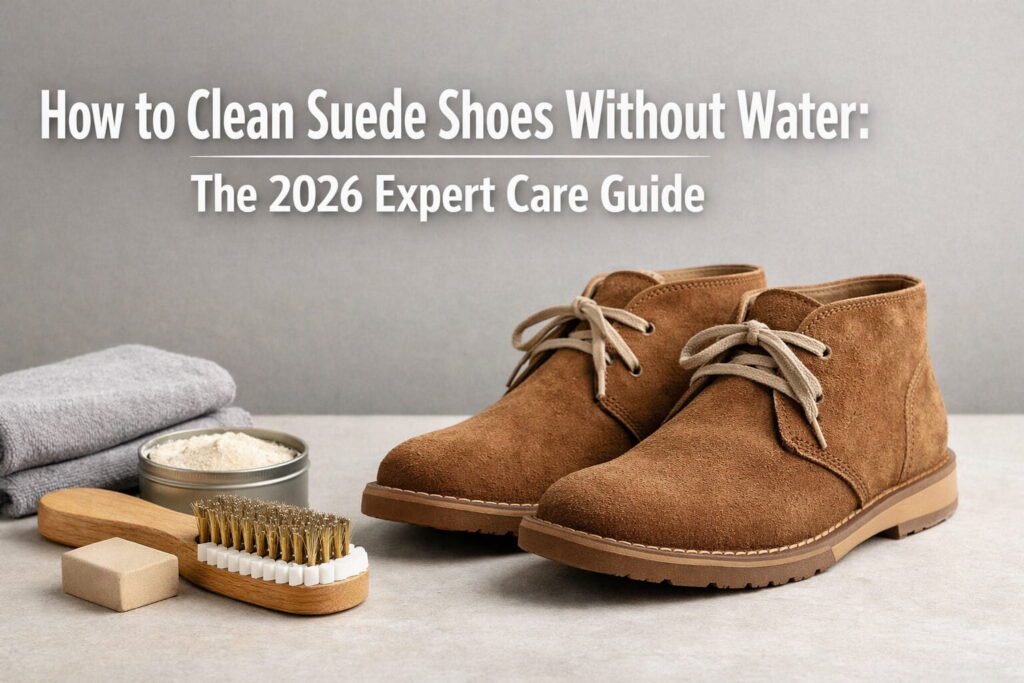
Before we start the cleaning process, you need to assemble a dry-cleaning kit. You likely have some of these items at home already.
- A Suede Brush: Ideally, a double-sided one with nylon bristles for gentle cleaning and brass bristles for resetting the nap.
- A Suede Eraser: These are blocks of crepe rubber or crumbly rubber specifically designed to lift stains. (In a pinch, a white vinyl pencil eraser works too).
- Microfiber Cloth: For blotting.
- White Vinegar: (Optional) The only liquid we allow, as it evaporates quickly and doesn’t stain.
- Nail File / Emory Board: For tough, flattened spots.
How to Clean Suede Shoes Without Water: Step-by-Step
This is the exact framework I teach my staff to use when prepping display models that have been handled by customers.
1. The Drying Phase (Crucial)
If your shoes have mud on them, do not touch them yet. This sounds counterintuitive, but if you try to wipe wet mud, you will push the dirt deep into the pores of the suede. Let the mud dry completely until it crusts over. It is much easier to flake off dry dirt than to remove wet mud.
2. The Surface Brush
Take your suede brush. If you are cleaning light dust, brush with the grain (in the direction the fibers naturally lay). This gives it a sleek look. However, for cleaning dirt, you need to brush against the grain initially to lift the fibers up and release trapped particles. Use short, quick flicks of your wrist rather than long, heavy scrubbing motions.
3. The Suede Eraser Technique
This is the secret weapon for how to clean suede boots specifically. Identify the scuffs or dark marks. Take your suede eraser and rub the stain vigorously.
- Don’t panic: The eraser will crumble, and it might look like you are making a mess. This is normal. The friction lifts the dirt out of the fibers and into the rubber crumbs.
- Blow it away: Once you’ve erased the mark, blow away the crumbs and brush the area again to blend it back in.
4. The “Dry” Liquid Method (Vinegar)
If the eraser didn’t work, you likely have an oil or salt stain. This is where we break the “no water” rule slightly, but we substitute water for white vinegar.
- Pour a tiny amount of vinegar onto a clean microfiber cloth.
- Dab the stain. Do not rub.
- Vinegar is acidic, which helps break down the stain, but unlike water, it evaporates very quickly and doesn’t leave a mineral ring.
- Note: Your shoes will smell like a salad for an hour, but the smell vanishes once dry.
5. Resetting the Nap
After cleaning, the suede might look a bit flat or patchy. Take your brush (or a dry toothbrush) and brush the fibers back and forth vigorously to fluff them back up. This restores that signature velvety look.
Material Deep-Dive: Know Your Suede
In the footwear industry, we categorize suede into a few tiers. Knowing what you have helps you clean it better.
Standard Suede (Cow/Split)
This is what you find on most casual sneakers and boots (like Timberlands or Adidas Campus). It is durable but rougher. You can be a bit more aggressive with the brushing here.
Kid Suede (Goat/Sheep)
Found on high-end dress shoes and pumps. It is incredibly soft and thin.
- Warning: Do not use brass brushes on kid suede; it will tear the material. Stick to soft nylon or a toothbrush.
Faux Suede (Microsuede)
This is actually polyester fabric. The good news? It is much harder to stain and easier to clean. You can actually use a damp cloth with a drop of detergent on faux suede without as much fear of water spots, but the dry method is still safer.
Pro-Tips: Retailer Insider Secrets
Over 20 years, you learn a few “hacks” when you don’t have professional tools on hand. Here are three tricks I’ve used in the back of the shop:
1. The Stale Bread Hack If you don’t have a suede eraser, use a piece of stale, crusty white bread. Remove the crust and let the bread harden slightly. Rub the bread over the suede. The gluten and porous texture act exactly like a rubber eraser, lifting dust and dirt. It sounds crazy, but it works on light-colored suede.
2. The Kettle Steam If your suede boots look crushed and flat (common after travel), hold them about 6 inches above a boiling kettle (be careful!). The steam opens the pores and relaxes the fibers. Brush them immediately while they are warm and damp from the steam, and the nap will stand right up.
3. The Emery Board for Shininess Sometimes suede gets “bald spots” where it becomes smooth and shiny. Take a standard fingernail file (emery board) and very gently lightly sand the shiny spot. You are essentially re-sanding the leather to create a new nap.
Comparison: Cleaning Methods
Is dry cleaning really better? Here is how the methods stack up.
| Method | Safety for Suede | Effectiveness on Mud | Effectiveness on Oil | Cost |
|---|---|---|---|---|
| Suede Eraser & Brush (Dry) | High | Excellent (once dry) | Moderate | Low ($5-$10) |
| Water & Soap | Low (High risk of stain) | Moderate | Poor | Low |
| White Vinegar | High | Good | Excellent | Very Low |
| Professional Cobbler | High | Excellent | Excellent | High ($30+) |
Common Mistakes to Avoid
I have seen customers destroy $200 shoes trying to save $5 on cleaning supplies. Avoid these errors:
- Drying Near Heat: Never put wet suede near a radiator, heater, or fire. The heat will dry out the natural oils in the leather, causing it to shrink, crack, and stiffen. Always air dry at room temperature.
- Using Colored Cloths: If you use a red rag to clean beige suede with vinegar, you might dye your shoes pink. Always use white or undyed cloths.
- Baby Wipes: This is the most common mistake. Baby wipes often contain moisturizers or oils that are great for skin but terrible for suede, leaving permanent grease marks.
People Also Ask (PAA)
Can I use baking soda to clean suede shoes? Yes, baking soda is effective for oil stains. Sprinkle it on the stain, let it sit for 15 minutes to absorb the grease, and then brush it off vigorously.
What household items can I use to clean suede? A white pencil eraser, white vinegar, a toothbrush, and a nail file are the best household substitutes for professional cleaning kits.
Does water ruin suede shoes permanently? Not always, but it can cause discoloration and harden the texture. If your shoes get soaked, stuff them with paper to hold their shape and let them dry naturally, then brush extensively.
Can you use a magic eraser on suede? Be very careful. Magic Erasers are abrasive (like sandpaper). They can work on white sneaker midsoles, but using them on colored suede can strip away the dye, leaving a bleached spot.
FAQs
1. Is it safe to wash suede shoes in the washing machine?
No. Putting suede shoes in a washing machine is widely considered the fastest way to ruin them. The complete submersion in water damages the leather, and the agitation can destroy the shoe’s construction and glue.
2. How often should I clean my suede boots?
For daily wear, give them a quick brush every week to prevent dust buildup. A deep clean with an eraser and vinegar is usually only necessary once a month or when visible stains appear.
3. How do I protect suede shoes after cleaning?
Once your shoes are clean and dry, apply a high-quality suede protector spray. This creates a hydrophobic barrier that repels water and prevents dirt from settling deep into the fibers.
4. Can I use carpet cleaner on suede shoes?
Generally, no. Carpet cleaners are harsh and often contain bleaching agents. Always stick to products specifically formulated for suede or leather.
Final Thoughts & Recommendations
Maintaining suede doesn’t have to be a headache. In fact, quality suede is one of the most durable materials out there if you keep it dry and brushed. In my experience, the longevity of a shoe depends 20% on the build quality and 80% on how the owner cares for it.
If you are looking to upgrade your footwear rotation or need the specific tools mentioned above, check out top-rated options online.
- [Check current prices for Suede Cleaning Kits on Amazon]
- [Browse Top-Rated Suede Boots for 2026]
- [Compare Suede Protectors and Sprays]
Disclaimer: As an experienced footwear enthusiast and strategist, I may earn a commission if you purchase through the links above. This supports our ability to provide free, expert guides.
- Best Crocs for Nurses 2026: ASTM-Certified Work Clogs & Reviews
- Best Dansko Nursing Shoes 2026: Professional Clogs Guide
- Best CNA Shoes 2026: 9 Comfortable Picks for Long Shifts
- Best Shoes for Pharmacy Technicians 2026 – Comfort & Slip Resistance
- 11 Best Shoes for Healthcare Workers in 2026: Hospital & Clinical Picks