
How to Recycle Old Shoes in India: The Complete 2026 Sustainability Guide
Introduction
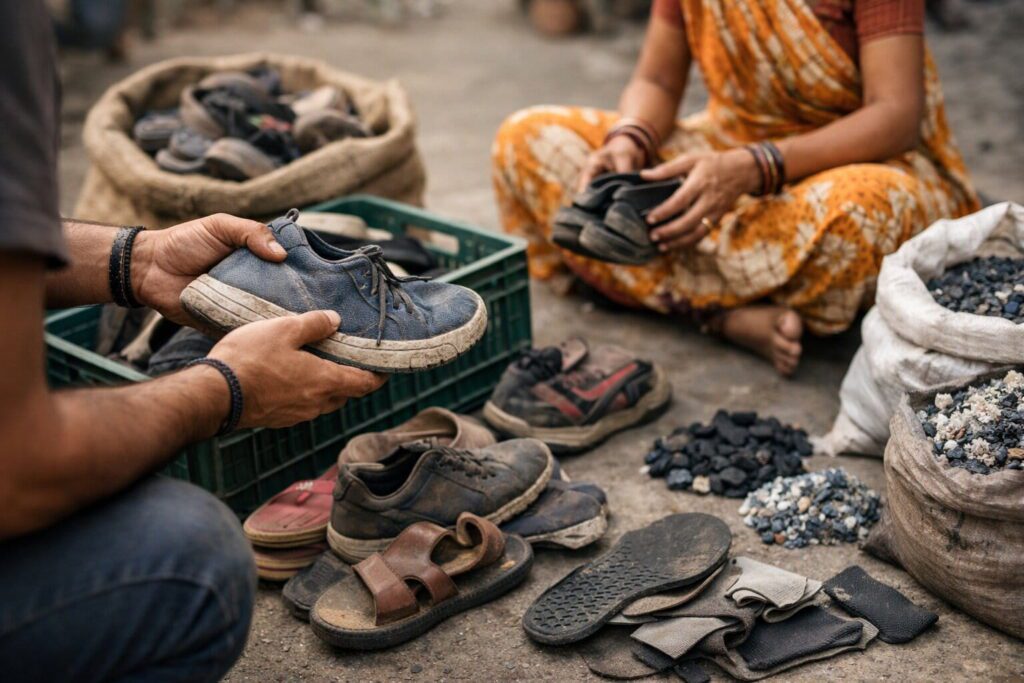
We all have that dark corner in our closet. It’s the “shoe graveyard“—a pile of worn-out sneakers, cracked leather formals, and sandals that have seen better days. As a footwear retailer who has spent over 20 years running a physical shoe shop in Chennai, I have seen thousands of pairs leave my store on happy feet, but I’ve also fielded the same question countless times from concerned customers: “What do I do with my old pair?”
In the past, the answer was often the dustbin. But in 2026, with the global push for sustainability and the reality of overflowing landfills, simply throwing shoes away is no longer the responsible choice. Footwear is complex; a single sneaker can contain plastic, rubber, leather, foam (EVA), and metal, making it a nightmare to decompose.
Whether you are looking for “shoes recycling near me” or trying to figure out if your old running shoes are suitable for donation, this guide is written to help you navigate the confusing world of footwear waste. We will break down exactly how to dispose of old shoes responsibly in India, how to distinguish between trash and treasure, and why the materials in your shoes matter more than you think.
Quick Answer: How to Recycle Old Shoes
(TL;DR for the Busy Reader)
To recycle old shoes in India, follow this three-step hierarchy:
- Assess Condition: If the soles and uppers are intact, clean and donate them to organizations like Greensole, Goonj, or Soles4Souls, which refurbish footwear for the underprivileged.
- Brand Take-Backs: For athletic shoes (even damaged ones), utilize programs like Nike’s Reuse-A-Shoe or Adidas’s exchange offers available at select flagship stores.
- True Recycling: For unwearable scraps, contact specialized waste management startups (like Ecokaari or local scrap dealers) that shred rubber and EVA soles for playground turf or industrial fuel. Never burn them.
Why This Topic Matters (The Global & Local Context)
In my two decades of selling shoes, I have noticed a shift in consumer behavior. People are buying more shoes than ever before—fast fashion has made footwear cheaper and more accessible. However, this has led to a massive increase in waste.
The problem with shoes is their construction. Unlike a glass bottle or a cardboard box, a shoe is an assembly of disparate materials glued together with high-strength adhesives.
- The Midsole: Usually Ethylene Vinyl Acetate (EVA) or Polyurethane (PU).
- The Outsole: Thermoplastic Rubber (TPR) or vulcanized rubber.
- The Upper: Synthetic mesh, polyester, or chemically treated leather.
When you throw these into a general landfill, the PU crumbles into microplastics, and the rubber takes up to 80 years to decompose. In a hot climate like India, cheap glues degrade faster, leading to “hydrolysis” (where the sole crumbles off), often leaving consumers with a pile of waste much sooner than expected.
Recycling isn’t just about being “green”; it is about responsible consumption. By extending the life of a shoe through donation or ensuring its materials are repurposed, we reduce the demand for virgin petroleum-based rubbers and plastics.
How to Recycle Old Shoes: A Step-by-Step Framework
Before you type “shoes recycling near me” into Google, you need to categorize your footwear. Not all old shoes belong in the same bin.
Phase 1: The Condition Audit
I always tell my customers: “One man’s boredom is another man’s luxury.” However, one man’s trash is still trash.
- Grade A (Gently Used): Minor scuffs, soles have 80% tread left, no structural damage.
- Action: Resell or Donate.
- Grade B (Well Worn): Faded colors, 50% tread, inner lining intact, functional.
- Action: Donate to refurbishment NGOs.
- Grade C (End of Life): Soles detached, holes in the toe box, crumbling midsole (hydrolysis), bad odor.
- Action: Material Recycling or Upcycling.
Phase 2: Donation Channels (Reuse)
If your shoes are Grade A or B, donation is the most impactful route. In India, several organizations specialize in this:
- Greensole: They are the gold standard in Indian footwear recycling. They take old discarded shoes and refurbish them into comfortable slippers for children in rural areas. They accept donations via courier from anywhere in India.
- Goonj: A renowned NGO that treats clothing and footwear as a dignified resource, not just charity. They have dropping centers across major metros.
- Soles4Souls: A global non-profit with operations in Asia. They distribute shoes to micro-enterprises to help people start small businesses selling refurbished footwear.
Pro-Tip: Always tie the laces of the pair together before donating. A separated shoe is useless to a charity.
Phase 3: Brand Take-Back Programs
If you have branded athletic gear (Grade C), check the manufacturer.
- Nike & Adidas: Often run specific campaigns where you can drop off old athletic shoes (of any brand) at their premium outlets. These are ground down into “Nike Grind” or similar materials used for track surfaces.
- Exchange Offers: E-commerce giants and brands like Bata often run “Exchange and Save” campaigns where you get a discount on a new pair in exchange for an old one. This ensures the old pair enters a managed waste stream.
Material Deep Dive: What Are You Actually Throwing Away?
Understanding materials is crucial. In my shop, I can look at a sole and tell you exactly how it will age. This knowledge helps in disposal.
1. EVA (Ethylene Vinyl Acetate)
- Found in: Running shoes, flip-flops, crocs.
- Recyclability: High. It can be shredded and reformed into foam mats or playground flooring.
- Disposal: Do not burn. It releases toxins. Look for specialized plastic recyclers.
2. TPR (Thermoplastic Rubber)
- Found in: Budget formal shoes, school shoes, casual sneakers.
- Recyclability: It can be melted down and remolded, unlike vulcanized rubber.
- Disposal: This is valuable to scrap dealers. If you have a bulk load, local “kabadiwalas” might actually take TPR soles if separated from the upper.
3. PU (Polyurethane)
- Found in: Premium formal shoes, sandals like Red Chief or Woodland style.
- The Issue: PU suffers from hydrolysis. If you haven’t worn them in 2 years, the sole might crumble into dust.
- Disposal: This is the hardest to recycle. It usually ends up as filler material or waste-to-energy fuel.
Pro-Tips: The Retailer’s Perspective
After handling thousands of returns and repairs, here are my insider tips on managing shoe longevity and disposal:
- The “Rot” Test: Before you donate vintage shoes, flex the sole hard. If you see deep cracks appearing instantly or if the material feels sticky, do not donate them. The sole will fall off within a mile of walking. It is undignified to give someone a shoe that breaks immediately.
- The Odor Factor: If a shoe has a permanent fungal smell, it is a biohazard. Do not donate it. The bacteria live deep in the foam. These must be scrapped.
- Sole Separation: If you are DIY-inclined, separate the rubber sole from the fabric upper. A pure rubber sole is much easier for a local scrap dealer to accept than a whole shoe.
Comparison: Donation vs. Recycling vs. Upcycling
| Feature | Donation | Recycling | Upcycling |
|---|---|---|---|
| Shoe Condition | Wearable, intact soles. | Damaged, detached soles. | Aesthetic damage only. |
| Best For | Casual shoes, school shoes. | Running shoes, flip-flops. | Canvas sneakers, boots. |
| Environmental Impact | High (Extends life). | Medium (Material recovery). | Medium (Creative reuse). |
| Cost to You | Shipping fees (sometimes). | Free (Drop-off). | DIY Supplies. |
| Where to go | Greensole, Goonj. | Brand stores, Scrap dealers. | Your home/Garden. |
Common Mistakes to Avoid
- Donating Mismatched Pairs: This sounds obvious, but you’d be surprised. Always tape or tie pairs together.
- Ignoring the Insoles: Remove custom orthotics or gel insoles before recycling. Those are medical devices meant for your feet only.
- Binning Electronics: Light-up shoes or smart shoes with chips contain batteries. These are e-waste, not general waste. They must be disposed of at e-waste centers.
- Waiting Too Long: Don’t wait until the shoe is disintegrated. If you don’t wear it for 12 months, recycle it while it still has value to someone else.
People Also Ask
Can I recycle shoes in my recycling bin? Generally, no. Municipal recycling bins are for bottles and paper. Shoes can jam sorting machinery; they require specialized drop-off points.
Where can I donate old shoes in India? Top organizations include Greensole (Mumbai/National), Goonj (Delhi/National), and local orphanages. Always call ahead to check their current needs.
What do Nike and Adidas do with old shoes? They grind them down to create raw materials for sports surfaces, tracks, and playgrounds, keeping them out of landfills.
How do I dispose of shoes that cannot be donated? Contact local waste management startups like Saahas Zero Waste or separate the materials and sell the rubber to scrap dealers.
Is there a way to recycle flip-flops? Yes, flip-flops are usually 100% foam or rubber. Several brands offering “take-back” programs specifically target flip-flops due to ease of recycling.
If you have successfully cleared out your closet and recycled your old pairs, you are likely looking for replacements that won’t fall apart in six months.
The most sustainable choice you can make is buying high-quality, durable footwear that lasts years, not seasons.
- Looking for durability? Check out top-rated running shoes with high-abrasion rubber soles on Amazon.
- Need comfort that lasts? Explore premium walking shoes with non-degrading cushioning on Myntra or Ajio.
- Travel ready? Compare prices for waterproof hiking boots that survive the toughest Indian terrains.
Invest in quality now, and you won’t have to visit this recycling guide again for a very long time.
FAQs
1. Can I get money for recycling old shoes?
Direct cash for old shoes is rare unless they are vintage collectibles. However, brands like Bata or Adidas occasionally offer discount coupons for your next purchase when you trade in old footwear.
2. Does Greensole pick up shoes from home?
Greensole primarily operates via courier donations. You pack the shoes and ship them to their Mumbai center. Occasionally, they run collection drives in major corporate parks or malls.
3. Can I recycle shoes with holes in them?
Yes, but not for donation. Shoes with holes should be sent to material recyclers (like the Nike Reuse-A-Shoe program) where they are ground up, rather than refurbished.
4. What is the most eco-friendly shoe material?
Natural rubber, cork, and ethically sourced leather are biodegradable. Avoid cheap PU (faux leather) if you want shoes that biodegrade eventually.
5. How do I clean shoes before donating?
Wipe down the uppers with a damp cloth and mild soap. Remove stones from the tread. Spray a disinfectant inside to kill bacteria. Dry them in the shade, not direct sunlight.
6. Can I recycle high heels?
Heels are difficult due to the metal shank inside the heel and rigid plastics. These are best donated if in good condition or upcycled into art projects if broken.
7. Are there shoe recycling centers in Bangalore/Delhi/Mumbai?
Yes, major metros have Goonj dropping centers. Additionally, look for “bhangar” or scrap markets in cities like Seelampur (Delhi) or Kurla (Mumbai) for material scrapping.
8. Why do shoes crumble if kept in the closet?
This is called hydrolysis. PU soles absorb moisture from the air, breaking down the chemical bonds. Shoes need to be worn to push air out of the soles and keep them flexible.
9. Can I compost my old shoes?
Only if they are 100% natural (e.g., organic cotton canvas with natural latex soles). 99% of modern shoes contain synthetics and cannot be composted.
10. What is ‘Upcycling’ regarding shoes?
Upcycling means turning the shoe into something else without breaking it down. For example, using an old rain boot as a flower pot or painting old canvas sneakers to give them a new look.