

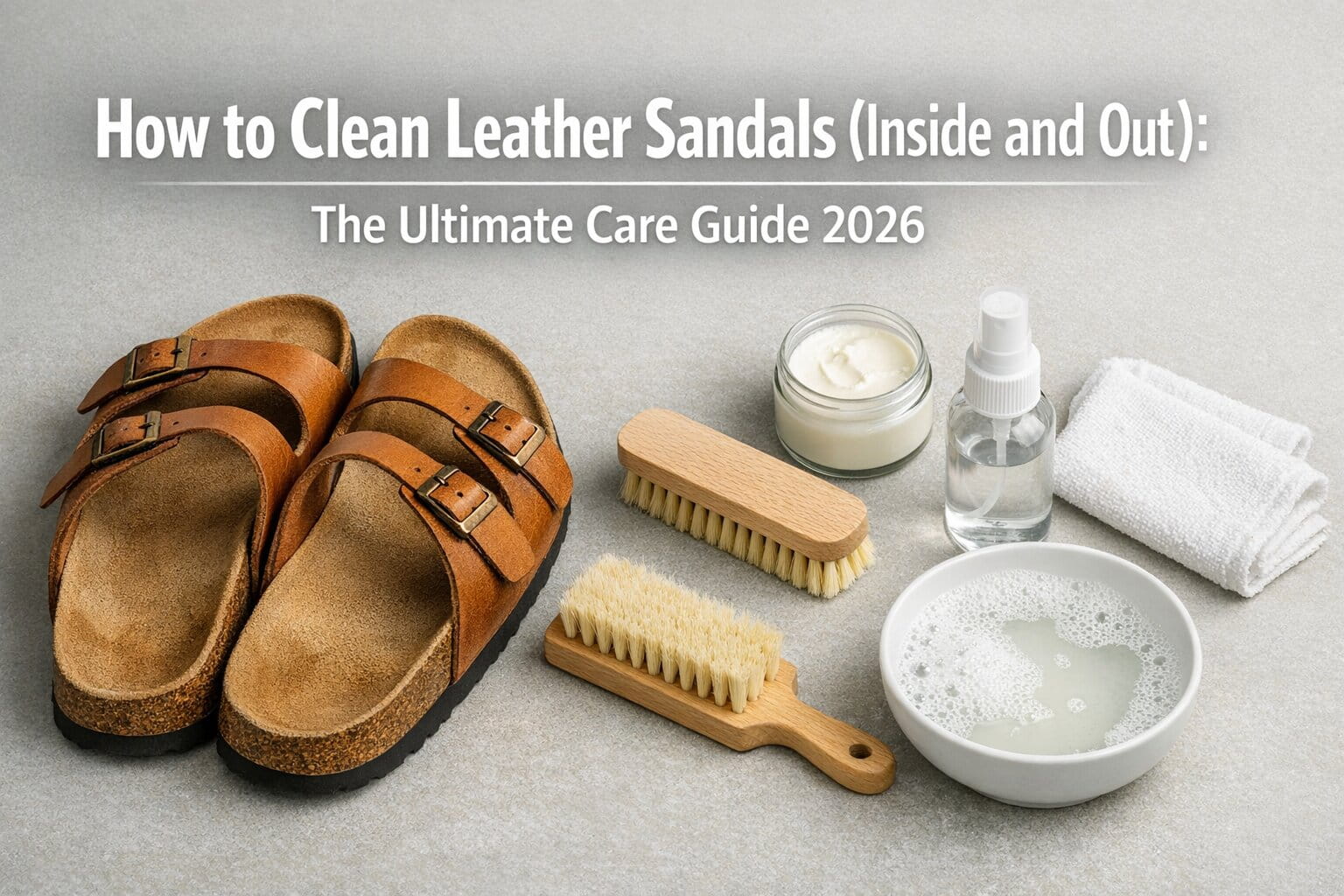
How to Clean Leather Sandals (Inside and Out): The Ultimate Care Guide 2026

Introduction
There is a specific heartbreak that happens in my line of work. A customer walks into my shop holding a pair of beautiful, high-quality leather sandals they bought three years ago. The straps are cracked, the footbed is stained black with sweat and dirt, and they smell… well, let’s just say they’ve seen better days.
“Can you save these?” they ask.
In the 20+ years I’ve spent running a physical shoe store and handling thousands of pairs of footwear, I’ve learned that leather sandals are often the most neglected shoes in a wardrobe. We treat our boots with respect. We polish our dress shoes. But sandals? We wear them barefoot, expose them to direct sun, sweat in them, and then toss them in the back of the closet.
The good news is that high-quality leather is incredibly resilient. Whether you are wearing rugged travel sandals, refined leather slides, or strappy gladiators, they can be restored.
In this guide, we aren’t just wiping off dust. We are going deep. I’m going to show you how to clean leather sandals inside and out, removing that dreaded dark footprint on the sole and restoring the suppleness of the straps using professional-grade techniques—and the right leather cleaner.
TL;DR: Quick Answer
To clean leather sandals effectively:
- Brush off surface dirt with a soft horsehair brush.
- Clean the footbed (the inside) using a mild leather cleaner or saddle soap applied with a damp cloth. Scrub gently in circles to lift sweat stains.
- Clean the uppers with a dedicated cleaner; avoid soaking the leather.
- Disinfect the footbeds if odor is present (a 1:1 vinegar/water mix works well).
- Condition immediately once dry using premium leather conditioners or a leather boot conditioner to replenish oils and prevent cracking.
- Air dry away from direct sunlight for 24 hours.
Why This Topic Matters (The Retailer’s Perspective)
Why do so many people ruin their leather sandals? In my two decades on the shop floor, I’ve noticed a global pattern. The biggest mistake isn’t that people don’t clean their shoes—it’s that they treat leather sandals like synthetic sneakers.
I have seen customers throw $150 full-grain leather sandals into a washing machine. I have seen others scrub them with harsh dish soap, stripping out every ounce of natural oil.
When you buy leather footwear, you are buying a skin. It needs to breathe, it needs to be cleaned, and most importantly, it needs to be fed.
In hot climates—whether you are walking the streets of Rome or navigating a humid summer in New York—sweat penetrates the footbed. This creates bacteria (which causes the smell) and turns the leather hard and brittle. If you don’t address the “inside” of the sandal, the structural integrity fails, no matter how good the straps look.
This guide is designed to bridge the gap between expensive professional restoration and the dangerous “life hacks” you see on social media.
The Essential Toolkit
Before we start, you need the right tools. You don’t need a professional cobbler’s workshop, but you do need better supplies than just water.
- Soft Bristle Brush: Horsehair is best to avoid scratching.
- Microfiber Cloths: For applying product and wiping away grime.
- The Cleaner: A dedicated leather cleaner (Saddle soap is the traditional choice, but foaming cleansers are easier for beginners).
- The Conditioner: Essential. Leather conditioners replace lost oils.
- Optional Polish: Saphir boot polish or shoe polish for leather shoes (neutral color) for dressy sandals.
Phase 1: The Prep and The “Inside” (Footbed)
The footbed is the hardest part to clean because it is where the foot acts like a stamp, pressing dirt and sweat deep into the pores of the leather.
1. Dry Brushing
Never apply liquid to a muddy or dusty shoe. Take your brush and vigorously (but carefully) knock off all loose surface dirt from the sole and crevices.
2. The Footbed Scrub
This is where the dark “footprint” lives.
- Dampen your cloth or a small applicator brush.
- Apply a small amount of leather cleaner or saddle soap.
- Expert Tip: If you don’t have a specific shoe cleaner, a leather bag cleaner is often formulated to be gentler and works wonderfully on softer sandal footbeds.
- Work the lather into the footbed using circular motions. You will see the foam turn gray or black. That is the extracted dirt.
- Do not soak the leather. You want to lift the dirt, not drown the fiber.
- Wipe away the dirty foam with a clean, damp cloth. Repeat until the foam stays relatively white.
3. Bactericide (The Smell Test)
If your sandals have a funk, cleaning isn’t enough.
- Mix equal parts white vinegar and water.
- Wipe the footbed down quickly with this solution. The acidity kills the bacteria that thrive in the leather’s pores.
Phase 2: The “Outside” (Straps and Upper)
The straps require a more delicate touch. They endure tension as you walk, so if they dry out, they will snap.
1. Gentle Cleansing
Using your leather cleaner, gently wipe down the straps. If the leather is textured or woven, use a soft toothbrush to get into the weave. Be very careful around stitching—harsh scrubbing can fray the thread.
2. The Drying Process (Crucial)
Wipe the entire sandal with a dry towel. Rule #1 of the Shoe Shop: Never, ever put wet leather in the sun or near a radiator to dry. Heat cooks wet leather, turning it into hard cardboard. Let them air dry in a cool, shaded spot for at least 24 hours.
Phase 3: Conditioning and Protection
This is the step 90% of buyers skip, and it’s why their sandals die young. Cleaning strips oils; you must put them back.
1. Choosing the Right Product
You might think it sounds strange to use a leather boot conditioner on a summer sandal, but leather is leather. A high-quality conditioner designed for rugged boots (like those containing mink oil or beeswax) is actually perfect for sandals that take a beating on city streets.
2. Application
- Apply a dime-sized amount of conditioner to a clean cloth.
- Massage it into the straps and the footbed.
- The leather will darken slightly as it drinks the oils—this is normal.
- Let it sit for 20 minutes, then buff off the excess.
3. The Finish (Optional)
If you are cleaning dress sandals or leather slides that need a shine, now is the time for polish.
- Using a high-end product like Saphir boot polish (in neutral or the matching color) creates a protective wax layer.
- Apply a tiny amount, let it haze, and brush it to a shine.
- Note: Do not polish the footbed! It will make the inside slippery and stain your feet. Only polish the outer straps.
Pro-Tips: Insider Shoe Quality Checks
In my shop, we evaluate leather quality by touch. After you clean and condition your sandals, try the “Flex Test.”
Gently flex the sole. If you see micro-cracks appearing instantly in the leather, the material is dehydrated. You need to apply a second coat of leather conditioners.
The “Sticky” Issue: Sometimes, after cleaning, the footbed feels sticky. This usually means you used too much soap and didn’t rinse (wipe) it enough, or you used a cleaner that is too harsh. If this happens, wipe them down again with a damp cloth and just water, then let them dry completely before conditioning.
Comparison: Choosing Your Cleaner
Not all products are created equal. Here is a breakdown based on what I recommend to customers.
| Cleaner Type | Best For | Pros | Cons |
|---|---|---|---|
| Saddle Soap | Rugged, thick leather sandals | Deep cleaning power; removes heavy grime. | Can be drying; requires heavy conditioning after. |
| Foam Leather Cleaner | Delicate straps, fashion sandals | Easy to use; doesn’t oversaturate leather. | May not remove deep-set sweat stains. |
| Leather Bag Cleaner | Soft calfskin, luxury slides | Very gentle; maintains soft texture. | Mild; won’t fix heavy outdoor mud. |
| DIY (Vinegar/Water) | Odor removal | Cheap; antibacterial. | Is not a cleaner; won’t remove dirt/oils. |
Common Mistakes to Avoid
- Using Magic Erasers: I see this online constantly. Magic Erasers are abrasive—they are essentially sandpaper. Using them on finished leather removes the protective dye and topcoat.
- Over-oiling: If you saturate the leather, it becomes mushy and loses its shape. Thin layers are better than one thick layer.
- Ignoring the Stitching: When applying shoe polish for leather shoes, avoid glopping it over contrast stitching. It will stain the thread and make the shoes look messy.
- Wearing Them Wet: If your sandals are damp from cleaning, do not wear them. Your foot shape will distort the wet leather permanently.
People Also Ask (PAA)
Can I wash leather sandals with water? You can use a damp cloth, but never submerge leather sandals in water or put them in a washing machine, as this destroys the glue and dries out the leather.
How do I get the smell out of leather sandals? Clean the footbed to remove bacteria-causing sweat, then wipe with a 1:1 vinegar and water solution. Baking soda can also absorb odors if left on overnight.
What is the best oil for leather sandals? Natural oils like mink oil or neatsfoot oil are excellent, but a formulated leather boot conditioner is safer as it prevents the leather from becoming too soft or rot-prone.
How do you clean the inside footbed of a sandal? Use a stiff brush and a small amount of saddle soap. Scrub in circular motions to lift the dark sweat marks, wipe clean, and dry away from heat.
Can I use shoe polish on sandals? Yes, for the outer straps. A cream polish or Saphir boot polish works beautifully to restore color and shine, but never polish the part your foot touches.
Monetization & Next Steps
You don’t need to be a cobbler to keep your sandals looking new, but you do need the right supplies. Investing in a $15 bottle of conditioner can save a $150 pair of shoes.
If you are looking to build your shoe care kit, I recommend checking out top-rated options online:
- [Check price for Saphir Renovateur on Amazon] – The gold standard for conditioning.
- [See top-rated Leather Cleaners] – Gentle foams and soaps for all sandal types.
- [Browse Horsehair Brushes] – Essential for dust removal.
Disclaimer: As an affiliate, we may earn a commission from qualifying purchases. This supports our ability to provide free, expert content.
FAQs
1. Can I use leather boot conditioner on sandals?
Yes, absolutely. High-quality leather boot conditioner is designed to penetrate thick hides and repel moisture. Since sandals are often exposed to direct elements and sweat, a boot conditioner provides excellent protection against cracking and drying out.
2. How often should I clean my leather sandals?
For daily wearers, a light wipe-down should happen weekly. A deep clean (saddle soap and condition) should happen once a month during the summer season, and definitely before you store them for winter.
3. How do you remove dark toe marks from leather sandals?
Those dark marks are a mix of dirt, oils, and sweat. You need a deglazing cleaner or saddle soap. Scrub the area vigorously with a toothbrush, wipe away the foam, and repeat. Note that heavily ingrained footprints may lighten but never fully disappear—that is the patina of a well-loved shoe.
4. Is Saphir boot polish good for sandals?
Saphir boot polish is arguably the best in the world. For dress sandals or high-end leather slides, Saphir cream polishes nourish the leather deeply while providing a soft, natural shine without the flaking associated with cheap waxes.
5. Can I use leather bag cleaner on my shoes?
Yes. Leather bag cleaner is typically formulated for softer, more delicate skins (like calfskin or lambskin). If your sandals have delicate straps or intricate weaving, a bag cleaner is a safer, gentler option than heavy-duty saddle soap.
6. What kills bacteria in leather sandals?
White vinegar is the safest household item. UV light (sunshine) kills bacteria but damages leather. There are also commercial sneaker disinfectant sprays, but ensure they are safe for leather before spraying the footbed.
7. Why are my leather sandals stiff after cleaning?
If they feel stiff, the cleaning agents stripped the natural oils. You must apply leather conditioners immediately. Massage the conditioner in, let it absorb, and flex the sole gently to soften the fibers again.
8. How do I clean suede sandals?
Suede requires a different approach. Do not use standard leather cleaner or creams. Use a crepe brush to lift the nap and a dedicated suede eraser for stains. Water can stain suede, so use specialized foam cleaners sparingly.
9. Can I use olive oil to condition leather sandals?
I do not recommend it. Olive oil can go rancid inside the leather, leading to a strange smell and rotting stitching. Always use a product formulated for leather, like neatsfoot oil or a synthetic blend.
10. Does baking soda ruin leather?
Baking soda has a high pH (alkaline) while leather is acidic. While it is great for absorbing odors inside the shoe, do not make a paste and scrub the leather with it, as it can alter the pH balance and cause the leather to become brittle and gray.
Pingback: How to Shorten Long Shoelaces Without Cutting: 5 Easy Hacks (2026)
Pingback: How to Clean Mesh Running Shoes: Expert 2026 Guide