

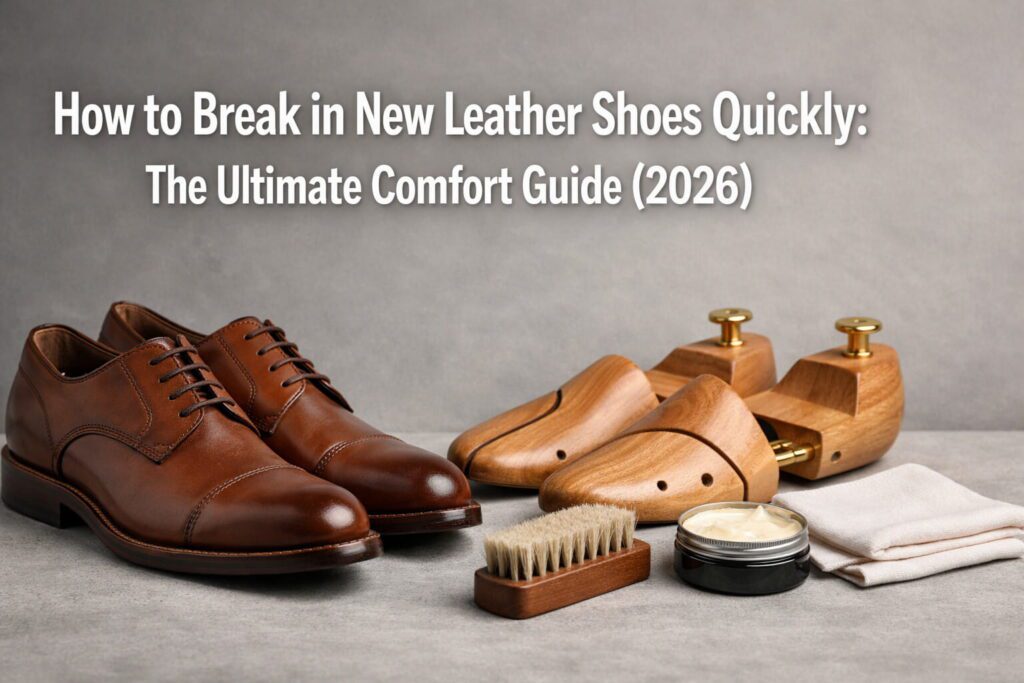
How to Break in New Leather Shoes Quickly: The Ultimate Comfort Guide (2026)
TL;DR: The Quick Answer
How do you break in leather shoes fast? The most effective, safe method is the Heat and Sock Technique. Put on a pair of thick wool socks and squeeze your feet into the shoes. Blast the tight areas (usually the heel and toe box) with a hairdryer on medium heat for 30 seconds while wiggling your toes. Keep the shoes on until they cool down. Follow up immediately with a high-quality dress shoe leather conditioner to replenish the moisture. This mimics weeks of wear in just 15 minutes.
Introduction
There is a specific kind of heartbreak that every footwear lover knows. You see a pair of handcrafted leather oxfords or boots online, you obsess over the specs, you finally buy them, and they look stunning out of the box. But 20 minutes after putting them on, you are limping. The heel is digging in, the toe box feels like a vice, and you are regretting everything.
We call this the “breaking-in period,” but honestly, it often feels more like a battle.
In my 20+ years of running a physical shoe store and handling thousands of pairs of shoes—from high-end Italian calfskin to rugged work boots—I have seen more bandaged heels than I care to count. Customers often came back to my shop a week after a purchase, convinced they bought the wrong size, when in reality, they just didn’t know how to negotiate with new leather.
Whether you are a corporate professional in New York, a traveler in London, or just someone looking for durable daily wear, the struggle is universal. But here is the good news: pain is not a requirement.
In this guide, I’m going to show you exactly how to break in new leather shoes quickly without ruining them. We will cover the best shoe bite remedy options, the tools you actually need, and the myths that will destroy your expensive footwear.
Why This Topic Matters (and Why Google is Full of Bad Advice)
Leather is skin. That is the fundamental thing most online guides forget. Just like your skin, it reacts to heat, moisture, and friction. When you buy a new pair of leather shoes, the collagen fibers are stiff and dry from the tanning and storage process.
The goal of breaking them in isn’t to “stretch” the shoe into a new size; it is to relax those fibers so they mold to the unique asymmetry of your feet.
After two decades on the shop floor, I’ve seen people do terrible things to their shoes because they read a “hack” online. I have seen people freeze their shoes in bags of water (which cracks the structural glue) or soak them in alcohol (which destroys the finish).
If you want your shoes to last five years instead of five months, you need to treat the material with respect. The methods below are the same ones I’ve used for my own collection and recommended to thousands of customers who walked through my doors.
The Science of the Fit: Before You Start
Before we apply heat or expanders, we need to verify one thing: Is it tight, or is it too small?
- Snug: You feel pressure, like a firm handshake, around the instep or the sides of the foot. The heel doesn’t slip, but it feels stiff. This is breakable.
- Small: Your toes are curled, touching the front of the shoe, or you feel a sharp pinching pain immediately upon standing. Return these. No amount of breaking in will make a shoe longer.
Method 1: The Hairdryer & Thick Sock Trick (Fastest)
This is the gold standard for a reason. It uses heat to temporarily loosen the leather fibers, allowing them to stretch and reshape around your foot.
The Step-by-Step Framework:
- Protect Your Feet: Put on one or two pairs of the thickest winter/wool socks you own.
- Force the Fit: Squeeze your feet into the shoes. It will be uncomfortable—that’s okay for now.
- Apply Heat: Set your hairdryer to medium heat. Aim it at the tight spots (usually the toe box or the heel counter) for 20–30 seconds. Do not hold it in one spot; keep it moving to avoid burning the leather.
- Mobilize: While heating, wiggle your toes and flex your foot. You are mechanically forcing the leather to expand.
- Cool Down: This is crucial. Keep the shoes on until they are completely cool. If you take them off while warm, they will shrink back.
- Condition: Heat dries out leather. Apply a premium dress shoe leather conditioner immediately after to keep the leather supple.
Pro-Tip: Don’t use high heat on patent leather (shiny leather), as the plastic coating can melt or crack.
Method 2: The “Slow Burn” Strategy (Safest)
If you aren’t in a rush, this is the method that preserves the structural integrity of the shoe best.
- Day 1: Wear the shoes for 30 minutes while sitting at your desk or watching TV. Do not walk much.
- Day 2: Wear them for 1 hour inside the house. Walk on carpet (this protects the sole in case you need to return them).
- Day 3: Take a short walk outside (grocery run or to the mailbox).
- Day 4: Half-day wear. Bring a backup pair of comfortable sneakers with you.
This gradual exposure allows the moisture and heat from your foot to slowly relax the shoe without shocking the material.
Method 3: Mechanical Stretching (For Width)
Sometimes, you just need a few millimeters of extra width.
- Shoe Stretchers: These are wooden or plastic devices you insert into the shoe. Look for “two-way” stretchers that can expand both length and width.
- Spot Plugs: Most good stretchers come with little plastic nubbins (plugs) that you can insert to target specific pressure points (like a bunion or a pinky toe).
- Stretch Spray: Use a leather stretching spray on the inside of the shoe before inserting the stretcher. It softens the fibers chemically.
Retailer Insight: Leave the stretcher in for at least 24 hours. Turning the crank too hard, too fast will pop the stitching. Patience is key.
The “Shoe Bite” Reality: Prevention & Cures
A “shoe bite” is simply a friction blister caused by the stiff leather rubbing against your soft skin, usually at the Achilles tendon (heel) or the little toe.
Immediate Shoe Bite Remedy
If you already have a blister:
- Do not pop it. That is an infection risk.
- Cushion it. Use a hydrocolloid blister plaster. These act like a second skin and absorb the fluid while padding the wound.
- Rest the shoe. Do not wear that pair again until the skin heals.
The Best Cure for Shoe Bite (Prevention)
- Petroleum Jelly: Rub a little Vaseline or coconut oil on the inside of the heel counter before wearing. It reduces friction significantly.
- Anti-Friction Sticks: Brands like Compeed or Body Glide make sticks specifically for this.
- Heel Grips: If the shoe is rubbing because it’s slightly loose, add a silicone or suede heel grip to the back.
Comparison Table: Breaking-In Methods
| Method | Speed | Risk Level | Best For | Cost |
|---|---|---|---|---|
| Hairdryer & Socks | Fast (15 Mins) | Low | Tight leather, stiff heels | Free |
| Shoe Stretcher | Medium (24 Hrs) | Low | Wide feet, bunions | $20 – $40 |
| The “Slow Burn” | Slow (1 Week) | Zero | Expensive/Delicate shoes | Free |
| Freezing Water | Fast | High | Avoid (Breaks structure) | Free |
| Alcohol Spray | Fast | High | Avoid (Dries/Discolors) | Low |
Pro-Tip Section (Retailer-Only Insight)
In my shop, I used to do a “Thumb Test” on every leather shoe before selling it.
The Thumb Test: Take the back of the shoe (the heel counter) and press firmly with your thumb.
- If it is rock hard and doesn’t yield: That is likely a plastic or cardboard stiffener inside cheap leather. It will be a nightmare to break in and will likely cut your heel.
- If it is firm but has a slight “give”: That is quality leather stacking. It will mold to you.
The Noise Check: Put the shoe on and flex your foot. If the leather makes a loud “squeak” or “crackle” like plastic, it is likely “corrected grain” (leather coated in polyurethane). These do not stretch well. They tend to crack rather than break in. Always check the material composition before buying.
Common Mistakes to Avoid
- Ignoring the Sole: Sometimes it isn’t the leather; it’s the sole. Leather soles are stiff. Flex them gently with your hands back and forth to loosen the shank before wearing them.
- Over-Conditioning: While dress shoe leather conditioner is vital, drowning the shoe will make the leather mushy and it will lose its shape. A dime-sized amount is enough.
- Wearing Them Wet: Never try to break in shoes by soaking them in water and wearing them dry. This rot the stitching and causes mold.
- Expecting Miracles: If a shoe is a size 9 and you are a size 10, no amount of stretching will fix it. Don’t ruin the shoe trying to force physics.
Monetization-Friendly Advice: What to Buy
You don’t need a cobbler for this, but having the right toolkit helps. If you are investing in good footwear, invest in maintenance.
- Check today’s best-rated Shoe Stretchers on Amazon – essential for wide feet.
- See top-reviewed Dress Shoe Leather Conditioners – look for brands like Saphir or Venetian Shoe Cream.
- Compare prices on Hydrocolloid Blister Plasters – keep these in your bag; they are the only real cure for shoe bite pain when you are on the go.
People Also Ask (PAA)
How long does it take to break in leather shoes? It typically takes 2 to 4 weeks of regular wear to fully break in high-quality leather shoes. Using heat methods can accelerate the initial comfort within 24 hours.
Does alcohol stretch leather shoes? Rubbing alcohol mixed with water can stretch leather, but it strips natural oils and can discolor the dye. It is not recommended for expensive footwear; use a dedicated stretching spray instead.
Why do my new shoes bite my heels? New shoes bite because the heel counter is stiff and hasn’t curved to match your heel’s shape yet. Friction causes the blister. Use thick socks or heel pads to prevent this during the first few wears.
Can you use olive oil to soften leather boots? Avoid olive oil. It can go rancid and leave a sticky residue that attracts dirt. Stick to proper leather conditioners or neatsfoot oil for boots.
FAQs
Q: What is the fastest way to stop a shoe bite? A: The fastest way to treat a shoe bite is to apply a hydrocolloid blister plaster immediately. To prevent it, apply a lubricant like petroleum jelly to your heel before wearing the shoes.
Q: Will leather shoes stretch if they are too tight? A: Leather shoes can stretch in width (up to a quarter inch) but they will rarely stretch in length. If your toes are hitting the front, the size is too small.
Q: How often should I apply dress shoe leather conditioner during break-in? A: Apply conditioner once before you start wearing them, and again after any heat treatment. After that, conditioning once a month is sufficient.
Q: Is the hairdryer method safe for suede shoes? A: Be very careful with suede. Heat can dry out the nap. If you use a hairdryer on suede, keep it on low heat and keep it moving constantly.
Q: Why are my leather shoes squeaking? A: Squeaking often happens when two pieces of leather rub together. Sprinkle a little talcum powder under the insole or use a leather conditioner to reduce the friction.
Disclaimer: This guide is based on professional experience with leather footwear. Always check the manufacturer’s care instructions for your specific brand.
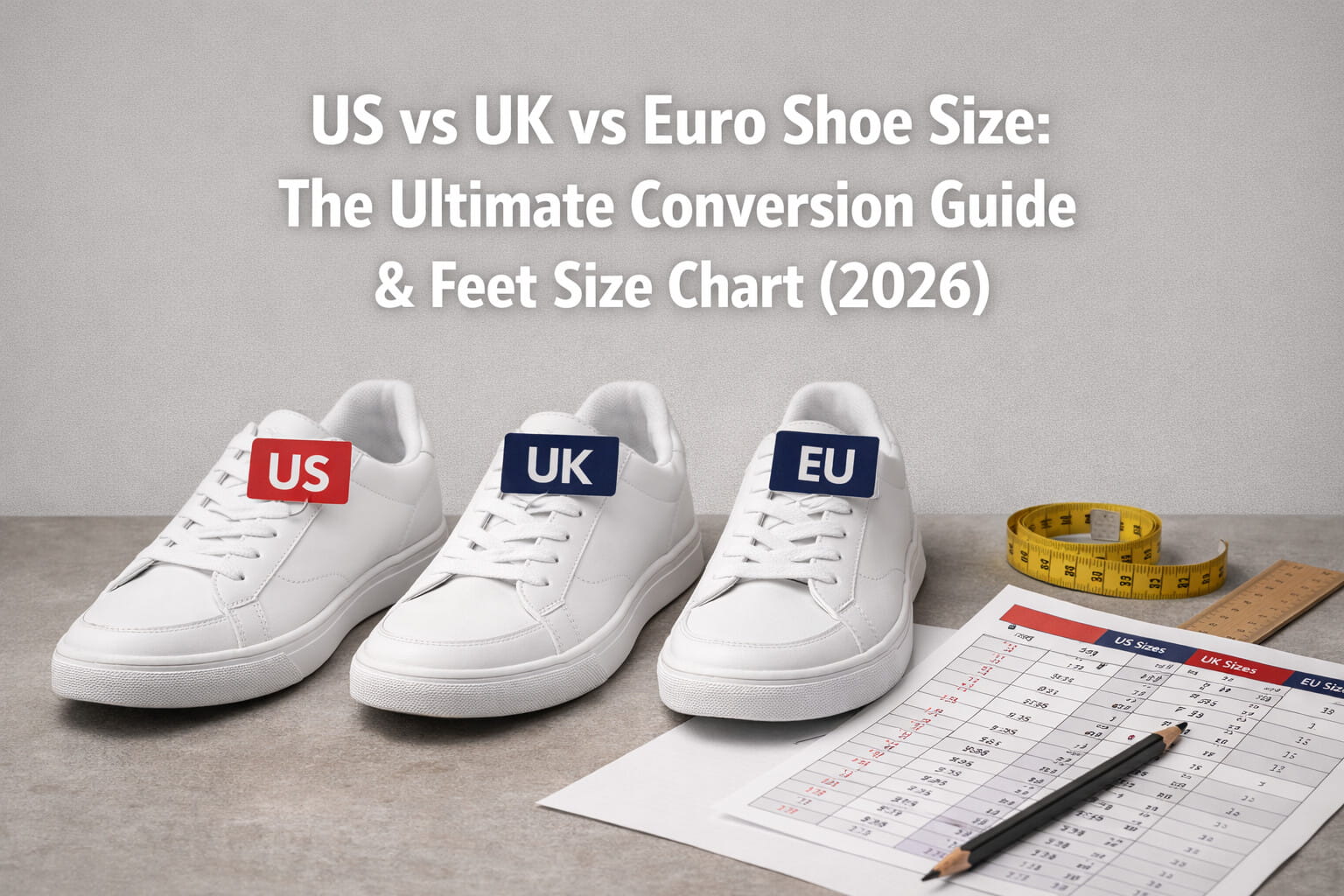
US vs UK vs Euro Shoe Size: The Ultimate Conversion Guide & Feet Size Chart (2026)
Pingback: How to Remove Creases from Shoes; Prevention Guide 2026