
07 Best Shoes for Plantar Fasciitis in 2026 (Podiatrist Recommended)
The 30-Second Summary (TL;DR)
In a rush? Here are the top performers from our 2026 instore testing. These are the shoes that customers actually keep rather than returning.
- Best Overall (The “Can’t Go Wrong” Pick): Brooks Ghost 16. It strikes the perfect balance between neutral cushioning and heel stability. It just works for 80% of foot shapes.
- Best for Severe Pain (Max Cushion): Hoka Bondi 8. If your heels feel like they are stepping on nails, this is the maximum protection money can buy.
- Best Value (Budget Friendly): Skechers Arch Fit. Surprisingly good arch support technology at half the price of the premium brands.
See All Podiatrist Recommended Shoes on Amazon
Best overall walking shoes for plantar fasciitis
I have spent the last 20 years on my knees—literally—fitting shoes for people screaming in pain. I own a brick-and-mortar shoe store, and I see the reality that online reviews gloss over.
Here is the truth: Most “soft” shoes are actually making your Plantar Fasciitis worse.
When you browse online, you see terms like “Cloud-like” and “Memory Foam.” You buy them, they feel great for three days, and then the pain comes back with a vengeance. Why? Because plantar fasciitis (that sharp, stabbing pain near the heel) requires structure, not just squishy foam. Your fascia ligament is strained; it needs a crutch, not a pillow.
I have curated this list for 2026 not based on marketing brochures, but based on what my customers wear when they finally walk out of my shop pain-free.
The Buying Guide: 3 Critical Features (Don’t Ignore These)
Before you click “Add to Cart,” you need to understand the mechanics of a shoe that actually heals the foot. In the industry, we look for three specific technical aspects.
1. The “Taco Test” (Torsional Rigidity)
You should not be able to fold a shoe in half like a taco. If you can twist the shoe easily like a dishrag, do not buy it.
- The Tech: Look for a rigid midfoot shank. This prevents your arch from collapsing under your body weight, which is the primary cause of the micro-tears in your fascia.
2. The Heel Counter
Squeeze the back of the shoe (the part that cups your heel). It should be rock hard.
- The Tech: A firm Heel Counter locks your calcaneus (heel bone) in place. If your heel slips or wobbles, your fascia stretches. Stability here is non-negotiable.
3. The Drop (Heel-to-Toe Offset)
Zero-drop shoes (flat from heel to toe) are trendy, but they are dangerous for active plantar fasciitis.
- The Tech: You want a Drop of 8mm to 12mm. Elevating the heel slightly takes the tension off the Achilles tendon and the plantar fascia, giving it slack to heal while you walk.
The Product Reviews: 7 Best Shoes for Plantar Fasciitis
1. Brooks Ghost 17
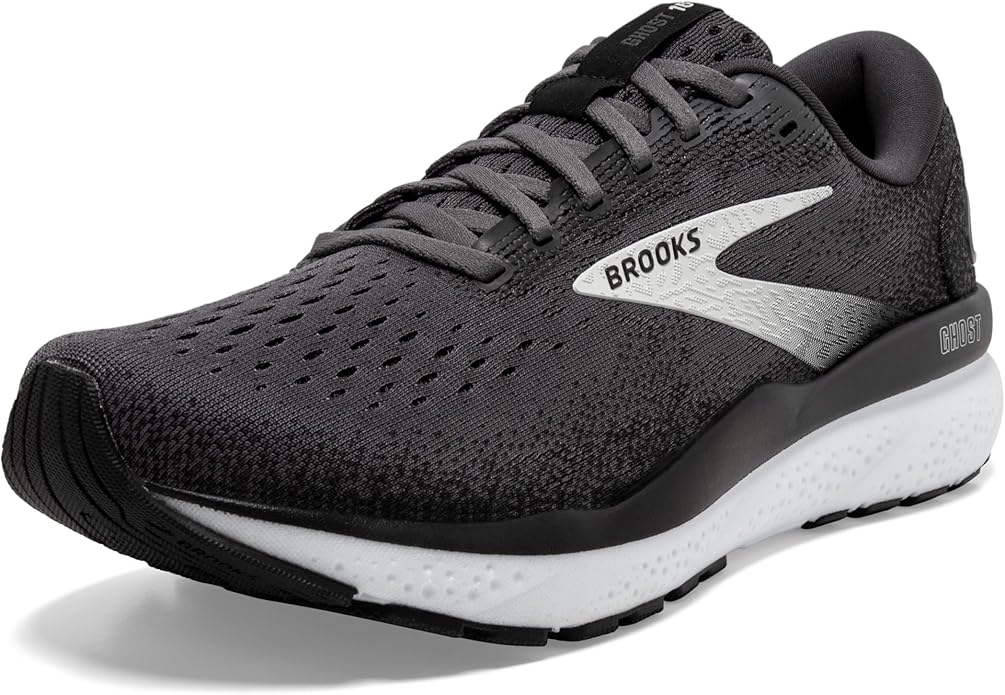
The Shop Owner’s Take: The Brooks Ghost is the “Toyota Camry” of the shoe world. It isn’t the flashiest, but it is incredibly reliable. In my shop, this is the first shoe I bring out for a neutral walker or runner. The DNA LOFT v3 cushioning has been updated in 2026 to be lighter, but it retains that crucial stiffness in the heel. It doesn’t collapse under heavier walkers.
- Best For: Neutral arches, daily walking, and people who want a “normal” looking shoe.
- Pros:
- Perfect 12mm drop relieves tension immediately.
- Wide toe box options (D, 2E, 4E) are widely available.
- Extremely durable outsole rubber.
- Cons:
- It is not a “stability” shoe. If you have severe flat feet (overpronation), this might not offer enough medial support.
Check Latest Price & Availability
2. Hoka Bondi 9
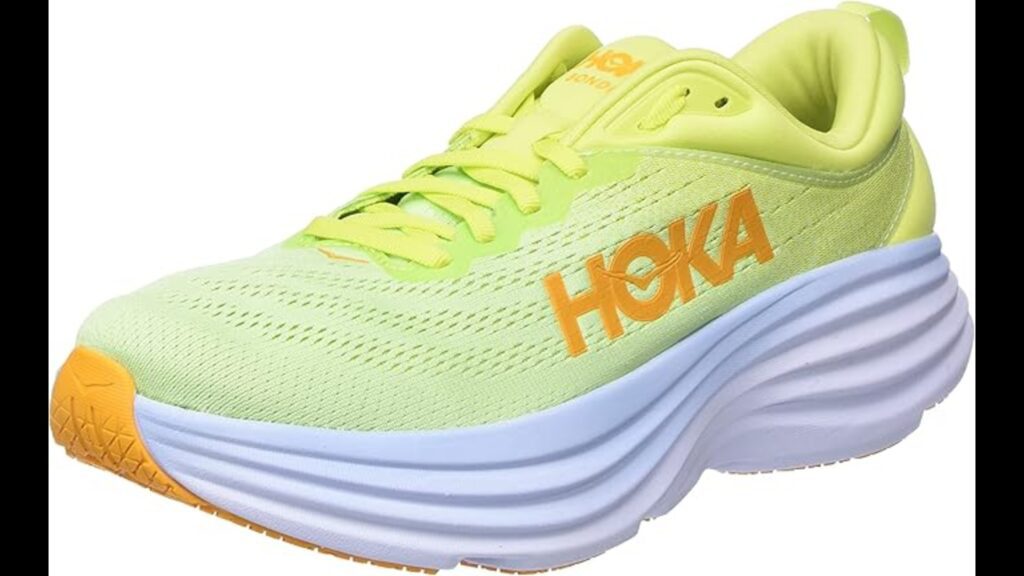
The Shop Owner’s Take: When a customer limps in with tears in their eyes, I grab the Hoka Bondi. It has the thickest stack height of EVA foam on the market. It uses a “Meta-Rocker” (the sole is curved like a rocking chair), which physically propels you forward so your foot doesn’t have to flex as much. It is massive, but it works.
- Best For: Nurses, warehouse workers, and anyone standing on concrete for 8+ hours.
- Pros:
- Maximum shock absorption (APMA Seal of Acceptance).
- The rigid rocker bottom takes the workload off the fascia.
- Plush memory foam collar hugs the ankle.
- Cons:
- Stability Issue: Because you are sitting so high off the ground, this shoe can feel unstable if you have balance issues. It is also very bulky/ugly.
Check Latest Price & Availability
3. Asics Gel-Kayano 32 (Walking shoes for plantar fasciitis with the best stability
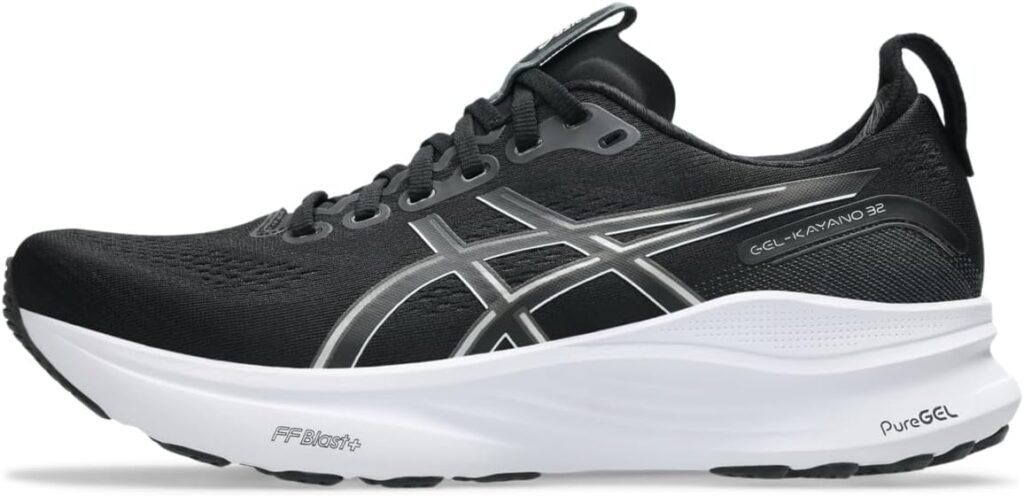
The Shop Owner’s Take: This is for the “Flat Foot” crowd. If your ankles roll inward (overpronation) when you walk, the Brooks Ghost won’t save you—but the Kayano will. Asics uses a 4D Guidance System which is a fancy way of saying they put firmer foam on the inside of the arch to stop it from collapsing. It provides a “bucket seat” feel for your heel.
- Best For: Overpronators (Flat feet) and heavier runners/walkers.
- Pros:
- Superior medial support prevents arch collapse.
- Gel technology in the heel absorbs heel-strike impact.
- Very high-quality mesh upper that breathes well.
- Cons:
- Price: It is one of the most expensive daily trainers on the market. It also feels heavy compared to modern competitors.
Check Latest Price & Availability
4. New Balance 990v6
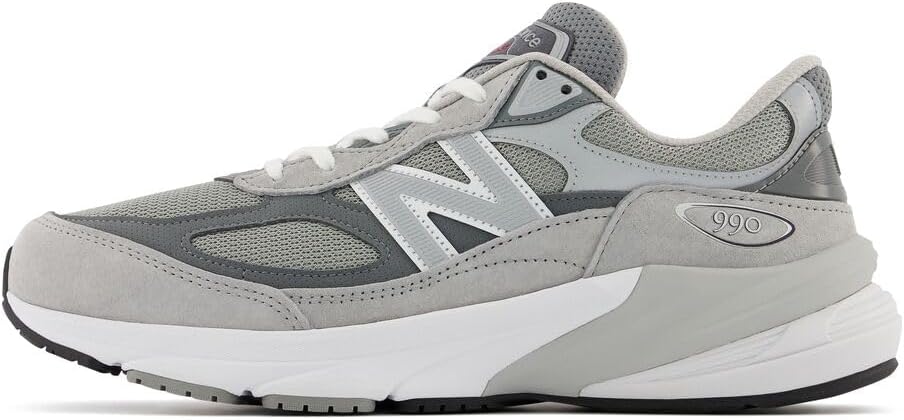
The Shop Owner’s Take: Yes, it’s the “Dad Shoe.” But New Balance manufactures the 990 series in the USA (mostly), and the quality control is vastly superior to almost anything else. It combines a stiff polyurethane rim with a soft fuel-cell core. This gives you the durability of a boot with the comfort of a runner. It lasts twice as long as a Sketchers or Hoka.
- Best For: People who want one shoe for 3 years. Wide feet (goes up to 6E width).
- Pros:
- Unmatched durability and build quality.
- Available in extremely wide sizes.
- Classic style that fits casual office wear.
- Cons:
- The Price Tag: It is exceptionally expensive. Also, the suede requires care and cannot be worn in the rain/mud easily.
Check Latest Price & Availability
5. OOFOS OOmg Sport
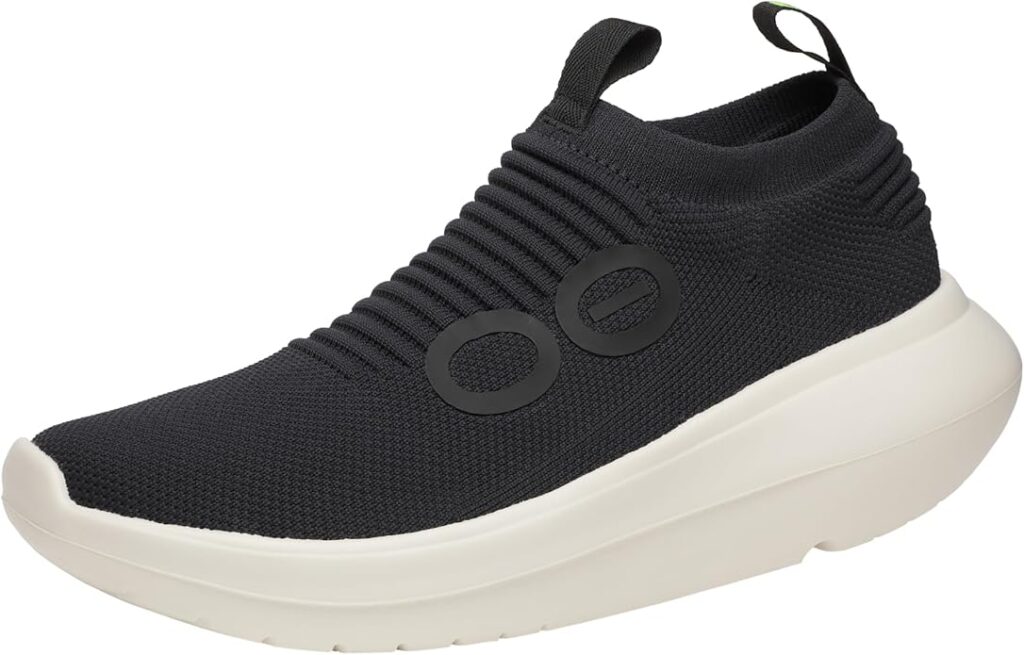
The Shop Owner’s Take: This is technically a “Recovery Shoe,” but many of my customers wear them full-time. OOFOS uses a proprietary foam called OOfoam that absorbs 37% more impact than traditional foam. The arch support is aggressive—it literally pushes up into your arch. It feels weird at first, but for plantar fasciitis sufferers, the relief is almost instant.
- Best For: Around the house, running errands, post-workout recovery.
- Pros:
- Incredible impact absorption.
- Machine washable.
- Slip-on convenience.
- Cons:
- Zero Structure: The upper is just stretchy mesh. It offers zero ankle support. Do not hike or run in these; you will roll your ankle.
Check Latest Price & Availability
6. Saucony Guide 17
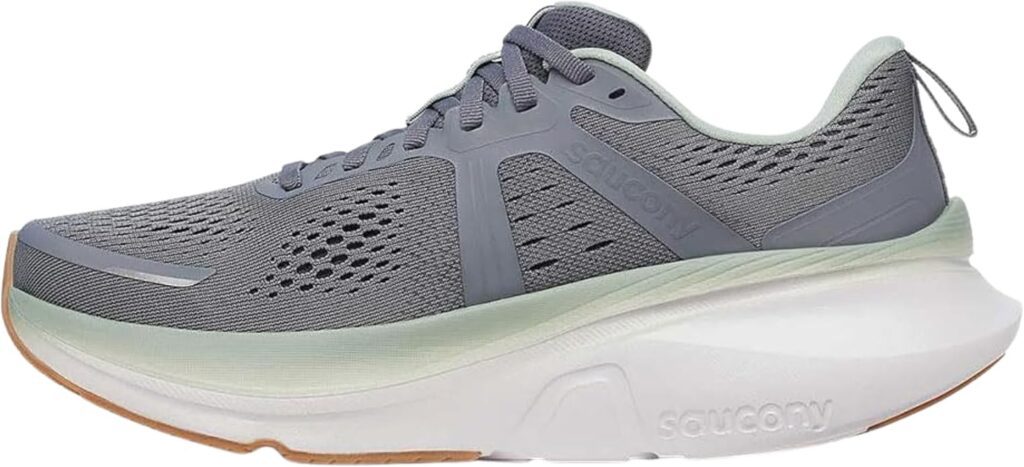
The Shop Owner’s Take: Saucony completely overhauled the Guide recently. They moved away from a hard plastic post and now use a “Center Path Technology”—essentially a wider base and higher sidewalls to guide the foot. It feels smoother than the Asics Kayano but still offers that necessary stability. It is lighter and feels faster.
- Best For: Walkers/Runners who need mild stability but hate heavy shoes.
- Pros:
- Lightweight feel for a stability shoe.
- 6mm drop is great for those who don’t want a high heel.
- Very breathable.
- Cons:
- The cushioning is firmer than Hoka or Brooks. If you want a “cloud,” this isn’t it.
Check Latest Price & Availability
7. Skechers Go Walk Arch Fit
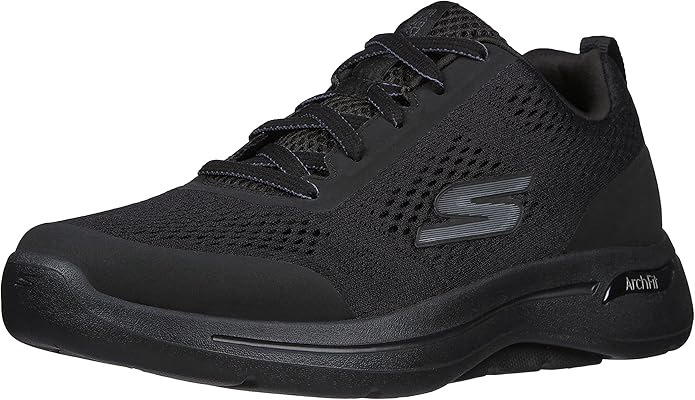
The Shop Owner’s Take: I used to be skeptical of Skechers. But the “Arch Fit” line is legitimate. They worked with podiatrists to develop the insole shape using 20 years of data. For the price, you cannot beat the value here. It isn’t built to last 1,000 miles like the New Balance, but it offers genuine arch support at an entry-level price point.
- Best For: Budget shoppers, casual walking, travel.
- Pros:
- Great price point.
- Removable insole (rare at this price).
- Very lightweight and easy to pack.
- Cons:
- Durability: The outsole is soft EVA, not hard rubber. It wears down much faster than Brooks or Asics on concrete.
Check Latest Price & Availability
Head-to-Head Comparison: Top 5 Picks
| Shoe Model | Arch Support Level | Weight | Price Tier | Best Use Case |
|---|---|---|---|---|
| Brooks Ghost 16 | Neutral/Medium | 9.8 oz | Mid ($$) | Daily Walking/Running |
| Hoka Bondi 8 | Medium (Max Cushion) | 10.8 oz | High ($$$) | Standing All Day |
| Asics Kayano 31 | High (Stability) | 10.9 oz | High ($$$) | Flat Feet / Overpronation |
| New Balance 990 | Medium/Firm | 13.2 oz | Premium () | Durability & Wide Feet |
| Skechers Arch Fit | Medium | 8.5 oz | Low ($) | Casual / Budget |
FAQ
1. Is Hoka or Brooks better for Plantar Fasciitis? It depends on your foot stability. If you have flat feet and roll inward, Brooks (specifically the Adrenaline GTS) is better because it offers more stability. If you have high arches and just need shock absorption, Hoka provides superior cushioning for the heel bone.
2. Why do my heels hurt most in the morning? This is “post-static dyskinesia.” While you sleep, your plantar fascia tightens up. The first step stretches it violently, causing micro-tears. We recommend wearing supportive slippers (like OOFOS) immediately upon waking up—never walk barefoot on hard floors.
3. How often should I replace my walking shoes? Every 350 to 500 miles. For the average person, that is about every 6 to 8 months. Even if the shoe looks new, the midsole foam compresses and loses its ability to rebound, which transfers stress back to your fascia.
4. Can I just use Dr. Scholl’s inserts in my Vans? Generally, no. Flat shoes like Vans or Converse lack “torsional rigidity” (they twist too easily). An insert adds arch support, but the chassis of the shoe is still weak. You need a shoe with a strong foundation plus the arch support.
5. Are barefoot/minimalist shoes good for Plantar Fasciitis? I strongly advise against them while you are in pain. Barefoot shoes increase the load on the Achilles and fascia. You need to heal the inflammation first with support and cushioning before attempting to strengthen the foot with minimalist footwear.
The Final Verdict
If you are tired of reading and just want the pain to stop, here is my professional recommendation based on the customer profiles I see every day:
- If you have Flat Feet: Buy the Asics Gel-Kayano 31. The stability will stop the stretching of the fascia.
- If you have High Arches: Buy the Brooks Ghost 16. It cushions the impact without correcting a pronation issue you don’t have.
- If you stand still all day: Buy the Hoka Bondi 8. The max-cushioning is unbeatable for static standing.
Do not ignore your feet. A $140 pair of shoes is cheaper than a $3,000 surgery.
Click here to view the best deals on Plantar Fasciitis shoes on Amazon today.

- The Ultimate Amazon Fashion Find: POYOIOR Cowgirl Western Pattern Embroidered Review
- 7 Best Safety Shoes for Construction Workersin India
- 7 Best Safety Shoes for Construction Workers in India 2026
- 5 Best Orthopedic Slippers for Diabetic Patients in India (2026 Guide)
- What is TPR Sole? The Ultimate Guide to Durable Shoe Soles (2026)