

What is EVA Foam in 2026: The Ultimate Guide to the Best Sole Material for Walking Shoes
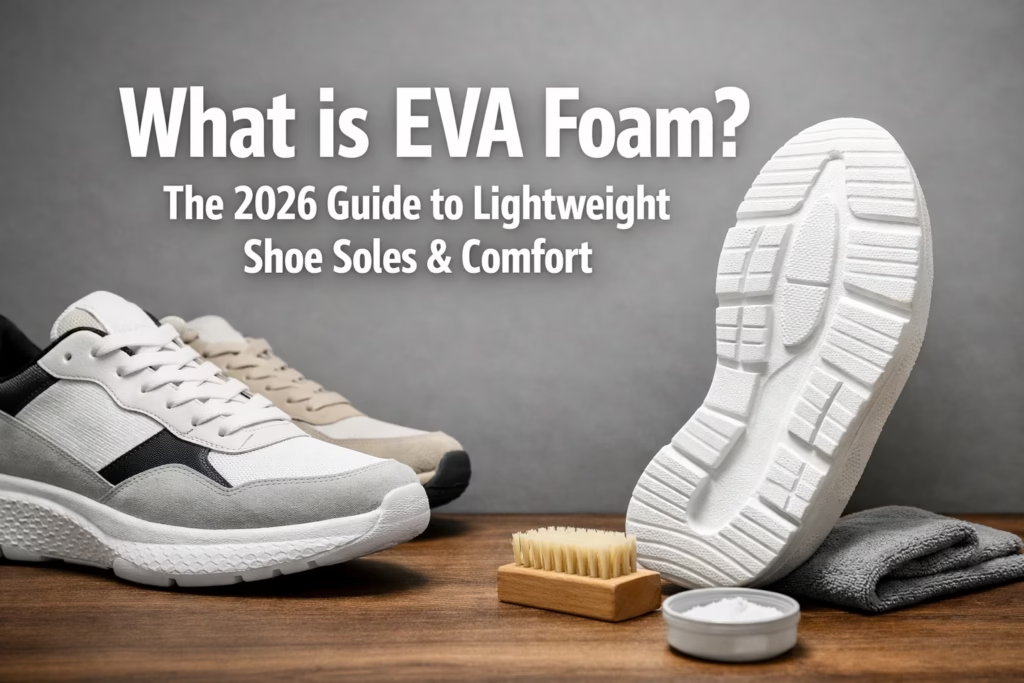
We’ve all been there—buying a gorgeous pair of sneakers online, only to feel like we’re dragging bricks on our feet by 3 PM. I saw a meme on Instagram last week that perfectly captured this struggle: “My brain: ‘Buy the chunky platform boots.’ My knees: ‘Please, I’m begging you, no.’” It’s a universal problem. Whether you’re commuting through the city, walking the cobbled streets of Rome on vacation, or standing behind a retail counter all day, heavy, unforgiving shoes will ruin your vibe and your joints. Often, we obsess over the upper material—like leather or breathable mesh—but completely ignore the foundation of the shoe.
If you’ve ever wondered why some shoes feel like walking on clouds while others feel like wooden clogs, the answer usually lies in the midsole. And today, we are doing a deep dive into the undisputed king of footwear cushioning: EVA foam.
TL;DR: The Quick Answer
What is EVA foam? EVA (Ethylene Vinyl Acetate) is a lightweight polymer foam widely used in shoe soles for its exceptional shock absorption and cushioning performance. Thanks to its closed-cell structure, it is highly flexible, impact-resistant, and water-resistant, making it the absolute best sole material for walking shoes, daily-wear sneakers, and comfortable everyday sandals.
- What is EVA Foam in 2026: The Ultimate Guide to the Best Sole Material for Walking Shoes
- Why This Topic Matters: The Global Footwear Dilemma
- What is EVA Foam Made Of? (Is it Rubber or Plastic?)
- EVA Foam Properties: Why It's the Industry Standard
- The Great Sole Debate: EVA vs. Other Materials
- Is EVA Foam Good for Walking Shoes & Daily Use?
- Pro-Tip: The Retailer's "Thumbnail Test"
- Quick Material Comparison Table
- Common Mistakes to Avoid When Buying Shoes
- Quick Footwear Answers
- Notes from the Fitting Stool
- Ready to Upgrade Your Walk?
- Your Sole Questions Answered (FAQs)
Why This Topic Matters: The Global Footwear Dilemma
Having spent over two decades fitting thousands of customers in a physical shoe shop, I’ve seen every foot issue imaginable. People come in complaining of heel spurs, aching arches, and lower back pain.
If I had a dollar for every time someone asked me, “Is this actually comfortable for all-day wear?” after pulling a heavy, dense rubber sneaker off the shelf, I’d be retired on a beach by now.
When shopping online, buyers face a major challenge: you can’t feel the weight or the bounce of a shoe through a screen. You see a great design, but you don’t realize the sole is made of cheap, rigid PVC until it arrives. Understanding shoe sole materials—specifically the EVA sole meaning and its benefits—is the ultimate cheat code to buying shoes online that you won’t immediately regret.
What is EVA Foam Made Of? (Is it Rubber or Plastic?)
To understand why this material dominates the footwear industry, we have to get a little nerdy. A question I get asked a lot is: What type of plastic is EVA, and is EVA foam rubber or plastic?
The EVA full form stands for Ethylene vinyl acetate. Technically, it is a plastic (an elastomeric polymer), but it is specifically engineered to produce materials which are “rubber-like” in softness and flexibility. So, you get the bounce and give of rubber, without the heavy weight.
The secret to its magic lies in its closed cell structure. During the EVA foam manufacturing process, gas is injected into the liquid polymer. Because the cells are closed (meaning they don’t connect to one another like a sponge), the foam traps microscopic gas bubbles inside. This structure makes the EVA material incredibly lightweight, buoyant, and essentially waterproof.
EVA Foam Properties: Why It’s the Industry Standard
Why do brands from Nike to Birkenstock rely so heavily on this material? Let’s look at the core EVA foam properties:
- Lightweight Polymer Foam: It is significantly lighter than traditional rubber. This makes it the premier lightweight shoe sole material, reducing foot fatigue during long walks.
- Supreme Shock Absorption Material: With every step, the foam compresses and disperses the impact away from your joints. This cushioning performance is why it’s heavily used in running and sports shoes.
- Flexibility and Resilience: The foam bends naturally with the movement of your foot without cracking, even in colder temperatures.
- Thermal Insulation: It protects your feet from hot pavements in the summer and freezing grounds in the winter. Combined with a breathable upper, it is arguably the best sole material for hot weather.
- Chemical Resistance: It holds up well against everyday oils, salts, and mild chemicals you might encounter on the street.
The Great Sole Debate: EVA vs. Other Materials
When deciding which sole is better for daily use, you have to compare EVA against the competition.
EVA vs Rubber Sole
This is the most common matchup. Is EVA more durable than rubber? Generally, no. EVA foam vs rubber comes down to weight vs. durability. Rubber is highly durable, offers incredible traction, and doesn’t compress easily, but it is heavy. EVA is vastly lighter and softer, but the outsole can wear down faster on rough concrete. Winner for durability: Rubber. Winner for comfort: EVA.
EVA vs TPR Sole
Thermoplastic Rubber (TPR) is a synthetic blend that tries to offer the best of both worlds. EVA vs TPR sole? TPR offers better slip resistance and is more durable than raw EVA, but it is noticeably heavier. If you want a lightweight running shoe, choose EVA. If you want a sturdy winter boot, TPR is great.
EVA vs PVC
People often search: Which is better EVA or PVC? The answer is unequivocally EVA. PVC (Polyvinyl Chloride) is stiff, heavy, and lacks shock absorption. It’s often used in cheap fast-fashion shoes. EVA is vastly superior for foot health, comfort, and longevity.
EVA vs PU Sole & Phylon
Polyurethane (PU) is a denser, heavier foam that lasts a very long time but is notorious for “hydrolysis” (if you’ve ever seen vintage sneaker soles crumble to dust on Reddit’s r/Sneakers, that’s PU breaking down). EVA vs PU sole is easy: EVA for lightweight daily wear, PU for heavy-duty work boots. Note on Phylon: Phylon is actually just EVA pellets that have been compressed, heated, and expanded. It’s essentially a denser, more sculpted version of standard EVA.
Is EVA Foam Good for Walking Shoes & Daily Use?
Absolutely. In fact, if you are looking for the best sole material for walking shoes, EVA is the gold standard.
If you scroll through travel forums asking for shoe recommendations for theme parks or European city tours, the top recommended shoes almost always feature thick EVA foam cushioning benefits.
It’s not just for closed-toe shoes, either. If you’ve seen those viral, ultra-chunky “cloud slides” on TikTok, you are looking at injected EVA. It is the ultimate lightweight slippers material and the go-to choice for EVA sole sandals for men and women who want arch support without the bulk.
Pro-Tip: The Retailer’s “Thumbnail Test”
Here is a quick trick I’ve taught my staff over the years to test EVA foam density and EVA foam hardness: The Thumbnail Test.
Press your thumbnail firmly into the midsole of the shoe.
- If it takes a lot of force to make a dent and it springs back instantly, it’s a high-density, high-quality EVA that will support you for miles.
- If it sinks in effortlessly and leaves a lingering dent, it’s a cheap, low-density foam. It will feel amazingly soft in the store, but after two weeks of wear, it will suffer from compression set (meaning the foam permanently flattens out and loses its bounce).
Quick Material Comparison Table
| Feature | EVA Foam | Rubber | TPR (Thermoplastic Rubber) | PVC (Polyvinyl Chloride) |
|---|---|---|---|---|
| Weight | Very Light | Heavy | Medium-Heavy | Heavy |
| Cushioning | Excellent | Low | Moderate | Poor |
| Durability | Moderate | Excellent | Good | Moderate |
| Best For | Walking, Running, Sandals | Hiking, Court sports | Daily casual, Boots | Cheap fashion shoes |
Common Mistakes to Avoid When Buying Shoes
- Choosing Looks Over Support: Don’t buy a flat, rigid PVC fashion sneaker and expect it to survive a 10,000-step day. Look for a cushioned sole material.
- Ignoring the “Compression Set”: As mentioned, ultra-soft EVA feels great initially but bottoms out. You want a balance of softness and firmness.
- Improper Care: Leaving EVA shoes in a boiling hot car or direct blazing sun will cause the foam to permanently shrink and warp. Keep them stored in a cool, dry place!
Quick Footwear Answers
What does “EVA sole meaning” translate to in plain English? It means the bottom of the shoe is made from a lightweight, spongy, shock-absorbing synthetic polymer rather than heavy rubber or wood.
What happens if EVA foam gets wet? Because of its closed-cell structure, absolutely nothing bad! It simply repels the moisture, doesn’t absorb water like a sponge, and air-dries incredibly fast.
Is EVA 100% waterproof? Yes, the EVA material itself is practically 100% waterproof. However, keep in mind that if the upper part of your shoe is made of canvas or mesh, your feet can still get wet.
Is EVA foam safe for babies / Is it toxic? EVA is highly regarded as a non-toxic, safe material. It is free from BPAs, phthalates, and harmful chlorides, which is exactly why it’s widely used in baby play mats and teething toys, as well as footwear.
Notes from the Fitting Stool
After 20+ years of watching how people walk, analyzing wear patterns on old shoes, and listening to feedback, my philosophy is simple: your feet are the foundation of your body.
We often see buyers trying to save a few dollars by buying generic knock-offs online. The biggest shortcut these cheap brands take is in the sole. They swap out high-quality, resilient EVA for cheap filler plastics that offer zero impact resistance. Investing in a shoe with a properly engineered EVA or blended sole is an investment in your knees, back, and daily mood.
Ready to Upgrade Your Walk?
Don’t let heavy, outdated shoe tech hold you back. If you’re ready to experience the difference a high-quality sole can make, we highly recommend checking out the latest collections from trusted brands.
- $$Compare top-rated EVA walking shoes on Amazon here$$
- $$Shop the best lightweight travel sneakers of 2026$$
- $$Browse highly-reviewed comfort sandals for daily wear$$
(Note: As an affiliate, we may earn a small commission if you purchase through our links, at no extra cost to you. We only recommend products we trust.)
Your Sole Questions Answered (FAQs)
1. What are the disadvantages of EVA foam? The main disadvantages are its susceptibility to “compression set” (flattening out over time) and its tendency to shrink or warp if left exposed to extreme heat, like a hot car in summer.
2. Is EVA long-lasting? (How long will EVA foam last?) Yes, high-density EVA is very resilient. In a standard walking or running shoe, a quality EVA midsole will typically last between 300 to 500 miles of use before the cushioning properties begin to significantly degrade.
3. What is better than EVA foam? For pure durability, rubber or PU is better. For elite athletic energy return, proprietary supercritical foams (like PEBAX or Nike’s ZoomX) are superior, though they come at a much higher price point than EVA.
4. What is the difference between polyethylene and EVA foam? While both are types of foam, EVA is much softer, more rubber-like, and has significantly better bounce-back (resilience) compared to standard Polyethylene (PE) foam, which is stiffer and often used for packaging.
5. Why is EVA foam so expensive sometimes? While basic EVA is affordable, high-end, high-density EVA injected into performance running shoes requires complex molding technology, precise heat expansion, and advanced research to perfect the bounce-to-weight ratio, driving up the cost.
6. Is EVA foam good for walking shoes? Absolutely. It is the industry standard for walking shoes because its lightweight and shock-absorbing properties prevent foot and joint fatigue over long distances.
7. EVA vs rubber sole: which is better? Neither is universally better; it depends on the use case. EVA is better for comfort, walking, and lightweight athletic shoes. Rubber is better for durability, traction, and heavy-duty wear.
8. What is the EVA foam manufacturing process? It involves blending Ethylene and vinyl acetate copolymer resins, heating them, injecting a blowing agent (gas), and curing the material in a mold so it expands into a lightweight, closed-cell foam.
9. How does EVA foam density affect comfort? Low-density EVA is softer and “squishier” but bottoms out quickly. High-density EVA feels firmer initially but provides better long-term support, arch stability, and longevity.
10. What is the best sole material for hot weather? EVA is excellent for hot weather. Not only does it provide thermal insulation from hot pavements, but it is incredibly light and breathable, preventing that “heavy, dragging” feeling during summer walks.
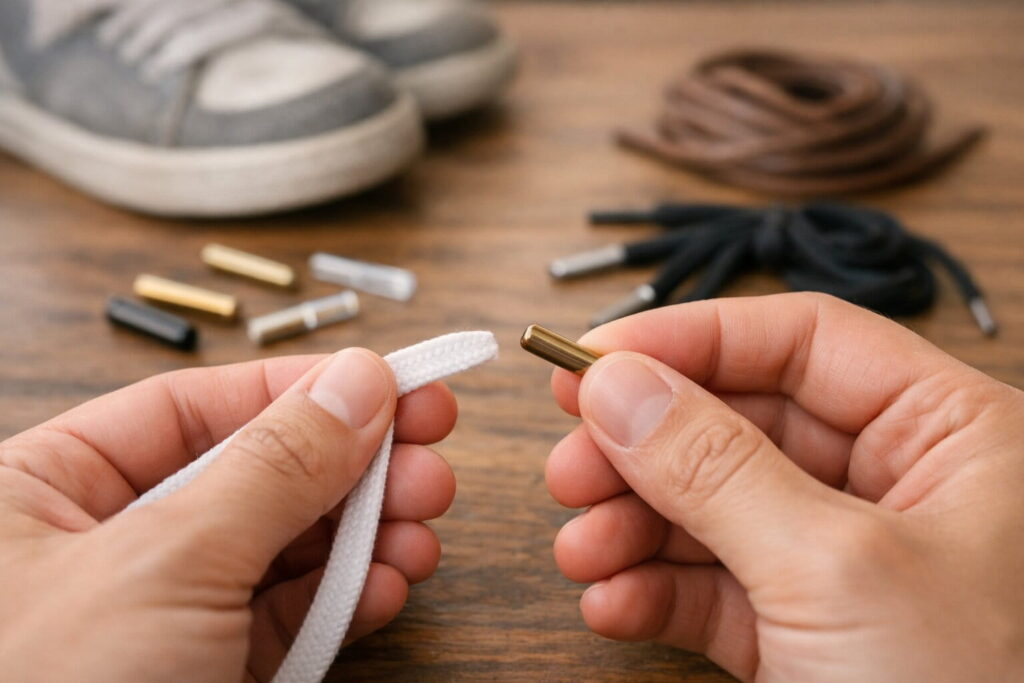
- What is an Aglet? The Complete Shoelace Tip History & Buyer’s Guide (2026)

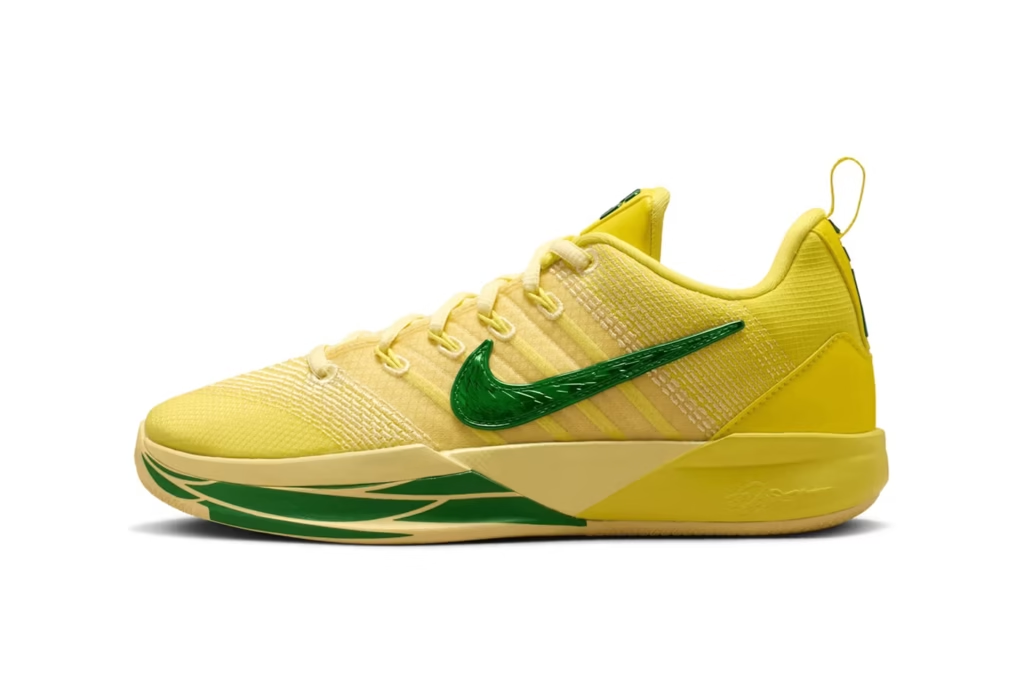
- Nike Sabrina 3 “Oregon Ducks” Officially Revealed: A March Madness Must-Cop

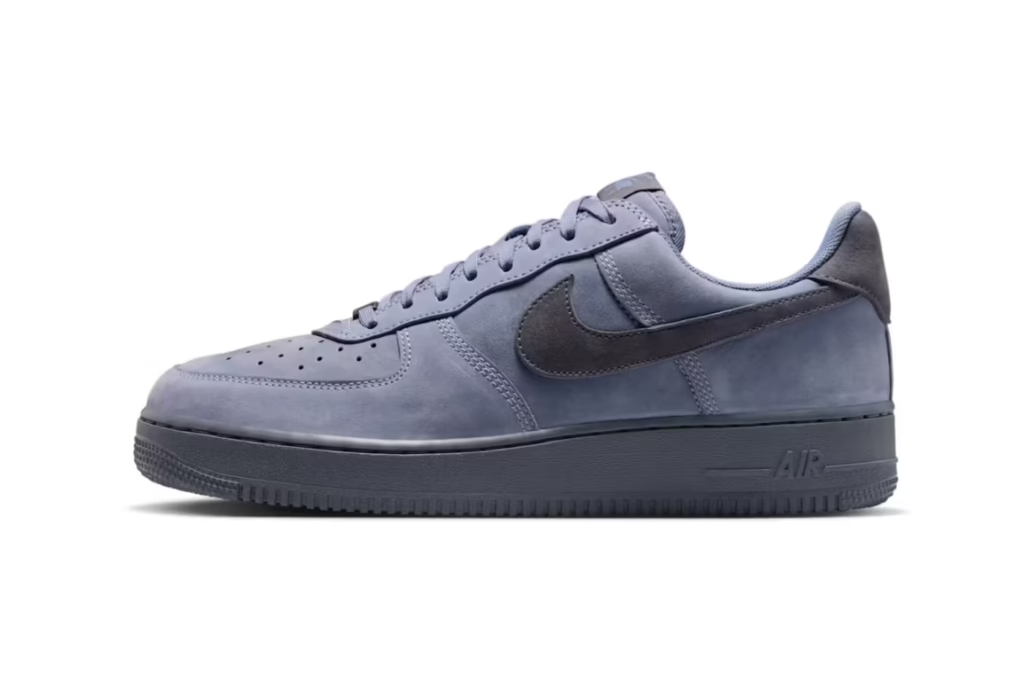
- Nike Air Force 1 Low “Dark Sky Blue” Retro Premium: Spring 2026 Release Date & Official Specs
- The Whitaker Group x adidas ‘Do Not Duplicate’ Collection: Ultra-Limited Drops Redefine Authenticity
- Goodyear Welt Explained: Why These Resolable Shoes Last Forever (2026 Guide)
Pingback: ulcanized vs. Cupsole: Skate Shoe Anatomy & Durability Guide