
What is an Aglet? The Complete Shoelace Tip History & Buyer’s Guide (2026)
If you spend enough time scrolling through Reddit’s r/Sneakers or watching footwear restoration reels on Instagram, you will inevitably see the same universal struggle: a sneakerhead having an absolute meltdown over a frayed shoelace.
I saw a meme on Facebook just last week that perfectly captured this. It said: “Nothing humbles a grown adult faster than trying to thread a frayed lace through a tiny shoe eyelet.” It’s funny because it’s painfully true. We invest heavily in our footwear—prioritizing comfort, durability, and style to get us through long hours of work, walking, or travel. Yet, the entire usability of a shoe often hinges on a tiny, seemingly insignificant piece of plastic at the end of the lace.
If you’ve ever wondered about that little piece of plastic, you aren’t alone. Today, we’re diving deep into a topic that bridges everyday convenience, ancient history, and modern footwear design.
TL;DR: The Quick Answer
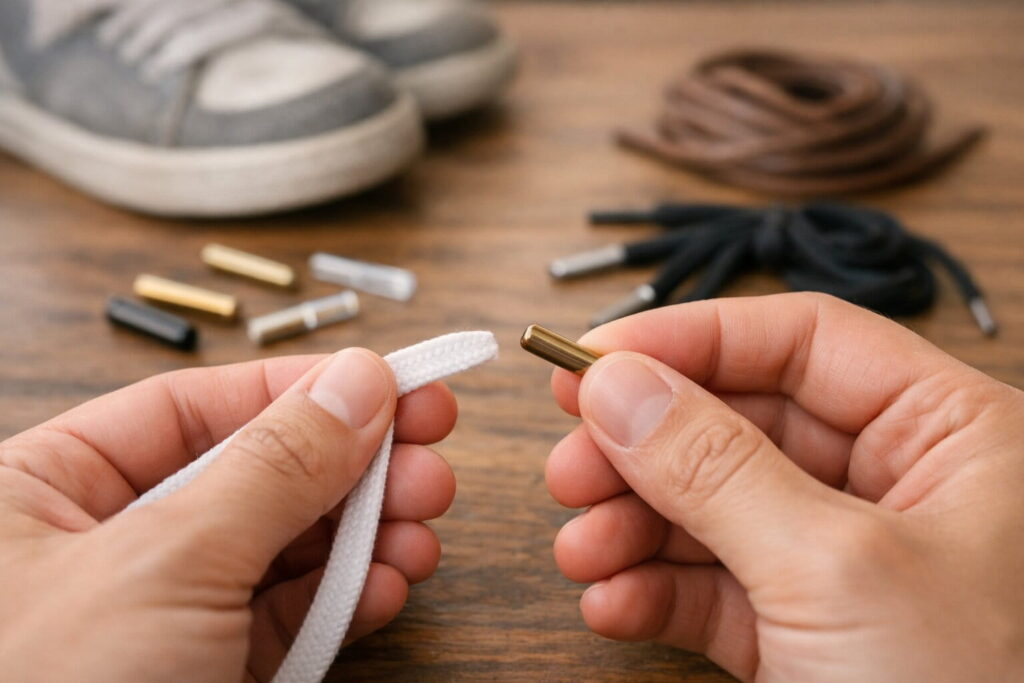
An aglet is the small plastic or metal sheath at the end of a shoelace. It prevents the twine or cord from unraveling and makes lacing your shoes significantly easier by guiding the lace through the eyelets. Historically made of glass or metal, modern aglets are typically made of durable acetate.
Why This Tiny Detail Matters Globally
In over two decades of running a physical shoe shop and analyzing global footwear trends, I’ve seen customers make the same mistakes worldwide. People will spend top dollar on premium walking shoes or high-end boots, only to replace broken laces with cheap, poorly tipped alternatives they bought on a whim online.
Online shopping has brought us incredible convenience, but it also brings challenges regarding fit, quality trust, and material accuracy. When an aglet breaks, the lace quickly follows, expanding and becoming impossible to use. This isn’t just a cosmetic issue; improper lacing leads to poor foot support, heel slippage, and eventually, foot pain.
Let’s explore the rich shoelace tip history, why that specific cartoon song is stuck in your head, and how to choose the right materials to keep your favorite shoes functional.
The Fascinating Shoelace Tip History
To truly understand what is an aglet, we have to look back. The word “aglet” comes from the Old French word aguillette, meaning “needle.”
Before the invention of the modern eyelet and lace system, clothing and footwear were often fastened with ribbons or cords. In ancient Rome, wealthy citizens used aglets made of precious metals like brass, copper, and even silver to thread their intricate leather sandals.
By the 19th century, the industrial revolution made mass-produced glass and metal aglets common. However, it was the invention of modern plastics in the 20th century that revolutionized the aglet. Manufacturers realized they could heat-press acetate directly onto woven laces, creating a cheap, durable, and highly effective tip that wouldn’t shatter like glass or rust like cheap metal.
The Cultural Impact: The Phineas and Ferb Aglet Phenomenon
You can’t talk about shoelace tip history without mentioning a specific pop-culture moment. If you ask anyone who grew up in the late 2000s, “what is an aglet?”, they will likely sing the answer back to you.
The Phineas and Ferb aglet episode (titled “Tip of the Day”) aired in 2009 and featured an impossibly catchy song dedicated entirely to this little plastic tip. The chorus, “A-G-L-E-T, don’t forget it!”, turned a piece of obscure trivia into mainstream knowledge for a whole generation. It’s a running joke on TikTok and X (formerly Twitter) today that millions of adults only know the word “aglet” because of an animated platypus and his owners.
Matching Laces and Aglets to Shoe Materials
When it comes to upgrading or replacing your laces, the aglet material should complement the overall construction of your shoe. It’s a balance of style, function, and the price-to-value ratio.
Here is how different aglets pair with common footwear materials:
- EVA & TPR Soles (Running & Walking Shoes): Shoes with Ethylene-Vinyl Acetate (EVA) or Thermoplastic Rubber (TPR) soles are built for lightweight comfort and shock absorption. Best Aglet: Standard heat-pressed plastic. Heavy metal aglets will flop around while running, hitting the shoe and causing annoyance.
- Mesh & Synthetic Uppers (Daily Casuals): For breathable summer shoes, you want a lightweight feel. Best Aglet: Clear or color-matched plastic aglets. They maintain the casual, sporty aesthetic without adding bulk.
- Full-Grain Leather (Boots & Dress Shoes): Premium leather requires premium accessories. Best Aglet: Brass or gunmetal aglets. They add visual depth, won’t fray easily under the heavy tension of boot eyelets, and look incredibly sophisticated.
- PU & Rubber (Skate & Court Shoes): Polyurethane (PU) and dense rubber are designed for high durability and abrasion resistance. Best Aglet: Thick silicone or heat-shrink tubing. These can take a beating from grip tape or concrete without snapping.
Comfort vs. Durability Trade-offs
Is this actually comfortable for all-day wear? It’s a question we hear constantly. If you are an athlete, heavy metal aglets are a terrible choice. The pendulum effect of a heavy metal tip hitting your ankle during a 5K run is highly distracting. However, if you are wearing heavy leather work boots, a thin plastic aglet will likely crack under the pressure of tight lacing within weeks. Choose based on your primary use-case.
Insider Shop Insights: Quality Checks
Brands frequently cut corners on laces to save a few cents per unit. Here are a few insider tricks I’ve learned from handling thousands of shoes to check if your aglets (and laces) are built to last:
- The Squeeze Test: Pinch the plastic aglet between your thumbnail and index finger. If it caves in easily or feels hollow, it’s cheap heat-shrink plastic that will crack within months. A quality acetate aglet feels solid and rock-hard.
- The Pull Test: Tug gently on the aglet while holding the lace. If you can feel the aglet sliding off the fabric, the manufacturer skimped on the adhesive or heat-pressing process.
- The Eyelet Match: What do most people regret after buying cheap replacement laces online? Buying aglets that are too thick for their shoe’s eyelets. Always check the diameter of your shoe’s punched holes before buying custom metal aglets.
Aglet Material Comparison Guide
| Feature | Heat-Pressed Plastic | Metal (Brass/Zinc) | Silicone/Rubber | Tape (DIY Fix) |
|---|---|---|---|---|
| Best For | Sneakers, running shoes | Dress shoes, boots | Skate shoes, outdoor | Emergencies |
| Durability | Moderate | Very High | High | Low |
| Weight | Very Light | Heavy | Moderate | Very Light |
| Price Point | Budget ($) | Premium ($$$) | Mid-range ($$) | Free |
| Style Factor | Standard, blends in | Luxurious, stands out | Sporty, tactical | Messy |
Common Mistakes to Avoid
When dealing with footwear, the smallest details often cause the biggest headaches. Avoid these common traps:
- Choosing Looks Over Function: Putting flashy gold metal aglets on a lightweight running shoe. They look cool, but they will annoy you during a workout.
- Ignoring a Cracked Aglet: Once an aglet cracks, it acts like a tiny saw blade against the fabric of your shoe’s eyelets, eventually fraying the shoe’s upper.
- Wrong Size Assumptions: Buying 72-inch laces for a simple 4-eyelet casual shoe. You’ll end up stepping on your own aglets, crushing them instantly.
- Using Superglue as a Permanent Fix: While a drop of superglue can temporarily stop a lace from fraying, it dries sharp and jagged, which can scratch the leather on the tongue of your shoe.
Quick Fixes for Everyday Lacing Struggles
How do you fix a frayed shoelace without an aglet? You can tightly wrap clear scotch tape around the frayed end, or carefully melt the tip with a lighter (if the lace is synthetic/polyester) to bind the fibers together.
Can you buy replacement aglets? Yes. You can buy metal aglet kits online that crimp onto your existing laces, or heat-shrink tubing that you can apply with a standard hairdryer.
Why do aglets break so easily? Most breakages occur from people stepping on their untied laces, or from the aglet getting caught in a washing machine agitator during cleaning.
Are metal aglets better than plastic? They are more durable and look more premium, but they are heavier. They are better for boots and dress shoes, while plastic is superior for athletic wear.
What is the best way to clean white plastic aglets? A simple scrub with a toothbrush, warm water, and a drop of dish soap will remove most dirt. Avoid bleach, as it can turn the clear plastic yellow.
Notes from the Fitting Stool
Handling thousands of customer interactions over the years teaches you that foot health and comfort rely on a complete system. Your sole provides the shock absorption, your upper provides the stability, but your laces provide the security.
When an aglet breaks and lacing becomes a chore, people tend to wear their shoes looser. This seemingly harmless act changes your gait, reduces the effectiveness of your shoe’s arch support, and can lead to plantar fasciitis or heel blisters. Never underestimate the importance of securing your footwear properly.
If your aglets are busted, don’t wait for your laces to turn into unmanageable fuzz. It’s time for an upgrade.
Upgrade Your Footwear Setup Today
Ready to breathe new life into your favorite pair of sneakers or boots? Sometimes, a fresh pair of premium laces with high-quality aglets is all it takes to make an old shoe look brand new.
- [Check today’s best-rated replacement laces on Amazon]
- [See top-reviewed metal aglet upgrade kits from trusted brands]
- [Compare prices on premium casual shoes at leading online stores]
(Disclosure: Urban Style Footwear may earn a small commission from affiliate links at no extra cost to you, which helps us keep providing expert shoe guides!)
Essential Lacing Questions
What is an aglet made of today? Most modern aglets are made of acetate, a type of durable plastic that is heat-pressed onto the lace fibers. High-end shoes may use brass, zinc, or copper.
Who invented the modern plastic aglet? While aglets have existed since Roman times, Harvey Kennedy is credited with patenting the modern shoelace (which included the standardized tip) in 1790.
How long should a good aglet last? A high-quality plastic or metal aglet should last the entire lifespan of the shoe, typically 1 to 3 years of regular wear, unless physically crushed.
Does the Phineas and Ferb aglet song have real historical facts? The song accurately defines the aglet and its purpose, though it exaggerates its world-changing importance for comedic effect.
Can I replace an aglet at home? Absolutely. You can use heat-shrink tubing, adhesive tape, or buy crimp-on metal aglets that attach with a pair of standard household pliers.
Why do some expensive sneakers come with cheap aglets? Brands often allocate their manufacturing budget toward the sole technology (like proprietary foam) and the upper materials, treating laces as a cost-saving afterthought.
What is the purpose of an aglet beyond making threading easier? Aside from guiding the lace, its primary structural purpose is to prevent the tightly woven fibers of the shoelace cord from unraveling and fraying.
Are there different sizes of aglets? Yes. Aglets vary in diameter and length. Dress shoe aglets are typically very thin to fit through small, refined eyelets, while boot aglets are thicker.
Do cotton and polyester laces use different aglets? Polyester laces can actually have their ends melted together to form a natural, self-made aglet, whereas cotton laces require a separate plastic or metal piece to be attached.
Can broken aglets ruin my shoes? Yes. A shattered, sharp plastic aglet can scrape and damage the leather or synthetic material of the shoe’s upper and tongue as you pull the laces tight.