
MCR vs MCP Slippers: Which Is Better for Your Feet? (2026 Guide)
Updated July 2026
Quick Answer: What’s the Difference?
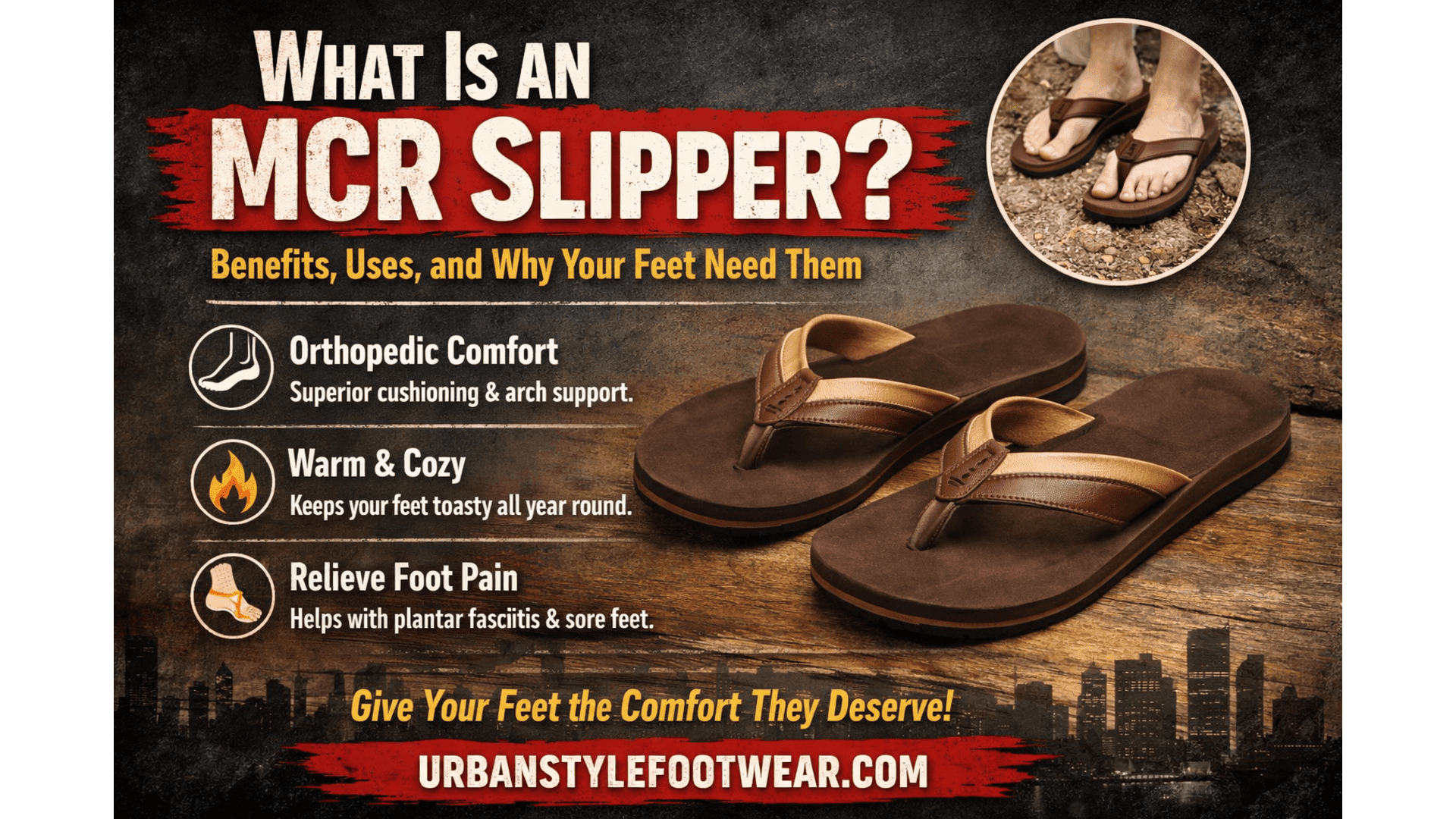
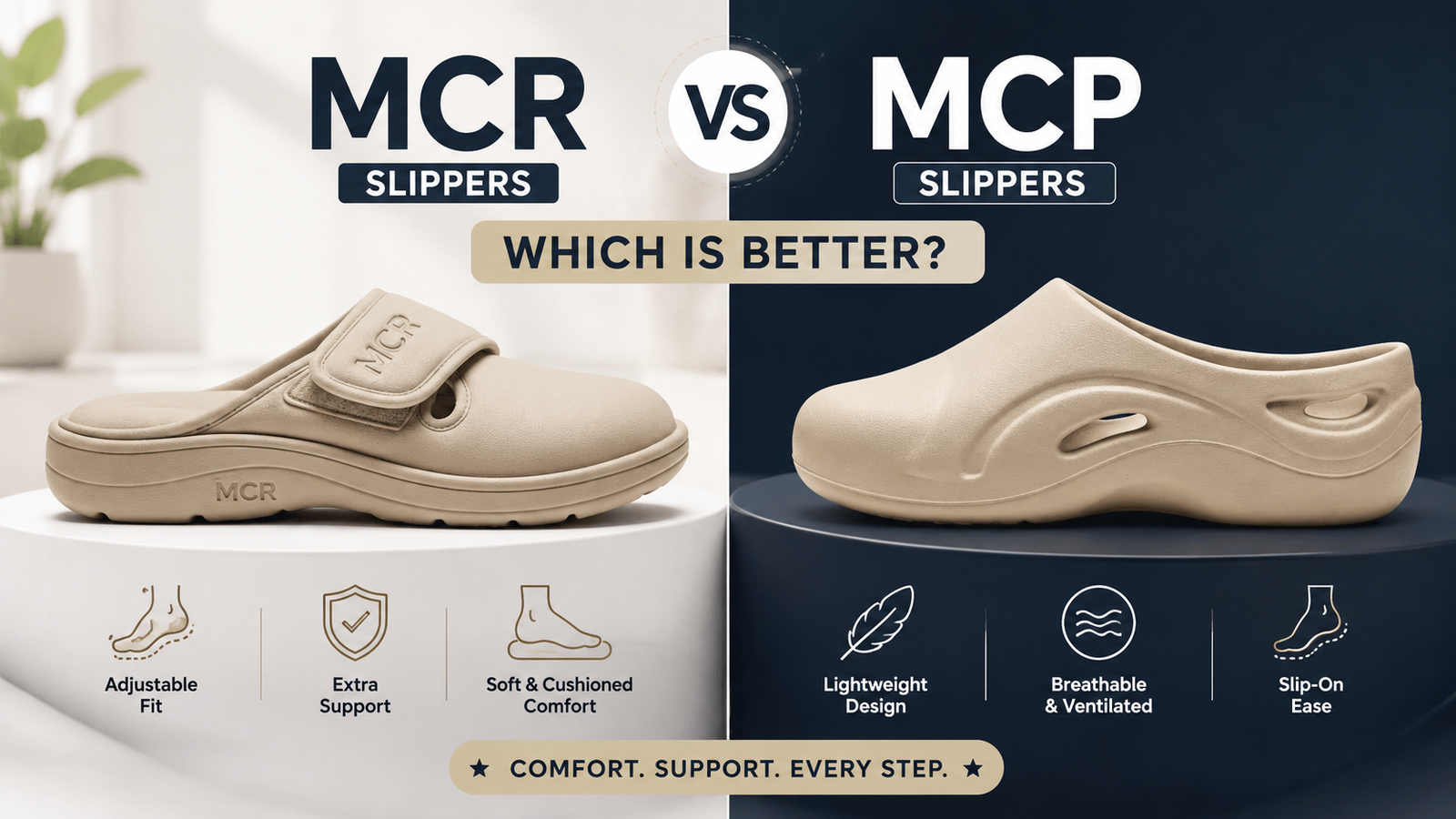
MCR (Micro Cellular Rubber) slippers use a microcellular rubber sole designed to provide durable cushioning, support, and impact absorption for everyday orthopedic comfort.
MCP (Micro Cellular Polymer) slippers use a lightweight polymer material that redistributes pressure and improves shock absorption, making it a common choice for diabetic and sensitive feet. While both materials are used in therapeutic footwear, the better option depends on your foot condition and your doctor’s recommendation.
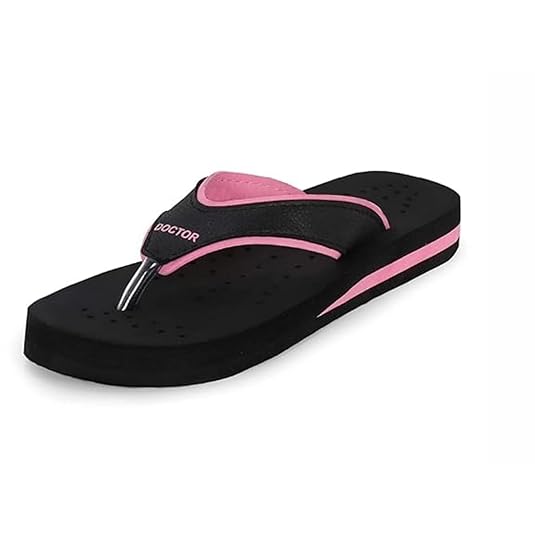
🩴 Best MCR & Orthopedic Slippers on Amazon India 2026

Free Delivery · Pay on Delivery
Great Summer Deal · 2% Coupon

Free Delivery · 10 Days Return
Prices verified on Amazon India · Always confirm size chart before ordering
Our Top 3 MCR & Orthopedic Slippers — Tested & Reviewed
We break down exactly who each slipper is for — so you buy the right one the first time, not the second.
We may earn a small commission at no extra cost to you · Prices change on Amazon — verify before purchase · Always check size chart
Introduction
MCR full form: Micro Cellular Rubber
MCP full form: Micro Cellular Polymer
Both are the full forms used on prescription slips and footwear labels in India. MCR refers to a soft, cellular rubber sole used mainly for general foot and heel pain. MCP refers to a firmer cellular polymer sole used mainly for diabetic and neuropathic feet. If your doctor wrote “MCR chappal” or “MCP slippers full form” on a prescription, this is what they meant.
Walk into any footwear store in T. Nagar or Parrys, show the shopkeeper a prescription slip from your orthopedist, and you’ll likely hear one of two terms thrown around: MCR or MCP.
For most customers walking into our Urban Style Footwear store here in Chennai, these acronyms are confusing. You just want pain relief. If you are looking for immediate options online, many of our customers start with popular MCR foot-relief slippers for general heel pain or specialized diabetic-friendly footwear to protect sensitive feet. However, simply buying online without understanding the material can be risky.
But choosing the wrong material—picking soft MCR when you actually need protective MCP, or vice versa—can actually do more harm than good.
In this guide, we are going to settle the MCR vs MCP Slippers debate once and for all. As footwear experts with over a decade of experience fitting thousands of feet, we will explain exactly what these materials are, how they behave in our Chennai climate, and which one your feet actually need in 2026.
Why This Topic Matters Right Now
Foot health in India is changing. With rising cases of diabetes and an increase in jobs that require long hours of standing (from retail to IT security), the demand for “medical chappals” has skyrocketed.
However, many people assume that “softer is always better.” This is the biggest myth in orthopedic footwear.
If you are diabetic, widely fluctuating blood sugar levels can affect the nerves in your feet (neuropathy). If you wear a slipper that is too soft and unstable, you risk friction blisters that you might not even feel. Conversely, if you have a calcaneal spur (heel bone growth), a hard sole will make walking agony.
Understanding the mechanics of MCR vs MCP Slippers isn’t just about comfort; for many of our customers, it is about preventing hospitalization.
What are MCR Slippers? (The Comfort King)
MCR stands for Micro Cellular Rubber.
Think of MCR as a high-density sponge. When you press your thumb into an MCR sole, it sinks in deep and springs back immediately when you let go.
The Main Characteristics of MCR:
- High Bounce: It absorbs shock very well. When your heel strikes the ground, the rubber compresses to take the impact.
- Instant Softness: It feels comfortable the moment you wear it. There is no “breaking in” period.
- Breathability: The cellular structure allows for some air circulation, which is vital in humid cities like Chennai.
When to Choose MCR:
You should opt for MCR footwear if you are suffering from:
- Calcaneal Spurs (Heel Spurs): The soft rubber creates a pit for the bony growth, reducing pain.
- Plantar Fasciitis: It cushions the inflamed tissue band on the bottom of your foot.
- General Heel Pain: For teachers, police officers, or homemakers standing on hard tiled floors all day.
- Non-Diabetic Foot Pain: If you have full sensation in your feet but just ache from fatigue.
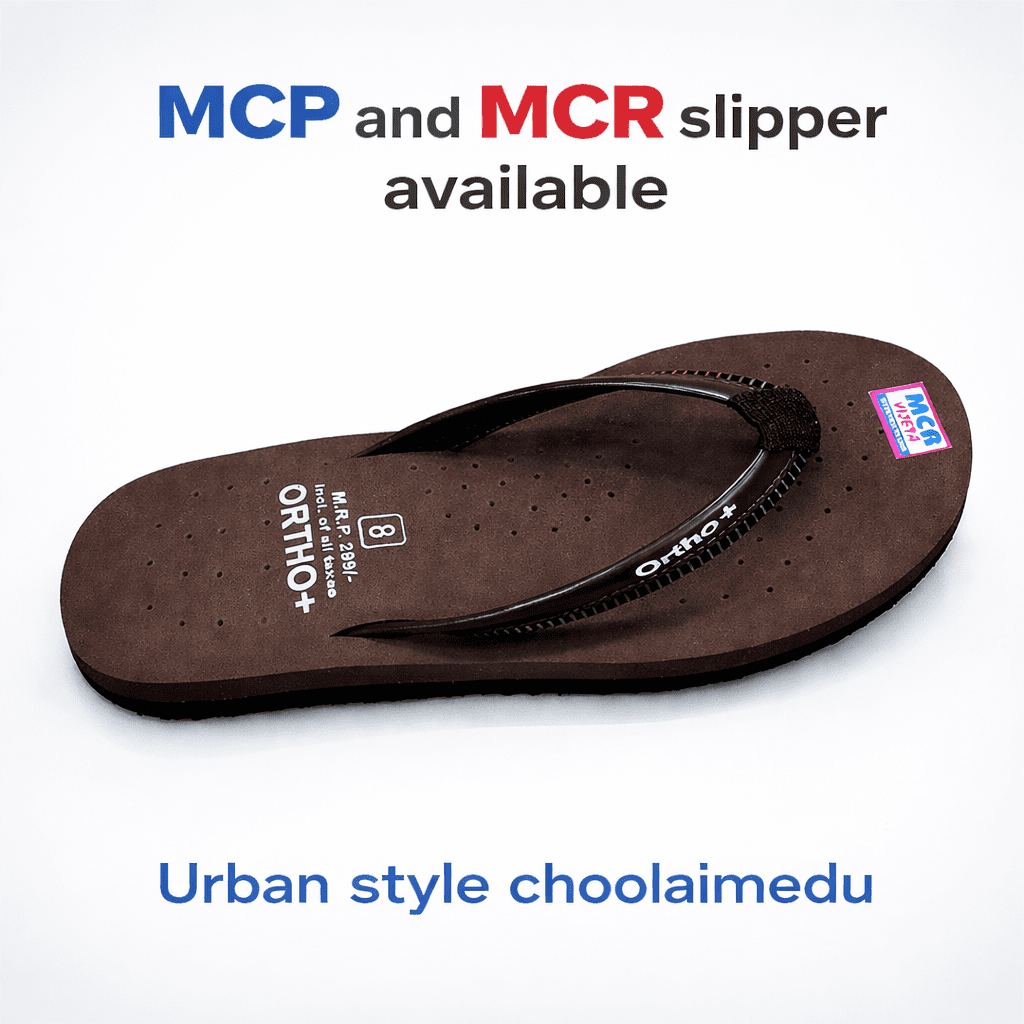
The Downside of MCR:
Because it is rubber, MCR tends to “bottom out” faster. Over 6 to 8 months of heavy use on Chennai’s tar roads, the sponge effect creates a permanent depression, and the shock absorption reduces.
What are MCP Slippers? (The Diabetic Shield)
MCP stands for Micro Cellular Polymer.
MCP slippers meaning in the medical world is strictly “Diabetic Footwear.” Unlike the bouncy rubber of MCR, MCP feels more like a firm memory foam or a cork-like material. It is lighter than rubber but feels harder to the touch initially.
The Main Characteristics of MCP:
- Pressure Distribution: This is its superpower. MCP is designed to offload pressure from specific points. If you have a callus or a pressure point on your big toe, the MCP material accommodates it specifically rather than just squishing down everywhere.
- Shape Retention: It has a “memory.” It molds to your specific foot shape over time and holds that shape.
- Low Friction: The material is designed to prevent shearing forces (friction) that cause blisters.
When to Choose MCP:
You must choose MCP if you have:
- Diabetes (Type 1 or 2): Especially if your doctor has mentioned “neuropathy” or loss of sensation.
- Pre-existing Corns or Calluses: MCP stops them from getting worse.
- History of Foot Ulcers: It provides the stability needed to prevent recurrence.
The Downside of MCP:
New customers often complain that MCP feels “hard” compared to MCR. It doesn’t give you that “walking on a cloud” feeling immediately. It is a functional medical material, not a luxury comfort material.
Comparison Table: MCR vs MCP Slippers
Here is a quick reference guide to help you decide.
| Feature | MCR (Micro Cellular Rubber) | MCP (Micro Cellular Polymer) |
|---|---|---|
| Primary Feel | Soft, bouncy, spongy | Firm, lightweight, moldable |
| Best For | Heel Pain, Spurs, Plantar Fasciitis | Diabetes, Neuropathy, Ulcer Prevention |
| Material Memory | Bounces back instantly | Retains foot impression over time |
| Durability | Compresses faster (6-8 months) | Retains structure longer (12+ months) |
| Water Resistance | Moderate (absorbs some water) | High (closed cell structure) |
| Target User | General population with foot pain | Strictly for diabetic patients |
A quick note on terminology: not every brand uses “MCR” and “MCP” identically. Some manufacturers emphasize MCR’s density and support, others emphasize its softness and bounce – the core material properties overlap more than the marketing language suggests. What matters more than the label is the two questions in our Doctor-Style Explanation below: can you feel a pinprick clearly, and do you have diabetes or numbness? Answer those, and the right material follows regardless of how a particular brand markets it.
The Doctor-Style Explanation: Which is Better?
We often get asked, “Which is better, MCR or MCP?”
That is like asking if a headache pill is better than a fever pill. They treat different things.
Here is the golden rule we follow at Urban Style Footwear:
- If you can feel a pinprick on your foot clearly and your main complaint is pain in the bone or muscle (Heel pain, knee pain, ankle pain) $\rightarrow$ Go for MCR. You need shock absorption.
- If you have Diabetes, numbness, or burning sensations, or if you cannot feel small cuts on your feet $\rightarrow$ Go for MCP. You need protection and pressure redistribution.
Important Note: If you are a diabetic with heel pain, you fall into a unique category. Often, a dual-density sole (combining layers) is best. In this case, visiting a store to try them on is non-negotiable.
Local Relevance: Wearing These in Chennai
Living in Chennai adds a unique layer to this choice. Our climate and lifestyle dictate how these materials perform.
1. The Heat Factor
Chennai temperatures regularly hit 35°C+.
- MCR: Can heat up if you leave them outside in the sun. However, they are generally breathable.
- MCP: Being a polymer, it resists heat well, which protects diabetic feet (which are sensitive to temperature extremes) from getting burned by hot ground.
2. The “Marble Floor” Problem
For home use, many of our clients prefer this orthopedic soft-step slipper which offers excellent grip on smooth marble floors without being too heavy.
- We highly recommend keeping a dedicated pair of MCR slippers strictly for indoor use. It acts as a shock absorber between your heel and the hard granite.
3. Dust and Grime
Chennai requires easy-to-clean footwear.
- MCP has a closed-cell surface, making it very easy to wipe down with a damp cloth—crucial for diabetics who need to keep infections away.
- MCR is porous and can trap dust over time, requiring a good scrub now and then.
Buying Guide: How to Inspect Before You Buy
When you visit Urban Style Footwear or any shop, use this checklist to ensure you are getting genuine quality:
- The “Thumb Press” Test: Press your thumb hard into the heel. If it springs back instantly like a rubber ball, it is MCR. If it leaves a slight indentation that slowly fades, it is likely MCP or memory foam.
- Check the Lining: For diabetics (MCP users), run your finger inside the strap. There should be zero rough seams or stitching that could cut the skin.
- The Weight: MCP is surprisingly light. MCR has the heft of rubber. If a “diabetic” slipper feels very heavy, strictly avoid it—it will cause drag and tripping hazards.
- The Sole Grip: Ensure the bottom sole is anti-skid. Medical slippers are useless if you slip and fall.
Common Myths & Mistakes
- Myth: “The softer the slipper, the better it is for diabetes.”
- Fact: Too soft creates instability. Diabetics need a firm base.
- Myth: “I can wear my walking shoes all day at home.”
- Fact: Feet need to breathe. In India, open footwear (chappals) with the right medical sole is healthier for the skin than closed shoes in our humidity.
- Mistake: Using MCR slippers for 2 years.
- Fact: Once the rubber compresses and becomes flat, it stops working. You are essentially walking on the ground. Replace MCR every 8–10 months.
FAQ: Your Questions Answered
Can I wash MCR and MCP slippers?
Yes, but avoid soaking them. Wipe MCP with a damp cloth. MCR can be washed with mild soap and water, but ensure they dry completely in the shade (not direct sunlight) to prevent the rubber from cracking.
Is MCP slipper good for heel pain?
It is not the best option. MCR is superior for heel pain because of the bounce. However, if you have both diabetes and heel pain, consult a specialist for a custom solution.
Do doctors prescribe MCR or MCP?
Orthopedists usually specify. If the prescription just says “Diabetic Footwear,” it implies MCP. If it says “Soft Chappal” or “Heel cushion,” it usually implies MCR.
Can I wear these for morning walks?
Yes, but ensure they have a back strap (sandals). Slippers without a back strap force your toes to “claw” to hold the slipper, which creates new foot problems.
Why are medical slippers so wide?
They are designed to be “Broad Toe” box footwear. This prevents your toes from getting squeezed, which is a major cause of corns and restricted blood flow.
Does MCR cure Plantar Fasciitis?
It does not “cure” it (exercises and physiotherapy do that), but it manages the pain significantly by reducing the impact on the inflamed fascia.
How much do genuine MCR/MCP slippers cost?
While we don’t list volatile prices here, genuine medical grade footwear is an investment in health. They cost more than standard hawai chappals but save you thousands in potential medical bills.
Is PU footwear the same as MCP?
No. PU (Polyurethane) is a common sole material used in regular sandals. It is durable but lacks the specific pressure-offloading properties of medical-grade MCP.
Conclusion
Choosing between MCR vs MCP slippers comes down to one simple distinction: Do you need cushioning for pain (MCR) or protection for sensation loss (MCP)?
Your feet carry you through life—don’t neglect them. Whether you are navigating the busy streets of T. Nagar or just managing household chores, the right footwear changes everything. If you cannot visit a store in person, we recommend checking out these highly-rated medical footwear options online to ensure you don’t delay getting the relief you need.
Still unsure which one fits your condition?
Don’t guess with your health. Visit us at Urban Style Footwear in Chennai. We can check your foot type and recommend the exact material that will give you relief.
📍 Visit the Store: Get Directions on Google Maps 💬 Chat with us on WhatsApp: Click to Chat 👟 Plan Your Visit: Store Details & Timings