

What Is Top Grain Leather? Quality, Feel, Durability, and How to Choose
Editorial Guide | Footwear Materials |
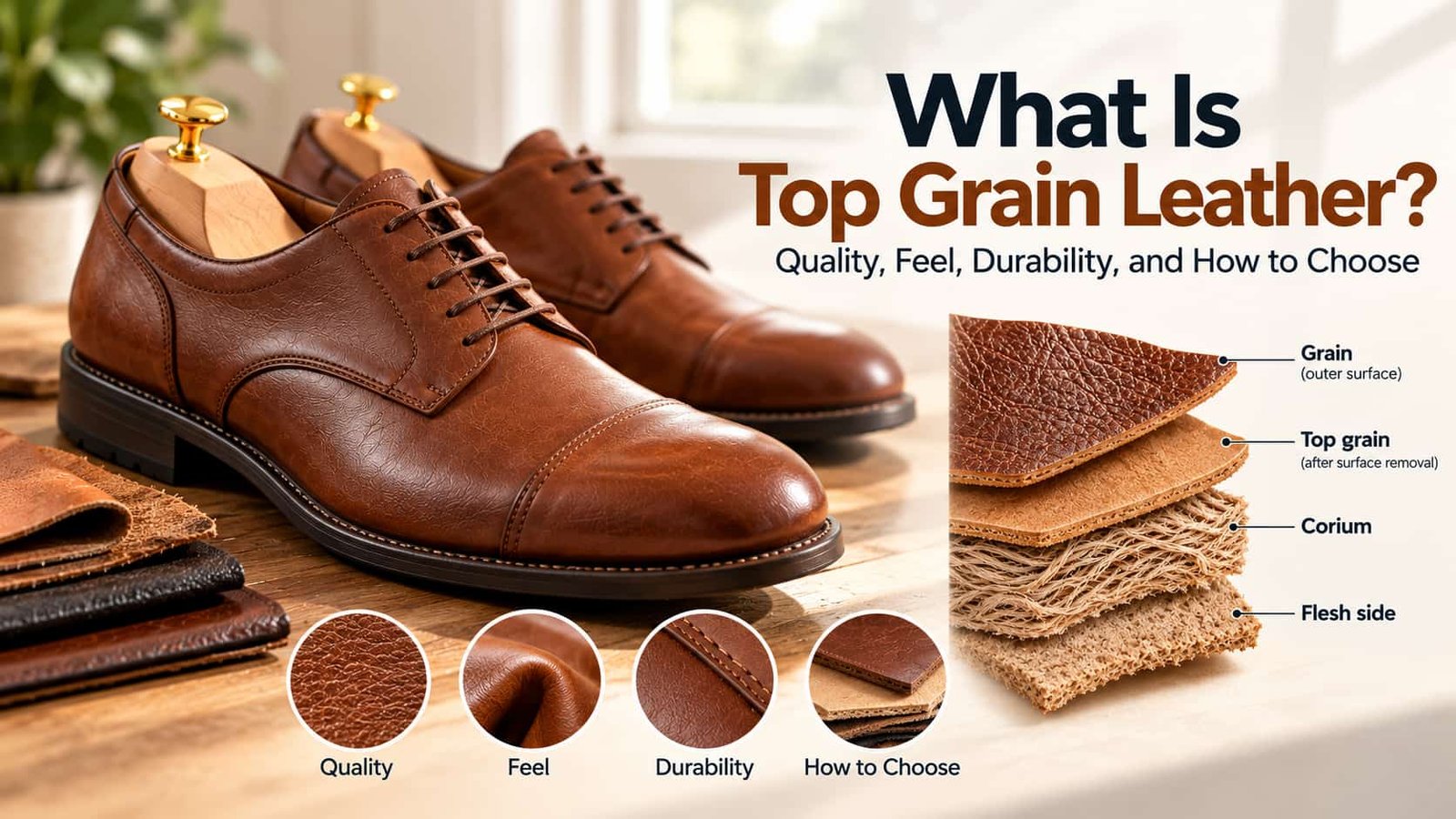
Top grain leather is a processed leather taken from the upper part of the hide, after the outer surface has been sanded or corrected and then finished. It usually looks more uniform and feels smoother than full grain, but it is generally less breathable and can be less resistant to wear. Many everyday and mid-range shoes use it as a balance between appearance, comfort and price.
Key Takeaways
- “Top grain” describes how leather was processed, not a ranking at the very top. It refers to the layer left after the outer surface is removed or corrected.
- Full grain usually keeps more of the natural structure and breathability. Top grain is typically sanded and coated, which changes both its look and how it performs.
- Feel depends on thickness, tanning and finish as much as grade. Top grain is often soft and even, but results vary between tanneries and brands.
- Lifespan depends on coating quality, flex points, climate and care. No reliable fixed number of years applies to every pair.
- Labels often do not name the grade. Check the product description or ask the brand directly.
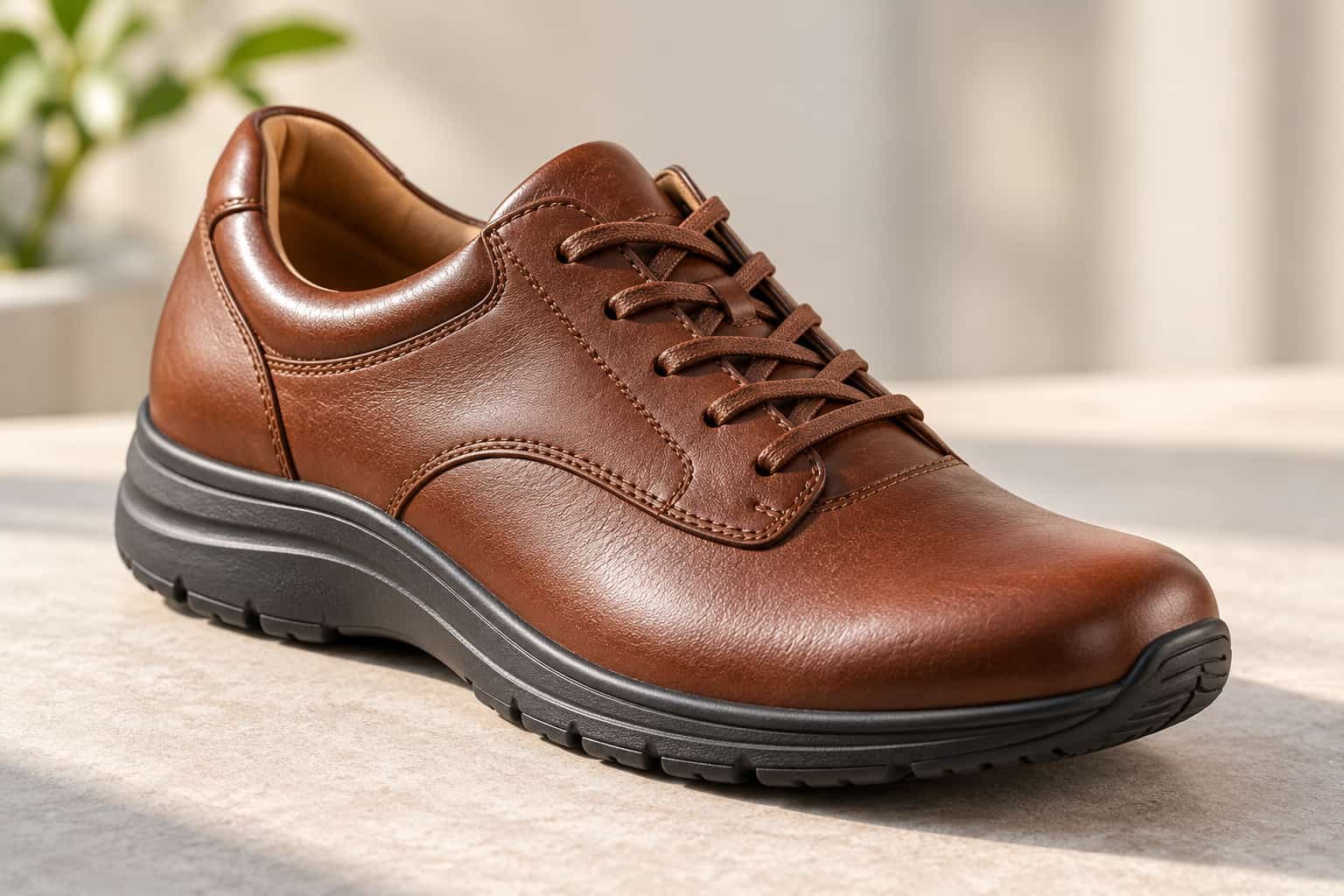
What Is Top Grain Leather?
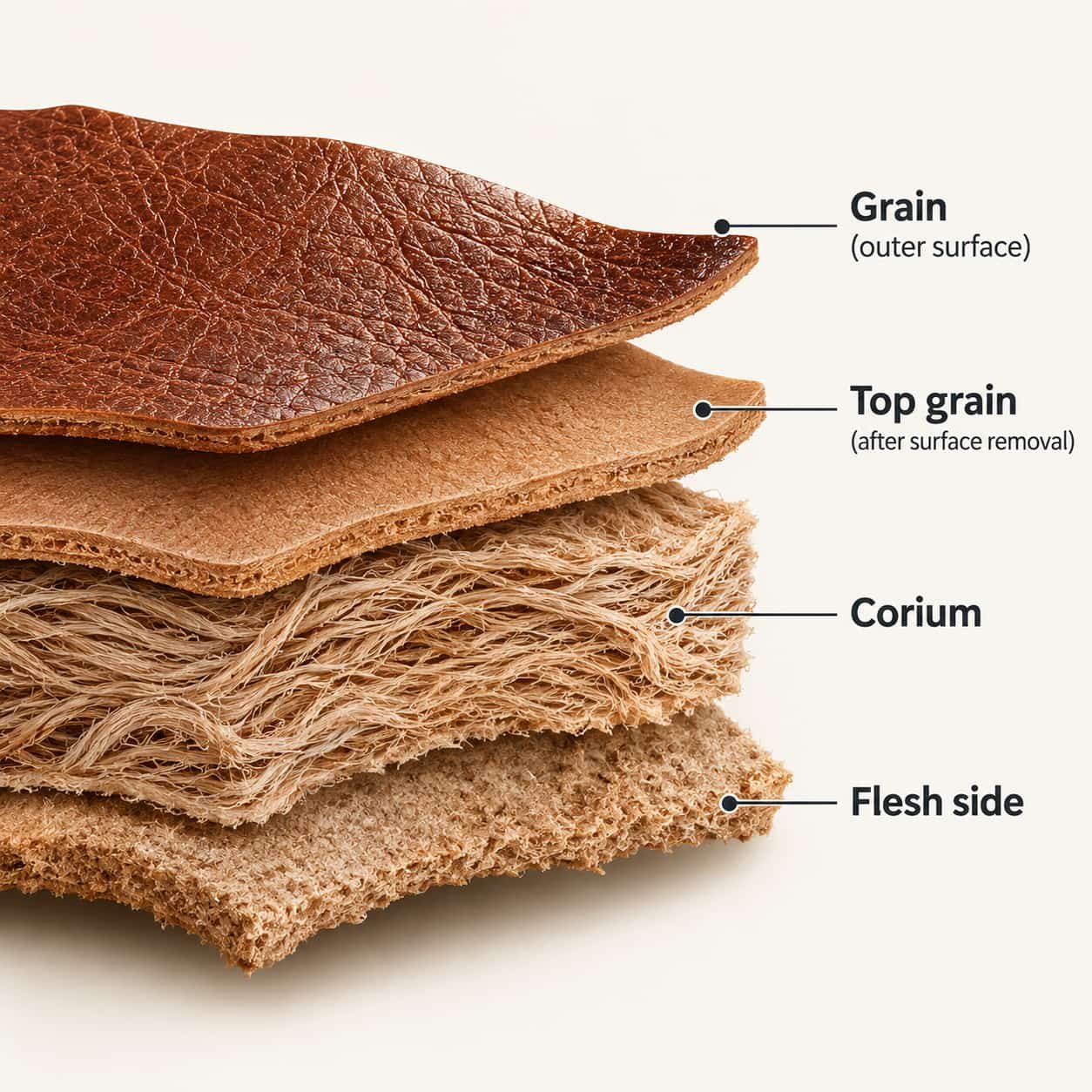
Leather comes from animal hide, and a hide has several layers. The outermost layer is the grain. It carries natural pores, small marks and surface texture. Beneath it lies the corium, a thick fibrous layer that gives leather most of its strength. Below that is the flesh side, which is the least refined part.
Leather grades are mostly defined by which part of the hide is used and how much its surface has been altered. Full grain leather keeps the original grain with little processing. Top grain leather is different. Its outer surface has been sanded or buffed to remove scars, insect marks, brands and uneven patches, leaving a more consistent layer just below the original surface.
It helps to think of top grain as “the top layer after surface treatment” rather than “the best part of the hide.” The term describes a process. It tells you the surface has been made more uniform, and on its own it says little about overall quality.
If you are new to leather in footwear, our shoe materials guide explains where leather fits alongside textiles, synthetics and sole materials.
How Top Grain Leather Is Made
Processes differ between tanneries, so no single method applies to every batch. The general sequence follows a recognisable pattern.
First, the hide is cleaned and tanned, usually with chromium salts or vegetable tannins. Tanning stabilises the protein fibres so the leather will not rot. Second, the hide may be split to a more consistent thickness, and the top portion carrying the grain is separated from the lower split.
Third, the surface of that top portion is sanded or buffed. This removes blemishes that would otherwise show through a finish. In some cases a thin layer is taken off, which is one reason the result is called top grain rather than full grain. Fourth, the surface is coated with pigment or finish, and sometimes an embossed pattern is pressed in to create a uniform look, such as a smooth calf or a pebbled texture.
Each step has a trade-off. Sanding and coating make leather look consistent and easier to colour. They also seal part of the surface, which reduces airflow through the pores and changes how the leather ages. Those trade-offs explain most of what wearers notice, from the first feel to how the surface behaves after months of use.
Where Top Grain Sits Among Leather Grades
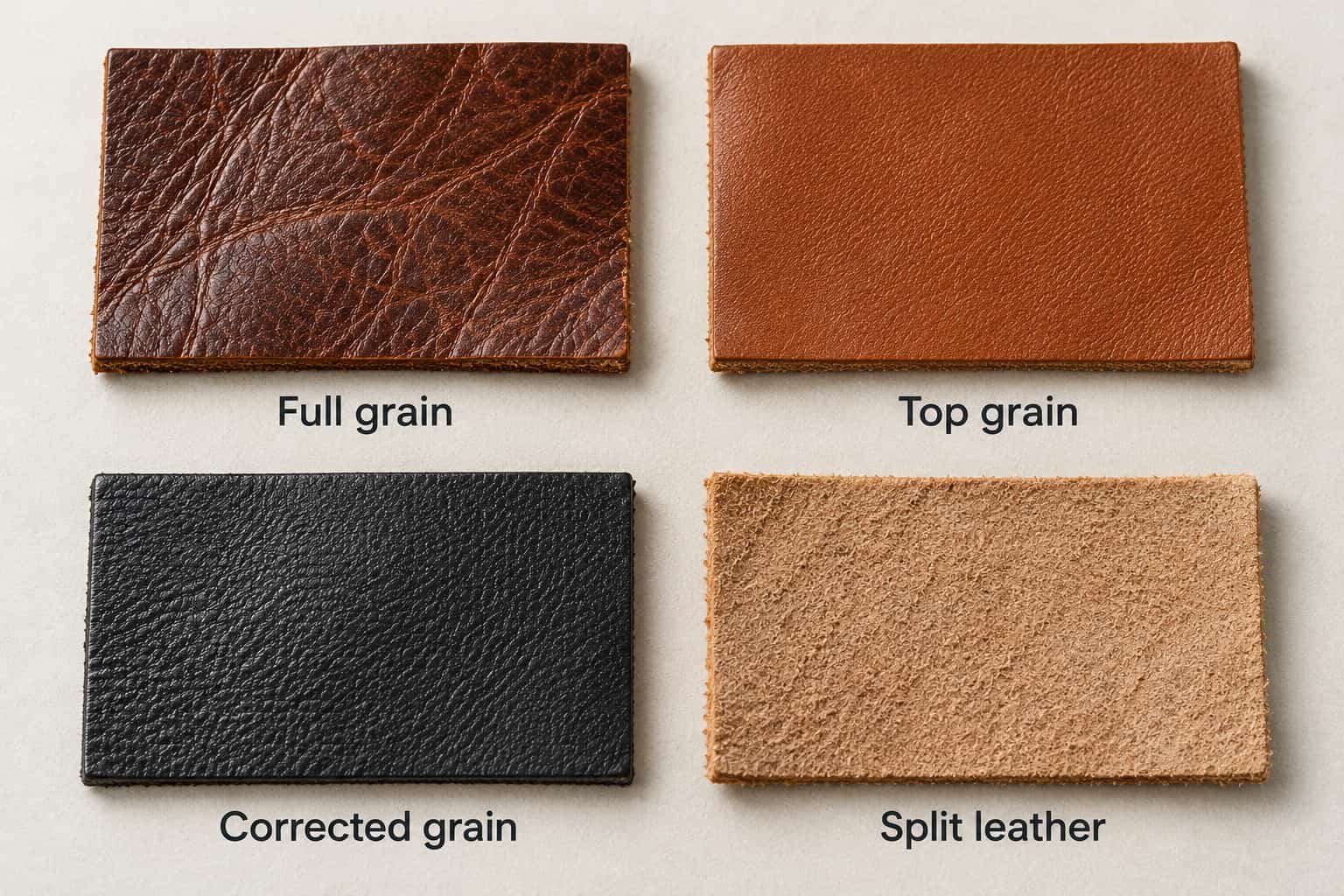
Leather grade terms are not fully standardised. Brands use them loosely, so two shoes labelled “top grain” can differ in thickness, finish and quality. The table below shows typical relationships, not fixed rules.
Types of Leather Used in Shoes
| Grade | What it is | Typical surface | Common use |
|---|---|---|---|
| Full grain | Outer grain kept with minimal sanding | Natural, with visible pores and small marks | Premium dress shoes, boots |
| Top grain | Outer layer after sanding and finishing | Even, often coated or lightly embossed | Mid-range dress and casual shoes |
| Corrected grain | Surface heavily buffed and embossed | Very uniform, sometimes pattern-like | Budget and fashion footwear |
| Split leather | Lower layer of the hide | Fibrous, often suede-like or coated | Linings, lower-cost uppers |
| Bonded leather | Leather fibres and binder pressed into sheets | Uniform, but not true grain | Low-cost products, linings and trims |
Note: Appearance and use vary by manufacturer. The leather name alone does not guarantee a shoe’s quality or durability.
“Genuine leather” needs a separate note. The phrase sounds premium, but it usually means real leather of an unspecified grade, often a lower layer of the hide. It is not a grade in the sense that top grain is. For a fuller explanation, see our guide to what is genuine leather.
Full grain is not automatically the right choice for every buyer. A top grain upper can suit someone who wants a clean, consistent appearance and expects moderate use.
How Top Grain Feels and Performs
Top grain leather often feels smoother and more even than full grain, because its surface has been worked to be consistent. When the leather is thinner and well tanned, it can feel soft in the hand and flex readily at the vamp, the part of the shoe over the toes.
Comfort, however, depends on much more than the leather grade. The lining, the insole, the last (the mould the shoe is built around) and the overall fit all affect how a shoe feels on the foot. A well-fitting top grain shoe can be more comfortable than a poorly fitting full grain one.
Breathability is where top grain usually gives ground. Full grain keeps its natural pores open, which allows some moisture vapour to pass through. A coating reduces that airflow. In practice, a top grain shoe may feel warmer and hold more sweat on a hot day, especially if the lining is synthetic. This is an editorial judgment based on how coatings work. It is not a standardised laboratory result, and the specific construction of each shoe matters.
Appearance is where top grain performs strongly. It hides minor marks well, takes colour evenly and keeps a clean look over time. That is a large part of its appeal, and why it is common in mid-price dress and casual shoes.
Durability and Lifespan
Anyone who gives a fixed lifespan for top grain leather is overstating what the evidence supports. Real-world life depends on several factors, and the most useful approach is to assess each one.
Coating quality. A thick, well-bonded finish resists cracking better than a thin one. In many top grain shoes the coating is the first part to crack, peel or scuff. Once the finish is damaged, moisture and dirt can reach the leather beneath and speed up wear.
Flex points. The vamp, where the foot bends, and the toe box tend to crease most. Repeated creasing stresses the coating. Shoes worn daily in the same pattern show these lines earlier than shoes worn occasionally.
Climate and moisture. Repeated soaking followed by fast drying can stiffen and damage leather of any grade. Direct heat can harden it and crack the finish. A dry, mild climate is generally kinder to finished leather than frequent heavy rain.
Care. Regular cleaning and conditioning help any leather stay supple. Neglect is one of the most common reasons good shoes fail early.
Construction. This is often overlooked. A stitched or welted sole can be repaired and replaced, so the upper can outlast several soles. A glued sole usually cannot be resoled, which often means the whole shoe reaches the end of its useful life sooner.
It is also worth comparing with other parts of a shoe. Athletic shoes often fail through their foam midsoles rather than their uppers. Our article on how long running shoes last explains that pattern. The principle that the weakest component usually sets the lifespan applies to leather shoes too.
How to Tell If a Shoe Uses Top Grain
Few shoes state the grade clearly, so combine several clues. None is conclusive alone.
Look at the surface. A very even grain or a glossy, uniform finish suggests a processed surface. Full grain tends to show small, uneven pores and natural variation in colour and texture. Be careful, because a deep embossed pattern can imitate natural grain.
Check cut edges where visible. Top grain often shows a finished layer over a more fibrous interior. Full grain usually shows an even fibre structure through its thickness. Seller close-up photos can help, but treat them with caution.
Read the material wording. Look at the product description and labels for the grade or the word “leather” alongside finish terms. Be wary of vague phrases such as “premium leather” or “genuine leather” that do not say what the leather actually is.
Ask the brand. A reputable brand should be able to tell you the leather type and finish. If the answer is unclear, that is information too.
Labelling rules focus on the main materials of the upper, lining and sole rather than on leather grades, so a grade term may not appear on the shoe at all. The EU and UK footwear labelling rules ask for material information on the upper, lining and outer sole. Confirm in the official text whether they require any grade term for leather before relying on this. The US Federal Trade Commission’s guides on leather and imitation leather cover disclosures for products that look like leather but are not. The official text is in 16 CFR Part 24.
For more identification checks, including the water test and the press test, see our guide on how to tell if shoes are real leather.
Top Grain vs Full Grain
Full grain and top grain are the two grades most often confused, so they are worth comparing directly.
Full grain keeps the natural grain and generally offers more breathability and a sturdier structure. Its surface shows natural character, which some buyers value and others find inconsistent. It usually costs more and needs a little more attention to keep it looking good.
Top grain offers a more uniform appearance and often a lower price. Sanding and coating make it easier to produce consistent colour and hide minor flaws. The trade-off is less breathability and a finish that needs care to avoid cracking.
For most readers the choice comes down to priorities. If appearance and value matter most, top grain can be sensible. If breathability and natural character matter more, full grain is usually the stronger choice. Our dedicated comparison, full grain vs top grain, goes into more depth. This article focuses on what top grain is and how it performs on its own terms.
Caring for Top Grain Leather Shoes
Top grain leather is easier to maintain than suede or nubuck, but it still needs regular, gentle care. The aim is to keep the finish flexible and prevent drying or cracking.
- Wipe off dust after wearing. Use a soft, dry cloth to remove loose dirt before it works into the surface.
- Treat stains gently. Use a damp cloth with a mild leather cleaner. Test any product on a hidden area first, such as the inside of the tongue, and let it dry before judging the result.
- Dry slowly. If the shoes get wet, let them dry at room temperature, away from radiators, hair dryers and direct sun. Shoe trees or stuffing help them keep their shape while drying.
- Condition sparingly. A leather conditioner suited to finished leather can keep the surface supple. Apply a thin layer, let it absorb, and buff off any excess. Too much can leave residue or darken the finish.
- Use shoe trees. Cedar shoe trees help absorb moisture and hold the shape between wears.
- Rotate your shoes. Giving a pair a day off lets the leather recover and reduces repeated creasing in the same places.
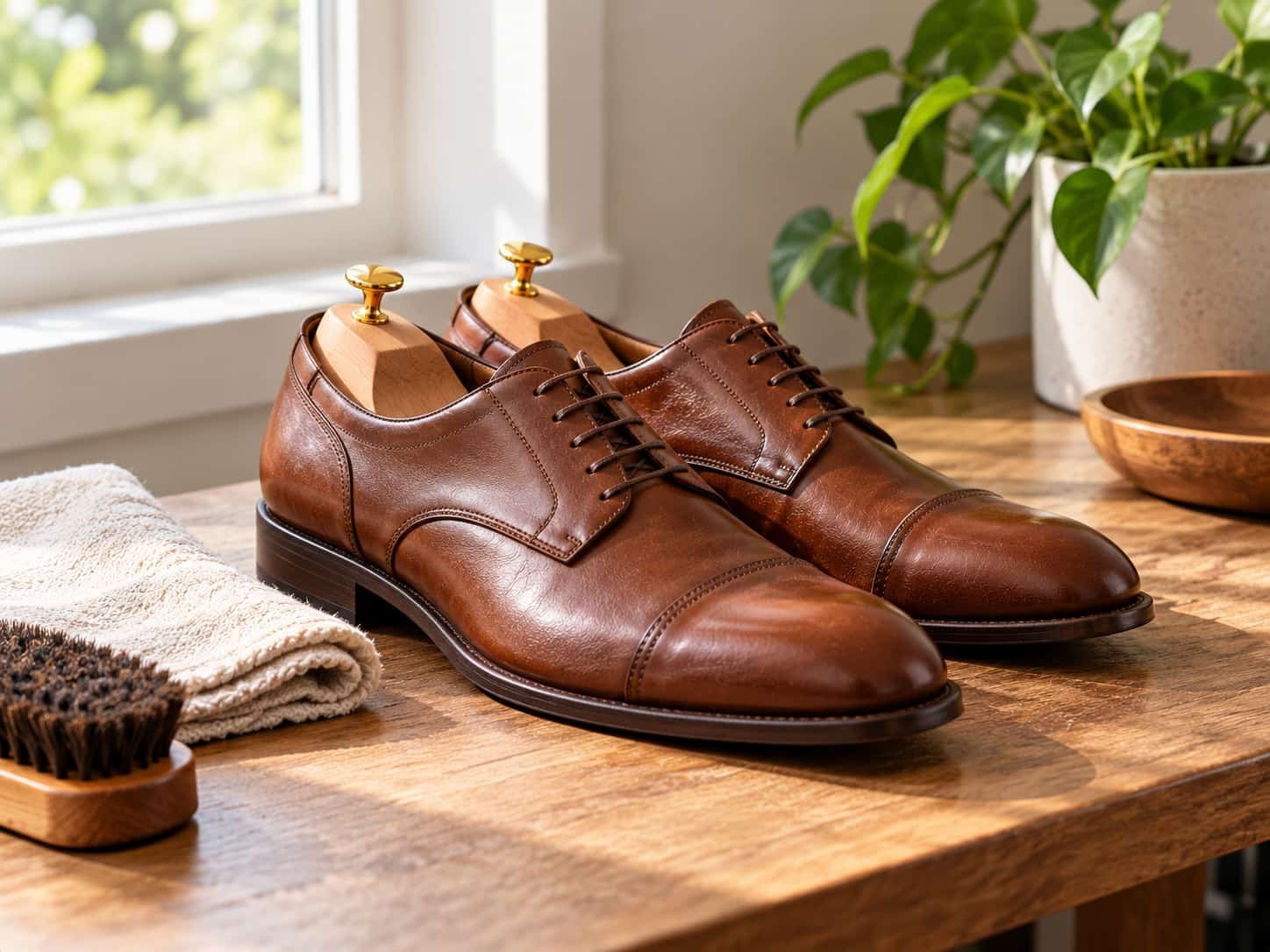
Avoid soaking top grain leather, using harsh solvents, or applying heat to speed drying. Any of these can damage the coating or stiffen the leather. For a full routine across materials, read our guide on how to clean shoes and maintain them.
Who Should Choose Top Grain Leather
The right choice depends on your situation.
Which Leather Should You Choose?
Note: Leather quality, finish, construction and care all influence performance. Neither type is automatically best for every buyer.
For a faster route, the shoe finder can help you narrow options by use and preference.
A few practical rules follow. If you wear shoes in the rain often, choose a well-finished surface and plan to dry them properly. If your feet sweat heavily, consider lined or breathable options, or use full grain or a textile upper for hot days. If you want shoes that can be resoled, check whether the sole is stitched or welted, since construction matters as much as the leather grade.
Common Myths About Top Grain Leather
Myth: Top grain is the highest grade of leather.
It is a processing term. Full grain usually sits above it in terms of natural surface quality, and overall quality depends on the whole build, not just the layer.
Myth: Top grain leather never wears out.
Any leather can crack, scuff or stiffen with poor care or heavy use. The coating is often the first weak point.
Myth: If a shoe says “leather,” it must be top grain.
“Leather” is a broad category. It can refer to full grain, top grain, split or corrected leather, and quality varies widely.
Myth: Top grain is always waterproof.
A coating may resist light moisture, but it does not make a shoe waterproof. Repeated soaking can still damage the leather, and any water resistance may wear off over time.
Frequently Asked Questions
What is top grain leather?
Top grain leather comes from the upper part of the hide, after the outer surface has been sanded or corrected. It is then usually finished or coated. The result is more uniform in appearance than full grain. The term describes processing, not a ranking.
Is top grain leather good quality?
It can be a good choice for everyday and mid-range shoes, especially where appearance and price matter. Its quality depends on the coating, the tannery and the construction of the shoe. It is generally less breathable than full grain. Judge each pair on its build, not the label alone.
Is top grain leather better than full grain?
Full grain usually keeps more of the natural surface and is generally considered the stronger grade. Top grain is more uniform and often more affordable. Neither is better in every case. Breathability and natural character favour full grain, while consistency and value favour top grain.
How long do top grain leather shoes last?
No reliable fixed number of years applies. Lifespan depends on coating quality, flex points, climate, care and whether the sole is stitched or glued. Stitched soles can often be resoled, which extends the life of the upper. Treat any single figure you see online with caution.
Is top grain leather waterproof?
Not by default. The coating may resist light moisture, but repeated soaking can still damage it. Water resistance from a finish can wear off over time. Look for an explicit water-resistance treatment in the product details.
How do I tell if a shoe is top grain?
Labels often do not state the grade, so use several clues. Check for a very even, uniform surface, and read the product description for finish terms. Ask the brand directly if the information is unclear. No single check is conclusive.
How do I care for top grain leather shoes?
Wipe off dust with a dry cloth and treat stains with a damp cloth and a mild leather cleaner. Dry shoes slowly at room temperature, away from heat, and use shoe trees. Condition lightly and avoid soaking or harsh solvents.
Does top grain leather breathe?
It breathes less than full grain because the coating limits airflow through the surface. The lining and construction also affect comfort. In hot or humid weather, consider a more breathable option.
Conclusion
Top grain leather is a practical, processed leather that trades some natural character for an even finish and a more accessible price. It can be a sensible choice for everyday and mid-range dress shoes when you understand its limits, particularly breathability and the wear life of its coating.
Before buying, look at the surface, check what the product description says about the leather, and consider how and where you will wear the shoes. Pay attention to construction too, because a well-made stitched sole can extend the life of a good upper. For the wider picture, start with our shoe materials guide, then compare grades in more detail through full grain vs top grain.
Sources
Official standards, regulations and footwear research resources.
-
1Leather Working Group
Leather industry standards and environmental and processing guidance.
Visit Leather Working Group -
2Federal Trade Commission (FTC)
Guides for Select Leather and Imitation Leather Products, 16 CFR Part 24.
Read the FTC leather guides -
3EUR-Lex
Directive 94/11/EC on labelling the materials used in the main components of footwear.
Read the footwear labelling directive -
4UK Legislation
The Footwear (Indication of Composition) Labelling Regulations 1995.
Read the UK regulations -
5SATRA
Footwear testing, technical guidance and industry resources.
Visit SATRA


