

What Is Shell Cordovan Leather and Why Is It So Expensive?
Editorial Guide | Footwear Materials |
Summarise this cordovan leather guide with AI
Open an assistant and submit the prefilled request. The assistant reads the page only after you submit it.
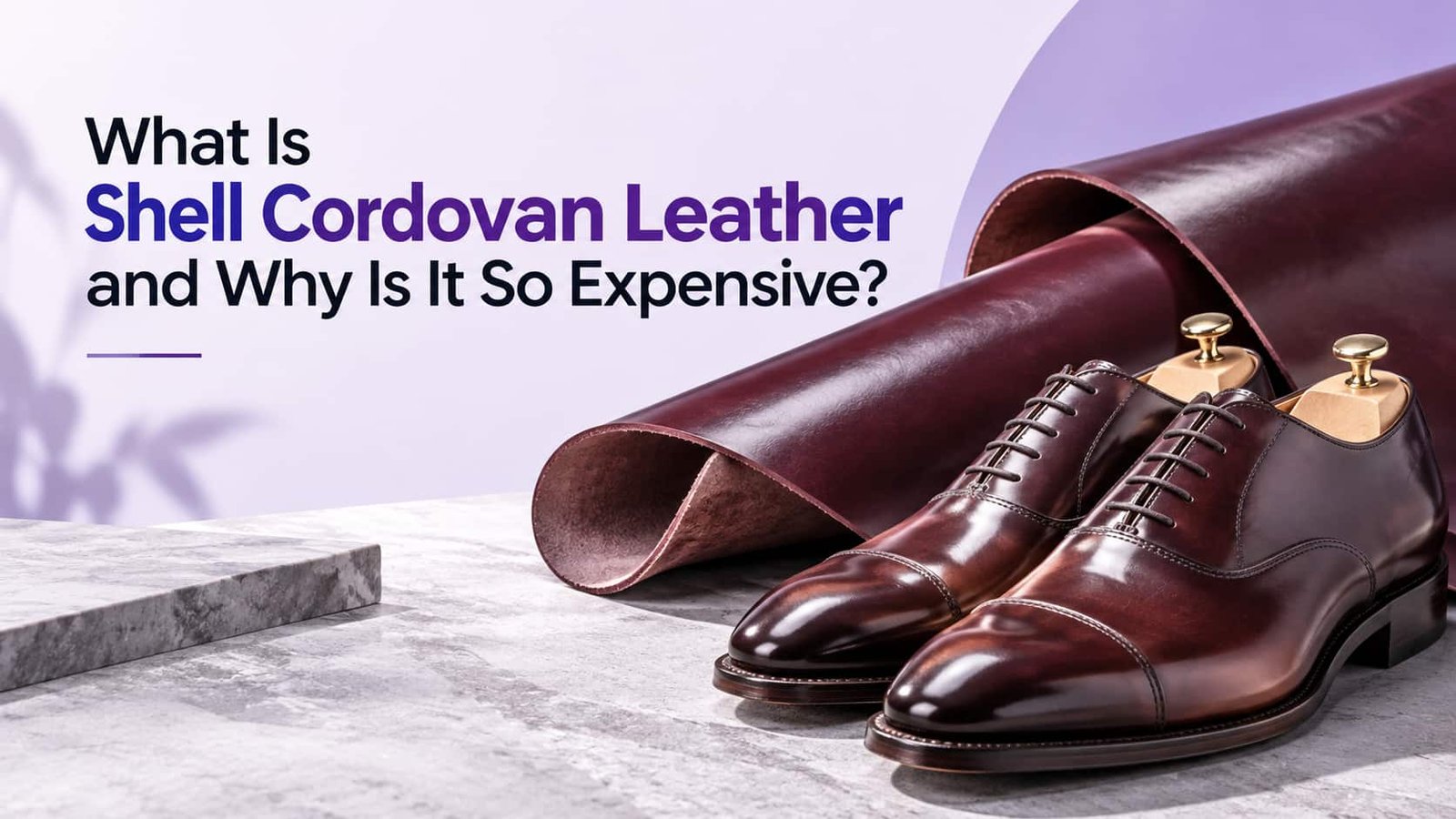
Cordovan leather, properly called shell cordovan, is a horse leather made from a dense fibrous membrane beneath the hide on the rump, not from the grain layer. Each horse yields only two small shells, and tanning takes months of skilled work. That scarcity and labour explain the price, and it gives a glossy leather that rolls instead of creasing.
Key Takeaways
- Shell cordovan is a specific part of a horse. It is the “shell” membrane under the hide on the rump, not ordinary horsehide.
- It is expensive because it is rare and slow to make. Supply is limited, and the tanning runs for months.
- It rolls rather than creases. Wear shows as soft waves, and the surface gains a deep patina.
- It needs different care from calf leather. It is already rich in oils, so too much polish is the usual mistake.
- Value is personal. It suits buyers who want one long-lived, repairable pair, and it is a poor fit if you need low cost or quick break-in.
Shell Cordovan at a Glance
| Feature | Shell cordovan |
| Source | Fibrous membrane (the shell) under the hide on a horse’s rump |
| Material | Equine (horse) leather |
| Tanning | Traditionally vegetable tanned, over months |
| Yield | Two small shells per horse |
| Surface | Smooth, glossy, fine-pored |
| Wear pattern | Rolls and ripples instead of sharp creases |
| Ageing | Deepens in colour and develops a patina |
| Water | Naturally resistant, though not waterproof |
| Typical use | High-end dress shoes, boots, small leather goods |
| Care | Light, infrequent polishing and brushing |
What Cordovan Leather Is
When people say cordovan leather, they usually mean shell cordovan. It is a type of tanned leather made from the shell of a horse’s hindquarters. Wikipedia describes it as an equine material taken from the lower layers of the hide on the rump, and it notes the leather’s unusual non-creasing character.
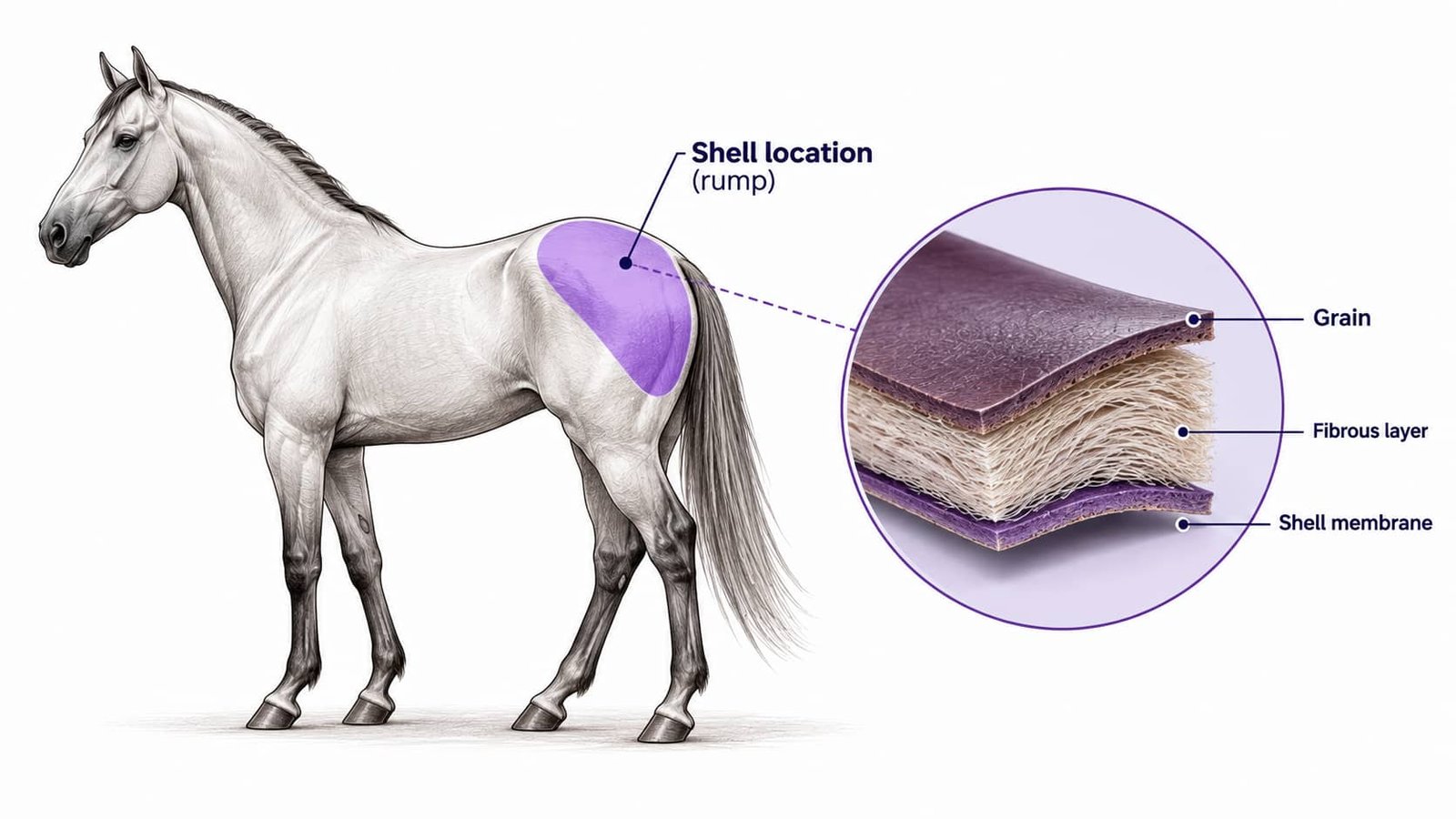
It is not the same as ordinary horsehide. Most leather is made from the outer layer of a hide, called the grain, and the layers beneath it. The shell is a different structure. Gentleman’s Gazette describes it as a membrane lying between layers in the rear of the horse, and it can only be reached once the hide is split to remove the grain.
The word cordovan is also a colour, a deep reddish brown, and a few shoes are simply “cordovan coloured” without being shell cordovan at all. The name comes from the Spanish city of Córdoba, and Wikipedia says the leather has been associated with it since early medieval times, although it flags parts of that history as disputed.
For a wider view of leather types, see the shoe materials guide.
Where the Shell Comes From
A horse has two shells, one on each side of the rump. Wikipedia notes that the hide is measured from the root of the tail forward along the backbone, with the butt cut from the front. Only the butt section is tanned as shell cordovan, and the fronts and other parts of the hide are used for other products. One retailer’s maker note says each horsehide yields about two shells of roughly two square feet each, so the total is small.
That small yield is the starting point for everything else about the material. A cow hide can supply large panels of usable leather. A horse gives a few small, specific pieces, and those pieces must be tanned, shaved and finished individually.
On sourcing, horsehide is generally a by-product of horse meat production in countries where horses are slaughtered for food, and not a product of animals raised for leather. Views on this differ, so check a maker’s own sourcing statement if it matters to you.
How Shell Cordovan Is Made
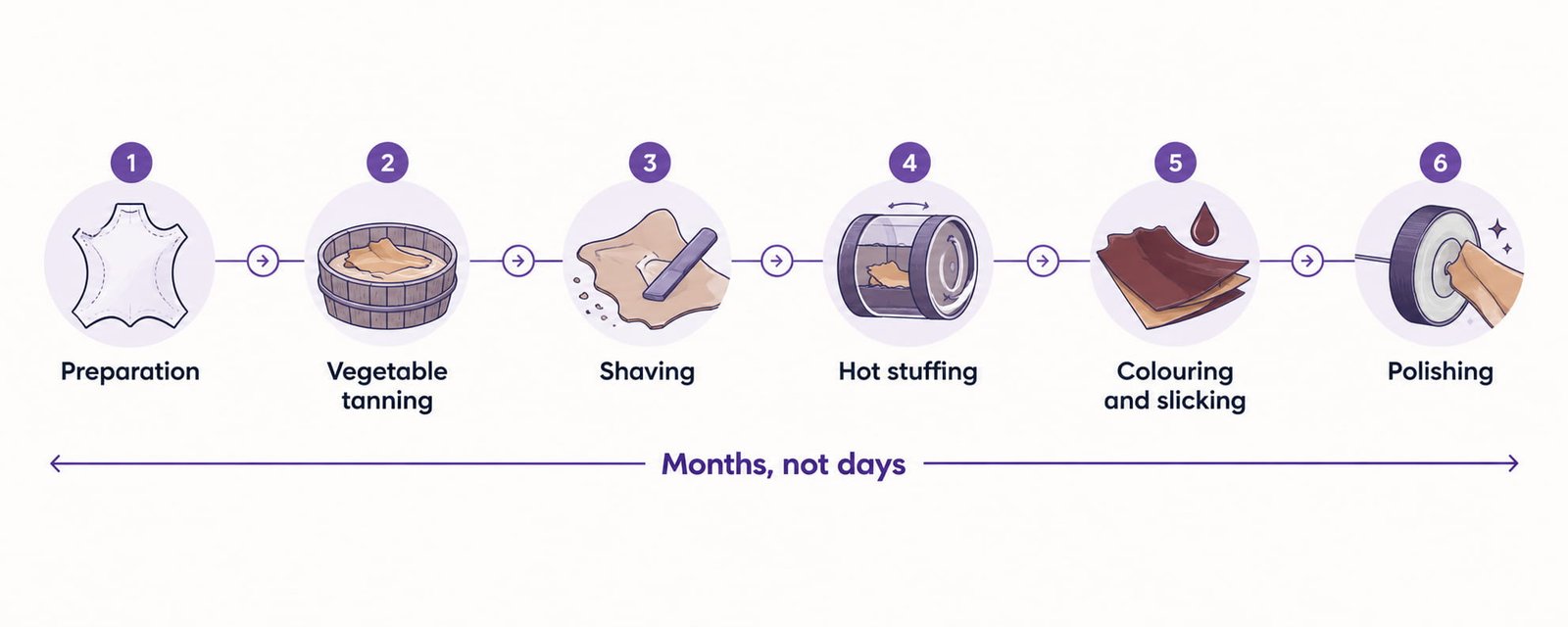
The process is slow, and the best-documented example is the Horween Leather Company in Chicago. Horween describes its genuine shell cordovan as tanned using a process that lasts six months and uses formulas dating to its founder in the early 1900s. A Stridewise report on a Horween visit quotes the company president saying six to nine months from start to finish.
The main stages, as described by Horween and the publications that have visited it, are:
- Preparation. Salted horse hides are trimmed, and the hair is removed. Only the butt section is kept for shell cordovan.
- Vegetable tanning. The hides soak in pits of vegetable tanning liquor. Stridewise reports about 60 days for this stage, compared with about a day for chrome tanning. For how the two methods differ, see chrome vs vegetable tanned leather.
- Shaving. The hides are shaved to expose the shell membrane.
- Hot stuffing. The shells are impregnated with oils and waxes. This is why finished cordovan is already full of oils, and it matters for care later.
- Colouring and slicking. The shells are dyed, and excess dye is removed.
- Finishing. The leather is dried, rolled and polished to bring up the gloss.
Individual tanneries use their own methods, so treat these stages as an outline of the best-known process and not a universal standard.
Why Shell Cordovan Is So Expensive
There is no single reason. Several costs stack up.
- Tiny yield. Each horse provides only two small shells, so a shoemaker gets far fewer pieces from the same number of hides than with calf.
- Time. Six months or more of tanning and finishing ties up stock and labour for far longer than a day-long chrome process.
- Skill and labour. Gentleman’s Gazette describes the work as complex and labour-intensive, with more than a hundred processes involved for each piece, and the shaving is done by hand.
- Few producers. Gentleman’s Gazette says only a few factories in the world tan shell cordovan today, and a 2009 Horween post described the company as the last North American producer of genuine shell cordovan. That post is old, so check current information before repeating it as fact.
- Limited supply. Shoemaker Crockett & Jones told trade press that cordovan supply is restricted by the lengthy tanning process and by the availability of the raw material.
- Demand. Buyers value the look and longevity, so demand holds prices up.
Shoes in shell cordovan have been quoted at upwards of $500 a pair in Gentleman’s Gazette’s guide, and prices have changed since, so check current prices with the maker.
How It Looks, Feels and Ages
Gloss. Shell cordovan has a smooth, fine-pored surface and a depth of shine that comes from its dense structure and finishing. A good pair can take a very high polish.
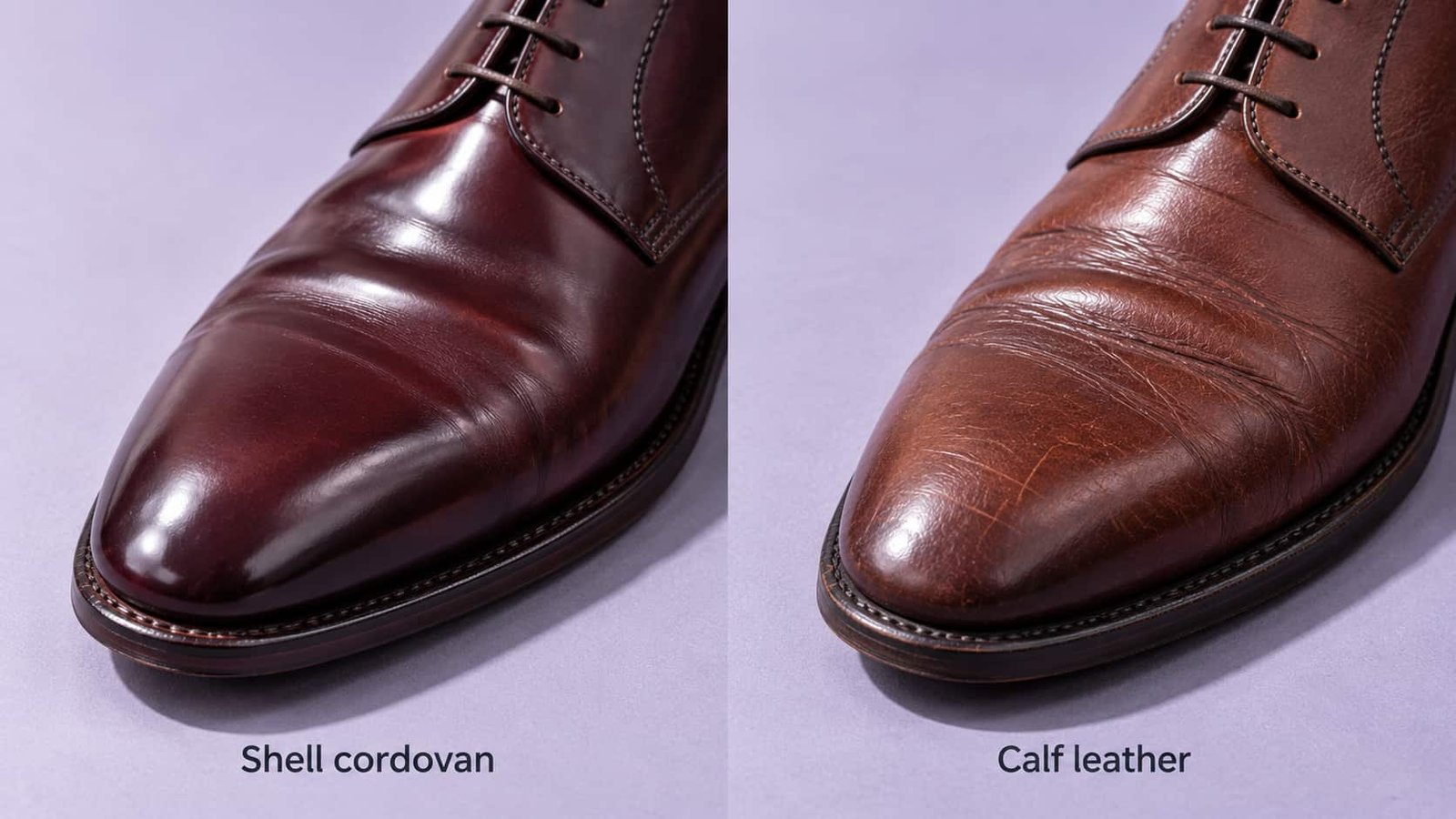
Rolls, not creases. Many people say cordovan does not crease. More precisely, it forms soft waves or rolls instead of sharp lines. Retail shoe-care guidance says it does crease, but the creases become gentle ripples.
Colour. The classic colour is a dark red-brown, which is where the name “cordovan” as a colour comes from. Shell cordovan is also made in black, brown and other shades. Gentleman’s Gazette notes that coloured shell cordovan will darken with age, except for black.
Patina. Over months and years, cordovan develops a deep patina from handling, polishing and wear. Some buyers love this, and others prefer leather that stays uniform.
Break-in. It is firmer than calf leather, and fit matters. Try the specific pair carefully, because you cannot rely on it stretching into shape.
Durability and Water
Cordovan has a reputation for toughness, and the structure of the shell supports it. Gentleman’s Gazette calls it exceptionally durable and naturally resistant to water, though not impervious, and resistant to stretching. Makers’ marketing sometimes goes further and uses words like “indestructible.” Treat that as marketing. No leather is indestructible, and a pair’s life depends on the build, the use and the care.
What can be said sensibly:
- Water. The dense, oily structure sheds light moisture well. Standing water, soaking and heat can still damage it. Water marks and scratches can show more easily on cordovan, but retail care guidance says they are often easy to restore.
- Wear. The shell is dense, so it resists abrasion and holds its shape. Soles, heels and stitching still wear out, and a stitched sole can be replaced, which is where a long-lived pair earns its value.
- Weather. Neither tanning nor the shell makes a shoe waterproof. For the general picture, see waterproof vs water resistant shoes.
Cordovan vs Calf and Other Leathers
| Feature | Shell cordovan | Full-grain calf | Corrected or genuine leather |
| Source | Horse shell membrane | Calf grain layer | Lower layers or corrected grain |
| Creasing | Soft rolls | Sharp creases | Varies, often coated |
| Price | Highest of the three | Mid to high | Lower |
| Break-in | Slower, firmer | Moderate | Varies |
| Ageing | Deep patina | Patina, varies | Coating can crack or peel |
| Care | Light polish, little cleaning | Regular polish and conditioning | Depends on the coating |
| Availability | Limited | Widely available | Widely available |
For more on grades, read full grain vs top grain and what is genuine leather. If you are also curious about a very different luxury material, see what is shearling.
Pros and Cons
What shell cordovan does well
- A deep gloss and rich, aged look
- Rolls instead of sharp creases
- Dense and resistant to stretching
- Sheds light moisture well
- Can last a long time on a repairable, stitched shoe
- Develops a distinctive patina
Where it falls short
- High price, and limited availability
- Slow break-in and a firmer feel
- Scratches and water marks can show readily
- Easy to over-polish
- A narrow range of styles and colours at many brands
- Many sources are marketing, so claims of invincibility deserve scepticism
Buying Cordovan Shoes
A shopper searching “shell cordovan shoes” is usually weighing price against longevity. A few checks help.
- Look for “shell cordovan.” Terms such as “cordovan leather,” “cordovan-coloured” or “semi-cordovan” are not the same. Semi-cordovan is not a standard term, and it is sometimes used for other horse leathers or for colour. Ask the maker exactly what the leather is.
- Ask who tanned it. Makers often name their tannery. Horween is the best-known, and Crockett & Jones has said it turns to Horween for its shell cordovan.
- Ask which part of the shoe uses it. Some shoes use shell cordovan only on the upper, and others use it for small trims or accents.
- Check the construction. A stitched or welted sole, which can be replaced, is what makes a high price easier to justify. A glued sole usually cannot be resoled.
- Compare maker policies. Look at returns, resoling services and fit guidance before you pay.
- Check current prices. They vary by maker and over time, so use the maker’s own page.
If you are still narrowing options, the shoe finder can help you filter by use and style.
How to Care for Cordovan
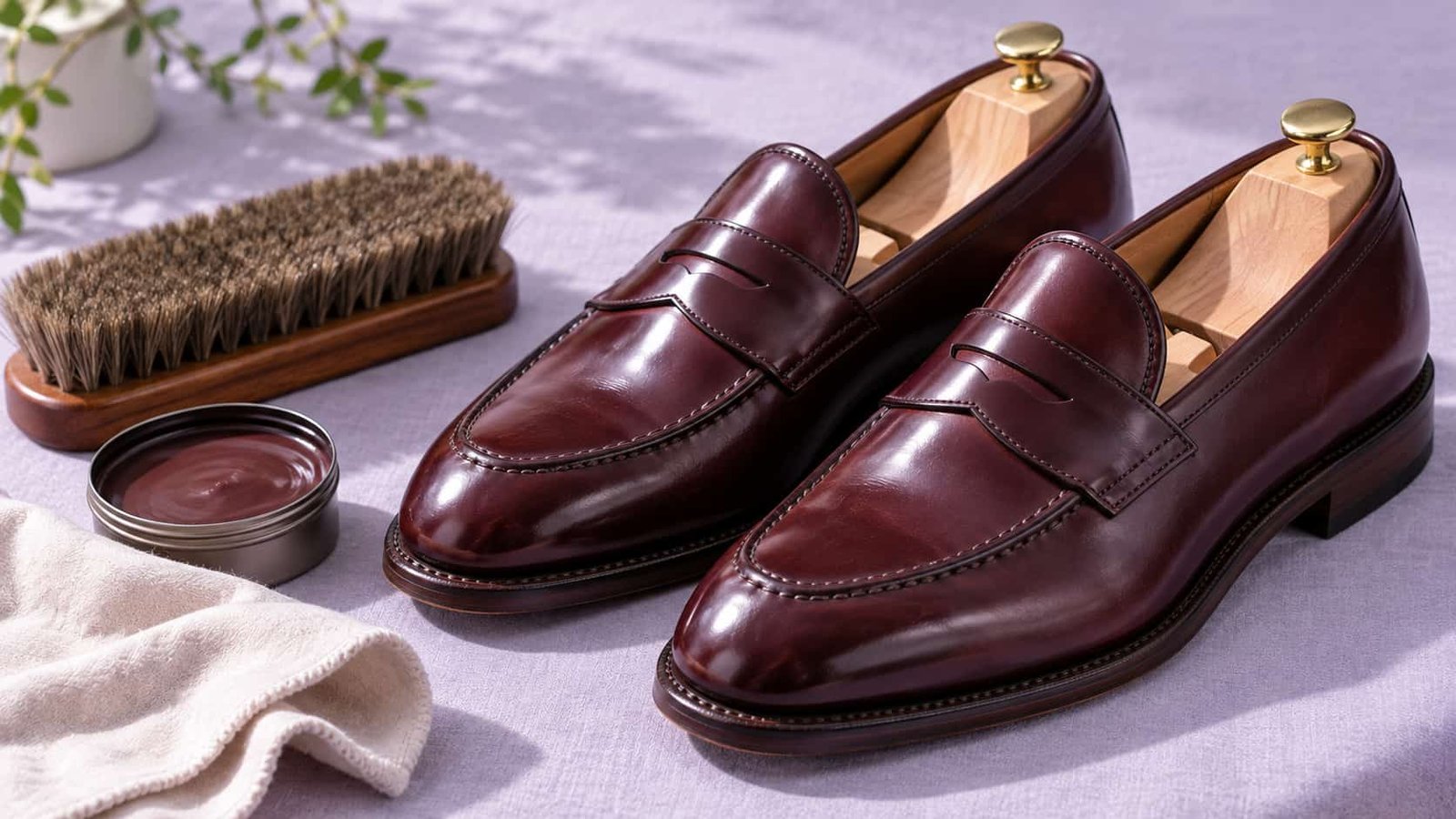
Cordovan needs less than most people expect. Crockett & Jones has advised customers that because the material is already full of oils from tanning, it is important not to use too much polish.
- Brush after wear. A horsehair brush removes dust and lifts a light shine.
- Wipe, don’t wash. Retail guidance for cordovan suggests a lukewarm, slightly damp cotton cloth if cleaning is needed, with saddle soap only occasionally.
- Use cordovan-specific products. Shoe-care sellers note that standard calf conditioners can contain solvents that cordovan does not always respond well to. Look for cream made for cordovan.
- Polish lightly. Apply a thin layer, let it dry to a matte surface, then brush off.
- Use shoe trees. Cedar trees help the shoes hold their shape between wears.
- Rest the pair. Rotate shoes so the leather can recover.
For more general routines across materials, see how to clean shoes and maintain them.
Who Should Choose Cordovan
| Your situation | Cordovan may suit you if | Consider another leather if |
| Budget | You will pay more for one long-lived pair | You need a lower price |
| Style | You want a classic, glossy dress look | You prefer matte or casual leathers |
| Comfort | You will allow time to break in | You need softness from day one |
| Care | You enjoy light, occasional polishing | You want zero upkeep |
| Weather | You mostly wear shoes in dry to damp conditions | You face constant heavy rain |
| Repair | You can resole a stitched shoe | You want a low-cost, replace-it option |
Myths Worth Dropping
- “Cordovan is just a colour.” It is also a leather. The shell is a real, specific material.
- “All horse leather is cordovan.” Only the shell from the rump qualifies as shell cordovan.
- “Cordovan never creases.” It forms soft rolls instead of sharp lines, and it does crease.
- “Cordovan is indestructible.” No leather is, and care and construction still matter.
- “More polish is better.” Over-polishing is the common mistake, because cordovan is already rich in oils.
- “Semi-cordovan is shell cordovan.” It is not a standard term, so ask the maker.
Frequently Asked Questions
What is shell cordovan leather?
Shell cordovan is a horse leather made from a fibrous membrane, the shell, beneath the hide on the rump. It is tanned over months, and it is prized for its gloss, its soft rolls and its patina.
What is cordovan leather made of?
It is made from the shell layer of horse hide, taken from the rump. Each horse yields only two small shells, which are vegetable tanned, shaved, stuffed with oils and waxes, dyed and polished.
What animal is cordovan leather?
Horse. The shell comes from the hindquarters of a horse, and horsehide is generally a by-product of the meat trade. If sourcing matters to you, check the maker’s statement.
Why is cordovan leather so expensive?
Each horse gives two small shells, the tanning runs for months with a lot of hand work, few tanneries make it, and supply is limited. Demand from buyers who value its look and longevity keeps prices high.
Is cordovan leather worth it?
It can be if you value a long-lived, repairable shoe with a deep patina and will look after it. It is harder to justify if you need low cost, quick comfort or a shoe for constant wet weather.
Does shell cordovan age well?
Yes, its patina is a major selling point. Coloured cordovan tends to darken with time, apart from black, and the surface deepens with polishing and wear.
What are the downsides of shell cordovan?
The price, limited availability, slow break-in, visible scratches and water marks, and the risk of over-polishing. A shoe’s construction matters as much as the leather.
Is cordovan leather waterproof?
No. Its dense, oily structure sheds light moisture well, but standing water and soaking can still damage it. Dry wet shoes slowly at room temperature.
What is semi-cordovan leather?
It is not a standard term. Some brands use it loosely for other horse leathers or for a colour, so ask the maker what the material actually is.
Is cordovan a colour or a leather?
Both. It is a deep reddish-brown colour, and it is a specific leather. Shoes sold as “cordovan” may only be the colour, so look for “shell cordovan.”
Final Thoughts
Shell cordovan is rare, slow to make and unusually dense, and those facts explain both the price and the look. It rewards buyers who want a single, well-made shoe they will care for and resole. It is a poor fit for anyone who needs low cost, instant comfort or a shoe for heavy rain.
Before you buy, check that it is truly shell cordovan, ask who tanned it, and look at the sole construction. For the bigger picture, start with the shoe materials guide, then see how chrome vs vegetable tanned leather differ.
External References
- Wikipedia, “Shell cordovan”: en.wikipedia.org/wiki/Shell_cordovan
- Horween Leather Company, “Only Producer of Genuine Shell Cordovan in North America” (2009): horween.com/blog/2009/05/28/…
- Gentleman’s Gazette, “Shell Cordovan Leather, Explained”: gentlemansgazette.com/cordovan-leather-from-horween
- Gentleman’s Gazette, “Why is Shell Cordovan Leather So Expensive?”: gentlemansgazette.com/cordovan-leather-expensive
- Stridewise, “How Is Shell Cordovan Made? Horween Leather Company Explains”: stridewise.com/horween-shell-cordovan
- Leatherbiz, “Crockett & Jones says cordovan shoes need special care”: leatherbiz.com/News/130911
- The Shoe Care Shop, “Cordovan leather care guide”: theshoecareshop.com/collections/cordovan-leather-care-guide


